|
Partners,
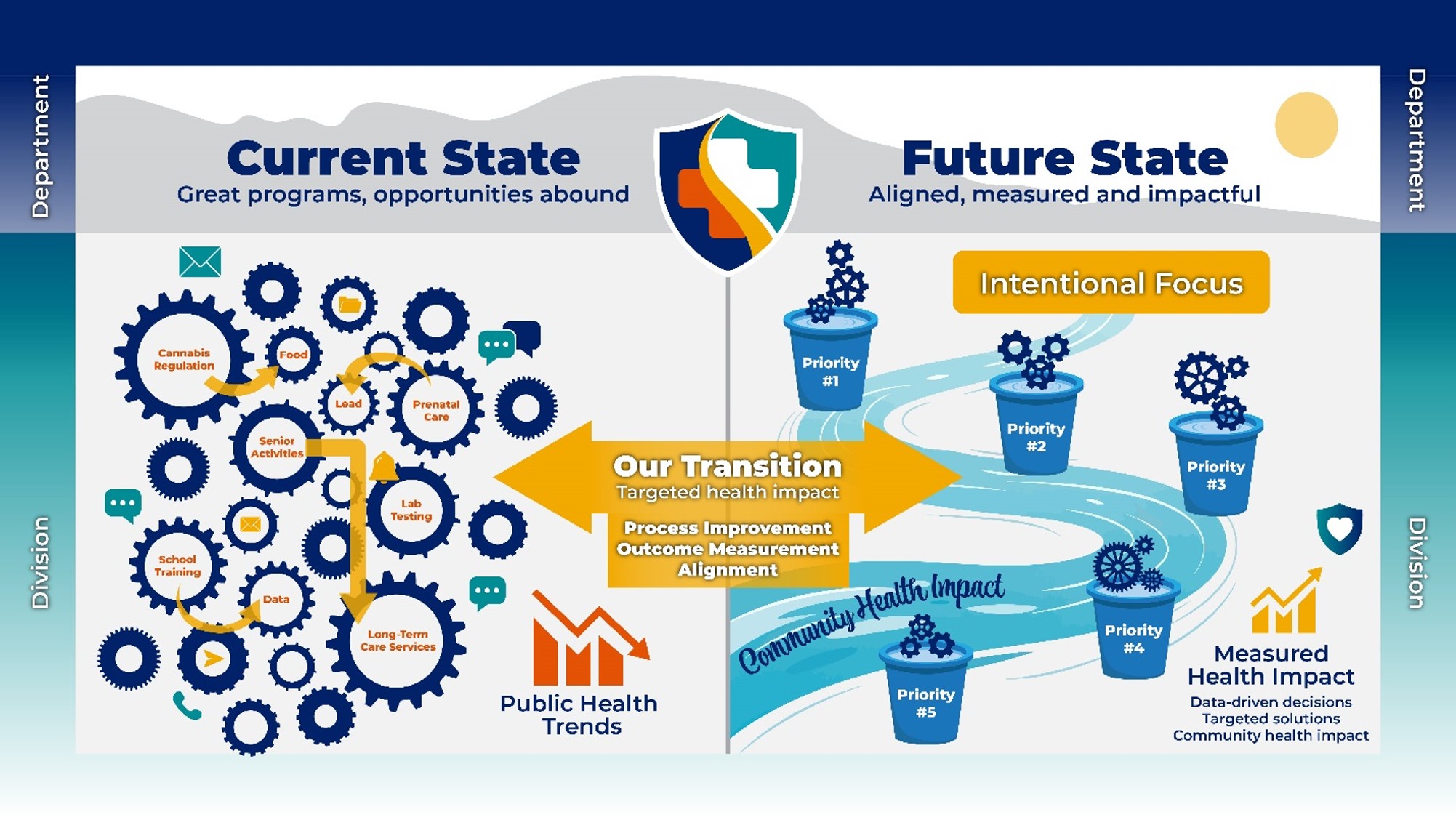
The illustration below represents the Missouri Department of Health and Senior Services’ ongoing work to evolve alongside a rapidly changing public health landscape—work that directly influences and strengthens our partnerships throughout the state. Over the past year, DHSS has communicated consistently about these changes and challenges through director’s messages, stakeholder conversations and departmentwide initiatives such as Project Reimagine, fiscal consolidation, Shared Resource Services and our outcomes‑focused Framework Project. Together, these efforts reflect our commitment to more intentional, aligned, and measurable public health action.
The gear‑based illustration highlights this shift. On the left, it depicts the department’s current state—strong, expert‑driven programs that produce meaningful work and serve Missourians every day. Yet, as our partners know well, the challenges facing public health and the department have grown increasingly complex. Addressing them effectively requires not just strong individual programs but coordinated, efficient, outcome‑driven approaches that maximize shared impact.
As the illustration moves toward the right, it communicates DHSS’s future direction: a system in which our programs and services are strategically aligned, supported by improved measurement, informed by data, and intentionally focused on improving statewide health outcomes. This evolution mirrors national trends and expectations reinforced by federal partners, professional associations, and policymakers, all of whom are placing greater emphasis on clearly demonstrating health impact.
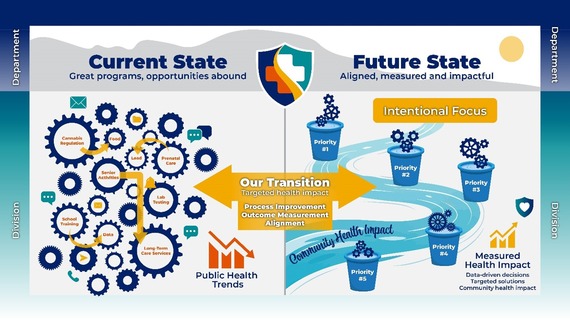
For external partners—local public health agencies, healthcare providers and systems, community organizations, academic institutions, and others—this shift is meant to strengthen collaboration. By moving from siloed efforts to unified outcomes, DHSS aims to create clearer pathways for partnership, better alignment of shared goals, and increased capacity for collective action. Our focus on intentional measurement and upstream strategies is designed to help all of us tell a more complete story about the impact of our work together.
Ultimately, the illustration communicates that DHSS is preparing for the future in a way that positions our partners for success as well. As we refine our processes, modernize how we evaluate programs, and coordinate more closely across divisions, we are also working to create conditions for more seamless collaboration, clearer communication, and more measurable improvements in the health and well‑being of Missouri communities.
We look forward to continuing this work alongside you—learning together, adapting together, and creating meaningful, lasting public health impact across our state.
 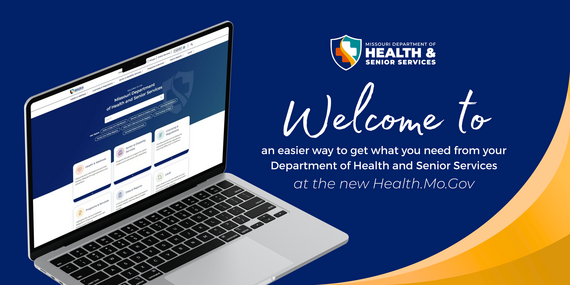 A New, Healthy Digital Home for DHSS
Laura Bennett-Smith, Digital Projects Manager
Since 2023, DHSS has collaborated with our partners to design a new website. We collected feedback and survey results from thousands of stakeholders like you.
Those contributions partnered with data and analytics helped us make decisions about the new website’s design, content, organization, presentation, look and feel.
We are inviting our team members and external partners to take a tour of our new website today and tomorrow in advance of our official launch Tuesday night!
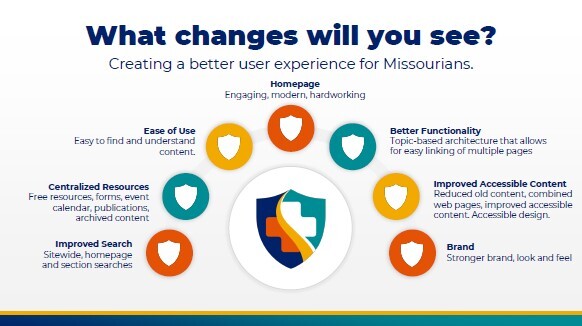
We are excited to share with you how we are creating a better user experience for Missourians. Learn more about our improvements.
Take a tour! Get acquainted with where content is, and take our survey before we offiicially go live. Your feedback will help us continue to make improvements. Please note that our technical experts are continuing to work on search functionality and broken links.
Then starting July 22, you'll see our new look and feel at Health.Mo.Gov!
Cache-clearing tips
Healthy Longevity: A Public Health Priority, Not a Wellness Trend
Dr. Heidi Miller, Chief Medical Officer
DHSS recently explored the growing public conversation around “longevity,” separating evidence-based public health strategies from commercial wellness trends. Longevity is fundamentally a public health outcome—not a luxury concept reserved for wellness enthusiasts. Prevention is public health.
Evidence-Based Levers That Improve Longevity
There are six actionable factors with the strongest influence on extending life and reducing preventable mortality. Smoking remains the single largest contributor to early death, responsible for an estimated 467,000 deaths annually in the U.S., with significant gains achievable even when quitting later in life. Nutrition, physical activity, weight management, blood pressure control, and substance use also represent major determinants. Together, these lifestyle factors can produce a projected 12–14‑year increase in life expectancy for adults who consistently adopt healthy behaviors.
Historically, public health interventions such as clean water systems, sanitation, vaccines, antibiotics, and cardiovascular prevention efforts have collectively added over 25 years to U.S. life expectancy from the 1880s to the 1960s, with continued gains since 1965. These large-scale initiatives illustrate the profound population-level impact of evidence-based public health strategies.
Healthy Longevity is Built from Behaviors, Exposures and Access
Longevity is meaningful only when paired with health span—the quality of those years. Disability Adjusted Life Years (DALYs), which combine years of life lost with years lived with disability, is a metric used in global health to measure the total burden of disease. The leading drivers of DALYs nationally include drug use, obesity, elevated glucose, tobacco, and nutrition. Addressing these factors improves both life expectancy and day-to-day wellbeing.
Healthy longevity is shaped by how individuals move, rest, eat, manage stress, and connect socially. Environmental exposures—such as pollution, temperature extremes, and lead—also play major roles. Access to healthcare, safe housing, transportation, and economic stability further determine an individual’s ability to engage in healthy behaviors and avoid preventable risks. These factors are deeply rooted in public health practice, not fringe wellness trends. In contrast, popular online “longevity hacks” and consumer aging tests often lack scientific evidence. These trends, while appealing, frequently overpromise and distract from proven strategies that impact population health at scale.
Reframing How Public Health Communicates and Use of Levers
Public health leaders must “read the room” by understanding the language used by social media and the wellness industry. Terms like “biohacking” and “cellular repair” resonate with audiences, even when they exaggerate biological claims. Meanwhile, traditional public health terminology—mortality, morbidity, chronic disease prevention—may feel less engaging despite being more accurate. The challenge is to communicate evidence-based strategies in ways that align with public interest without compromising scientific integrity.
The department recognizes there are numerous levers the state does and could pull to impact health. A key leverage point for Missouri: tobacco control. Evidence shows that every 10% increase in cigarette retail price results in a 9.59% decrease in consumption—an impact especially strong among youth. Strengthening tobacco policies represents one of the most effective pathways to improve longevity statewide. Continuing to address screen time is another important lever. Why? When children, youth, and adults are not in front of a screen, including a mobile device, they are more likely to be moving.
Longevity is not a trend—it's the culmination of public health’s continuous efforts to improve conditions across the life course. By focusing on behavior, environment, and access, DHSS can continue advancing strategies that truly extend and improve lives.
- Global Burden of Cardiovascular Diseases and Risk Factors, 1990-2019: Update From the GBD 2019 Study. Journal of the American College of Cardiology. 2020.Roth GA, et al.
- Burden of Disease Scenarios by State in the USA, 2022-50: A Forecasting Analysis for the Global Burden of Disease Study 2021.Lancet. 2024.GBD 2021 US Burden of Disease and Forecasting Collaborators. Modeling
- Contributions of Public Health, Pharmaceuticals, and Other Medical Care to US Life Expectancy Changes, 1990-2015.Health Affairs. 2020.Buxbaum JD, Chernew ME, Fendrick AM, Cutler DM.
- Science. 1978.Mortimer EA.
- Ten Great Public Health Achievements--United States, 1900-1999. MMWR. Morbidity and Mortality Weekly Report. 1999.
- Trends in Infectious Disease Mortality in the United States During the 20th Century. JAMA 1999.Armstrong GL
- American Journal of Preventive Medicine. 2021.Ibsen DB, et al. Circulation. 2018.Li Y, et al.
- NEJM, 2025.Global Cardiovascular Risk Consortium, Magnussen C. AJCN 2024, Nguyen XT, et al.
- JACC Advances 2025, Huether et al.
- Impact of Healthy Lifestyle Factors on Life Expectancies in the US Population. Circulation. 2018.Li Y, Pan A, Wang DD, et al.
|

Missouri’s World Cup 2026 Public Health Preparedness & Surveillance Efforts
Jonathan Garoutte, Assistant Deputy, Division of Community & Public Health
Ahead of the 2026 World Cup, DHSS conducted an extensive communicable disease risk assessment to identify priority infections and align resources. With no unified federal guidance available early on, Missouri independently reviewed global sporting event data, expert opinions, and past experience to establish its surveillance priorities—ultimately aligning closely with the federal assessment once it was released.
Beyond this planning, DHSS programs implemented several innovative surveillance and preparedness strategies to support the Kansas City region during the influx of visitors.
Emergency Coordination
The Office of Emergency Coordination launched new ESRI tools—such as a World Cup Hub and daily situation update dashboards—and coordinated daily departmentwide situational reports, including weekends and non‑match days. OEC closely monitored hospital capacity, convened the Medical Incident Coordination Team, and collaborated with partners including SEMA and MARC.
Syndromic Surveillance (ESSENCE)
ESSENCE enhanced monitoring of emergency department trends by:
- Requesting WC‑related visit tagging,
- Creating hourly baselines and automated alerts for 14 syndromes,
- Building an internal dashboard shared with LPHAs, and
- Conducting intensified monitoring on game days.
This work identified trends such as heat‑related illness, respiratory spikes tied to poor air quality, and fireworks injuries, plus several reportable cases that were quickly routed for investigation.
Wastewater Surveillance
Missouri nearly doubled its wastewater pathogen targets in the KC region, adding Enterovirus, Hepatitis A, Norovirus and MERS. The program built an internal Tableau dashboard and initiated novel drug monitoring, identifying the synthetic opioid Brorphine—information shared with emergency response partners. The approach demonstrated the strong value of wastewater surveillance during major international events.
Reportable Disease Surveillance
The Bureau of Communicable Disease Control & Prevention worked with partners to enhance ShowMe WorldCare, enabling rapid identification and follow‑up of out‑of‑state and international cases—an entirely new capability for Missouri. Daily review of KC‑area conditions helped flag and investigate several cases and clusters. No major outbreaks were linked to World Cup activities, and new tools can be used again for large future events.
Environmental Public Health
BEHS provided months of hands‑on support to LPHAs and proactively communicated with lodging and food establishments statewide to ensure readiness.
Biowatch
SPHL oversaw a special BioWatch deployment in KC, adding courier routes and rapid testing capacity to support bioterrorism surveillance.
|

*The More You Know* Moment
Melanie Highland, Director of the Division of Senior & Disability Services
Most of us are likely aware of DHSS’ commitment through the Division of Regulation and Licensure to ensure safe and quality care is delivered to Missourians residing in nursing facilities through routine surveys and complaint investigations. But did you know that DHSS also supports a program that helps nursing facility residents advocate for their rights, educates the community on long-term care challenges, and empowers residents to speak up when they feel unheard? Those are the goals of the small-but-mighty Long Term Care Ombudsman Program housed within DSDS. State Ombudsman, Jenny Hollandsworth, and Deputy State Ombudsman, Lindsay Luebbering, oversee a network of regional ombudsman coordinators and trained volunteers who visit with residents in nursing facilities across the state to ensure residents have a good quality of life and that their rights are protected. If you’ve never heard of this program and would like to learn more (including how you or someone you know can become a trained ombudsman volunteer), please contact LTCOmbudsman@health.mo.gov
Similarly, DHSS also operates a program that helps nursing facility residents who want to return to a home of their own or one shared with family—the Show-Me Home Program. In partnership with the Department of Social Services, contractors and community partners, the DSDS Show Me Home (SMH) team plays a remarkable role in helping nursing home residents across Missouri take meaningful steps toward independence. Anyone who has helped someone through a big transition knows that it takes coordination, compassion and persistence. That’s where the SMH team shines as they work to make each move safe, smooth and successful. However, their impact doesn’t stop at individual success stories. By helping Missourians live in the least restrictive environment possible, the SMH program generates meaningful cost savings for the state while honoring the principles of the Olmstead Decision and the Older Americans Act. To learn more about the Show-Me Home program, contact ShowMeHome@dss.mo.gov.
|

Nature is One of Our Most Powerful Health Resources
Lacey Vermette, Wellness & Recognition Coordinator
When we think about improving health, we often focus on nutrition, exercise, sleep, and preventive care. Yet one of the most effective and accessible tools for improving our physical and mental well-being is something many of us overlook: spending time in nature.
Research consistently shows that time outdoors is more than a pleasant escape; it is a powerful investment in our health. People who spend 120 to 300 minutes each week in nature report the highest levels of overall health and well-being. Even 15 minutes in a park, garden, or other green space can lower cortisol, our body's primary stress hormone, helping us feel calmer and more focused.
The benefits extend far beyond stress relief. Time in nature has been shown to lower blood pressure, improve heart health, strengthen immune function, enhance concentration, and reduce anxiety. For children, growing up with access to green spaces has been associated with a significantly lower risk of developing mental health conditions later in life.
Ironically, while nature offers remarkable health benefits, Americans now spend more than 90% of their time indoors. Reconnecting with the outdoors doesn't require a vacation or a strenuous hike; a walk during your lunch break, a family visit to a local park, gardening, or simply enjoying your morning coffee outside can make a meaningful difference.
For those interested in tracking their time outdoors, NatureDose is one example of a free app that helps users monitor time spent in nature and work toward the research-supported goal of 120 minutes each week.
This month, I encourage each of us to make nature part of our wellness routine. Every step outside is an opportunity to reduce stress, restore our minds, strengthen our bodies and reconnect with the world around us. Sometimes, the best prescription isn't found in a bottle, it’s found beneath an open sky.
|
 July Team Members of the Month
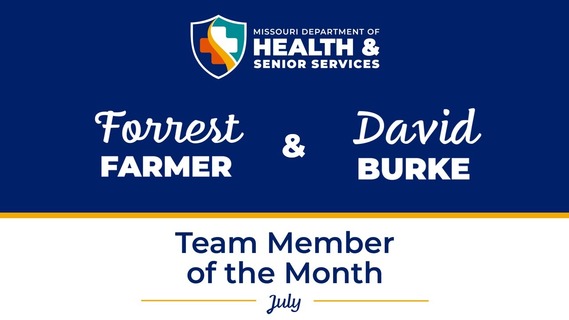
Congratulations to David Burke and Forrest Farmer, Investigators with the Office of Special Investigations, were selected as the Department’s July Team Members of the Month for their outstanding work on a complex financial exploitation case involving an elderly assisted‑living resident.
Their investigation uncovered that the victim’s son, after obtaining financial power of attorney, took control of the victim’s accounts, liquidated CDs totaling over $178,000, sold the victim’s longtime home for $480,000, and ultimately stole $735,137 for personal use. The victim was left without basic necessities, medical coverage, or appropriate living conditions. Burke and Farmer worked with federal partners to ensure the son was indicted on eight counts of wire fraud.
Beyond the criminal case, the investigators collaborated with the assisted living facility to prevent the victim’s eviction and secure guardianship/conservatorship, social security payeeship, and efforts to access pension funds. Facility staff are now helping the victim restore comfort, dignity, and stability in daily life.
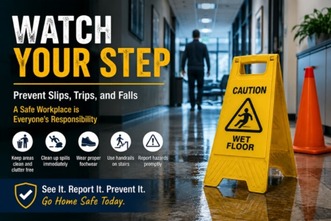
Watch Your Step: Preventing Slips, Trips and Falls
Eric Hueste, Office of Emergency Coordination
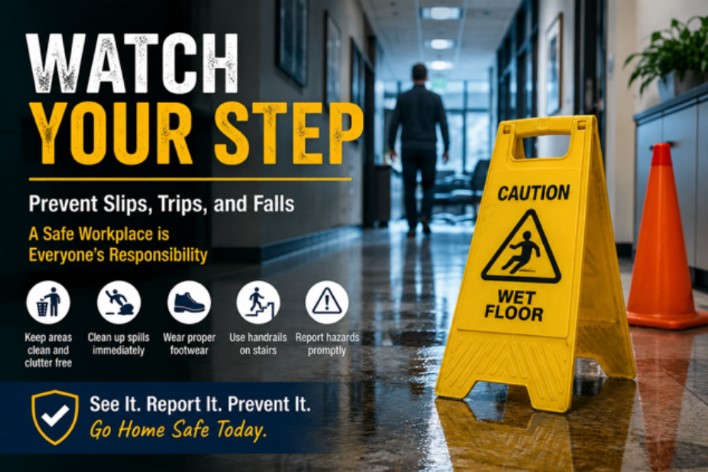
This month’s safety reminder: If you see a hazard, don’t assume someone else will take care of it. Report it or address it safely if you are able. A proactive approach helps create a safer workplace for everyone.
Summer often brings increased travel, outdoor work, facility maintenance, and changing weather conditions. While these seasonal activities are common, they can also increase the risk of slips, trips, and falls, one of the most common causes of workplace injuries.
Help reduce your risk by following these simple safety practices:
-
Keep work areas, hallways, and emergency exits free of clutter.
-
Clean up spills immediately or report them so they can be addressed promptly.
-
Secure loose cords and remove tripping hazards from walkways.
-
Wear footwear that provides support and traction for your work environment.
-
Use handrails on stairs and avoid carrying items that obstruct your view.
-
Remove any unused items from your workspace and store them appropriately.
-
Stay alert when transitioning between indoor and outdoor areas, especially after rain or on uneven surfaces.
Remember, safety is everyone’s responsibility. Taking a moment to identify and correct a hazard can help prevent injuries and protect both employees and visitors.
|

Workforce Transformation in Motion
What the DHSS Health Workforce Programs Inventory Tells Us — and Where It’s Taking Us
Pat Simmons, Director of Health Care Workforce Transformation
In recent months, DHSS has revisited something we have not looked at in years, if ever — an inventory of health care workforce programming across the department. And honestly — seeing it all in one place has been eye-opening. This exercise gave a clear view of what we’re doing, where we’re strong and where we have real opportunities to make lasting change. One thing stood out immediately: most of our programs focus on supporting the existing workforce — helping people stay, grow, and succeed. That’s important, but without efforts to bring new people into health careers, including public health, solving long‑term shortages becomes much harder.
Where We’re Heading Next
Once we finished the inventory, the next moves came into focus. These steps aren’t flashy, but they’re the foundation for everything that comes next.
-
Build an internal working group with leadership and program staff from across the department so we can set shared priorities and move as one.
-
Create a simple partner map so we know who else is working in this space, where, and with what resources — before we think about how to address gaps.
-
Choose a small number of focus areas where we can make meaningful progress over the next year or longer.
-
Build an external advisory committee around those priorities to gain insight on our direction.
Why This Matters
At the end of the day, this is about making sure Missouri communities have access to care — and right now, the biggest barrier to that is the workforce needed to provide it. By understanding where we are, we can do a better job of directing time, funding, and energy where they’ll matter most.
This inventory didn’t just give us data. It gave us direction.
Moving Forward
I’m grateful for how much work is already happening and for everyone who contributed to pulling this picture together. It’s not always easy to pause and take stock, but it’s exactly what we needed. Now, with a clearer understanding of our strengths and gaps, we’re ready to move forward with purpose — and build a workforce strategy that meets Missouri’s needs. More to come, but we’re moving.
|

Quantum Computing and the Urgent Shift to Post‑Quantum Security
Ryan Marsch, Director of Information Technology and Data Strategy
Quantum computing represents a monumental shift from standard technology, trading classical binary bits—which can only exist as a 0 or a 1—for quantum bits, or qubits. Thanks to the principles of quantum mechanics, qubits can exist in a state of superposition, allowing them to evaluate multiple computational possibilities simultaneously. This capability allows quantum computers to solve complex mathematical problems at speeds unimaginable with today’s supercomputers. While this promises incredible breakthroughs in fields like molecular modeling and drug discovery, it simultaneously introduces a critical vulnerability to global data security. The public-key encryption protocols currently safeguarding our digital world, such as RSA, rely on mathematical equations that classical computers cannot solve within a practical timeframe (think millions of years in compute time). A mature quantum computer will shatter these same algorithms in minutes. This looming capability has already altered the cybersecurity landscape, driving adversaries and bad actors to engage in "harvest now, decrypt later" tactics, actively stealing encrypted data today with the intent of unlocking it the moment quantum decryption becomes viable.
In response to this threat, recent White House executive orders (Executive Order 14412) and federal directives have mandated an urgent transition to post-quantum cryptography (PQC), requiring agencies to inventory vulnerable systems and adopt quantum-resistant algorithms finalized by the National Institute of Standards and Technology (NIST). For OA-ITSD and DHSS, these directives are a loud wake-up call rather than a distant federal concern. DHSS manages massive, highly regulated repositories of sensitive data, including Protected Health Information (PHI), genomic data, and vital population statistics. Because medical and biometric records retain their value and sensitivity for decades, they are prime targets for retroactive quantum attacks. If we fail to modernize our data security frameworks and adopt a "crypto-agile" posture in line with these new executive standards, the lifelong health profiles of millions of citizens could be exposed to future exploitation, turning vital public health data into a massive long-term liability. Thankfully, OA-ITSD recognized this threat early and had begun this work well before Executive Order 14412, assuring DHSS and statewide data systems will remain safe and secure into the next phase or our digital evolution. For a more detailed explanation of what quantum computing is and how it works, check out this video: Quantum Computers Explained: How Quantum Computing Works
|
New World Screwworm (NWS) Outbreak
John Bos, Chief, Bureau of Communicable Disease Control and Prevention
In 2023, Panama and Costa Rica identified an outbreak of New World Screwworm (NWS). The outbreak has continued to spread northward, encompassing all Central American countries and Mexico, where NWS was previously controlled. On June 3, 2026, an animal case of NWS was detected in the United States (U.S.). As of July 10, a total of 35 animal cases have been reported on the USDA NWS Dashboard. The detections include cattle, sheep, goats, and a dog in Texas and an additional dog in New Mexico. There have been no reports of human cases of NWS acquired in the U.S. The risk of NWS for persons in the U.S. remains very low and is localized to areas where NWS has been detected.
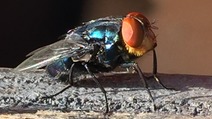
NWS is a species of parasitic fly that completes part of its lifecycle by feeding on the living flesh of warm-blooded animals and people. The flies are attracted to open wounds and body openings, where they lay eggs. Even very small wounds, such as an insect bite or a superficial scratch, may attract a female fly. A female fly can lay 200-300 eggs at a time and may lay up to 3,000 eggs during her 10- to 30-day lifespan. The eggs hatch into larvae that burrow into the wound to feed, causing worsening, often painful and foul-smelling wounds in animals and people. If not treated early, they can lead to extensive tissue damage. After feeding for about 7 days, larvae drop to the ground, burrow into the soil, and emerge as adult screwworm flies.
NWS can be particularly devastating to livestock health, with serious economic impacts. Historically, NWS was a major concern in the southern U.S. prior to its eradication in the 1960’s. A key to successful eradication was the development and release of sterile male flies using the sterile insect technique (SIT). Sterilized males are released in massive numbers at regular intervals. The wild NWS flies mate with the sterile files and their resulting eggs do not hatch. The female flies mate only once in their lifespan. Prompt detection, appropriate medication use, and SIT remain important control measures for stopping NWS.
The Missouri Department of Agriculture (MDA) continues to lead NWS response efforts in Missouri. On June 4, the MDA issued a press release with information and guidance following the detections in the U.S. The Missouri NWS Joint Working Group, established in 2025, includes staff from MDA, Missouri Department of Conservation, United States Department of Agriculture, University of Missouri Extension, and the Missouri Department of Health and Senior Services (DHSS). The DHSS Bureau of Communicable Disease Control and Prevention (BCDCP) continues to participate in Missouri’s Joint Working Group and works in collaboration with the CDC to prepare for surveillance and response activities related to NWS infections in humans.
|
Thank you for your continued partnership!
|