|
Partners,
As we continue working together to improve the health and well‑being of Missourians, I’d like to share several key initiatives and developments underway at the Department of Health and Senior Services. From statewide efforts to strengthen nutrition and chronic disease prevention, to enhancing preparedness, advancing clinical education, and expanding cross‑sector collaboration, our progress is made possible through your partnership. Thank you for the expertise, coordination and commitment you bring to this work every day.
Included in this newsletter:

Eat MO Healthy
Missouri DHSS understands that the overconsumption of unhealthy foods is a significant contributor to poor health outcomes in Missouri, and beyond. For instance, our number one cause of death is heart disease, and our second cause of death is cancer, and we know that poor diet contributes to both of these diseases through weight gain, high blood pressure, diabetes, and obesity associated cancers (which are on the rise). Therefore, DHSS has begun convening a monthly meeting with stakeholders across the state around this issue, with the following goal:
Make Missouri healthy through nutritious, minimally processed foods for all Missourians with the intent of improving health outcomes in Missouri. Solutions must be feasible, cognizant of resources, and consider citizens' knowledge of food preparation and the infrastructure citizens use to access food.
This group brings together fellow state agencies, private sector partners, research institutions and trade associations representing a variety of different vantage points on this issue, including grocers, farmers, food banks and food support programs.
|
MU, UMKC and KCU Medical Schools Commit to Nutrition Education
HHS and the US Department of Education announced that 53 medical schools are voluntarily agreeing to incorporate 40 hours of nutrition education (or a 50-hour competency equivalent) – among them are the University of Missouri, UMKC, and Kansas City University. The voluntary commitments will be implemented for students starting in the fall of 2026.
According to the announcement, the goal is to train health care professionals to “recognize, diagnose, treat, and prevent diet-related diseases” and is backed by $5 million dedicated to supporting not only medical schools but also nursing, residency, nutrition science, and dietician programs that integrate NIH nutrition education.
The commitments from medical schools follow a September 2025 letter from the Association of American Medical Colleges (AAMC) to Secretaries Kennedy and McMahon encouraging enhanced nutrition education in medical schools.
The commitment by three of Missouri’s medical schools aligns with the RHTP policy commitment that Missouri will require physicians to complete one hour of continuing medical education (CME) on nutrition. Integration of nutrition into both medical school and CME training will reinforce nutrition as an essential component of a physician’s care and treatment of Missourians.
|

Vaccine Update
On March 16, a federal judge in Boston ruled in favor of the AAP in the case of the AMERICAN ACADEMY OF PEDIATRICS, et al. v. ROBERT F. KENNEDY, JR., et al. The judge granted the following stays:
- The Court STAYS the January 2026 Memo revising the CDC’s childhood immunization schedule pursuant to 5 U.S.C. § 705.
- The Court STAYS the appointments of the thirteen ACIP members appointed on June 11, 2025, September 11, 2025, and January 13, 2026.
- The Court further STAYS all votes taken by the now-stayed ACIP.
- The judge also included language in the decision on page 44 that indicates that ACIP cannot meet this week. Press is reporting that HHS confirmed the meeting is postponed.
A stay functions as a legal halt and suspends the implementation or effect of these actions until further court review. In this case, it means the CDC’s January 2026 immunization schedule revisions, the recent ACIP member appointments and all ACIP votes taken by those members are paused and currently have no legal effect. The next step would likely be an appeal.
In Missouri, vaccination requirements for childcare and school-aged children remain unchanged. There is no current plan to modify the current regulations until and unless there is a requirement, or new evidence suggests a change is needed.
|
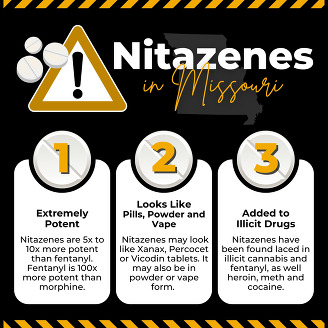
Nitazenes: A Class of Opioids Invented in the 50s Causing Problems in MO Today
DHSS, with partners from the Department of Public Safety, Department of Elementary and Secondary Education and Department of Mental Health, issued a news release today announcing statewide detections of nitazenes in wastewater. DHSS also issued a health advisory to health care providers urging vigilance, prevention and expanded access to lifesaving resources such as naloxone.
Nitazenes—some of which are over 5 to 10 times more potent than fentanyl—have recently been identified in counterfeit pills, illicit powders, unregulated cannabis products and vape liquid, often without the user’s knowledge.
Through a DPS-led voluntary school wastewater monitoring program, nitazenes have been detected in 26 of 37 participating Missouri schools since January of this year. This initiative helps communities identify emerging drug trends while protecting individual privacy. These findings align with increases in law enforcement drug surveillance data, emergency department reports and state overdose death investigations collected through DHSS’s State Unintentional Drug Overdose Reporting System.
Nitazenes were implicated in 14 Missouri overdose deaths in 2024, more than triple the total number recorded between 2019 and 2023. Health officials warn that traditional drug detection tests do not identify nitazenes, making it more difficult for individuals—and providers—to know when they are present.
The four partnering agencies strongly encourage families, educators and community leaders to:
- Talk with children and teens about risks of counterfeit pills, illicit substances and unregulated vapes.
- Understand that any illicit or unregulated substance may be contaminated with nitazenes.
- Keep naloxone on hand and know how to use it if you may be in a position to witness an overdose or if you live with someone at risk.
- Seek substance use treatment or recovery support when needed.
Resources available:
|
On The Regulatory Front
- CMS issued guidance regarding patient protections and accountability in the organ donation system. Guidance | Press Release
- CMS Center for Clinical Standards and Quality (CCSQ) released its FY2025–2028 Strategic Roadmap. Roadmap
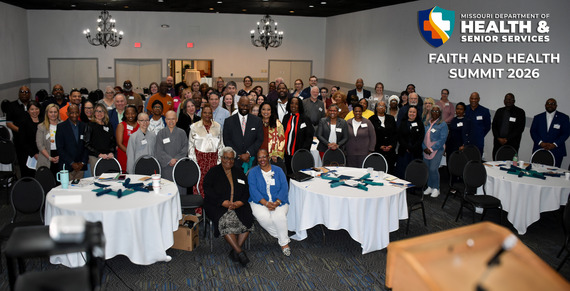 Faith and Health Summit
The Office of Minority Health and Health Equity within DHSS held the 2026 Faith and Health Summit on March 11-12 at Lake Ozark. I had the opportunity to attend the first day of the summit and interact with the office and participants. In a single comment, it was an impressive offering. Faith leaders, associations and advocacy groups were in attendance. While not everyone shares the same beliefs it was universally agreed upon that the faith community should and does play an active role in supporting the health and well-being of their communities. This common belief was evident when groups from all over the state were sharing the actions and programs they are engaged in like: substance use, housing insecurity, food and nutrition programs, emergency preparedness, workforce development, chronic disease management and mental health.
Angel Surdin, Chief of the Office of Minority Health and Health Equity, and her team are important partners in achieving the vision of the department. I encourage our internal and external stakeholders to consider how to partner with the office and our faith leaders across the state.

The Powerful Link Between Health and Nature
The DHSS and Department of Conservation (MDC) directors and senior staff convened recently for an extensive meeting to explore the role of nature in optimizing the health of Missourians.
Spending time outdoors and being physically active can improve health just as much as protecting people from environmental hazards such as tick bites or chemical contamination. Adding “nature as health” to the established pillars of healthy lifestyle medicine (nutrition, physical activity, social activity, stress management, sleep, avoidance of risky substances) is a joint interest of MDC and DHSS. To implement this, MDC shared and collected feedback on several initiatives to provide accessible healthy nature/lifestyle care to central Missourians to prevent disease. Hospitals, health care providers, public health departments, local governance entities and investors have been involved in exploring innovative ways to bring nature and health together. The departments plan to continue this collaboration.
|
Alpha-Gal Syndrome (AGS)
DHSS continues a broad multifaceted, multistakeholder effort to teach doctors and health care providers how to recognize and manage AGS. In addition to tick bite prevention efforts, Dr. Heidi Miller, our Chief Medical Officer and Dr. George Turabelidze, Chief Epidemiologist, have been presenting statewide to promote education on AGS. This includes over a dozen large conferences and physician leadership meetings. By a rough count, half of the large health center physician executives have already held a Grand Rounds lecture on AGS for their entire staff, with the other half being encouraged to do the same. In addition, this topic will be featured as a priority in a presentation to both the upcoming annual Missouri State Medical Association physician convention and annual Missouri Association of Osteopathic Physicians and Surgeons conference. This remains a high priority for the department. View the DHSS AGS webpage.
|
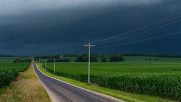
Being Prepared During Severe Weather
by Eric Hueste, Office of Emergency Coordination
Severe weather can develop quickly and with little notice. Staying informed and prepared is one of the most effective ways to protect yourself and those around you. Each year, the United States experiences approximately 1,200 tornadoes — more than any other country in the world. On average, Missouri experiences just over 30 tornadoes a year with a little less than 50% of them occurring in April and May. Tornadoes can occur any time of year and any time of day. According to the National Weather Service (NWS), tornadoes can form in minutes, and most injuries occur when individuals are not in a designated safe shelter.
In addition to tornadoes:
- Severe thunderstorms can produce straight-line winds exceeding 70 mph, capable of causing structural damage and power outages.
- Lightning strikes the U.S. roughly 25 million times annually.
- Flooding remains one of the leading weather-related causes of fatalities nationwide.
- The National Oceanic and Atmospheric Administration reports that severe storms cause billions of dollars in damage across the country each year.
To ensure readiness during severe weather:
- Know your building’s designated shelter areas.
- Monitor local forecasts and alerts throughout the workday.
- Keep emergency contact information current.
- Have multiple ways to receive warnings, including mobile alerts apps and weather radios.
- Review your buildings emergency procedures and sheltering plans.
During a tornado warning:
- Move immediately to the lowest level of the building, or designated sheltering location.
- Take shelter in an interior room away from windows and exterior walls.
- Remain in place until an official all-clear is provided. NWS estimates that 97% of dangerous tornadoes have an average warning time of 16 minutes, do not assume the threat has passed until you are notified.
Preparedness and awareness are key to safety. Taking a few moments now to review procedures can make a significant difference when severe weather occurs.
Thank you for your continued commitment to maintaining a safe workplace.
|

Prescribed Pediatric Extended Care
In August 2025, after several years of hard work and collaboration, the Division of Senior and Disability Services' Bureau of Special Health Care Needs within DHSS, in conjunction with DSS, established Prescribed Pediatric Extended Care (PPEC) as a state plan service available for children birth to age 6. PPEC allows children with medical complexities the opportunity to thrive socially, emotionally and medically by receiving multidisciplinary coordinated care, including: Private Duty Nursing, Personal Care, Physical Therapy, Occupational Therapy, and Speech Therapy through an inclusive day program setting, as opposed to receiving one-on-one nursing in the home. Thus, PPEC will also alleviate some of the critical shortage of nurses to provide PDN services in the home, as nurses in the PPEC setting are able to serve multiple children simultaneously.
We are proud to announce that Strictly Pediatrics in St. Louis has become the state’s first dual-licensed PPEC provider and will soon begin delivering services authorized through the Bureau of Special Health Care Needs’ Healthy Children and Youth Program for eligible participants in that area. The Bureau of Special Health Care Needs and DSS strive to continue outreach efforts with the goal of expanding PPEC services throughout the state.
|
Thank you for your continued partnership,
|