 Conservation Corps Minnesota is accepting applications through Dec. 15 for crew labor to work on water quality projects. These crews can help with planting rain gardens, stabilizing river channels, maintaining storm ponds and much more.
As directed by the Minnesota Legislature, the Board of Soil and Water Resources (BWSR) has appropriated $500,000 of the Clean Water Fund to be contracted for services with Conservation Corps Minnesota. This labor is available to cities, counties, soil and water conservation districts, watershed districts, metropolitan watershed management organizations and joint powers organizations of those local government units for water quality projects.
The Corps is now accepting applications for 2013 projects. Funds are available for Conservation Corps crew labor only.
All applicants must have an approved Total Maximum Daily Load Implementation Plan, a current watershed management plan, county comprehensive local water management plan, local surface water management plan, metro groundwater plan, surface water intake plan or well head protection plan that has been state approved and locally adopted.
For details, visit the Corps website where you can download the Project Application. The Corps will send award notices in January 2013 for projects being implemented from March to December. Contact Tim Johnson-Grass at 651.209.9900 x18 with any questions.
|
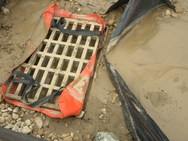 Without stormwater controls, runoff from construction sites can be a major source of contaminants flowing to Minnesota’s water resources (photo at right). Controlling that runoff and preventing contamination from sediment, nutrients and other pollutants is the goal of the MPCA’s construction stormwater program, which administers the requirements of the federal Clean Water Act in Minnesota.
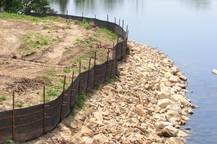
Under this General Construction Stormwater permit, certain construction sites agree to implement best management practices (BMPs) such as using special fences to catch sediment (photo below).
|
 MPCA stormwater staff are preparing to re-issue the General Construction Stormwater permit which expires Aug. 1, 2013. Updates to the permit will reflect changes at the federal level as part of the Clean Water Act.
While the primary changes address federal rules, the MPCA is also revising the permit to clarify existing language, better align with the municipal stormwater program, address defects, and incorporate changes needed to enhance compliance with the permit.
In addition, the agency will require that permit applications be submitted electronically to achieve greater efficiency.
The MPCA will provide equitable access for all stakeholders to comment on the draft permit. The MPCA will hold a preliminary information meeting on Monday, Dec. 17, starting at 9 a.m. at the Minnesota Dept. of Revenue building, with public notice scheduled to start in January 2013.
Details for the meeting are available in a message from the construction stormwater program. For more information about the permit, contact Larry Zdon at 651-757-2839.
|
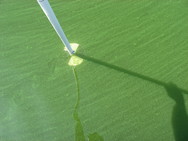 While the MPCA is currently celebrating the 40th year of achievements brought about by the federal Clean Water Act, there are remaining challenges to the goal of having clean water for drinking, recreation, aquatic life, agricultural, and industrial uses. Excess nutrients in waters within Minnesota and downstream from this state is one of the problems that has persisted. Excess nutrients make up 18 percent of Minnesota’s water impairments, and the number is expected to grow in the coming decade.
Minnesota is one of a dozen states in the Mississippi River Basin developing a statewide- action strategy to achieve and track measureable progress for reducing point and nonpoint nutrient losses. The strategy is driven by a need to reduce Minnesota’s contribution of nitrogen and phosphorus pollution to downstream waters such as the Gulf of Mexico and Lake Winnipeg, as well as in-state nutrient reduction needs to protect and improve Minnesota waters from excess nutrients.
Building on the scientific findings about nutrient levels, sources, trends and solutions, Minnesota is using a collaborative approach to make progress toward milestone nutrient reduction targets. The strategy, when complete, will:
- Identify current progress under existing programs and efforts;
- Identify ways to close the gap between status quo progress and progress needed to achieve nutrient reduction targets;
- Identify the most promising strategies; and
- Ensure that collective activities around the state are working to achieve our goals.
Agencies and organizations can use the strategy to focus and adjust state-level and regional programs. In addition, watershed managers and local water planners can translate strategy ideas and priorities into effective local BMP implementation. Minnesota’s state-level strategy will be completed by the end of 2013.
Agencies involved in developing the strategy include: Board of Water and Soil Resources, Department of Agriculture, Department of Natural Resources, Metropolitan Council, MPCA, Department of Employment and Economic Development, Department of Health, University of Minnesota-Extension, U.S. Geological Survey and Natural Resources Conservation Service.
Stakeholder input is vital. Success depends on actions from many people around the state. For more information on the strategy development process and opportunities to provide feedback, visit the MPCA website or email nutrientreduction.pca@state.mn.us.
|
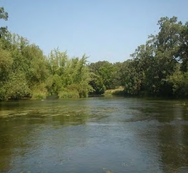 The MPCA recently released a water quality monitoring and assessment report for the Mississippi River-St. Cloud watershed. The watershed includes all or parts of Benton, Meeker, Mille Lacs, Morrison, Sherburne, Stearns and Wright counties. The stretch of the Mississippi River which flows through this watershed is well known for the quality recreational opportunities it provides, and its monitoring and assessment results will be covered in a separate report.
Surface water monitoring took place in the Mississippi River-St. Cloud watershed from 2009 through 2011. The focus of the monitoring was to characterize the fish, macroinvertebrates, habitat and water chemistry of rivers, streams and lakes in the watershed. More than 70 river and stream sites and 69 lakes were sampled.
Results of the monitoring and assessment efforts found 15 stream segments impaired because of unfavorable biological communities (fish and macroinvertebrates), while elevated nutrients and bacteria are common water quality concerns throughout the watershed. Improvements could be made by reducing runoff in agricultural areas, protecting remaining forested areas, controlling stormwater runoff, improving and adding riparian buffer strips, and reducing total phosphorus levels.
To view the full monitoring and assessment report, visit the MPCA’s Mississippi River – St. Cloud Watershed webpage. This report is one of about 80 being developed during the next decade by the MPCA for all of Minnesota’s major watersheds.
With dollars provided by the Clean Water Fund (from the Clean Water, Land and Legacy Amendment), the MPCA currently conducts and oversees a variety of surface-water-monitoring activities that support its mission of helping Minnesotans protect the environment. To be successful in preventing and addressing problems, good information is needed about the status of Minnesota’s waters, potential and actual threats, options for addressing the threats, and data on how effective management actions have been. The MPCA’s monitoring efforts are focused on providing that critical information.
|
The U.S. Environmental Protection Agency (EPA) recently approved the TMDL reports for several water bodies in Minnesota:
- Lake Shaokatan, 950 acres in size with a maximum depth of 10 feet, in southwest Minnesota in Lincoln County, is impaired by excess nutrients. The Yellow Medicine River Watershed District led this effort, collecting water samples, obtaining GIS data and publicizing the project. The report, which the EAP approved on Sept. 20, has identified phosphorus sources as runoff from the surrounding landscape as well as the lake bottom.
- Mill Creek in central Minnesota is a tributary to the Sauk River and is impaired by bacteria. Pearl Lake, about 750 acres in size with a maximum depth of 18 feet, is located southwest of St. Cloud and is impaired by excess nutrients. Leading the project are the Sauk River Watershed District and Stearns County. Approved by the EPA on Sept. 25, the report calls for reducing bacteria levels in Mill Creek through agricultural best management practices such as feedlot runoff controls, and reducing phosphorus levels in Pearl Lake by targeting multiple nonpoint sources such as on-site sewer systems.
- Carver-Bevens Creeks, in Carver County, southwest of the Twin Cities metro area, is impaired by bacteria and turbidity. Leading the project is Carver County. In an earlier phase the county completed bacteria TMDLs for these creeks and have since worked to reduce bacteria levels by focusing on manure management, animal feedlots and septic system updates. In the recent turbidity report, approved Sept. 26, the county has identified stream channel erosion and stormwater runoff as the sources of turbidity.
The MPCA will now work with local partners to develop implementation plans to restore these water bodiies.
|




