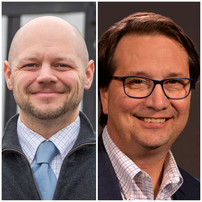
From Nick Thompson, Deputy General Manager-Capital Programs and Brian Funk, Acting Chief Operating Officer
Our Strategic Plan describes the actions we’ll take to emerge from the pandemic as a stronger, better service provider. But even before the pandemic began, we were facing a climate crisis that demanded more attention.
And so, while we take meaningful and immediate steps to better serve our customers, we must also be thinking about how we can make our facilities and our fleet more sustainable in the years ahead.
To help us on our path, we are creating our agency’s first Zero Emissions Bus Transition Plan.
This plan will be developed over the coming months with input from many stakeholders, including the technicians and operators who will ultimately be responsible for maintaining and operating any new technologies we adopt.
Thank you in advance for sharing your valuable perspectives as this plan is put together. Thank you also to the leadership in Engineering & Facilities, Bus Maintenance, Service Development and Community Outreach who are guiding this work.
You may be wondering why a plan like this is needed. One of the most important reasons is to build consensus around when, where and why we would use electric buses or other new zero emission technologies in the future.
Staff and community input, service plans, conversations with peer agencies and other data will all help inform the detailed plan that will be put forward early next year. But we have already established a set of primary considerations, including:
-
Technical viability. Electric buses, batteries and charging equipment are all emerging technologies that manufacturers and transit agencies like ours are just beginning to learn about. So, many important questions remain, and we must move forward deliberately but carefully so we can continue to deliver reliable service.
-
Equity and environmental justice. Many of the neighborhoods we serve are disproportionately impacted by air pollution. While electric buses are not, by themselves, a solution for air quality concerns they can be a part of a larger, regional effort to create healthier environments for all.
-
Cost. Electric buses and chargers currently cost more than diesel buses. Federal grants and other partnerships can help cover the cost difference, but we must always consider what these investments mean to our own capital and operating budgets.
While this planning effort is underway, the work to integrate more electric buses into our fleet has already begun.
Our proposed Capital Improvement Plan calls for the purchase of eight 40-foot electric buses in 2022 and up to 70 electric buses in 2025. We are working to identify other funding sources that could allow us to buy more electric buses in the future, if the technology is ready.
To support this growing fleet, charging equipment is being installed at our new Minneapolis Bus Garage.
Of course, our first electric buses are already here. Unfortunately, issues with charging equipment have prevented their use for an extended period. But we believe they will be able to re-enter service before the end of the year, and we have gained valuable knowledge through this experience.
So, thank you again for participating in this important conversation and helping us embark on a necessary, exciting evolution of our bus fleet.
Learn more and join the conversation
|
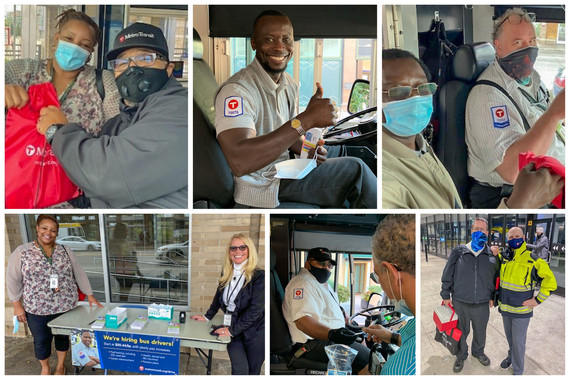
Operators have been greeted and thanked en-route during several recent operator appreciation event led by garage managers. The last scheduled event was held Thursday morning in downtown Minneapolis. Thank you to the managers at Ruter Garage who spearheaded this effort.
Employee Recognition Event is November 15
All Council employees are invited to the 2021 employee recognition event on Monday, Nov. 15, at 9 a.m. The annual event will be presented online. If you have not received an invite or would like to learn more, please email Paula Crane.

The annual Charitable Giving Campaign is being extended through Friday, Nov. 12.
During the campaign, you are encouraged to support eligible charities by making a one-time donation or enrolling in automatic payroll deductions that will go to the charity of your choice. To donate please visit this link.
Answers to a few common questions were provided in last week’s Insights.
As part of the campaign, employees are invited to bring non-perishable food items to the Heywood Office on Saturday, Nov 6, from 9 a.m. to 1 p.m. Items that have been collected in recent weeks will be distributed to several local food shelves. Find a list of most-needed items and more information in this flyer.
Winter Super Bowl hats are also being sold to raise additional money for charities supported through the campaign. Learn more by reading this flyer.
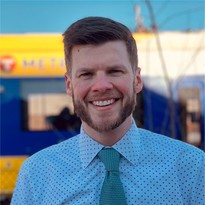
Charles Carlson, who currently services as the director of the Bus Rapid Transit Projects Office for Metro Transit, will become the executive director of Metropolitan Transportation Services (MTS) in December.
After interning in Service Development, Carlson began his career at the Council as a transportation planner in 2006. He has been with Metro Transit since 2008, serving as facilities planner, transitway projects manager, Bus Rapid Transit senior manager and, since 2018, as the director of BRT Projects. Carlson will remain in his director role through the opening of the METRO Orange Line on December 4.
At MTS, Carlson will lead the Council's long-range transportation planning efforts, oversee contracted services and the Metro Mobility program.
"This is an exciting new role that will allow me to build on and support all the work I've been involved in to this point," Carlson said. "I look forward to championing Metro Transit's BRT and capital projects as we work together to create a stronger, better and more integrated transit system."
Carlson is replacing Nick Thompson, who became Metro Transit's deputy general manager of capital programs earlier this year.
The Council also announced the hiring of a new deputy regional administrator this week, Georges Gonzalez. Gonzalez has more than 25 years of experience working in finance, shared services and customer service roles. He most recently served as the business and customer services director for Pinellas County Utilities in Clearwater, Fla.
|
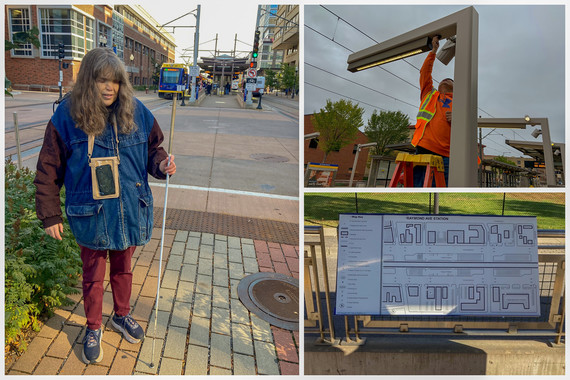 Clockwise from left: Sheila Enerson using the Aira app during a recent trip on the METRO Green Line, a beacon being installed at the Raymond Avenue Station and a new tactile map at the Raymond Avenue Station.
On a recent Friday morning, Sheila Enerson stepped out of her home, boarded a Route 17 bus, transferred to the METRO Green Line at Nicollet Mall, and made her way to the University of Minnesota.
It’s the kind of trip that, even after 30 years of taking transit, she’d normally avoid.
But on this day, Enerson, who has been blind since birth, navigated with the help of a trained representative who, through an app called Aira, could see each step she was making through her cell phone, hung from her neck and camera on.
Metro Transit recently began piloting the service to understand how it could help people like Enerson use transit more confidently.
“This gives me a lot more freedom,” Enerson said. “I feel like I can take the light rail right now instead of feeling like, ‘Oh no am I on the tracks?’”
The introduction of the Aira app isn’t the only step being taken to make transit more accessible to individuals who are blind or low vision, either.
In November, a group of blind and low-vision customers will be invited to help test technology that will provide audio instructions at and near the Green Line’s Raymond Avenue Station. The instructions come through an app using Bluetooth and beacon technology fixed to the station and other points nearby.
New tactile maps that can orient blind or low-vision customers are also being installed at the Raymond Avenue Station.
“The long-term goal of all these pilots is to understand what works best under certain conditions, and how we can deploy them at a larger scale,” Transit Information Manager Ben Rajkowski said. “It’s about taking more of a holistic approach.”

Fifteen years ago, when Malika Kifal (Mah-lee-ka Key-fall) immigrated from Morocco to Minnesota, she relied on transit for daily life.
“I’ve been outside walking to a stop or waiting in the cold or rain for a bus,” Kifal said. “I know what it’s like to be a customer.”
After a few years as a school bus driver, her husband suggested applying at Metro Transit. She started part-time on weekends while driving a school bus. Two years later, she decided to go full-time.
“Driving a school bus is working paycheck-to-paycheck,” she said. “There are long breaks in the summer and during holidays when you don’t get paid.”
Kifal is grateful for the consistent work, good pay, and benefits Metro Transit provides. It not only helps her live a more stable financial life with her husband and two boys, but also affords her time to be with her family. “I’ve found some people can complain a lot,” Kifal said. “I guess as an immigrant, I find myself being more grateful for opportunities.”
She plans to work at Metro Transit until retirement, serving customers who rely on transit as she once did.
“On local routes, there’s lots of interactions with customers who use transit to get groceries or have no other way to get around,” she said. “I truly enjoy helping those people.”
We’re hiring!
Efforts to recruit and hire new bus operators are ongoing. One-day hiring events will be held at the Instruction Center on November 13 and November 16. Learn more at metrotransit.org/drive.
Apply to become a train operator
Bus operators who are interested in transferring to light rail are invited to apply to become a train operator through Monday, Nov. 22. Operators who pass agility testing and an interview will go on an eligibility list according to seniority. Individuals on the eligibility list will be trained as positions open. To learn more and apply, visit metrocouncil.org/employment.
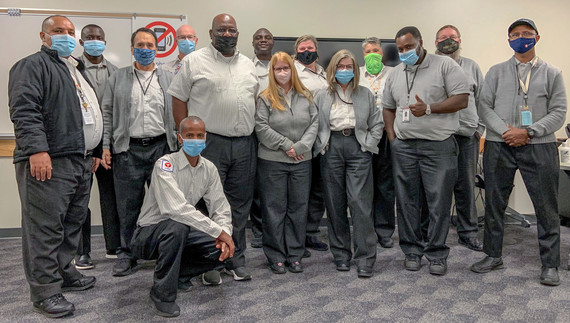 Mentors and mentees met this week at the Instruction Center, providing mentees a chance to reflect on their first few months on the job and mentors the chance to offer advice based on their experience.
Full-time bus operators with at least three years of experience are invited to support new hires by joining the Operator Mentorship Program.
Mentor applications will be accepted through Friday, Dec. 3, and will be reviewed by a panel of ATU members and management. Paper forms will be available at each garage.
Operators who are selected to serve as mentors, are asked to meet regularly with mentees during their first year of service, ride with their mentees to observe and offer advice, and to attend meetings with fellow mentors and mentees and program organizers.
All time spent mentoring will be paid at an operator’s regular wage.
For more information, email Bus Operator Apprenticeship Coordinator Alec Johnson or call 612-349-7022.

Frontline employees who want to earn supervisory experience are encouraged to apply for the Leadership Academy. Applications will be accepted online from November 1 to November 15, and the next group of participants will begin in March 2022.
Employees who participate in the Leadership Academy spend six months working with mentors in full-time acting supervisory roles and take online and instructor-led classes. Graduates earn the equivalent of one year of supervisory experience that can be used to meet minimum qualifications for future job openings.
Available positions include assistant transportation manager, transit supervisor, transit control center supervisor, Transit Information Center supervisor and bus maintenance supervisor.
Human Resources staff will be visiting facilities to share more information and answer questions. Review the schedule here.
|

Police officers Dmitriy Vecherkov and Timbutu Wilkerson and TCC Supervisor Jodi Arreola earned this commendation for assisting a couple who called for help while using the 28th Avenue Park & Ride.
We wish to compliment your emergency operator, who the 911 employee transferred us to, for staying on the phone with us until police arrived. We had just parked and were getting ready to go to the Vikings game when kind of out of nowhere a person came toward our car. This individual wanted us to open our car and/or our window, which we didn’t do as we felt somewhat threatened. Two officers arrived a few minutes apart. The first officer got the person away from our vehicle and the second officer came to make sure we were OK. We are 72 and 74 and want to express our extreme gratitude for the police officers and emergency dispatcher whose response in this event was greatly appreciated.
- Dixie and Jim
|
Employees are encouraged to get involved in several Employee Resource Groups, including serving in leadership positions.
-
Advancing Women in Transit (AWT) is seeking nominations for chair, vice chair, coordinator, and special events coordinator. To submit a nomination, complete this online form. For more information, contact Amina Wolf or Carri Sampson.
-
The Pride ERG is seeking nominations for chair, vice chair and coordinator. To submit a nomination, complete this online form. For more information, contact Nia Colebrook or David Hanson.
-
ERGs for employees who identify as having a disability or as Black Indigenous or People of Color (BIPOC) are being organized. For more information, contact Sarah Berres.
What is an Employee Resource Group (ERG?)
An ERG is a Council-supported group of employees who share a common characteristic or interest, or allies of that group. Members are a resource to one another and the organization. AWT and the Pride ERG as the organization's first Employee Resource Groups, or ERGs.
Employees can spend up to two paid hours a month participating in activities related to Council-recognized ERGs, such as attending monthly meetings. Employees who would like to participate in an ERG should speak with their manager or supervisor.
Nursing parent survey: Employees who have had experience nursing are invited to participate in an online survey that will help continue efforts to make Metro Transit a more breastfeeding friendly workplace. The survey poses questions about resources and support needed to achieve a successful nursing experience while continuing to work. Frontline staff are also being sought to participate in upcoming focus groups on this subject. For more information, contact Sarah Berres.
Blue Line Extension: Several in-person and virtual workshops will be held in November to invite feedback on updated design plans for the Blue Line Extension, which will bring light rail from Minneapolis to Brooklyn Park. Review the dates and times, and learn more about the updated plans, at metrocouncil.org.
MPS offering Student Passes to middle schoolers: Minneapolis Public Schools has given parents of eligible middle school students the option of receiving a Student Pass by opting out of school bus service. The district began offering families the option as another way to lower demand amid a shortage of school bus drivers. Middle schoolers who receive a Student Pass will be able to use their passes between 5 a.m. and 9 p.m. daily.
|