From General Manager Wes Kooistra
While the pandemic has reduced ridership, we’ve continued to keep buses and trains running so people can use transit to get where they need to go.
However, like many transit agencies and other transportation providers across the nation, we are facing a significant operator shortage. We are falling short of honoring our commitments to our customers because we do not have enough people to meet our schedules, and this is unacceptable.
Reliability is a bottom line for our riders, and it is a bottom line for Metro Transit.
Since March, we’ve been working hard to hire more operators. We’ve held multiple one-day hiring events and are planning more. We’ve streamlined the hiring process and provided on-site CDL training. We offer hiring and referral bonuses for successful hires. Today, we have 20 operators in training, but we are still about 80 operators short of what we need to meet our current schedules.
So, beginning December 4, when the next quarterly service changes go into effect, we are adjusting service to reduce our operator need by 60 operators. This represents about a 5% reduction in current systemwide service hours. This level of reduction is necessary to improve reliability to the standards we share with our customers.
Reducing service is never an easy decision. In planning the December 4 service changes, we’ve considered ridership levels, reliance on transit service, and the availability of alternative routes. Service reductions will be accomplished on select routes through:
-
Reduced frequency
-
Reduced hours of service
-
Route suspensions where other options are available
Detailed information about the routes that will be affected will be shared with our customers beginning next week.
Of course, reducing service is never something we want to do. These changes will be inconvenient to many riders and even more difficult for others. But we also hear from many customers that they’d rather have a schedule they can count on than one that presents options that may not be fulfilled.
As we continue to work to overcome the considerable challenges of the pandemic and now the job market, I want to thank all of you for your work and your efforts to provide reliable service to our customers. This is another challenge to overcome, and we remain committed to provide a stronger and better service in the future.
At a Glance: December 4 service changes
Here are a few highlights of the service changes that will be made on December 4:
-
Five local routes will be fully suspended, including the 16, 19 and 84, which provide additional service in corridors served by light rail or Bus Rapid Transit lines.
-
Trips on several local routes, including the 2, 5, 6, 10, 17, 18 and 21 will run less frequently. Core local routes will continue to operate every 10 to 15 minutes.
-
Nine express routes will be suspended, including the 134 and 579, and others will have reduced frequency, including the 250 and 270.
-
The METRO Orange Line will open. Trips will operate every 15 minutes during the week and every 30 minutes on Saturdays and Sundays. Several new routes will be introduced or restructured to better connect to Orange Line stations.
-
The METRO A Line will operate every 12 minutes, instead of every 10 minutes, and the METRO Red Line will operate every 30 minutes on weekdays, instead of every 20 minutes.
-
Light rail trips will continue to operate every 12 minutes during the day, a change that took effect on October 23.
-
Route 94 bus stops will be restored at I-94 and Snelling Avenue to provide access to the Midway and Allianz Field.
View Service Development’s presentation about the December 4 service changes
|
All Council employees will receive a $500 payment recognizing efforts to respond to challenges presented by the COVID-19 pandemic. The payment was unanimously approved by the Council this week and will appear on the November 12 paycheck.
“We know that this pandemic has really required extra efforts,” Chair Charlie Zelle said. “We, as a Council, believe that we should reward and recognize all Council employees because every single person has really made extra efforts.”
Proof of vaccination
As a reminder, employees who have their proof of COVID-19 vaccination verified by the Council by Friday, Nov. 26, will receive a $150 payment on their December 10 paycheck.
Employees who have not had a proof of vaccination verified must test weekly to report for on-site work. The vast majority of on-site employees are meeting the proof of vaccination or testing requirement.
Currently, the Council is not collecting COVID-19 vaccine booster information. Please do not attempt to upload booster information into Employee Self-Service (ESS) until further notice.
Return to office
Employees who are currently teleworking can return to the office without prior approval beginning Monday, Nov. 1.
Employees who will be working on-site more than six days per pay period will have an assigned workstation; those working on-site less often will have access to shared workstations.
As a reminder, only employees whose positions are listed on the priority parking list can access employee parking areas on the Metro Transit Campus between 1 a.m. and 5:30 p.m. on weekdays.
Employees whose positions are not on the priority parking list are encouraged to use transit, bike, walk or use other parking options. Free parking spaces have been reserved for Metro Transit employees from 6 a.m. to 6 p.m. on weekdays at 712 E. Lyndale Ave. N, just west of the Minneapolis Farmer’s Market.
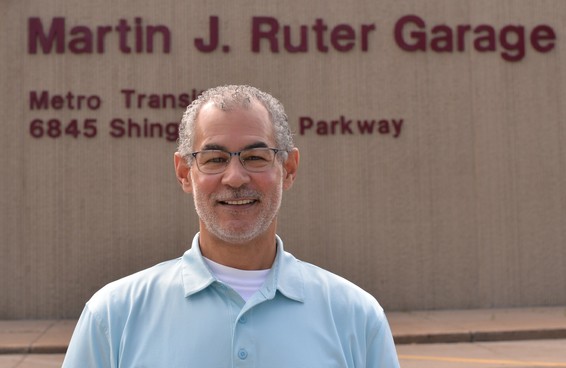
Many people who work at Metro Transit take on new responsibilities and roles throughout their careers. Career Tracks highlights the paths employees have taken to their latest assignment and where they see themselves going next. To learn more about career opportunities at Metro Transit and the Metropolitan Council, visit metrocouncil.org/employment.
How did you begin your career at Metro Transit?
I had three young kids and was working four jobs to support them, which was exhausting. Metro Transit was offering good pay and benefits, so I decided to apply. After four years, I stopped working all my other jobs and became a full-time bus operator. I never thought this was something I’d do, but it was fitting – I’d taken the bus to Washburn when I was in school; I liked driving; and I really knew the Twin Cities. It also helped that my parents were Lutheran pastors, because I grew up learning about people and liked that this job gave me an opportunity to help.
What were your career goals and what steps did you take to achieve them?
After about ten years here, I thought I’d retire as an operator. I wasn’t super-ambitious and didn’t have a lot of direction, but I got pulled aside and was encouraged to apply for the Leadership Academy. I thought: ‘You know, you might be onto something!’ I applied and got the chance to serve as an assistant transportation manager at South Garage. At the time, the program was still being developed and my mentor (Manager Frank Stumpf) told me I could sit at a computer, or I could dive in and learn everything I wanted to know. I hounded the guy to the point that he asked me to stop asking so many questions. I learned so much, and I also found out that I really enjoyed the job and had a knack for it.
I went back to driving, applied for jobs but would freeze up in the interview. I practiced in front of a mirror, rehearsed with my sister, and eventually I got jobs as a rail supervisor and Transit Control Center supervisor. This (assistant transportation manager) is the job I’ve been chasing for years, though. I’m glad I stuck with it and am incredibly happy I finally got it.
What advice do you have for others who want to take on more or different responsibilities?
Usually, the first or second time you won’t get through. So, you have to have thick skin, and you have to keep trying if you really want something. It’s also a good idea to network, contact HR and start letting people know you’re interested so your name gets repeated.

Leadership Academy applications will be accepted November 1-15
Frontline employees who want to earn supervisory experience are encouraged to apply for the Leadership Academy. Applications will be accepted online from November 1 to November 15, and the next group of participants will begin in March 2022.
Employees who participate in the Leadership Academy spend six months working with mentors in full-time acting supervisory roles and take online and instructor-led classes. Graduates earn the equivalent of one year of supervisory experience that can be used to meet minimum qualifications for future job openings.
Available positions include assistant transportation manager, transit supervisor, transit control center supervisor and bus maintenance supervisor. Find the application beginning November 1 at metrocouncil.org/employment.
|

The annual Charitable Giving Campaign continues through Friday, Nov. 5. During the campaign, you are encouraged to support eligible charities by making a one-time donation or enrolling in automatic payroll deductions that will go to the charity of your choice. To donate please visit this link. Here are answers to a few common questions:
Why donate through the Charitable Giving Campaign?
Signing up for recurring donations makes giving easier, because money is automatically withdrawn from your paycheck. For example, if you pledged $500, $19.23 would be taken out of each check, from January 2022 through December 2022.
When the next Charitable Giving Campaign begins, you will need to re-enroll to continue giving in 2023. If you take no action, no further deductions will be made. You may decide to stop donating at any time.
In addition to simplifying the giving process, contributing through the campaign helps demonstrate Metro Transit and the Council’s collective commitment to the communities we serve.
Are one-time contributions also deducted from my paycheck?
No, one-time donations can be made online using a credit card. If you are submitting a paper pledge form, you will need to include a check.
Are contributions deducted pre-tax?
No, one-time and recurring donations are deducted after taxes.
What is the ATU Local 1005 Hardship Fund?
Among the eligible charities employees can donate to is the ATU Local 1005 Hardship Fund. Administered by Working Partnerships, the fund helps local union members pay for things like food, utilities, and childcare during times of need. Learn more about fund eligibility and guidelines.
Resources
Participate in these Charitable Giving Campaign fundraisers
For more information about Metro Transit’s fundraising events, contact Julie Obedoza.
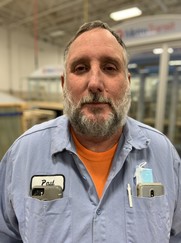
Before starting his career at Metro Transit, Paul Poppie had repaired tanks, trucks, and other equipment for the U.S. Army and earned a degree in diesel mechanics. So, when he landed his first job fueling buses at South Garage, he almost didn’t make it past the first year. “I had a new, fully stocked toolbox and was thinking, ‘I didn’t go to school for this,’” Poppie said.
It didn’t take long to move up, though, and Poppie will retire next week after a 37-year career in transit.
During his time in Bus Maintenance, Poppie worked at nearly every garage but spent most of his time at Nicollet, where he worked for more than 20 years. In addition to working at several locations, he also had a variety of different roles over the years, performing engine tune-ups, inspecting new buses and repairing wheelchair lifts, powertrains, injectors and transmissions.
Poppie found even more variety when he moved to Facilities Maintenance, where he spent the last five years of his career as a facilities technician. “We do everything in this job – fixing toilets or sinks, changing out glass, cutting grass to who knows what,” he said. “Every day is different. This has probably been my favorite job because you do so many things.”
In retirement, Poppie plans to sell his home in White Bear Lake and move with his wife to northern Minnesota, where he could spend more time hunting, fishing and boating.
Learn more about employees who have retired with 30+ years of service
|

Nicollet Operator Michael Gray recently received a commendation from a customer for their customer service.
This driver went out of his way to accommodate me. I was still far away from the bus stop but was carrying bags of groceries and he waited for me to board. I really appreciated that and know drivers don’t have to wait for people not at the bus stop. His actions meant that I didn't have to sit and wait another half hour in the heat with fresh food. He was kind and accommodating to other customers and drivers on the road. He represents Metro Transit very well.
Jane P
|

Joe Waldoch, who joined Metro Transit as a light rail helper in March, passed away on Wednesday, Oct. 20, following a battle with cancer.
Waldoch, 59, was remembered by co-workers as someone with a strong work ethic. “He was there, working through the pain, and would rather be sent home than call in, knowing he had people there who depended on what he could accomplish in a shift,” fellow helper Laura Chilson said.
Waldoch’s wife of 24 years, Yvonne, said he was a “special person” who enjoyed fishing and gardening and eagerly volunteered in his hometown, Bloomington. Waldoch was active in the Boy Scouts, the Bloomington Sister City Organization, and the American Legion, among other organizations. “He didn’t know the word ‘no,’” Yvonne Waldoch said. “He always said yes.”
Waldoch is survived by Yvonne Waldoch, three sons, three brothers and a sister. Services were held on Wednesday, Oct. 27, in Bloomington. View Waldoch’s obituary at startribune.com.
Note: Moving forward, we are committing to sharing information about active employees who pass, with permission from family. Please work with Drew Kerr if this situation arises.
|
Members of the Equity & Inclusion Unit and Equity & Inclusion Team are looking for feedback from all employees to develop a shared definition of transit equity before the end of the year. Add these upcoming one-hour virtual open houses to your Outlook calendar, and join the conversation at any time.
Interested in joining the Equity & Inclusion Team?
The Equity & Inclusion Team is seeking representatives from the Ruter, South, Heywood and Nicollet garages, light rail and the Metro Transit Police Department. Applications will be accepted through the end of November.
Submit your application online
Equity Award nominations deadline November 3
Nominations for the new Equity and Inclusion Award award, part of the annual employee recognition event, can be submitted through November 3. Nominate any employee here.
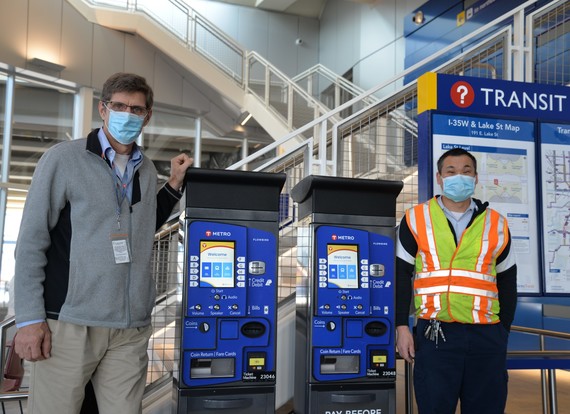 Revenue Operations Manager Dennis Dworshak, left, and Lead Senior Revenue Equipment Technician Chris Sagerer with new ticket vending machines at the I-35W & Lake Street Station.
New and improved ticket vending machines are among the features customers can look forward to using when the METRO Orange Line opens in December.
New machines being installed at each Orange Line station include several improvements from previous versions, including:
-
The ability to issue receipts that can be redeemed for future fare purchases. Until this point, ticket machines could not issue change to customers who used cash and overpaid.
-
The option of purchasing multiple fare types in one transaction, instead of making multiple purchases to buy different fare products.
-
An integrated trip planner that allows customers to enter their destination and see which routes to take.
-
Audio instructions in English and Spanish, and text instructions in English, Spanish, Somali, Vietnamese, Hmong, and Karen. In addition, audio plays through a speaker instead of requiring users to plug in headphones.
The machines accept all forms of payment, including cash, tokens, credit, tap for credit, and transit vouchers.
Revenue Operations Manager Dennis Dworshak said the new machines respond to feedback Metro Transit received after the METRO A Line opened in 2016. The A Line and C Line also have ticket vending machines to allow for off-board fare payment, speeding up boardings.
The improved machines are expected to be used on all future BRT corridors, including the METRO D Line, opening in 2022.
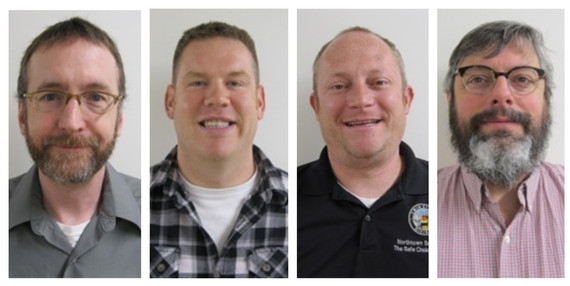
Rail Transportation welcomed four new rail supervisors. They are, from left to right:
-
Chris Becker, who joined Metro Transit in 2014 and has served as a bus and train operator.
-
Ryan Knoll, who previously served with the Minneapolis Police Department.
-
Phil Choukalas, who previously worked at BNSF Railway as a conductor, switchman and yardmaster.
-
Jody Moore, who has 20 years of railroad experience and has worked on passenger rail projects across the country.
Fare promotion ending October 31: A fare promotion that discounted regular adult fares to $1 for the past two months will end on Sunday, Oct. 31. All buses will need to be probed by revenue operations staff on Monday, Nov. 1, to revert to the previous fare structure. Operators should pull into vault stations on that day, even if they are parking outside. Operators who encounter issues with transfers on or after November 1 should record the ride using Key 9 and allow the passenger to board. Ridership has increased since the start of the promotion, but the rise is largely attributed to the resumption of in-person classes. Revenue operations will consider results from the fare promotion as part of a 2022 review of the fare structure.
Free breast cancer screenings at Heywood: HealthPartners' mobile mammography unit, "Mammo a-go-go," will visit the Heywood Garage on Tuesday, Nov. 2, to provide employees access to free breast cancer screenings. Appointments can be made between 7 a.m. and 10 a.m. To schedule at 15-minute appointment, call 952-993-3700.
Election: Operators can help get out the vote by displaying “Go Vote Nov. 2” using PR-Code 18 through the end of the day Tuesday, Nov. 2. Several municipal and school board elections will be held on Tuesday across the region. If possible, employees who are voting in-person are encouraged to vote before or after their normal work shifts. Polls will be open from 7 a.m. to 8 p.m. on Election Day. In-person early voting is also underway. Absentee ballots that are being returned by mail must be postmarked on or before Election Day. Learn more at sos.state.mn.us.
Update banking information in ESS: Employees who are customers of TCF Bank/Huntington Bank and who have been notified that their bank routing and/or bank account numbers have been changed should login to Employee Self Service (ESS) and update this information as soon as possible. For assistance with ESS, email ess.hris@metc.state.mn.us. As a reminder, all employees can join the Transit Operations Federal Credit Union, officed out of the Instruction Center, at 725 North 7th Street, Minneapolis. The credit union is open Tuesday through Friday from 9 a.m. to 4 p.m. Appointments are not necessary. For more information, call 612-338-9985 or visit tofcu.org.
|