|
Oct. 2024
View this as a webpage
Condition onboarding and training
Thank you to those who provided feedback about CYSHN condition staff onboarding and training at our 2024 Local Public Health (LPH) conference. Summarized findings include:
- Requests for varied learning methods for onboarding new contacts such as:
- One-on-one orientation with a Minnesota Department of Health (MDH) CYSHN representative.
- Video tutorials for documenting in MEDSS.
- Talking points to use with families when conducting LPH assessments.
- Strong interest amongst LPH contacts to participate in routine training opportunities on topics such as:
- Condition-specific information.
- Documentation in MEDSS.
- Family supports and resources.
Your feedback will inform an onboarding and training plan that will support both new and established CYSHN condition LPH contacts.
As part of our efforts to improve the onboarding and training experiences, you may notice some changes to the LPH partners SharePoint webpage. New CYSHN condition contacts can email Dana Janowiak, CYSHN nurse consultant at dana.janowiak@state.mn.us to initiate the onboarding process.
New feature in MEDSS
Based on feedback received from local public health staff, a CYSHN related event notification will appear on a child’s record if the child has another CYSHN event in MEDSS. For example, if a child has a Defects event and a cCMV event and the user opens the Birth Defects event, you will see “Congenital Cytomegalovirus: XXXXXXXXX [Open]” in green font with a blue hyperlink to the child’s cCMV event. Clicking on “Open” will take you to the child’s cCMV event in MEDSS.
 It’s important to note that users will only be able to see CYSHN related event notifications for the types of events they have access to, and at this time, it will only be available for programs administered by the MDH Children and Youth with Special Health Needs (CYSHN) Section: Birth Defects, Congenital Cytomegalovirus (cCMV), Hearing Loss (EHDI), and Heritable (Bloodspot) Conditions.
Users can expect to begin seeing CYSHN related event notifications in MEDSS likely sometime in October, although an exact date has not yet been finalized.
CHSTRONG KIDS update
Survey recruitment has been attempted for caregivers of 2,287 children living with certain congenital heart defects who were born in Minnesota.
The standard mailing process of sending surveys to at least one caregiver of eligible children was complete as of Oct 1. As of September 26, 739 surveys have been completed by caregivers of these Minnesota-born children with a response rate of 36% for cases that have finished recruitment. All three survey sites in the U.S. have over 1,500 completed surveys combined.
Additional information about the CHSTRONG KIDS survey can be found at the links below:
|
Program-specific updates
Birth defects monitoring and analysis
Thank you for supporting FASD awareness month and Folic Acid Awareness Week!
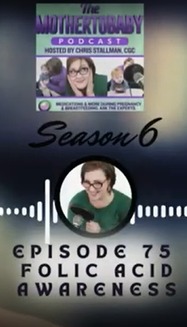
September was a busy and impactful month for health awareness, and we are grateful to all the local public health staff who contributed to raising awareness for both Fetal Alcohol Spectrum Disorders (FASD) Awareness Month and Folic Acid Awareness Week.
Our partners at Proof Alliance want to extend a heartfelt thank you to everyone who joined in raising awareness about the impact of FASD on children, families, and communities. A special highlight this year was the official proclamation by Governor Tim Walz declaring September 9th as FASD Awareness Day in Minnesota, which amplified efforts to promote prevention, education, and support.
To learn more about FASD and ways to stay engaged throughout the year, visit Proof Alliance's FASD Awareness webpage.
We also want to extend our thanks to those who joined us in supporting Folic Acid Awareness Week and promoting the role folic acid plays in preventing neural tube birth defects. A special shout-out to everyone who attended our listening session and Q&A with the National Birth Defects Prevention Network (NBDPN). If you missed the session or want to revisit the podcast, you can listen on the Mother to Baby website.
|
Longitudinal follow up
Upcoming Newborn Screening Advisory Committee meeting
Please join the Newborn Screening Advisory Committee (NSAC) for the convening of the fall meeting. This meeting will be held in-person and streamed online. A final agenda will be posted to the MDH newborn screening website at least 48 hours prior to the start of the meeting.
You can register at: NSAC Fall Meeting Registration.
-
Location: Wilder Foundation, 451 Lexington Pkwy N, St Paul, MN 55104 | Auditoriums A & B and Streamed online
-
Date: Oct. 8, 2024
-
Time: 1p.m. – 4 p.m.
If you have any questions about the registration process, please email health.nsac@state.mn.us.
CMV fact sheet for expecting parents now available in Hmong, Somali, and Spanish
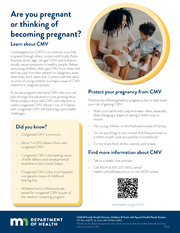
We are excited to announce that our CMV flyer, titled "Are you pregnant or thinking of becoming pregnant? Learn about CMV," is now available online in English, Hmong, Somali, and Spanish (PDF).
This resource aims to provide essential information about cytomegalovirus (CMV) for expectant parents and those planning for pregnancy.
We encourage you to share this valuable resource with your communities to promote awareness and education.
|
Thank you for raising awareness during Sickle Cell and Newborn Screening Awareness Months!
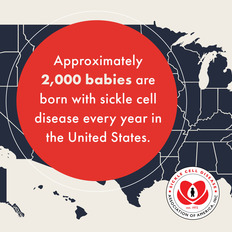
In September, we participated in statewide efforts to highlight Sickle Cell Disease and Newborn Screening. We want to recognize all of you for your continued work in improving the health of children and families affected by these conditions. Your dedication to follow-up care ensures that families receive the crucial support they need for a healthier future. Thank you for your continued commitment to raising awareness and promoting healthier outcomes for families across Minnesota!
Learn more about Sickle Cell Awareness Month on the national association’s Sickle Cell awareness month webpage and about Newborn Screening Awareness on the MDH public health lab webpage.
|
Early hearing detection and intervention
Decrease in early intervention referrals for children with hearing loss
Statewide, on average, we are monitoring a decrease in the number of children with confirmed hearing loss who are referred to early intervention services in Minnesota. Children with hearing loss have better outcomes when they are connected to early intervention by 6 months of age, or for older children, as soon as possible after diagnosis. Children with confirmed hearing loss automatically qualify for early intervention.
We need your help promoting early intervention referrals to families of children with confirmed hearing loss. As trusted partners, local public health nurses play a critical role in early intervention by ensuring all children are referred through Help Me Grow, unless a parent declines. CYSHN staff have developed a list of talking points that may be useful to local public health nurses who are following up with confirmed hearing loss cases.
You can find the talking points on our SharePoint site under CYSHN Condition Materials > EHDI > Suggested Talking Points for Early Intervention in Confirmed Hearing Loss (PDF)
|