|
August 12, 2026
August is National Tree Check Month
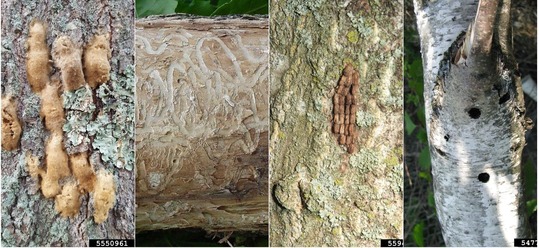 From left to right: Spongy moth egg masses are tan and fuzzy (photo by Karla Salp, Washington State Department of Agriculture, Bugwood.org); "S"-shaped galleries beneath the bark are a definitive sign of emerald ash borer (EAB) (photo by Michigan Department of Agriculture, Bugwood.org); spotted lanternfly egg masses are yellowish brown and covered with a gray, waxy coating (photo by Richard Gardner, Bugwood.org); and Asian longhorned beetle adults leave distinctive, round exit holes about the size of a dime when they emerge from trees (photo by Leslie J. Mehrhoff, University of Connecticut, Bugwood.org).
Each August, National Tree Check Month reminds us that everyone can play a role in protecting our forests and urban trees from invasive pests. Minnesota is home to more than 17 million acres of forest, and millions more trees line our neighborhoods, parks, and communities. Unfortunately, invasive insects can spread quickly and cause lasting damage.
The good news is that early detection makes a difference. By learning what to look for and reporting suspicious pests, you can help slow their spread and protect Minnesota's trees. Take a closer look at the trees around you and learn to recognize some of the invasive pests that threaten Minnesota's forests and communities.
Emerald ash borer (EAB)
Emerald ash borer continues to spread across Minnesota and has killed millions of ash trees in North America. Watch for:
- Increased woodpecker activity
- S-shaped, galleries under the bark
- Thinning leaves and dying branches in the upper canopy
- D-shaped exit holes in ash bark
Spongy Moth
Spongy moth is one of the nation's most destructive forest pests because its caterpillars feed on more than 300 species of trees and shrubs. Look for:
- Eggs laid in a fuzzy, tan-colored mass
- Caterpillars with five pairs of blue spots near the head, followed by six pairs of red spots
- Dark reddish-brown, hairy pupae that range in size from ¾ inch to 1½ inches long and are often tethered to an object with silk strands
- Heavy leaf feeding or defoliation
Asian Longhorned Beetle
Although Asian longhorned beetle has not been found in Minnesota, it remains a high-priority pest because it attacks many hardwood tree species. Watch for:
- Large black beetles with white spots and long, black-and-white banded antennae
- Perfectly round exit holes about the size of a dime
- Sap that may seep from the bark beneath egg sites
- Sawdust-like material collecting at the base of trees
Spotted Lanternfly
Spotted lanternfly has not been detected in Minnesota, but it continues to spread in the eastern United States and has recently been found closer to the Midwest. While it prefers tree-of-heaven, it also feeds on grapevines, maple, walnut, and many other plants. Look for:
- Yellowish-brown egg masses covered with a gray, waxy coating
- Bright red hindwings visible when the insect flies
- Black-and-white spotted immature nymphs
- Sticky honeydew and black sooty mold on trees and plants
Protecting Minnesota's trees starts with a few simple actions:
-
Check your trees regularly. Look for unusual insects, damage, or signs of declining tree health.
-
Don't move firewood. Firewood can transport invasive insects and diseases to new areas. Buy it where you burn it.
-
Clean outdoor equipment. Inspect campers, trailers, grills, and other outdoor items before traveling to avoid moving egg masses or hitchhiking insects.
-
Report suspicious pests. If you find an unfamiliar insect or signs of infestation, take clear photos and report your findings to the MDA's Report a Pest.
Is That Really a Hornet?
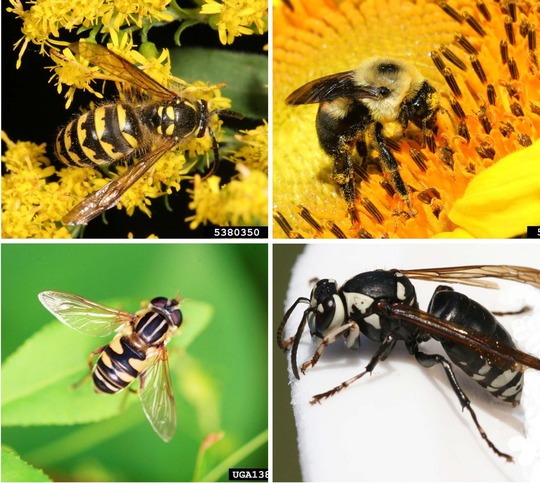 Top row, left to right: yellowjacket photo by Gary Alpert, Harvard University, Bugwood.org; bumble bee photo by Russ Ottens, University of Georgia, Bugwood.org. Bottom, left to right: hoverfly photo by Steven Katovich, Bugwood.org; baldfaced hornet photo by Johnny N. Dell, Bugwood.org.
You may have noticed more yellow-and-black insects flying around lately. Some of the most common include yellowjackets, hornets, bumblebees, and hoverflies. While some of these insects will sting if threatened, others don't even have stingers. Hoverflies, for example, are flies not bees or wasps. They mimic the appearance of more defensive insects but are harmless and cannot sting. Although many of these insects share similar yellow-and-black markings, they differ in behavior and their ability to sting.
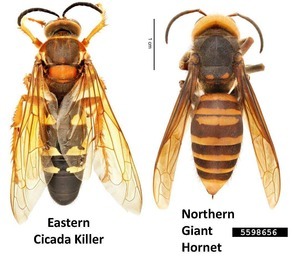
Larger insects also tend to attract more attention. One of our largest native insects, the eastern cicada killer, is especially noticeable this time of year and is often mistaken for the invasive northern giant hornet (formerly known as the Asian giant hornet).
The eastern cicada killer (Sphecius speciosus) is a large, solitary wasp native to the eastern half of the United States. Although it can be territorial, it generally poses little threat to people and animals. Males cannot sting, and females sting only when provoked. Female cicada killers hunt cicadas, paralyze them with a sting, and carry them to underground nests to feed their young. These wasps prefer sunny areas with loose, well-drained soil for nesting, and small mounds of soil near sidewalks or lawns are a common sign of their activity during this time of year.
Photo by Hanna Royals, USDA APHIS PPQ, Bugwood.org
The northern giant hornet (Vespa mandarinia) is an invasive species that was first detected in Washington in 2019. This insect is concerning because it can decimate a honeybee colony within hours and poses a threat to pollinators. Like cicada killers, northern giant hornets typically nest underground, but they prefer forested or mountainous habitats. Following five years of coordinated efforts by multiple agricultural agencies, the northern giant hornet was declared eradicated from the United States.
For a helpful guide comparing these and other commonly confused insects, visit A Visual Comparison of the Asian Giant Hornet and Other Insects.
New Smarty Plants Episode - Teamwork Tackles Tree of Heaven
Smarty Plants is a podcast exploring invasive insects and noxious weeds that threaten Minnesota’s natural and agricultural resources.
Tree of Heaven, a high priority noxious weed, was discovered for the first time in Dakota County in 2025. Host Jennifer Burington talks with MDA weed scientist Tony Cortilet and Loni Anderson of the Minnesota Department of Transportation about its accidental discovery, the team effort happening to eradicate the problem, and how you can be on the look out for tree of heaven and other noxious weed in Minnesota on this episode of Smarty Plants.
Subscribe to Smarty Plants today so you don’t miss an episode!
See You at the Minnesota State Fair!

Headed to the Great Minnesota Get-Together? Stop by the MDA's Plant Protection Division exhibit in the Agriculture Horticulture Building, August 27 through September 7!
Get a close-up look at the tiny world of plant pests through our microscope, where you'll discover fascinating insects, plant diseases, and other specimens you may never have noticed before.
While you're there, submit a question for our Smarty Plants podcast. Your question could be featured and answered by one of our experts in an upcoming episode!
|
In the Field: What Nursery Staff Are Seeing
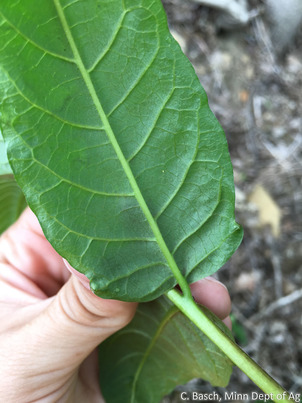
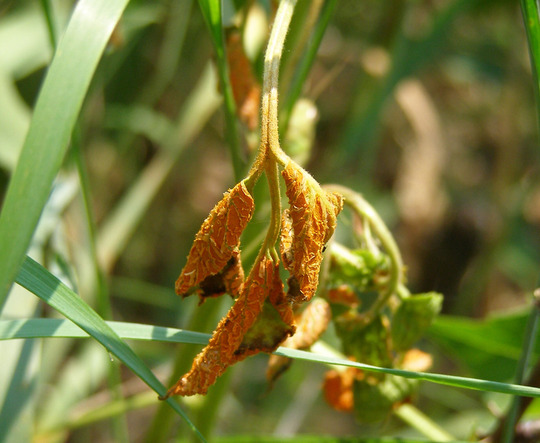
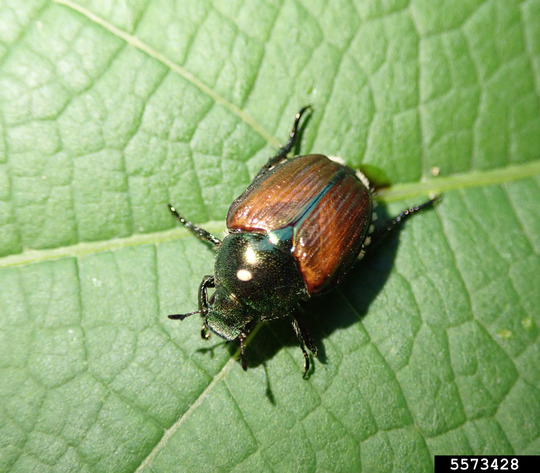
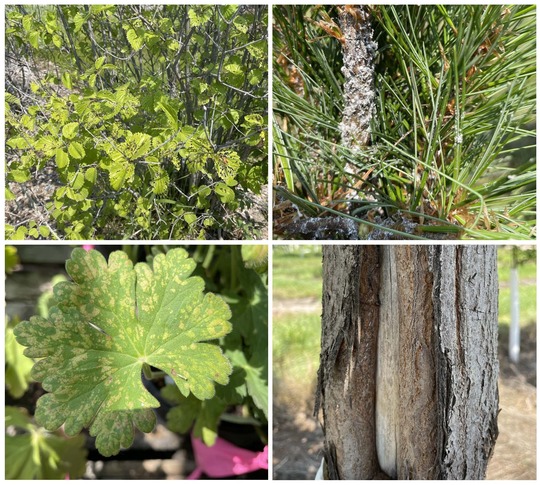 Nursery inspections aren’t just about checking off a list. Inspectors are on the lookout for pests, diseases, and other plant health problems that can hide among healthy-looking plants. Catching these issues early helps keep pests and diseases from spreading and protects Minnesota’s nurseries, gardens, and landscapes.
Some recent finds shown above from left to right:
August Weed of the Month: Tree of Heaven
Tree of heaven leaflet has two lobes at the base of the leaf and smooth edges.
Tree of heaven is fast growing and overtakes other species
By Emile Justen, Minnesota Department of Agriculture: Tree of Heaven (Ailanthus altissima), an aggressive tree that outcompetes native plant species, was confirmed in Dakota County for the first time in September of 2025. In addition to displacing native plant species, tree of heaven can damage important infrastructure like sewer lines, pavement, and building foundations.
Tree of heaven thrives in a wide range of soil types and conditions. It can be found along roadsides and fence rows, in floodplains, open woodlands, and disturbed sites. In urban areas, it can grow in tight spaces where other trees can’t. It prefers full sun and is intolerant of shade. As a fast-growing tree, it overtakes areas by producing abundant seed and sending up new shoots from the roots. Read more
Help Protect Minnesota Forests from Invasive Pests
Look for the MDA certified logo.
Moving untreated firewood can spread harmful pests like emerald ash borer, spongy moth, and Asian longhorned beetle, species that have destroyed millions of trees across the United States. Even native pests like carpenter ants and bark beetles can hitch a ride on firewood and cause problems for homeowners.
Help stop the spread:
- Buy firewood where you burn it! Locally sourced wood is less likely to carry invasive pests.
- Use MDA certified firewood with the official seal. View the list of Certified Firewood Producers in Minnesota.
- Avoid transporting hardwood firewood across county or state lines. It is illegal to move hardwood firewood out of Minnesota quarantined counties unless it is MDA certified. Violations can result in fines of up to $7,500 per day.
Visit the MDA's Buying Firewood webpage for more information.
Explore the Minnesota Grown Directory
Whether you're planting a garden or looking for locally grown products, Minnesota Grown has you covered. The Minnesota Grown Directory connects you with nurseries, garden centers, farmers markets, community supported agriculture (CSA) farms, and more throughout the state.
Find the plants, seeds, and local expertise you need while supporting Minnesota growers. Visit MinnesotaGrown.com to explore the directory and start planning today.
|