Winsome Fly Survey (U of M Extension)
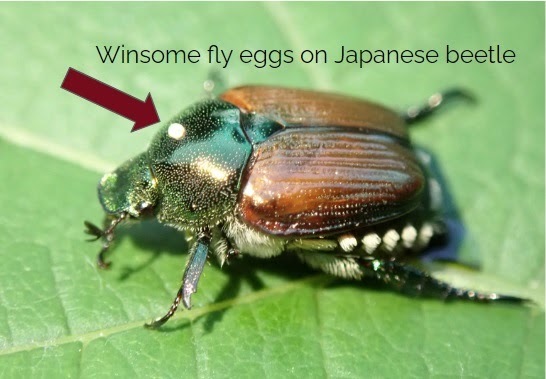
Photo by Whitney Cranshaw, Colorado State University, Bugwood.org, text added by A. Gupta
"Winsome fly, Istocheta aldrichi, is a biocontrol for Japanese beetles. Winsome fly (WF) was first introduced in 1922 and has been noticeable in Minnesota since 2017. During the past 3 summers, WF parasitism rates have been increasing (range, 10-60%) in several Metro areas.
To help better understand the distribution and density of this biocontrol agent, report Winsome fly observation to iNaturalist. Also confirm your interest by emailing: hutch002@umn.edu. Researchers from Bill Hutchison's UMN Entomology lab will be in touch.
Visit the UMN Extension website if you need help identifying Japanese beetles."
Upcoming Events and Trainings
July 23 - "You've done what you can all year to set your soybeans up for success, but the season isn't over yet. This webinar will address management strategies for late-season challenges, providing you with the knowledge and tools to address issues as they arise as you head into harvest. Hear from an expert panel of researchers from across the U.S. and get updates on recent national collaborative research trials on desiccation and harvest timing." Register for webinar.
July 28 - "Join UMN extension and forest health experts at St. Croix State Park to learn more about oak wilt on its leading edge in Minnesota. As we work to slow the spread of this fungal disease northward, broad familiarity with its symptoms and potential management strategies is critical. This workshop will cover common symptoms of active oak wilt with hands-on demonstrations of current wilt pockets. We will also show effective management methods employed in St. Croix State Park and discuss additional viable management strategies." Register for event.
August 7 - "This field day provides hands-on training in identifying, scouting, and managing soybean gall midge, an emerging and economically important pest in Midwest soybean systems. This event is designed for crop consultants, scouts, growers, extension personnel, and anyone involved in soybean production who wants practical, field-based skills to improve pest detection and response. " Register for field day.
August 13 - "Laura Greenleaf, founder of the James River Park System's Invasive Plant Task Force, will reflect on over 10 years of collaborative experience bringing invasive plant management to a 600+ acre urban park in Virginia's capital city, beginning with an all-volunteer effort and progressing to professional staff." Register for webinar.
August 19 - "Urban forests are on the front lines of invasive pest threats and climate uncertainty. This webinar features two practical tools that help communities assess risk, strengthen preparedness, and respond strategically to emerging forest pests." Register for webinar.
August 22 - "During this workshop, participants will learn how to identify and manage common invasive species, such as buckthorn, garlic mustard, and tansy. This will be an interactive, in-person workshop." Register for workshop.
September 10 - "Rapid detection and rapid response (RDRR) has been seen to be critical to managing invasive species, to ensure invasions are dealt with as quickly as possible, in order to minimize economic and environmental costs.” Register for webinar.
October 6-8 - "The Upper Midwest Invasive Species Conference (UMISC) is a biennial conference that addresses all taxa of invasive species. In 2026, UMISC will celebrate 18 years of connecting the invasive species management, research, and policy community. The goal of UMISC is to strengthen management of invasive species, especially prevention, control, and containment. There have been great strides in invasive species research, prevention, and management, but much work still must be done. The conference provides numerous opportunities to network with professionals, land managers, researchers, nonprofits, and others." Early Registration ends August 3rd (6:00pm Central Time). Register for conference.
October 28 - "How can we foster shared stewardship and better bridge the gap between formal conservation management and the traditional ecological knowledge of Southeast Asian communities? During this webinar the University of Minnesota Extension will share insights from early-stage work, highlighting lessons learned and ongoing efforts to adjust their approach." Register for webinar.
November 18 - "This presentation will provide an overview of the IInSRRT structure, roles the program can support during response actions, and provide one of many opportunities for suggestions on how to effectively implement the program." Register for webinar.
Pests in the Press
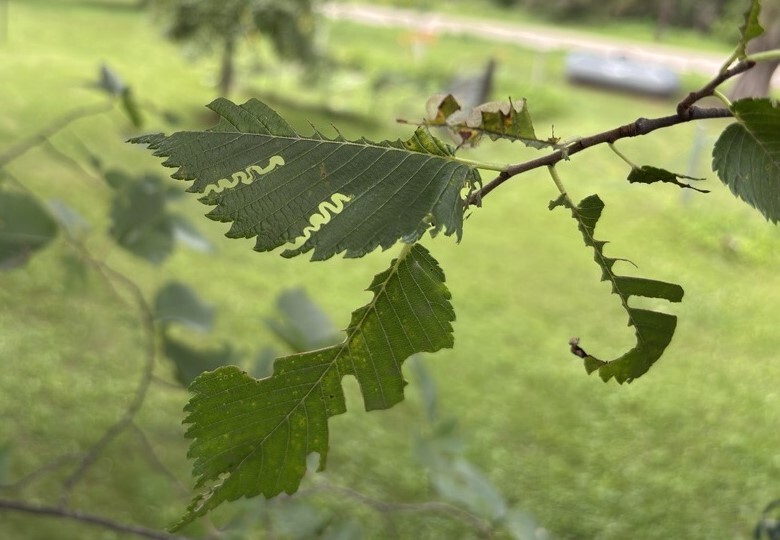
"The Michigan Department of Agriculture and Rural Development has confirmed the first reported case of an elm zigzag sawfly in Michigan, which was spotted in St. Clair County. However, MDARD Director Tim Boring says the insect isn’t a significant public threat." Read more
"Last year, when Joe Sullivan’s sugar beet fields were infected with a fungal disease called Cercospora leaf spot, he was devastated. Sullivan, who farms throughout Renville County, said the disease cut his yields by about a third. He had to dig into his farm’s savings to cover the losses." Read more
"Cities by their nature are hotspots for invasive species: all the coming and going means that countless newbie plants and animals regularly face the gamble of natural selection. Most newcomers fade out or establish only a small population, but every so often a species explodes on the scene and becomes problematic." Read more
"Weed scientists from coast to coast are reporting that Palmer amaranth continues to spread and evolve resistance to herbicides. Now, the Pacific Northwest (PNW) is battling glyphosate resistance while atrazine resistance has appeared in the Northeast, according to the University of Idaho’s Dr. Albert Adjesiwor and Rutgers’ Dr. Thierry Besançon." Read more
"Since experts first detected the spotted lanternfly (Lycorma delicatula) in Pennsylvania in 2014, the invasive pest has sucked the sap out of various plants across at least 18 eastern and midwestern states in the U.S., including some key crops such as grapevines and fruit trees. Lanternflies have already left a wake of destruction in vineyards in South Korea, and researchers fear they could have similar impacts in other wine-producing regions, including the U.S. and Europe, which offer the lanternfly plenty of suitable habitat." Read more
Grants that Grow
"The Managing Invasives for a Resilient Landscape Grants Program provides funding to support the restoration of native plant communities in areas impacted by terrestrial invasive or noxious weeds. Administered by the Minnesota Board of Water and Soil Resources (BWSR), the program provides funding to support collaborative efforts that manage terrestrial invasive plant species and reestablish resilient native vegetation. Tribal Governments, Local Government Units, Municipalities, and Townships are eligible for funding." Learn more
"Money may be available to share the costs of your woodland stewardship projects. Taking care of your woods benefits all Minnesotans by growing future forests which improve water quality, enhance wildlife habitat, enhance recreational opportunities, and support a healthy forest products economy." Learn more
|