|
Having trouble viewing this email? View it as a Web page.
July 1, 2026
July Weed of the Month: Play Clean Go
Humans are the number one reason invasive species spread
By Julia Delick, Minnesota Department of Agriculture: Summer is in full swing and many of us are spending time outside. Whether you’re hiking, boating, fishing, or biking, it is important to be mindful of how you recreate because people are the number one way invasive species spread.
Invasive species are non-native plants, animals, or organisms that can harm the environment, human health, and the economy. They’re often moved unintentionally from place to place, so simple actions can make a big difference.
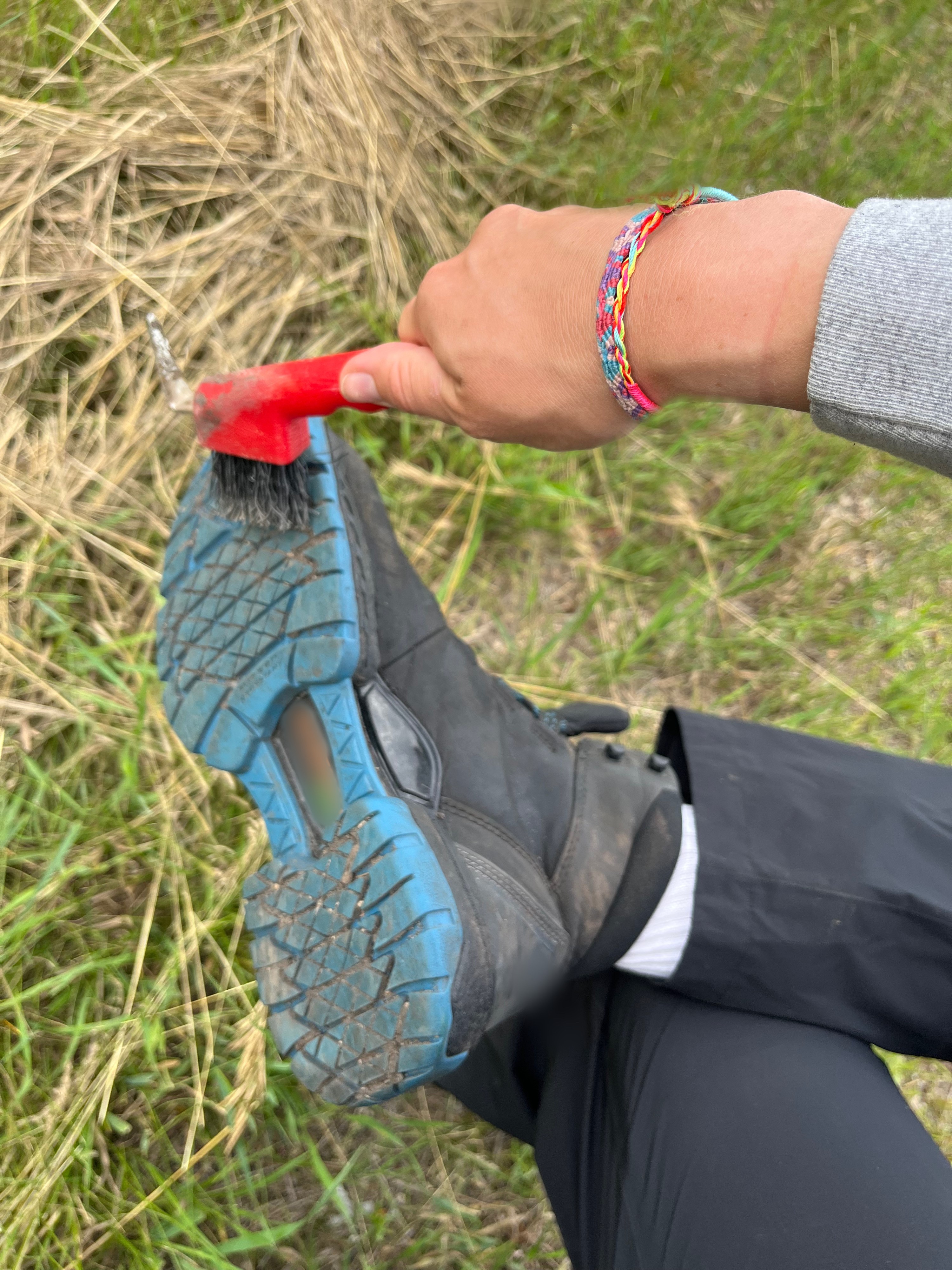
 Boot brushes help prevent the spread of invasive species by removing dirt, seeds, and debris from your shoes.
When visiting natural areas, the following steps can reduce the spread of invasive species to new locations:
- Know the regulations — State, county, and municipal rules vary. The Minnesota Departments of Agriculture, Natural Resources, and Transportation all provide information on invasive species, noxious weeds, species of concern, and related regulations.
- Learn what to look for — Before you go, check tools like EDDMapS and iNaturalist to see what invasive species are in the area. Knowing how to identify and avoid invasive species is the easiest way to avoid their spread.
- Clean your gear — Remove dirt, seeds, and debris from your shoes, pets, bikes, recreational gear, and vehicles before leaving a site. This keeps insects and plant material from hitchhiking to new places.
- Prepare horses responsibly — Clean your horse’s shoes and feed certified weed-free hay before and after rides. Contact the Minnesota Crop Improvement Association to learn more about certified weed-free forage.
- Stay on designated trails — This protects native plants and keeps invasive species contained along paths where they can be managed more easily.
- Clean, drain, and dry watercraft — Kayaks, canoes, and boats can carry aquatic invasive pests in to new areas if not properly cleaned.
- Dispose of bait properly — Throw unwanted bait, fish parts, and packing materials in the trash. Never dump it in the water or on land.
-
Don’t move firewood — Buy it where you burn it. A number of disease pests and insects, including the emerald ash borer and spongy moth, can move in cut firewood, pallets, and packing material.
- Repeat these steps every time — Consistency is key to preventing spread!
By inspecting and cleaning your gear and being mindful of what you bring into natural areas, you can help protect the places we all cherish. For more tips on recreating responsibly, visit the Play Clean Go website. By practicing these steps, everyone can do their part to help minimize the spread of invasive pests.
 |
|
To learn more, listen and subscribe to Smarty Plants, a podcast produced by the MDA that explores the invasive insects and noxious weeds that threaten Minnesota’s natural and agricultural resources. |
MEDIA: Contact Brittany Raveill, MDA Communications, brittany.raveill@state.mn.us
|