Plant Pest Insider

Having trouble viewing this email? View it as a Web page.

Plant Pest Insider Newsletter logo with bug and leaf

A Newsletter from the Minnesota Department of Agriculture

April 9, 2026 

Growing Awareness for Spring Blooming Invasive Plants

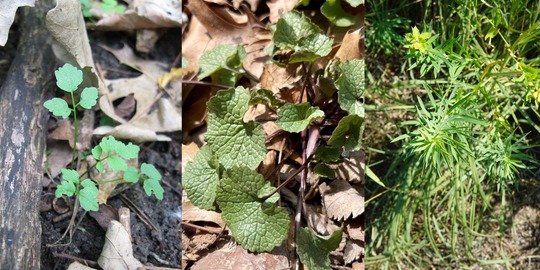
narrowleaf bittercress seedling, garlic mustard seedling, and leafy spurge seedling

Left to right: narrowleaf bittercress (MDA), garlic mustard (MDA), and leafy spurge (MnDOT).

Invasive plants have characteristics that give them competitive advantages over native plants. Some leaf-out early, shading other plants. Others release chemicals into the soil that prevent other plants from growing. And some bloom and produce seed early in the season, allowing them to spread throughout the season.

To prevent invasive plants from establishing or spreading on a property, landowners should understand the three basic plant lifecycles: annuals, biennials, and perennials. Understanding lifecycles allows for better management plans that are properly timed for maximum efficiency. The following are examples of early blooming invasive plants found in Minnesota, representing each lifecycle category.

Narrowleaf bittercress (Cardamine impatiens) can be an annual or biennial, in most cases it acts as a biennial and stays as a rosette in its first year. It produces white flowers and starts blooming in May, then produces seed.

Garlic mustard (Alliaria petiolata) is one of the first invasive plants to mature and bloom in early spring. Most people notice it growing in wooded areas, and many organizations that manage parks host garlic mustard pulls in the spring. This biennial forb germinates from seed. Garlic mustard forms a rosette in its first year that overwinters and then flowers and produces seed very early in its second year.

Because annuals and biennials spread primarily by seed, management strategies are similar and focus on preventing seed production:

  • Hand pull plants in the spring while they are flowering and before they go to seed.
  • Apply herbicide treatments to rosettes in the fall or to seedlings in early spring. Because these plants die after producing seed, avoid treating plants that have already gone to seed.
  • Mow or cut plants, when applicable, as the mature stem begins to develop prior to flowering in early spring.

Leafy spurge (Euphorbia virgata) is an herbaceous perennial that starts flowering in May. It has greenish yellow flower bracts and can grow in large colonies along roadsides, making it very visible. Because it is a perennial, management can be challenging, but several options are available depending on the site:

  • Dig roots at the seedling stage or just before flowering; this method is best for single plants or small patches.
  • Mow before flowering to reduce seed production and follow up with herbicide applications. Always clean equipment before moving off-site.
  • Use biological control for large infestations that have minimal disturbance, such as in pastures.
  • Apply herbicide repeatedly in early spring and again in the fall to effectively reduce leafy spurge populations.

Lifecycle and treatment timing graphics are available for each of these species and include additional management options.

Narrowleaf bittercress

Garlic mustard

Leafy spurge

Restoration of a treatment site is an important component to successful weed management. Reestablishing native species allows them to better compete with invasive plants and can prevent future infestations. The combination of restoring beneficial plants with the continued scouting of previously infested areas provides the best long-term management.

With any invasive plant, whether it blooms early in the year or later in the summer, the key to preventing its spread is to understand its lifecycle and apply the appropriate treatment at the right time. Even the simple task of cutting flowering heads before they go to seed can limit seed production and prevent invasive plants from spreading.

For more information on other invasive plants on the noxious weed list, visit the Minnesota Noxious Weed List.


New Smarty Plants Episode - Buckthorn: There is Light at the End of the Tunnel

Smarty Plants Podcast Logo

Smarty Plants is a podcast exploring invasive insects and noxious weeds that threaten Minnesota’s natural and agricultural resources.

As one of the most aggressive and invasive plants threatening Minnesota, buckthorn is a major problem in urban and rural forest alike. Managing a buckthorn infestation can make many go from pulling plants to pulling out their hair, as the plant seems to never stop growing and spreading. However, Mike Schuster and Lee Frelich, buckthorn experts, join this episode of the podcast to make the seemingly impossible, possible. Listen to learn tips and tricks for successfully managing buckthorn, get details on the Cover It Up! Project, and find out where to start when managing buckthorn on your property.

Subscribe to Smarty Plants today so you don’t miss an episode!


In the Field: Sampling Seed

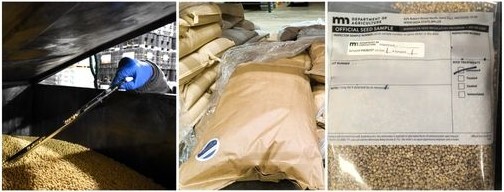
seed probe in seed bin, bulk bag, and seed in sample bag

Left to right: Inspector using a seed probe to collect a sample; seed bag with probe sticker; vegetable seed in a sample bag.

Seed inspectors play an important role in ensuring the quality and integrity of seed sold across Minnesota. They visit sites that process, label, and sell seed for agriculture, landscaping, and home use, checking that products meet state and federal requirements. These laws, including the Minnesota Seed Law and the Federal Seed Act, are designed to protect consumers through accurate labeling and promote fair competition among seed sellers.

As part of this work, inspectors collect official samples from seed offered for sale and submit them to the state seed laboratory for testing using national standards. Results are then compared to label claims to confirm accuracy. This process also helps prevent the spread of noxious weed seeds through contaminated seed.

The MDA Seed Regulatory Program supports this work by tracking compliance, providing education to seed labelers and retailers, and ensuring regulations are followed statewide. This season, inspectors have already collected 1,343 samples and conducted 50 label-only inspections, supporting consumer protection, fair markets, and healthy landscapes.

For more information, visit the Seed Regulatory Program webpage.


Spongy Moth Limited Permits Expire April 30

MDA spongy moth limited permit logo

Spongy moth limited permits allow shippers to move certain regulated articles out of the spongy moth quarantine to a designated receiving facility. Designated receiving facilities operate under a compliance agreement with the MDA to ensure regulated articles are processed in a manner that minimizes the risk of introducing a new spongy moth infestation. Facilities also agree to treat any infestations that occur on-site as a result of handling regulated materials.

Saw bolts, pulpwood, and bark intended for fuel must be accompanied by a limited permit when leaving the quarantine area. Under state and federal guidelines, limited permit holders must watch an MDA training video, complete a quiz, and submit an application to obtain a permit.

For more information, visit the Spongy Moth Quarantine webpage.


April Weed of the Month - Weed Look-a-Likes: When This Looks a Whole Lot Like That

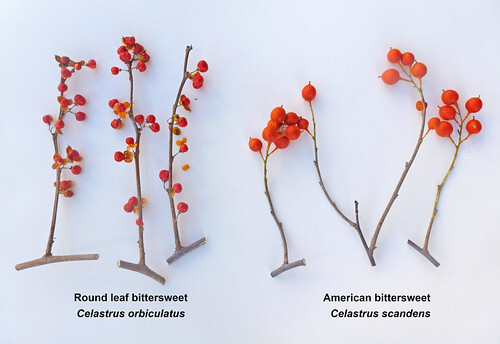
round leaf bittersweet and American bittersweet plants side by side

Roundleaf bittersweet is on the left compared to native American bittersweet on the right. The roundleaf bittersweet fruit are red with yellow capsules and grow along the entire vine. In comparison, the native American bittersweet fruit are red with orange capsules and just grow at the terminal end of branches. Flower and fruit placement are helpful for identification from late spring flowering to green developing fruit to ripe fruit in fall and winter.

How to decide if the plant is a friend, foe, or a harmless stranger

By Maya Sarkar, Minnesota Department of Agriculture - Even for seasoned botanists and ecologists, there are plenty of moments in the field where a plant can look like a similar species, but the identification can have very different meanings. It could be the difference between a native and an invasive species or a toxic versus a harmless plant. This month, we cover some close look-a-likes and how to spot key differences in the field so you can help decide for yourself if the plant at is a friend, foe, or a harmless stranger.

Read more


Help Protect Minnesota Forests from Invasive Pests 

MDA certified safe to move logo

Look for the MDA certified logo.

Moving untreated firewood can spread harmful pests like emerald ash borerspongy moth, and Asian longhorned beetle; species that have destroyed millions of trees across the United States. Even native pests like carpenter ants and bark beetles can hitch a ride on firewood and cause problems for homeowners.

Help stop the spread:

  • Buy firewood where you burn it! Locally sourced wood is less likely to carry invasive pests.
  • Use MDA certified firewood with the official seal. View the list of Certified Firewood Producers in Minnesota.
  • Avoid transporting hardwood firewood across county or state lines. It is illegal to move hardwood firewood out of Minnesota quarantined counties unless it is MDA certified. Violations can result in fines of up to $7,500 per day.

Visit the MDA's Buying Firewood webpage for more information. 


Explore the Minnesota Grown Directory

minnesota grown logo

Planning your garden this season? Start local. The Minnesota Grown Directory connects you with nurseries, garden centers, farmers markets, community supported agriculture (CSA) farms, and more across the state.

Find the plants, seeds, and local expertise you need and support Minnesota growers while you’re at it. Visit minnesotagrown.com to explore the directory and start planning.


Pest Alert: Two-Spotted Cotton Leafhopper (Texas Department of Agriculture) 
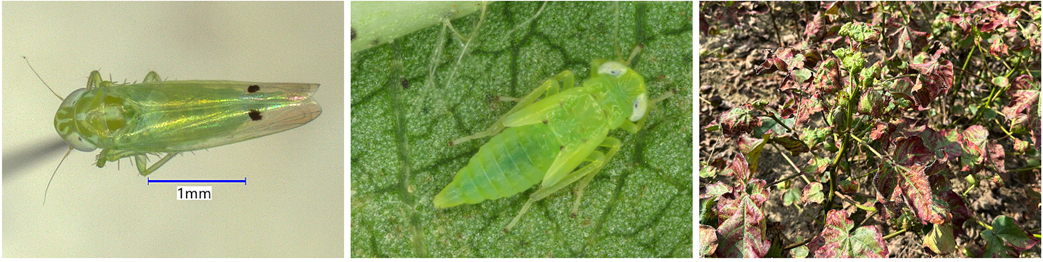
small green insect with a small spot on each wing, small green insect on leaf, plant showing browning and damage from cotton jassid

The cotton jassid (adult above left, nymph above center) is an invasive pest new to Texas. The pest was introduced in nursery settings, and AgriLife Extension and Department of Entomology experts are monitoring and addressing infestations through a coordinated effort with state and federal agencies. (Scott Graham, Auburn University and Isaac Esquivel, University of Florida)

"The two-spotted cotton leafhopper, Amrasca biguttula (also known as cotton jassid) is an invasive pest recently detected in Texas, posing a significant threat to cotton production and other crops like okra, eggplant, sunflower, and hibiscus. It feeds by injecting saliva into plants, causing leaf curling, yellowing, and potential yield losses up to 50% in severe cases. In Texas, the pest was first identified on hibiscus plants in big box store nurseries, plants shipped from nurseries outside the state, and has since been found in cotton fields, including in Fort Bend County south of Houston." Read more


Virus Issues? Take a Look at Transplant Production (U of M Extension)

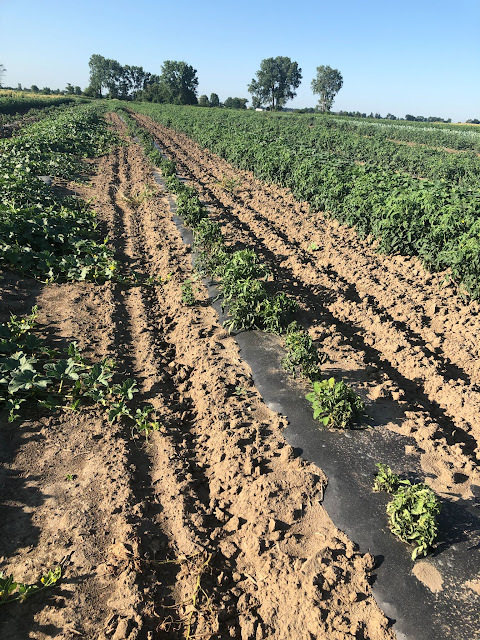
field showing extensive damage

Virus damage as extensive as this often starts during transplant production, where entire trays can be exposed to plant viruses. Photo: Marissa Schuh, UMN Extension.

"Many commonly grown Minnesota vegetables can be infected by plant viruses. With their limited means of prevention and no control options post-infection, these diseases can be devastating. Solanaceous crops, especially peppers and tomatoes, can play host to over a dozen plant viruses. These viruses stunt plants, distort leaves and fruit, and severely reduce yield." Read more


Thermal Calendars 
thermal calendars maps and tool

"The Thermal Calendars tool provides high-resolution maps of thermal accumulation in the northeastern U.S. Maps indicate the date on which 50 growing degree day thresholds have been reached in the current year, as well as information about how conditions in the current year differ from the historical average. This information can support monitoring and management activities for insect pests in the region." Read more


Upcoming Events and Trainings

UMN Extension Fruit and Veg Webinar Series

January through April - "Kick off 2026 with a series of interactive online webinars to learn practical strategies to improve the production, harvest and quality of your fruits and vegetables." Register for the webinar series. 

Webinar: Fridays with a Forester

February through April - "Join Extension foresters to discuss some of the key issues and questions around forest and woodlands facing Minnesota land stewards. These online sessions will be very informal, open to the public and free of charge. Each session will start with a brief presentation followed by a discussion framed around participant questions on the topic." Register for webinars.

Genetics and Disease Resistance in Eastern North America Trees: American Beech, Butternut, and Eastern Hemlock

April 16 - "Forests are being inundated with invasive pests and pathogens, as well as climate change. Traditional disease resistance breeding is slow for trees, which can take decades to reach sexual maturity. Identification of genetic markers of resistance can accelerate this process. Researchers from the Plant Computation Lab at the University of Connecticut will talk about their work to identify disease resistance genetic markers in 3 systems: American Beech—Beech Bark Disease—Beech Leaf Disease, Butternut—Butternut Canker Disease, and Eastern Hemlock—Hemlock Woolly Adelgid. They will also discuss the ability of landscape genetics to forecast range shifts and introduce a citizen science project for landscape collections in American Beech." Register for webinar. 

Weed ‘em Out

"Learn how to identify and report early detection invasive plants before they become big trouble. You will learn identification skills and then apply those skills to target species samples to distinguish them from common look-alike species. The agenda will include these high priority plants: stiltgrass, Johnsongrass, swallow-worts, rough potato, Dalmatian toadflax, golden honeysuckle vine, porcelain berry, common and giant butterburs, teasels, Amur corktree, tree-of-heaven, rowan mountain ash plus regional specialties. These workshops are for people who are active in identifying vegetation on roadsides, parks, pastures or natural areas. The workshops are free but registration is required. This is a free program so lunch will not be provided. There will not be time to leave the site and purchase lunch so please bring your own. All workshops will be from 9 a.m. - 3 p.m. Stewardship plan writers will receive 4.5 CEs. Verification to earn SAF and ISA CFEs provided on request."

  • St. Cloud, Wednesday, April 15, MnDOT Training Center (Located at the MnDOT District 3 office), 3725 12th St. N. St. Cloud, MN 56303. Register here.
  • Duluth, Tuesday, April 28, Hermantown Police Training Center, 5111 Maple Grove Rd, Hermantown, MN 55811. Register here.
  • Grand Rapids, Wednesday, April 29, Minnesota Interagency Fire Center, 402 SE 11th St, Grand Rapids, MN 55744. Register here.

This program is a joint venture between University of Minnesota Extension, the Minnesota Departments of Agriculture, Natural Resources, and Transportation and the US Forest Service. 

Stopping Stiltgrass in the Upper Midwest: How You Can Protect Our Forests

May 7 - "Stiltgrass (Microstegium vimineum) is an annual grass that grows in branching, sprawling mats in forests, streambanks, trails, ditches, and even lawns. When left unchecked, it makes wildfires more frequent and severe, alters nutrient cycling and soil microbes, and reduces wildlife habitat. Join us to learn the latest about the status of stiltgrass in the Midwest and lessons learned from managing it in the Northeast." Register for webinar. 

Emerald Ash Borer Awareness Week 2026

May 19, 20, and 21 - "For EAB Awareness week Don’t Move Firewood is highlighting this notorious hitchhiking tree pest by hosting a series of informational webinars each year. Hear from experts on the impacts and management of EAB, ash cultural practices, and social media messaging strategies." Register for webinars. 

Practical Approaches to Managing Amur Honeysuckle

July 15 - "Amur honeysuckle (Lonicera maackii) is an invasive shrub native to eastern Asia that was widely planted for ornamental use and wildlife habitat. It is now established across much of the eastern and midwestern United States, where it forms dense understory thickets that outcompete native plants, reduce plant diversity, and alter forest structure and ecosystem processes." Register for webinar.


Save the Date!


Upper Midwest Invasive Species Conference, October 6-8, 2026 in La Crosse, WI

Present Your Work at the 10th Upper Midwest Invasive Species Conference!

"UMISC welcomes presentations on invasive aquatic and terrestrial plants, animals, insects and pathogens. Share your work around prevention, control, impact mitigation, public engagement, and more! The UMISC audience includes a broad group of stakeholders and professionals who engage on invasive species issues, including land managers, natural resource professionals, researchers, environmental consultants, private land owners, conservation group leaders, NGO staff, and volunteers. The deadline for abstracts is April 15, 2026.

More information and a link to the abstract submission form can be found at the UMISC website."


Pests in the Press

cartoon bug holding newspaper

New Invasive Plant Making its Way Across the Upper Midwest

"Lesser celandine (Ficaria verna), sometimes known as fig buttercup, is a short, perennial plant that is spreading in the Midwest. It has shiny, dark green, heart-shaped leaves and small, bright yellow flowers. Natural resource professionals are asking for your help to prevent the spread of this invasive plant and protect landscapes." Read more

Nurturing Nightshade for Bacterial Wilt Disease Management

"Comprised of an expansive variety of nourishing and perilous plants, the solanaceous family represents one of nature’s most complex characters. Simultaneously nurturing life—through vital medicines, ornamentals, and food crops—and harboring deadly toxicity in species that can threaten both human health and agricultural stability." Read more

Newly Identified Disease of Corn and Sorghum May Be Mistaken for Iron Deficiency

"A newly identified disease affecting corn and sorghum can closely resemble iron deficiency, potentially leading farmers to apply costly nutrient treatments that do not address the underlying problem. New research published in Plant Health Progress documents the discovery and identification of a bacterial pathogen responsible for the symptoms." Read more

Safeguard Against Spreading the Invasive Box Tree Moth

"Boxwoods are a beloved staple of formal landscapes, hedges and foundation plantings across the United States. But a destructive pest—the invasive box tree moth (Cydalima perspectalis)—is threatening the health and longevity of these ornamental shrubs continuing to be a part of Michigan’s landscape." Read more

Beetle that Attacks Tree-of-Heaven Found in Indiana

"Purdue Landscape Report: We are often the bearers of bad news when a new exotic insect species is discovered in Indiana. This time, however, we have some good news to share. Agrilus smaragdifrons, a beetle that feeds exclusively on Tree-of-Heaven (Ailanthus altissima), was detected in Indiana last year in Allen County." Read more

Best Bradford Pear Alternatives: 4 Better Trees for Spring

"Spring is when nature tells everyone that while winter was a good rest, it's time to get back to blooming flowers, bees buzzing, and lawn mowers running. Over the past 10 years, spring in the woods has been signaled by a ubiquitous white flowing tree that can fill the understory of the forest. The culprit is a nasty invasive plant, which became one of the most popular landscape trees available − the Bradford pear." Read more


Grants that Grow

stacks of pennies with sprouts coming out of top

Cost Share for Woodland Owners (DNR) 

"Money may be available to share the costs of your woodland stewardship projects. Taking care of your woods benefits all Minnesotans by growing future forests which improve water quality, enhance wildlife habitat, enhance recreational opportunities, and support a healthy forest products economy." Learn more

Listen and Subscribe to the Smarty Plants Podcast

Subscribe to Smarty Plants Podcast


Report a Pest


Call us at 888-545-6684

Email us at reportapest@state.mn.us

Use our online reporting form