|
Having trouble viewing this email? View it as a Web page.
April 1, 2026
April Weed of the Month - Weed Look-a-Likes: When This Looks a Whole Lot Like That
How to decide if the plant at is a friend, foe, or a harmless stranger
By Maya Sarkar, Minnesota Department of Agriculture - Even for seasoned botanists and ecologists, there are plenty of moments in the field where a plant can look like a similar species, but the identification can have very different meanings. It could be the difference between a native and an invasive species or a toxic versus a harmless plant. This month, we cover some close look-a-likes and how to spot key differences in the field so you can help decide for yourself if the plant at is a friend, foe, or a harmless stranger.
Native versus invasive roundleaf bittersweet
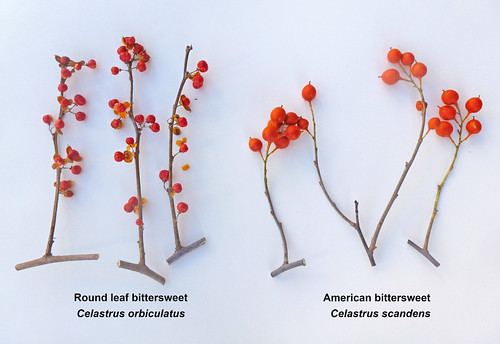
Roundleaf bittersweet is on the left compared to native American bittersweet on the right. The roundleaf bittersweet fruit are red with yellow capsules and grow along the entire vine. In comparison, the native American bittersweet fruit are red with orange capsules and just grow at the terminal end of branches. Flower and fruit placement are helpful for identification from late spring flowering to green developing fruit to ripe fruit in fall and winter. Download photo here.
These two species have very different impacts in Minnesota. Our native bittersweet is less frequently found, while the invasive roundleaf bittersweet has taken over some forests in the southeast part of the state and has even brought down trees with their heavy vines. The key difference between these two species is the fall fruit capsule color and where they hang on the vine. Our native bittersweet has red fruit in orange capsules that only hang at the end, or terminal, of the vine. The invasive berries are red with yellow capsules and hang throughout the vine.
Cow parsnip versus giant hogweed
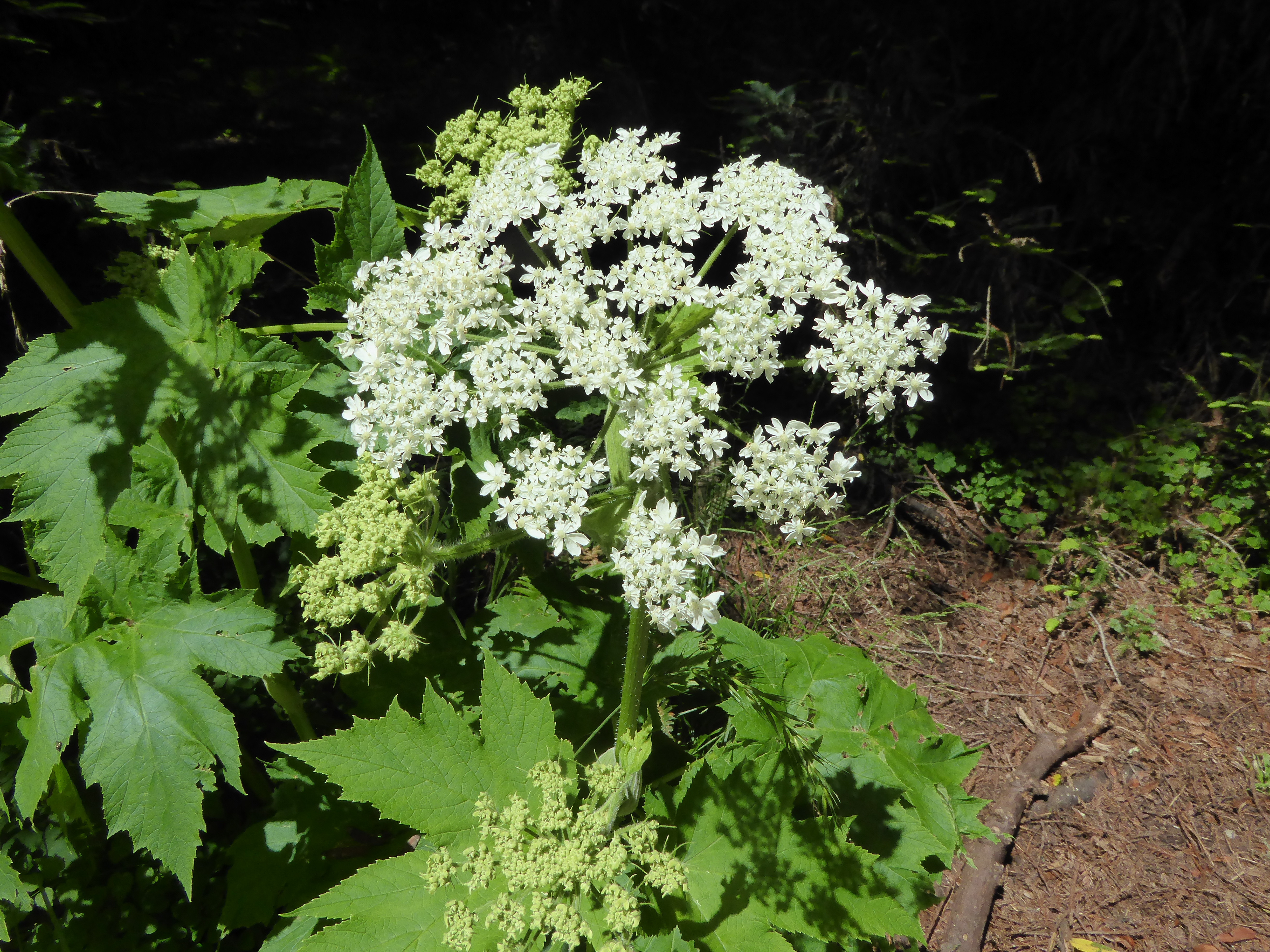
Cow parsnip is native to Minnesota. Like giant hogweed, it has white flowers, but it is shorter. Its leaves are much smaller with fewer lobes. Download photo here.
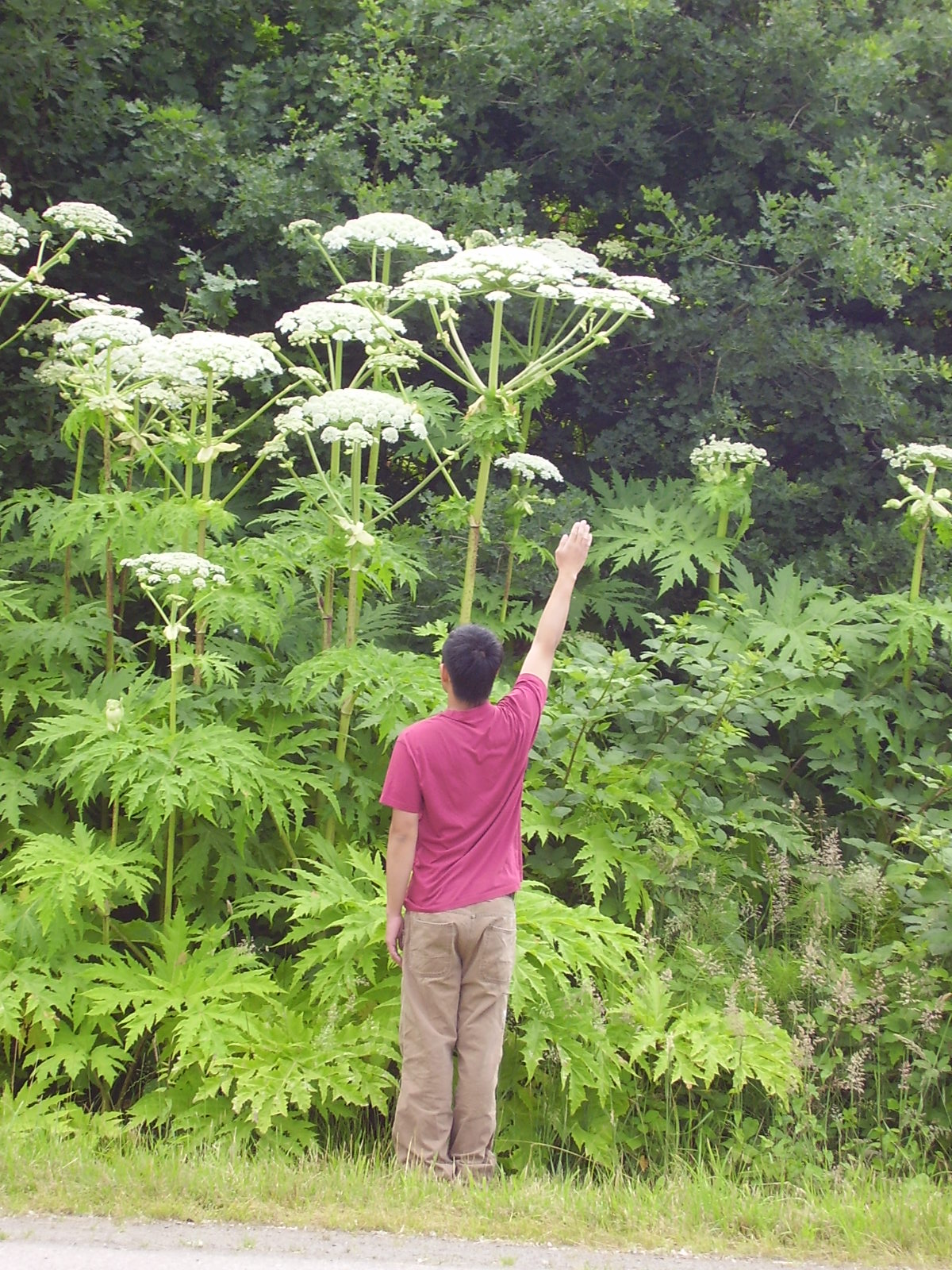
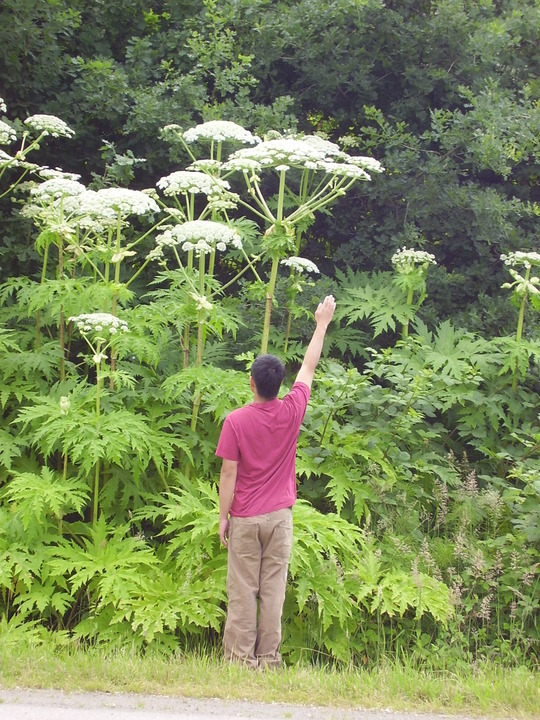 Giant hogweed can grow up to 15 feet tall, has large, serrated leaves, and is highly toxic. Luckily, this invasive species has not yet established in Minnesota. Download photo here.
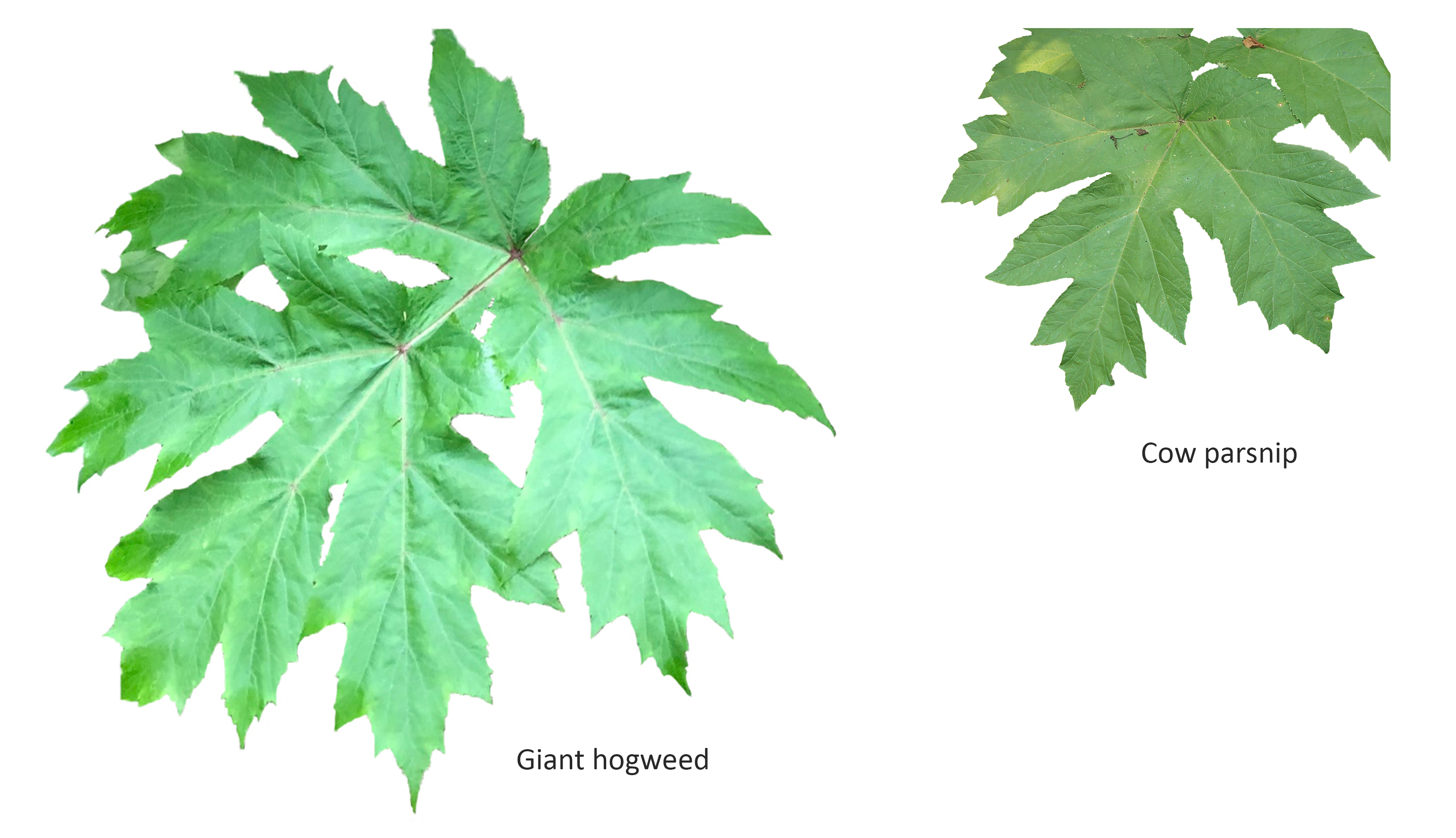
Both cow parsnip and giant hogweed have flowers arranged in an umbrella shape, known as an “umbel” to botanists, and the key identification difference is their size. Giant hogweed is truly giant. It can grow up to 15 feet tall, has sharply serrated leaves that can be up to 5 feet wide, and its flower umbels typically are 2.5 feet in diameter. Cow parsnip only grows up to 8 feet tall with three lobed leaves, and both leaf and umbel size are half the that of giant hogweed. Both species can cause skin irritation when plant sap is exposed to human or livestock skin, so be careful when interacting with a look-a-like. We are fortunate not to have giant hogweed in Minnesota, but now you should be ready to identify one and not mistake native cow parsnip for this much larger, more toxic look-a-like.
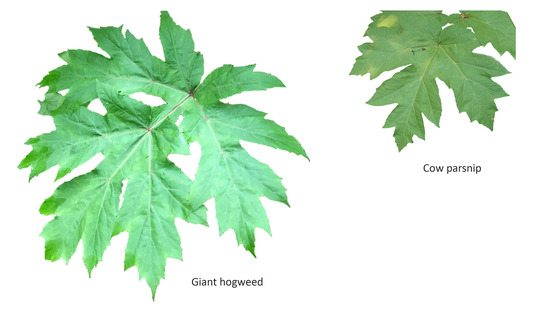 Note, giant hogweed leaves are much larger and more serrated than cow parsnip. Download photo here.
Poison hemlock versus water hemlock
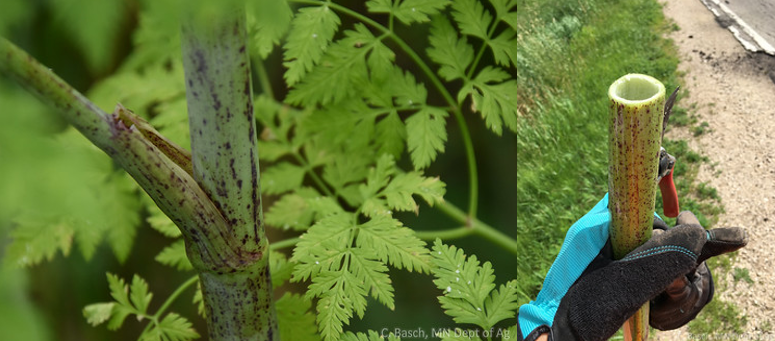
Poison hemlock has blotchy purple, hollow stems and fern-like leaves. Be careful handling this plant as all parts of it are toxic. Download photo here.
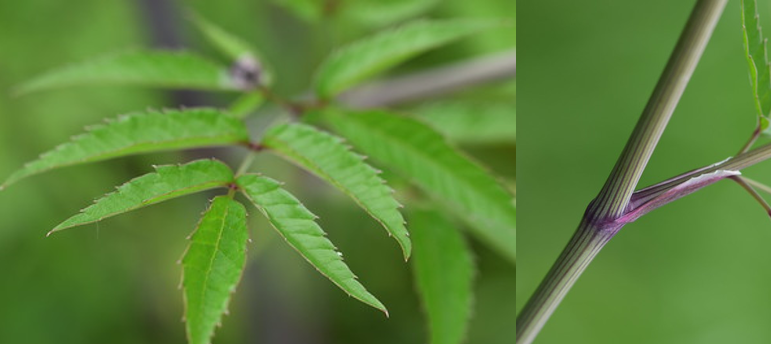
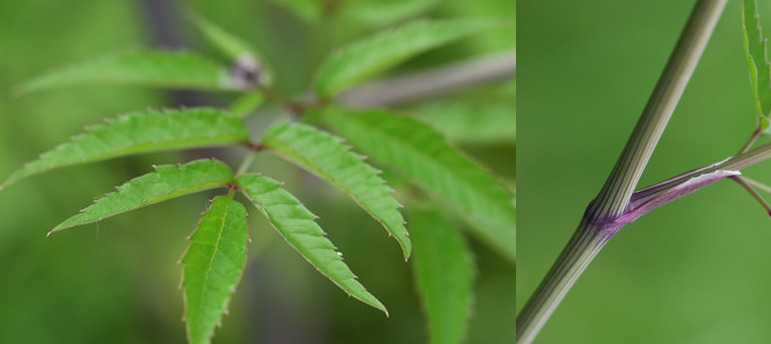 Water hemlock leaves are not fern-like and their stems have some purple but are not blotchy or hollow. Download photo here.
These species look-a-likes can be “umbel-ievably” hard to tell apart. From a distance, they both have small, white flower clusters arranged in an umbrella, or umbel, shape. However, on closer inspection, poison hemlock has spotted, blotchy, purple stems that are hollow, while water hemlock has differently shaped leaves. They require a closer look to identify but, overall, be careful and don’t touch! All parts of poison hemlock are highly toxic and can be deadly to humans and livestock if ingested. To complicate identification, both species also look like wild carrot, wild chervil, caraway, burnet saxifrage, cow parsnip, and giant hogweed. All these species are in the carrot family and share the characteristic of toxic sap, so make sure to not get it on your skin. If you’d like more carrot family comparisons, please check out the Minnesota Department of Transportation Comparison Sheets: Carrot Family.
Wild parsnip versus Golden Alexanders
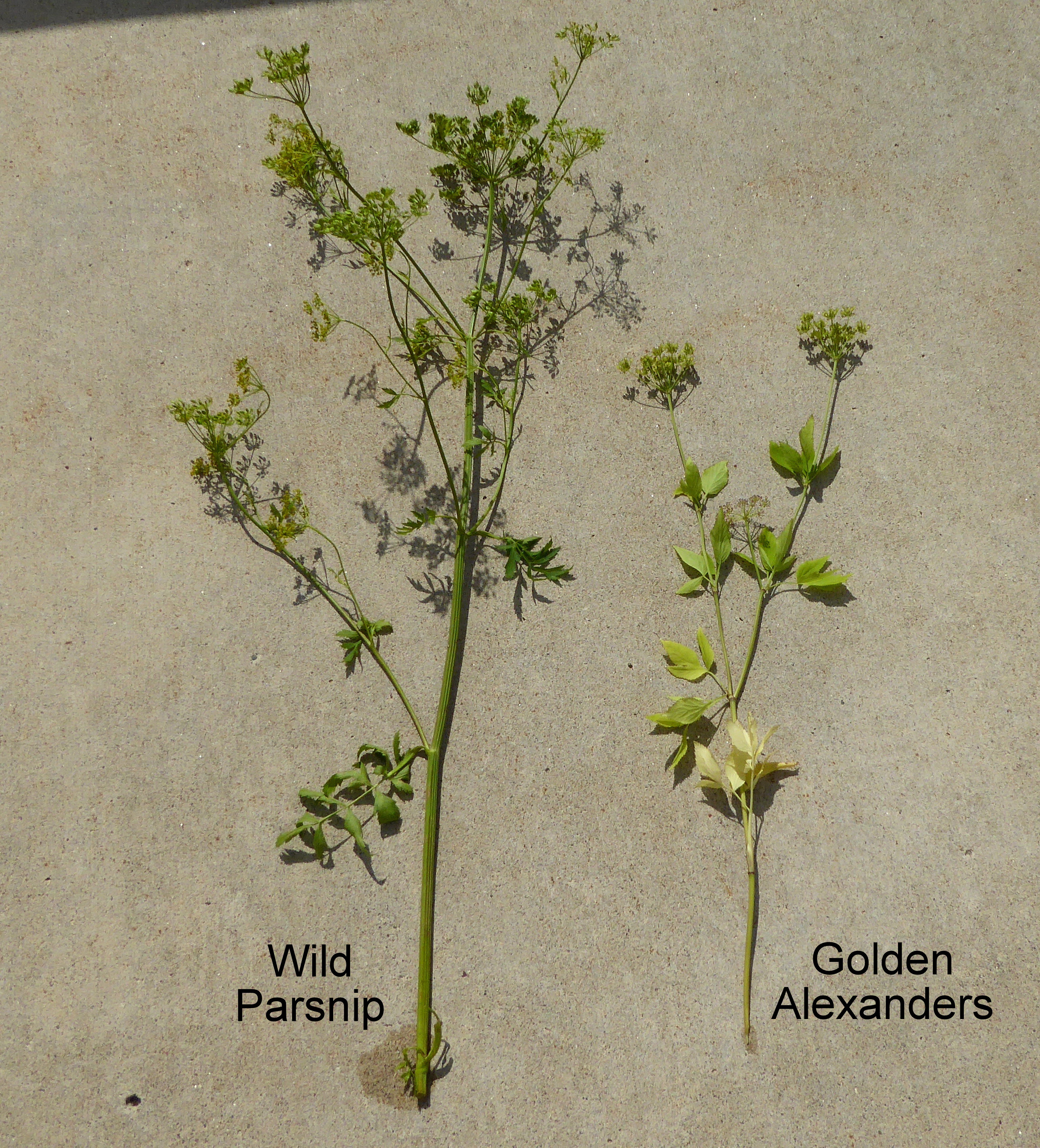
Wild parsnip is larger and has longer, more serrated leaves compared to the shorter, smaller, native Golden Alexanders. Download photo here.
For these two species you’ll have to look closely, but make sure not to touch! Wild parsnip is a toxic plant with chemicals that react with sunlight and cause painful burns and blisters to skin after contact. Ouch! To avoid the pain, make sure to pay attention to the leaves and size – wild parsnip has longer, feather shape leaves and is a larger plant. Also, take note of the location of the plant. Wild parsnip likes roadsides and disturbed areas.
Best of luck out there looking at the plants around you and figuring out their species identification. The Minnesota Department of Transportation Minnesota Noxious Weed booklet is a great resource for species identification, management options, toxicity warnings, and species comparisons. There is also plenty of information online with species comparison factsheets provided by state and local plant groups. As always, feel free to post the plant on iNaturalist or go to University of Minnesota Extension’s Ask a Master Gardener if you want more opinions on the identification. We’re crossing our fingers that you find more friends than foes!
MEDIA: Contact Brittany Raveill, MDA Communications, at brittany.raveill@state.mn.us or 651-201-6131 for more information on Weed of the Month
|