|
March 12, 2026
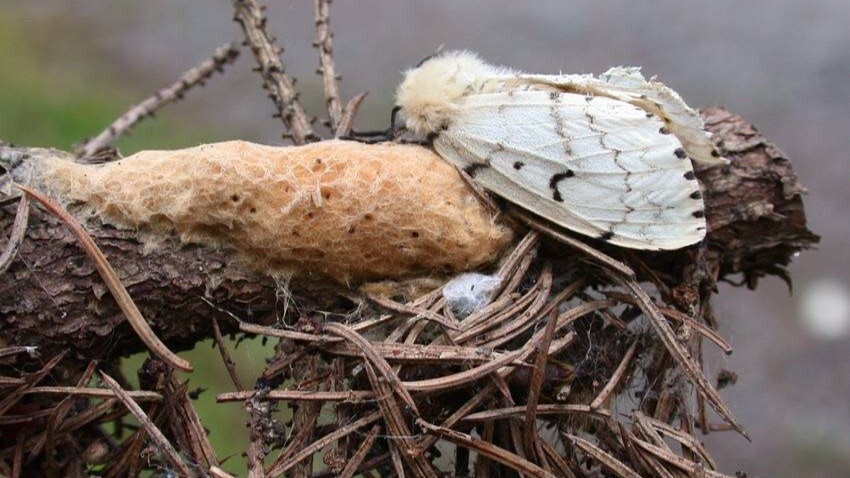
Female spongy moth with egg mass.
In 2026, the Minnesota Department of Agriculture (MDA), in partnership with the United States Department of Agriculture Forest Service Slow the Spread (STS) program and local partners, is proposing aerial management to control spongy moth populations using the mating disruption product SPLAT GM-O (Specialized Pheromone and Lure Application Technology Gypsy Moth Organic). Proposed management areas include portions of nine counties: Aitkin County, Carlton County, Fillmore County, Mower County, Olmsted County, Pine County, St. Louis County, Wabasha County, and Winona County.
Residents can use the interactive map on the spongy moth management webpage to see whether they are located within a proposed management area. If approved, aerial management in southern Minnesota is expected from mid-June through early July. Management in northern Minnesota is expected from mid- to late July.
The MDA will host several public meetings both virtual and in person during March and April to share details about the proposed project and answer questions. For the latest information on management timing, residents can sign up to receive text and email alerts specific to their area. Visit the spongy moth management webpage for meeting dates, locations, and updates.
Keep an Eye Out for Stink Bugs in Your Home
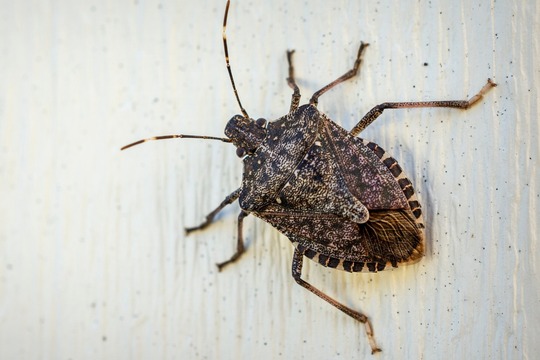
Adult BMSB have rounded 'shoulders,' an alternating dark-and-light pattern along the edges of the abdomen, dark-colored antennae with light-colored bands, and green and gold flecks on the underside of their 'shoulders'. Photo by the MDA.
During warmer days this winter, you may have noticed insects becoming active inside your home. Common examples include boxelder bugs, lady beetles, and the invasive brown marmorated stink bug.
The Minnesota Department of Agriculture (MDA) is tracking brown marmorated stink bugs across the state and asks that you report sightings outside the Twin Cities metropolitan area (Anoka, Carver, Dakota, Hennepin, Ramsey, Scott, and Washington counties).
Review the brown marmorated stink bug look-alikes document to help ensure proper identification. Several native insects resemble this species, and accurate identification helps staff respond appropriately.
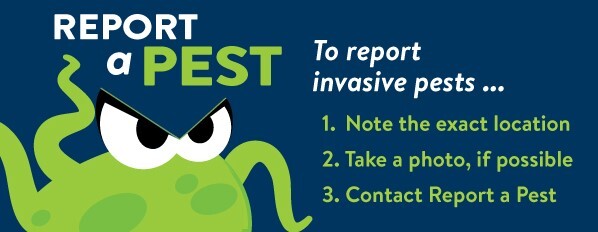
If you see a brown marmorated stink bug, please take a clear photo of the insect or collect a specimen for identification. Visit the Report a Pest webpage for more information on how to submit a report.
New Smarty Plants Episode: Bee the Change
Smarty Plants is a podcast exploring invasive insects and noxious weeds that threaten Minnesota’s natural and agricultural resources.
A perfectly manicured lawn may be a goal for many homeowners but all that freshly mowed grass doesn’t provide much habitat for Minnesota’s pollinators. Dan Shaw and Erin Loeffler from the Minnesota Board of Water and Soil Resources join us to talk about pollinators and the Lawns to Legumes program. This initiative helps Minnesotans rebuild vital pollinator habitats in their own yards and communities. Listen in to learn how you can “Bee the Change.”
Subscribe to Smarty Plants today so you don’t miss an episode!
In the Field: 2025 Year in Review
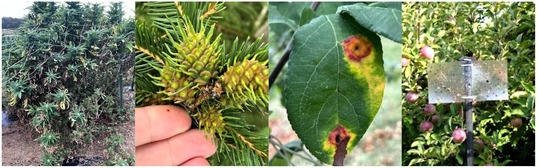
From left to right: hemp borer damage; eastern spruce gall adelgid; red star rust on a Zestar apple leaf; sticky trap in an apple orchard.
Protecting Minnesota’s agriculture, natural resources, and plant industries requires year-round work by the Minnesota Department of Agriculture (MDA) and its partners. Through inspections, surveys, monitoring, and regulatory programs, the MDA works to prevent the introduction and spread of harmful plant pests, diseases, and invasive species across the state.
These efforts help maintain healthy crops, protect ecosystems, and support Minnesota’s agricultural economy. The stakeholder reports below highlight key work carried out in 2025, including nursery inspections, invasive pest surveys, weed management, and agricultural monitoring across Minnesota.
2025 Hemp Annual Report
2025 Nursery Certification and Plant Pest Regulatory Annual Report
2025 Status of Invasive Field Crop Pests in Minnesota
2025 Status of Invasive Forest and Landscape Pests in Minnesota Report
2025 Status of Invasive Fruit and Vegetable Pests in Minnesota
March Weed of the Month: 2025 New County Finds of Prohibited Eradicate Noxious Weeds
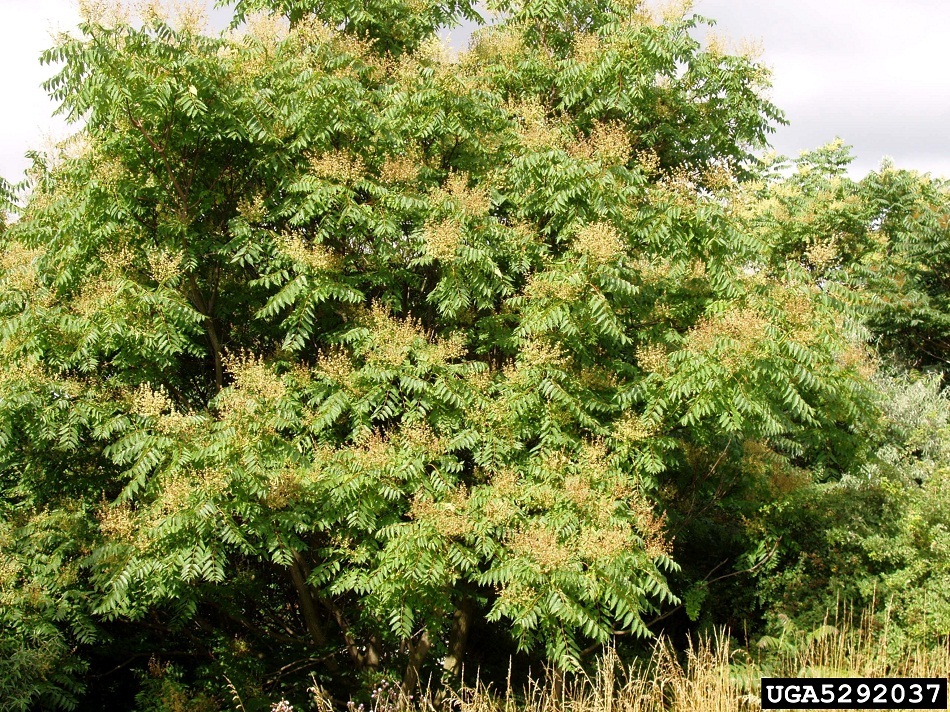
Tree of heaven displaying dense foliage and abundant clusters of yellowish-green flowers in full bloom. Jan Samanek, Phytosanitary Administration, Bugwood.org.
Three Prohibited Eradicate species were confirmed for the first time in three counties
By Emilie Justen, Minnesota Department of Agriculture - Noxious weeds can damage public health, the environment, public roads, crops, livestock, or other property. In Minnesota, noxious weeds are classified into four categories: Prohibited Eradicate, Prohibited Control, Restricted, and Specially Regulated.
Highly damaging plant species with few infestations are the highest priority for management. They are in the Prohibited Eradicate category. To prevent these species from becoming widespread throughout the state, the Noxious Weed Law requires that all above and below ground plant parts are destroyed.
Read more
Help Protect Minnesota Forests from Invasive Pests
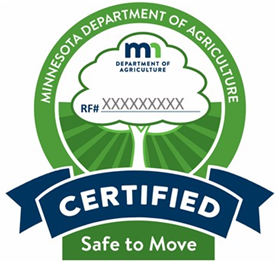
Look for the MDA certified logo.
Moving untreated firewood can spread harmful pests like emerald ash borer, spongy moth, and Asian longhorned beetle; species that have destroyed millions of trees across the United States. Even native pests like carpenter ants and bark beetles can hitch a ride on firewood and cause problems for homeowners.
Help stop the spread:
- Buy firewood where you burn it! Locally sourced wood is less likely to carry invasive pests.
- Use MDA certified firewood with the official seal. View the list of Certified Firewood Producers in Minnesota.
- Avoid transporting hardwood firewood across county or state lines. It is illegal to move hardwood firewood out of Minnesota quarantined counties unless it is MDA certified. Violations can result in fines of up to $7,500 per day.
Visit the MDA's Buying Firewood webpage for more information.
Explore the Minnesota Grown Directory

Planning your garden this season? Start local. The Minnesota Grown Directory connects you with nurseries, garden centers, farmers markets, community supported agriculture (CSA) farms, and more across the state.
Find the plants, seeds, and local expertise you need and support Minnesota growers while you’re at it. Visit minnesotagrown.com to explore the directory and start planning.
|
Minnesota Noxious Weeds
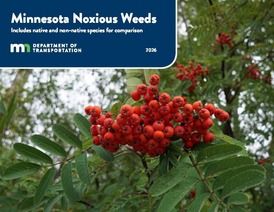
The Minnesota Noxious Weeds invasive plants booklet from the Minnesota Department of Transportation provides information on identifying and managing species regulated under Minnesota’s Noxious Weed Law. Because regulatory status may change more frequently than the printed version is updated, always consult the current Noxious Weed List for the most up-to-date information.
|
|