|
Having trouble viewing this email? View it as a Web page.
March 2, 2026
March Weed of the Month: 2025 New County Finds of Prohibited Eradicate Noxious Weeds
Three Prohibited Eradicate species were confirmed for the first time in three counties
By Emilie Justen, Minnesota Department of Agriculture - Noxious weeds can damage public health, the environment, public roads, crops, livestock, or other property. In Minnesota, noxious weeds are classified into four categories: Prohibited Eradicate, Prohibited Control, Restricted, and Specially Regulated.
Highly damaging plant species with few infestations are the highest priority for management. They are in the Prohibited Eradicate category. To prevent these species from becoming widespread throughout the state, the Noxious Weed Law requires that all above and below ground plant parts are destroyed.
Collaborations with many partners, including private landowners, help the MDA successfully identify and detect noxious weeds in the Prohibited Eradicate category. In 2025, three Prohibited Eradicate species were confirmed for the first time in three counties:
|
Species
|
County
|
|
Common teasel (Dipsacus fullonum)
|
Rice
|
|
Dalmatian toadflax (Linaria dalmatica)
|
Otter Tail
|
|
Tree of heaven (Ailanthus altissima)
|
Dakota
|
Common teasel is a biennial with a deep taproot. It produces large quantities of seed and thrives in sunny, open habitats such as roadsides and pastures. Treatments are planned for spring of 2026.
Dalmatian toadflax is a perennial that produces a stalk of yellow flowers resembling snapdragon. It prefers sunny areas with well drained, sandy, or coarse textured soil such as roadsides, pastures, or gravel pits. The small infestation in Otter Tail County is being managed.
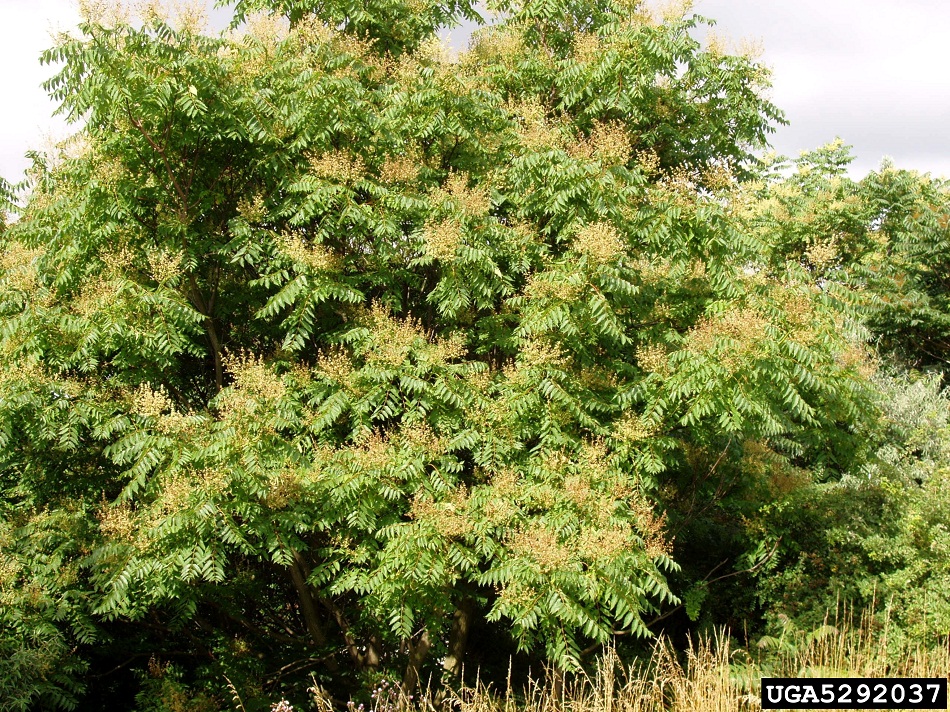
Tree of heaven is a deciduous tree that can grow in a large colony, spreading from horizontal roots. It thrives in areas of disturbance in a wide range of soil types. It is host to an invasive insect called spotted lanternfly (Lycorma delicatula), which is a pest of grape, apple, and nursery crops. Management began in fall 2025 and will continue throughout 2026 and 2027.
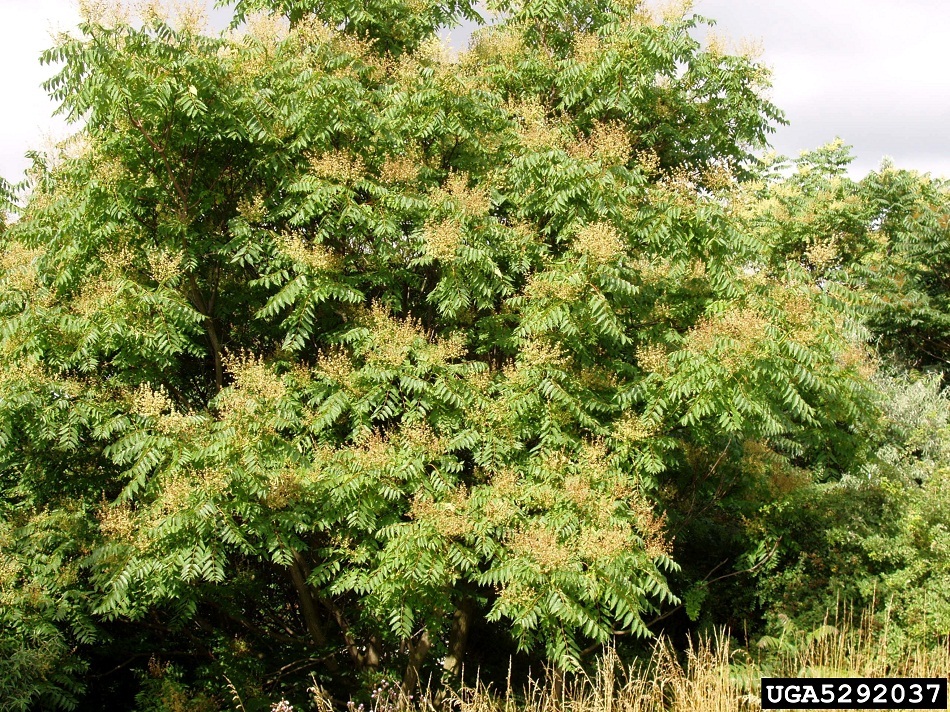 Tree of heaven displaying dense foliage and abundant clusters of yellowish-green flowers in full bloom. Jan Samanek, Phytosanitary Administration, Bugwood.org
Download photo here.
You can learn more about these species by visiting the Minnesota Department of Agriculture’s (MDA) Noxious Weed List. You can also listen and subscribe to Smarty Plants, a Minnesota Department of Agriculture podcast.
MEDIA: Contact Brittany Raveill, MDA Communications, at brittany.raveill@state.mn.us or 651-201-6131 for more information on Weed of the Month
|