Wednesday, June 30 from noon to 1 p.m.
Join other environmental educators to reconnect, share knowledge, and have some fun! Hennepin County staff will share updates on what we have been up to over the past year and new/returning resources available to environmental educators. Participants will get the chance to share resources and conversation in breakout rooms and provide input about the future of the network. Register to attend.
Agenda
- Welcome
- Introductions
- Trivia
- Breakout rooms
- Hennepin County environmental education resources
If you are unable to attend the meeting, don't worry! A recording, along with ways for you to provide your input, will be shared in our Facebook group after the meeting.
New climate action resources
Figuring out where to focus your climate efforts
When thinking about climate change, people often wonder: “So, what can I do?” A new article on the climate action website provides a guide for figuring out where best to focus your efforts.
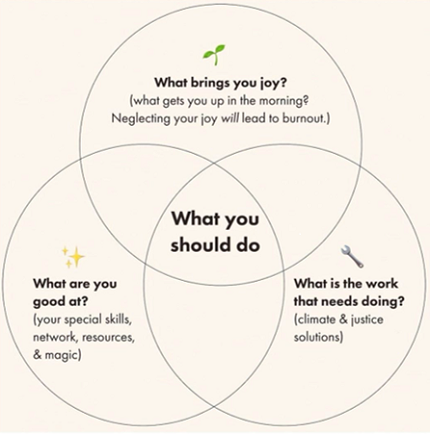
Climate change is a broad issue, so addressing the climate crisis will require a lot of different people putting their skills and talents to work in a lot of different areas. The intersection of the things that bring you joy, use your special skills, networks, and resources, and addresses a climate solution that you want to work on represents a good place to focus.
It’s also important to consider: What can we do? Think about the organizations you are involved with and the systems you can influence. And consider who is your team – the people that you can work with to help you bring about this change. We can accomplish more by working together.
Image credit: How to Save a Planet
Tips for talking about climate change
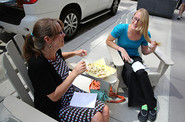
Conversations are important. They promote social change, develop social norms, and can be deeply influential to the people involved. But when it comes to climate change, we seem to have made an informal agreement as a society to not talk about the issue – a phenomenon referred to as “climate silence.”
Not talking about climate change leads to a perception that caring about and taking action on climate issues is not a social norm, which is why talking more about climate change is one of the most important actions we can take.
A new article on the climate action website provide tips for talking about climate change, including:
|
- Remember that most people are concerned about the issue, and you might agree more than you expect.
- Find common ground, including shared interests, areas of concern, and values.
- Ask questions and genuinely listen.
- Tell your story and share what actions and solutions you are excited about.
- Emphasize the scientific consensus (that 97% of climate scientists have concluded that human-caused climate change is happening) and the benefits of climate action – you don’t have to have a deep understanding of climate science to have an effective conversation.
- Maintain realistic expectations for your conversation, enjoy it, and learn from it.
New video highlights treatment as an option to preserve high-value ash trees
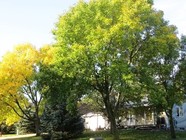
The trees around us provide many benefits. They improve air and water, make our communities healthier, create wildlife habitat provide shade, save energy, and increase property values. The older the tree, the more benefits it provides.
Emerald ash borer, an invasive tree pest that attacks and kills ash trees, are the biggest current threat to our trees. There are over 1 million ash trees in Hennepin County, and all of them are threatened by the emerald ash borer.
A healthy, mature ash tree may be worth saving, and treatment with an insecticide is an option to preserve ash trees of high value.
Our new video, protect ash trees from the threat of emerald ash borer (YouTube), provides tips on how to determine if a tree is worth saving and shows how treatment works.
|
Additional resources to help raise awareness about emerald ash borer and managing ash trees include:
Ojibwe and Dakota lessons from Project Learning Tree
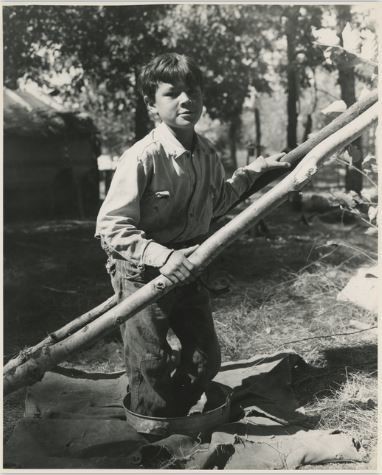
An Ojibwe boy uses two birch poles as supports while he dances on wild rice to separate the husks from the seed. Photo is from the Minnesota Historical Society
Use Minnesota forests as your "window to the world" to integrate indigenous Ojibwe and Dakota content into your K-8 curriculum. The lessons help meet Minnesota's academic standards in science, social studies, and English language arts, while sharing relevant, place-based knowledge about the people who have inhabited our state for hundreds of years.
About the lesson writer: Onondaga by birth, Larissa Harris-Juip, has lived and worked in northern Minnesota for almost two decades. She is working toward a Ph.D. at Michigan Technological University, studying Industrial Heritage and Archaeology. She has an M.A. from the University of Manitoba in Anthropology and a B.A. from Minnesota State University-Moorhead in Anthropology with an Archaeology emphasis and a History minor.
Access the lessons here. You will also find important teacher tools for understanding about Indian lands in Minnesota, treaties, vocabulary and pronunciation guides, more information about the lesson writer, and more.
Food waste prevention webinars
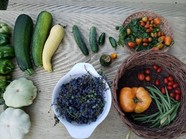
Learn how to save money, set a good example, and have a positive impact on the planet by attending a food waste prevention webinar! The webinar will provide tips and tricks for making the most of your food through shopping, storage, and cooking.
Webinars are scheduled for:
- Wednesday, June 23 at 7 p.m.
- Thursday, June 24 at noon (open to residents of apartment and condos only)
- Friday, June 25 at noon
The webinars will be hosted by Hennepin County GreenCorps member, Marielle Mateo, and they will be about an hour with time for questions. The webinars are offered free of charge, but registration is required.
Spread the word! Download a media kit (DOCX) with a newsletter article, social media posts, and photos.
|
Communities grow greener when young people have a voice
Building alliances for place-based learning and civic action
Tuesday, June 22 from 2 to 3 p.m.
 |
|
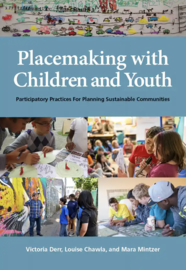
This webinar from the North American Association of Environmental Education (NAAEE) will walk you through key steps in involving young people in local investigations and civic action to improve their communities, including building sustained relationships with community partners. It demonstrates how to apply two complementary resources—Community Engagement: Guidelines for Excellence by NAAEE and Placemaking with Children and Youth: Participatory Practices for Planning Sustainable Communities by the webinar presenters. Learn more and register. |
Climate change adaptation
Wednesday, June 23 from 1 to 3 p.m.
 |
|
This webinar from the EPA’s Watershed Academy will discuss the challenges of climate change adaptation planning, including the methodologies and tools currently available and how they are being used to develop adaptation strategies. Speakers will include scientists and managers whose organizations are making decisions and moving to action in the face of uncertainty. Learn more and register. |
A new garden ethic
Thursday, June 24 from 6:30 to 8:30 p.m.
Join the Minnesota Landscape Arboretum to learn why gardening with native plants is an ethical imperative in a world of climate change and extinction. Explore ecology, science, psychology and philosophy as we ponder how to embrace gardens as places to create empowering social and cultural change. $10 member/$25 non-member. Learn more and register.
Demonstrating the power of environmental education
Wednesday, July 7 from 2 to 3 p.m.
How do we demonstrate evidence-based outcomes of environmental education without letting go of the passion that breathes energy into the field? You will hear from researchers and learn about communications tools you can use to structure and evaluate programs, provide professional development, apply for funding opportunities, make the case for environmental education to policymakers, and more. Learn more and register.
Green Schools Conference
June 28 and 29

The Green Schools Conference is an opportunity for leaders and advocates to collaborate on transforming schools into healthier, more sustainable places to learn, work, and play. The virtual conference will focus on advancing the three pillars of sustainable schools: positive environmental impact, increased health and wellness, and environmental and sustainability literacy. Learn more and register.
|
Natural Start Alliance 2021 Nature-Based Early Learning Virtual Conference
July 26 to 30
Registration is now open for the largest national gathering of nature-based early education professionals!
Join hundreds of professionals around the globe for the Nature-Based Early Learning Virtual Conference, hosted by the Natural Start Alliance. Explore the role of nature and education in promoting healing, addressing injustice, and helping children, families, communities, and the planet thrive.
The conference will feature more than 50 interactive live sessions, more than 60 on-demand sessions, and virtual tours of up to six nature preschools in the U.S. and around the world. Learn more and register.
|
Summer Institute for Climate Education
July 28 to 30

Join Climate Generation, the NOAA Climate Office, and The Wild Center’s Youth Climate Program virtually at the Summer Institute for Climate Change Education.
The 17th annual Summer Institute will focus on challenging climate change misinformation, addressing climate change inequalities, and focusing on community-centered solutions. Institute attendees will have the opportunity to network with national and regional climate change education leaders. Learn more and register.
|
Community forestry corps member with Mississippi Parks Connection
Mississippi Parks Connection is seeking a forestry corps member to work 40 hours per week starting in September 2021.
Community Forestry Corps Members serve at a nonprofit or public agency with a mission to preserve and protect Minnesota’s environment and strengthen communities, with a focus on preserving and increasing tree canopy. Service could include tree inventorying, tree planting events, gravel bed nursery design and management, emerald ash borer management plan development, citizen volunteer recruitment and training, and outreach and education events. Learn more and apply.
Wayzata Sailing partners with artists to educate about aquatic invasive species with the help of a grant from Hennepin County

Wayzata Sailing received an aquatic invasive species prevention grant from Hennepin county to work with artists to create sails to educate the public about aquatic invasive species (AIS). This art installation intends to create long lasting and widespread awareness of AIS on Lake Minnetonka and in the surrounding community. Five unique sets of sails that highlight AIS issues have been created by local and diverse artists and will be unveiled at the Wayzata Art Experience on Saturday, June 26.
|
The sails will be hoisted aloft at noon at the Wayzata Public Docks, located at the west end of the new Panoway Park in Wayzata (intersection of Lake Street and Broadway Ave). After unveiling, the sails will be viewable during the entirety of the Wayzata Art Experience, either on the docks (if wind allows) or out and about for public sailboat rides in Wayzata Bay.
The artists who are creating the sails are: Aimi Dickel, Geno Okok, Josh Desmit, Kati Duesler, and Marlena Myles.
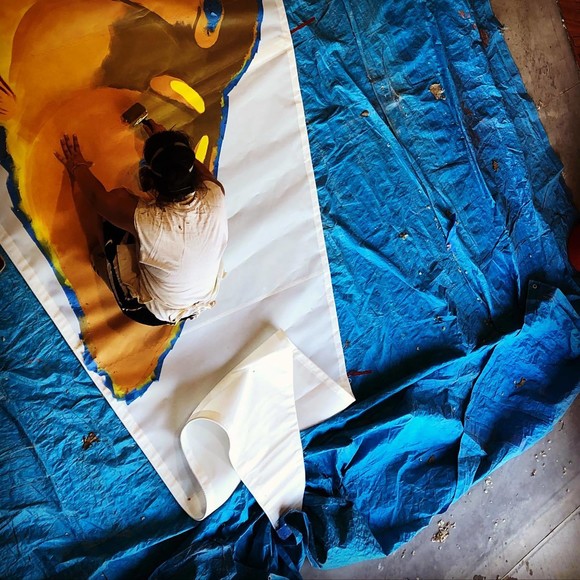 Aimi Dickel works on a sail as part of the project.
Wayzata Sailing has previously received Green Partners environmental education grant funding from Hennepin County. One of the artists (Geno Okok) is a Minnesota Water Steward, a program that Hennepin County also supports.
Wayzata Sailing is also offering free sailboat rides from noon to 4 p.m. on Saturday, June 26 and 10 a.m. to 1 p.m. on Sunday, June 27.
Bolder Options continues summer programming on outdoor sustainability
Bolder Options continues their work educating youth and their mentors on outdoor sustainability topics as part of their Hennepin County Green Partners youth environmental education grant. This spring they explored growing local food. Program participants will be in the garden weekly for weeding, watering and harvesting while learning about environmental sustainability issues related to growing food throughout the summer. This summer they will also explore sustainable transportation.
|
Bolder Options hosted a garden planting night in late May where mentor-mentee pairs were able to plant seedlings that had been grown from seeds planted in March. They also learned how to plant seeds. Pairs were assigned plots to design and plant. The pairs will take care of the garden throughout the summer.
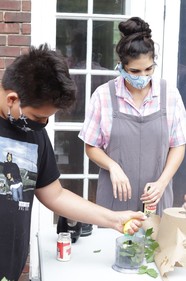
On planting days, mentors and mentees make snacks using produce from the garden and take extra produce home to their families. Most recently, they made and ate pesto from the perennial herbs growing in the garden - lovage, parsley and mint - a delicious snack to kick off the gardening season!
|
|
 |
|