|


In February, each eligible reporting unit will receive a credit for Defined Contribution employer contributions it paid for employees who did not vest in the past year. This is an annual credit distributed around February each year.
The contributions will appear as a payment credit on your pay cycle statements in early-to-mid-February. The credit will be visible to you by clicking on the ACH Payments Received link. The money can only be used to offset future employer contributions on your pay cycle statement(s), according to IRS rules. You are still required to withhold the appropriate employee contributions from your employees. The credit cannot be used to offset employee contributions.
Web administrators will receive more information as soon as it becomes available.
|

In December’s Employer News we included an article indicating the Michigan Office of Retirement Services (ORS) would identify individuals who earn $150,000 or more in Federal Insurance Contributions Act (FICA) wages in 2025. We indicated we would send a list of these individuals to their reporting units (RUs) in January or February with a request to verify the employee actually earned that amount.
Based on further information, ORS will not be sending an initial list. Instead, ORS will monitor Detail 4 wages and DC/PHF contributions throughout the year. ORS will confirm 2025 FICA wages for your employees if it’s projected they will contribute catch-up contributions, which are DC/PHF contributions over the IRS normal limit of $24,500.
If it’s determined an employee will contribute to catch-up and they earned more than $150,000 in FICA wages in 2025, ORS will update their pre-tax contribution rate to 0% and increase their Roth contribution rate. ORS will notify the employee by letter. If the employee decides to switch back to pretax, they may do so but may face tax implications. ORS will not switch the employee back to Roth contributions if the employee switches back to pretax.
This change of contributions to the Roth will be visible on your View DC Feedback File on the Employer Reporting website. See the Reporting Instruction Manual sections 7.04.01: View DC Feedback File and 7.01.08: Using the Download Detail link for help.
|

Some compensation types are clear and occur frequently enough that you know whether to report them on a Detail 2 (DTL2) record. Some, however, are less frequent, and assumptions can lead to errors. This is a common error found during the Payroll Audit.
Additional duties and other payments are two categories that may sound broad, but the guidelines and examples provided in the RIM should help you determine whether to report a payment on a DTL2 record.
If you are not sure how to report a type of compensation or pay, please review section 4.04: Special situations in the Reporting Instruction Manual (RIM). This section lists types of compensation that may or may not be reportable on a DTL2 record and provides examples of when ORS considers a payment reportable or nonreportable.
If you have questions about the reportability of a payment, please contact ORS Employer Reporting at ORS_Web_Reporting@michigan.gov.
|


Every year, the IRS announces the latest contribution limits for retirement savings accounts. The limits for 2026 have increased. Review the IRS limits for more information based on age and plan type.
|
|
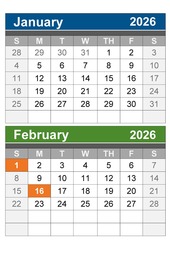
Feb. 1
Scheduled System Maintenance (Employer Reporting website unavailable).
Feb. 16
Presidents Day - ORS is not open on this state holiday.
Recent communications
 No communications have been sent to all reporting units since the last newsletter.
 Recent RIM updates
6.03.06: State of Michigan Roth 457 Plan contributions

Include reporting unit number on email correspondence
When sending email correspondence to Web Reporting be sure to include your reporting unit (RU) number. Your RU number is necessary for us to help you with even the most general questions.
|
|
|
|