The federal Setting Every Community Up for Retirement Enhancement (SECURE) 2.0 Act provides guidelines for individuals who earn $150,000 or more in Federal Insurance Contributions Act (FICA) wages in 2025 and who contribute more than the normal IRS limit in 2026 to have catch-up contributions placed into a Roth account.
The Michigan Office of Retirement Services (ORS) will review Detail 4 (DTL4) – DC Contribution records to identify individuals earning $150,000 or more in FICA wages. A list of these individuals will be sent to their reporting units (RUs) with a request to verify the employee actually earned that amount.
Once the RU validates the amount, ORS will notify Voya Financial to place an indicator on the employee’s account. The indicator will be triggered if the employee is over age 50 and they contribute more than the normal IRS limit ($24,500 for 2026). Before the employee reaches the normal IRS limit, ORS will switch contributions with Voya from pretax contributions to Roth contributions. This change will be visible on your View DC Feedback File on the Employer Reporting website. See the Reporting Instruction Manual sections 7.04.01: View DC Feedback File and 7.01.08: Using the Download Detail link for help.
When someone’s contributions are sent to the Roth account because they have reached the IRS limit, ORS will notify the employee by letter. If the employee decides to switch back to pretax, they may do so but may face tax implications. ORS will not switch the employee back to Roth contributions if the employee switches back to pretax.
RUs will receive further instructions in January 2026 when ORS creates a list of highly compensated employees.

Effective Jan. 1, 2026, the interest rate charged on late payments will continue to be 6%.
The interest rate charged on any late contribution payment is determined by the actuarial rate of return from the prior year’s investments less 2%; however, the rate cannot be less than 6%. The most recent calculated actuarial rate of return was 6.81%.
Delinquent payments are a serious matter. The Michigan Office of Retirement Services (ORS) closely monitors reporting units (RUs) in Defined Benefit (DB) and/or Defined Contribution (DC) shortfall.
On the seventh business day from the report end date, review the employer statement balance due. Ensure payments are made in full and on time to avoid a daily (including weekends and holidays) interest assessment on the delinquent balance.
See the Reporting Instruction Manual (RIM), sections 8.02.02: Late payment fees and interest charges and 7.00.01 Payroll calendars and due dates for more information.
|

In preparation for the 2026 Small Steps campaign, a comprehensive list of your reporting unit’s (RU’s) employees with a Defined Contribution (DC) component is now available upon request by emailing Employer Reporting at ORS_Web_Reporting@Michigan.gov. Please use the subject line “Small Steps list” in your email.
Using the list you receive, please complete the following in preparation for the campaign. Note: The deferral rates on your list are as of Oct. 15, 2025. The list you received is not final and is for reference only.
- Begin to clean up your feedback file before the Small Steps campaign begins. For instructions on how to do that, refer to the Reporting Instruction Manual (RIM) section 7.04.01: View DC Feedback File.
- Complete a Detail 4 (DTL4) – DC Contribution termination record for each employee on the list who no longer works for your RU. Refer to the RIM section 7.04.02: Reporting a terminated employee on a DTL4 record for instructions about submitting the required DTL4 record.
- Verify Social Security numbers (SSNs) are correct. Contact ORS with any SSN issues or corrections before taking any action.
As part of the Small Steps campaign, employees in the Pension Plus Plan, Pension Plus 2 Plan, DC Plan, or Personal Healthcare Fund who are not contributing at least 15% to their State of Michigan 457 Plan in mid-December a mailer from Voya Financial received about their contribution rates.
A final comprehensive list of employees with a DC component will be included on the View DC Feedback File at the end of February 2026.
If you have any questions related to reporting, email Employer Reporting at ORS_Web_Reporting@Michigan.gov.
|
The IRS determines limits to how much employees can contribute to a qualified plan each calendar year. The limits for 2026 are posted on the Voya Financial website.
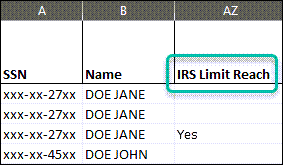
The Michigan Office of Retirement Services (ORS) calculates up to the yearly IRS contribution limit ($23,500 in 2025) using the employee contributions reported to ORS only. Once the annual IRS limit has been reached, column AZ on the download detail will indicate “Yes.” ORS will only charge for the 4% mandatory employer Defined Contribution (DC) contribution rate after the IRS limit has been reached for members of the DC Plan.
If your reporting unit (RU) offers a deferred compensation plan outside the State of Michigan 401(k) and 457 Plans, your employees and RU are responsible for monitoring the IRS limits made collectively to all 457 plans you offer.
You may save work for your RU by monitoring amounts contributed to plans you offer. Any amount the employer withheld over the IRS limit needs to be refunded to the employee.

Michigan’s State School Aid Act includes language in Section 27l that’s new for fiscal year 2026. Section 27l(2) of the act states that the funds are “to increase compensation for educators.” The statute defines “educator” broadly, including not only teachers but also paraprofessionals, counselors, bus drivers, and other school staff.
The Michigan Office of Retirement Services (ORS) has determined that the 27l(2) payments (which appear on your state aid report as “educator compensation 27l(2) payments”) remain reportable as compensation. These payments should be reported on both Detail 2 (DTL2) – Wage and Service and Detail 4 (DTL4) – DC Contribution records.
|
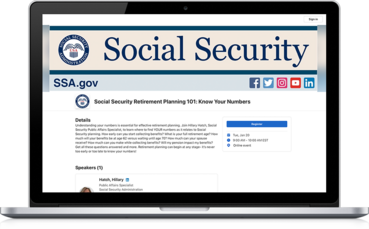

The Social Security Administration is partnering with the Michigan Office of Retirement Services to offer free webinars in January 2026.
The one-hour webinar sessions will provide details on the Social Security retirement benefits, benefits for spouses and divorced spouses, factors in determining the right time to file, how you can work and collect benefits at the same time, and how and when to file an application.
In addition, the sessions will include information on when to apply for widow(er) and Medicare benefits.
Click a date and time below to register:
- Tuesday, Jan. 13, 2026, noon-1 p.m.
- Wednesday, Jan. 14, 2026, 3-4 p.m.
- Thursday, Jan. 15, 2026, 11 a.m.-noon
- Tuesday, Jan. 20, 2026, 9-10 a.m.
|
|