|
(Para una versión en español, haga clic aquí.)
Celebrating Michigan’s Fall Harvest

October brings the heart of Michigan’s harvest season, a time when employers, growers and farmworkers work side by side to bring in the last of the fall crops. Orchards and farms welcome families for apple picking, pumpkin patch visits, and corn maze adventures seasonal traditions that not only celebrate fall but also support local agriculture and the communities behind it.
As the season reaches its peak, our team continues connecting with farmworkers and employers to strengthen relationships, support onsite needs and highlight the essential role both play in keeping Michigan’s agricultural heritage thriving.
October reminds us how important it is to uplift and champion the people who make this season possible whether through a field visit, a community event or simply showing support at a local farm. Locate a Michigan pumpkin patch near you.
|
Collaboration Across Programs Helps Farmworker Return Home Safely

For more than 25 years, Eva has traveled from Weslaco, Texas, to Michigan to support this work. She spent many seasons at Burma Farms and, for the past five years, has returned to Traverse City for the cherry harvest.
After losing her husband, Eva relies on seasonal farm labor to support herself through the winter, making each paycheck critical.
But when this year’s cherry harvest ended and Eva discovered her vehicle needed new tires before making the long drive back to Texas, she knew she needed additional support.
Read more about Eva here.
|
Spotlight: Agricultural Employment Practice Survey Supports Data‑Driven Services

The Agricultural and Foreign Labor Services (AFLS) team is collecting current wage and employment practice information for agricultural jobs by crop, occupation and region. Your responses help establish prevailing wages used by the U.S. Department of Labor for both U.S. farmworkers and employers using the H‑2A program. Because conditions change each season, we update this information throughout the year.
Why your participation matters:
- Supports fair wages
- Ensures wage data reflects real, in season conditions
- Helps reduce compliance issues for your operation
By completing this short survey, you help keep wage data accurate and up to date for Michigan’s agricultural workforce. Participation is voluntary, and all information is kept strictly confidential.
Open the Agricultural Prevailing Wage and Practice survey.
The survey takes five minutes or less. If you prefer assistance by phone, contact us at LEO-FLCOffice@michigan.gov or at 517-290-9298.
|
Expanding Opportunities Through a Strong MSU Partnership: Creating Pathways to Education and Training for Farmworker
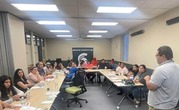
The NFJP program continues to expand outreach efforts through strong collaboration with MSU’s High School Equivalency Program (HEP). This partnership helps ensure migrant and seasonal farmworkers and their dependents can access education and support services that reduce barriers to success.
Working alongside these efforts, AELs support coordination with Michigan Works! partners to strengthen connections across programs.
|

Further strengthening connections, on Aug. 20, NFJP invited MSU HEP Director Miguel Torres to present at the monthly Partner Engagement Meeting, bringing together Michigan Works! Agencies and NFJP implementing partners to learn about HEP services and co‑enrollment opportunities.
Shortly after, on Aug. 29 and Sept. 2, NFJP Outreach and Enrollment Coordinator Cristo Garcia presented at HEP orientation sessions in Oceana and Van Buren counties, introducing NFJP and highlighting co‑enrollment as a tool to help participants overcome educational and employment barriers.
As preparations continue for the upcoming GED instructional year, several NFJP participants are already co‑enrolled and ready to benefit from aligned support.
If you are interested in learning more about NFJP please click on the NFJP link and complete the NFJP intertest form.
|
Supporting First‑Generation Scholars Through Partnership and Outreach

Outreach and Enrollment Coordinator Cristo Garcia and State Administrative Manager for Agriculture and Foreign Labor Services, Ginger Vallejo, recently joined MSU’s College Assistance Migrant Program (CAMP) Welcome Reception, an event dedicated to uplifting students from migrant and seasonal farmworker backgrounds as they begin or continue their higher‑education journey.
At the reception, Cristo and Ginger connected with incoming and returning CAMP scholars, listening to their goals, celebrating their accomplishments and sharing information about NFJP services designed to help remove barriers to education and employment. They also met with partner organizations across campus, strengthening relationships that open new pathways for student support and outreach.
The reception celebrated MSU’s long‑standing College Assistance Migrant Program, which has supported first‑generation students through the critical early years of higher education and built a strong community of scholars, mentors and alumni.
By participating in this event, the team reinforced a shared commitment to ensuring migrant and seasonal farmworker students have access to the resources, guidance and encouragement they need to thrive. Moments like this highlight how collaboration creates opportunity—when partners come together with a unified mission, students feel welcomed, supported and empowered to succeed.
|
Discover exciting job opportunities across Michigan!
Corewell Health Partnership Supports Participants Entering the Health Services Field

NFJP has partnered with Corewell Health to create a pipeline for participants to enter the health field. Coordinated by Diana Hernandez, Business and Community Liaison, NFJP invited a recruitment representative from Corewell Health to present to NFJP implementing partners, Michigan Works! Agencies on Sept. 17, 2026.
The presentation explained opportunities that may exist for farmworkers in the healthcare and adjacent fields, including patient-facing and clinical support, operational, access and customer support, and specialty technical services. NFJP and Corewell Health laid out a clear pathway for identification, participant interest, career discovery, recruiter connection, and warm referral. NFJP successfully referred a participant in Corewell Health’s recruitment team who has started training and is interested in entering healthcare industry.
|
State Monitor Advocate Spotlight
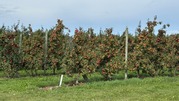
Katalina Soria, Compliance Monitoring Analyst, conducted outreach activities in Holland in collaboration with AEL Ruben Santellan. Together, they visited 3-4 agricultural employers and provided them with information regarding available workforce services, as well as the potential benefits of utilizing the Agricultural Recruitment System.
The employers represented a variety of operations, including nurseries, apple orchards, greenhouses, and blueberry farms. Most, if not all, of the employers indicated that they primarily hire domestic workers and have established relationships with these workers, which encourages them to return for subsequent seasons. However, a few employers reported that they also utilize H-2A workers to meet their seasonal workforce needs.
|
Apples in Focus: Insights from the Latest Field Visit
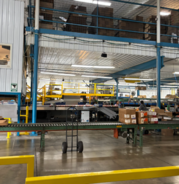
Apples were the primary in-season crop during our field visits. According to the Michigan Ag Council, the apple industry in Michigan:
- The economic impact of apples is substantial, with farm gate value bolstered by benefits to schools, packaging and shipping industries, suppliers, local communities, and input costs.
- Michigan ranks second in the nation in apple production.
- There are more than 17.6 million apple trees in commercial production, covering 38,000 acres on 850 family-run farms.
- Michigan harvests about 1.28 billion pounds of apples per year.
- 50 percent of all Michigan apples are sold ready-to-eat, and the other 50 percent are processed into other products.
- Michigan slices more apples than any other state for use in pies and fresh-cut slices, and processes apples into applesauce, fresh and shelf-stable apple cider and apple juice.
Overall, outreach provided an opportunity to connect with agricultural employers, share information about available workforce services, and discuss how the Agricultural Recruitment System may support their recruitment needs.
For more information about the Agricultural Recruitment System, call 855-633-2323 or go to Michigan.gov/AFLS.
|
Agricultural & Foreign Labor Services
Workforce Development
Michigan Department of Labor and Economic Opportunity
|