|
(Para una versión en español, haga clic aquí.)
Connecting Youth to Opportunity: Engaging Students at ALSAME Conference
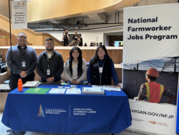
The National Farmworker Jobs Program (NFJP) team participated in the ALSAME Youth Conference at Western Michigan University, which brought together students from high schools across Michigan – many who come from agricultural and farm working backgrounds.
The conference offered an invaluable opportunity for the NFJP team to engage directly with youth who may qualify for services. Throughout the day, staff connected with students, shared information about career pathways and highlighted the training and support available through NFJP.
To enhance outreach efforts, the team distributed flyers, business cards and other informational materials to students, school personnel and partner organizations. The Agricultural Employment Liaisons also provided additional resources focused on agricultural employment opportunities and support services designed to help youth pursue both education and meaningful work.
ALSAME plays a vital role in helping high school students, especially those from farm working and first-generation backgrounds, explore college options and connect with programs that can support their success.
|
Holland Michigan Works! Leads NFJP Outreach Pilot to Strengthen Farmworker Engagement

West Michigan Works! led a pilot NFJP Information Session at their Holland service center, spearheaded by NFJP Case Manager Norma Barajas. The event aimed to expand outreach to the local farmworker community and introduce them to available NFJP services and supports.
To ensure accessibility and broaden engagement, the presentation was delivered in both English and Spanish. Attendees actively participated in the session and completed NFJP applications on site, demonstrating strong interest in the program and its services.
The event offered valuable insights for strengthening community outreach. Holland Michigan Works! and the NFJP team documented key lessons and shared them with the statewide Michigan Works! Association network to support future replication and improvement.
This collaborative effort highlights Holland Michigan Works!’ ongoing commitment to improving access to services and expanding opportunities for West Michigan’s farmworker communities.
If you or someone you know is interested in learning more about NFJP, please complete the Agricultural Employment Interest Form.
|
Agriculture Employment Services Team: Standing Together in Service to Farmworkers and Employers
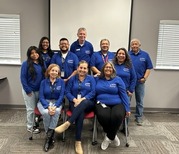
Every farmworker deserves the chance to succeed, improve their family’s quality of life and feel supported, valued and appreciated. Our team is proud to contribute to making that possible.
Agricultural Employment Liaisons (AELs) act as a vital connection between farmworkers, employers and community resources. By meeting farmworkers where they are, AELs share information about job opportunities, training and workforce services, and help connect them to essential support programs for themselves and their families.
Through the Agricultural Employment Services (AES) Program, we strengthen Michigan’s agricultural workforce by linking Migrant and Seasonal Farmworkers (MSFWs) with employment, training and supportive services. At the same time, we assist agricultural employers by providing workforce solutions and helping them meet their labor needs. The AES Program brings together workers, employers and community partners to build a stronger, more resilient agricultural sector.
All services are provided at no cost to employers and farmworkers.
Whether you need support posting job orders, accessing compliance materials, recruiting domestic workers, or partnering to expand farmworker outreach, your local Agricultural Employment Liaison is ready to help. Find your local Agricultural Employment Liaison here.
To learn more about available programs and services, go to Michigan.gov/AFLS.
|
ES Complaint System: Key Updates
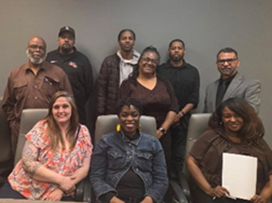
The Complaint System Representative (CSR) is responsible for ensuring State Workforce Agencies comply with the code of federal regulations by establishing and managing a standardized system for intake, documentation, investigation, resolution, and referral of Wagner–Peyser complaints. The CSR ensures a central complaint log is maintained, official posters are displayed and only trained personnel receive and process complaints—referring issues as necessary.
In Michigan, CSRs also act as the frontline liaison through Michigan Works! offices, helping individuals file or follow-up on reviews, including those related to migrant and seasonal farmworkers.
|
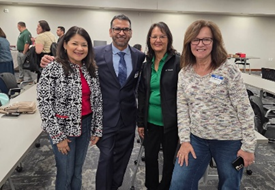
Recently, CSR conducted an on-site training for the Michigan Works! Service Center in Pontiac, detailing the state’s complaint system operations—from intake best practices to accurate logging and formal case management. Additionally, the CSR presented key Employment Service procedures and complaint protocols at the Interagency Migrant Services Committee preseason conference, ensuring aligned processes across workforce and migrant service partners. These efforts reflect core CSR responsibilities: educating staff and partners, promoting system consistency and enhancing public awareness.
In support of Veterans’ Employment Services, the CSR facilitated a targeted training session, covering related veteran complaint procedures under the Wagner–Peyser framework. The session emphasized the CSR’s role in differentiating employment service-related issues from veteran-specific employment laws and referring veterans to the appropriate resources.
These targeted training courses ensure staff are equipped to handle complaints with clarity, sensitivity and regulatory compliance, reinforcing trust in the statewide complaint system.
For more information on the complaint system, contact: Hugo Pantoja, Coordinated Services Representative at 517-290-6374 or MiESCS@michigan.gov.
|
DOL Requires English Proficiency Standard in All CMV‑Related H‑2A, H‑2B, CW‑1, and PERM Filings

The U.S. Department of Labor has announced a new rule requiring all employers filing H‑2A, H‑2B, CW‑1, or PERM applications for jobs involving Commercial Motor Vehicle (CMV) operation to explicitly include an English Language Proficiency requirement. This aligns with federal driver‑qualification rules under 49 C.F.R. § 391.11(b)(2), which state that drivers must be able to “read and speak the English language sufficiently to converse with the general public” and understand traffic signs.
Beginning June 15, 2026, all job orders and labor certification applications involving CMV operation must include an English Language Proficiency statement such as:
“The worker must be able to read and speak the English language sufficiently to converse with the general public, understand highway traffic signs and signals in English, respond to official inquiries, and make entries on reports and records.”
This requirement applies even if the job does not require a CDL, because the driver‑qualification rules still apply to anyone operating a CMV in interstate commerce.
If omitted, the job order will be denied under the relevant H-2A, H-2B, CW-1 or PERM regulations. If you have any questions, please reach out to LEO-FLCOffice@michigan.gov.
|
Discover exciting job opportunities across Michigan!
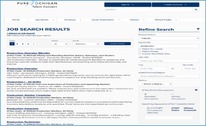
Michigan is hiring! Thousands of positions are available statewide across a wide range of industries. Whether you're looking to start a new career or take the next step, there are full-time jobs with benefits waiting, especially in the Food and Agricultural Industry and the Agri-business sector.
Explore your options on the Pure Michigan Talent Connect website (MiTalent.org) or click here to view a list of more agricultural industry related jobs.
View a list of agricultural jobs.
|
State Monitor Advocate Updates
Michigan Becomes First State in Region 5 to Host SMA Pre‑Season MSFW Training
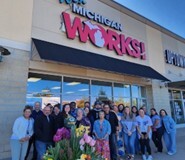
The State of Michigan hosted the Region 5 Pre-Season MSFW Training, bringing together representatives from nine additional states, including Illinois, Ohio, Indiana and Nebraska. The conference included participation from Michigan leadership, the Regional Monitor Advocate, and representatives from the U.S. Department of Labor, Wage and Hour Division.
The event provided an opportunity to share insight into Michigan’s operation of the Monitor Advocate System and highlight the strategies and initiatives implemented to serve all job seekers. Training sessions were conducted by Regional Monitor Advocate Raymundo Garcia as well as representatives from other state departments, highlighting how agencies collaborate and work together to better serve job seekers through outreach services.
|
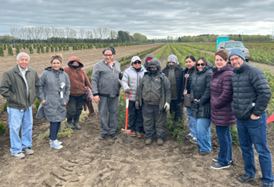
The training hosted a panel of four agricultural employers from the local area to discuss some labor challenges they face. Following the discussion the group was invited by the AES team to go out and visit workers and employers in the field.
The event was held at the Holland Michigan Works! office. Special thanks to Site Manager Rosa Hernandez and her team, who warmly welcomed us and provided a tour of the office, along with an overview of how job seekers are supported in finding employment or accessing appropriate training. Thanks to SMA Aranda, Compliance Monitoring Analyst (CMA) Katalina Soria and the AES team for planning the event.
Site Reviews: Wrapping up Program Year 2024
As we approach the close of another Program Year, the SMA office has continued to actively conduct office reviews to ensure ongoing compliance and operational effectiveness. All eleven significant sites have been reviewed and a shift to review all 92 offices is being made for the new program year.
The SMA office has provided technical assistance in some areas such as complaint system training, properly identifying job seekers that perform agricultural work and whether they are transient from another state or live in Michigan year-round and perform seasonal farmwork.
|
June is Youth Employment Month
As more than 250,000 Michigan teens prepare to enter the workforce this summer, employers across the state have an opportunity to do more than fill seasonal positions. By creating meaningful early career opportunities for young workers during Youth Employment Month and beyond, employers can help strengthen Michigan’s future talent pipeline, support long-term workforce growth and encourage more young people to build their careers and their futures in Michigan.
Find resources to help employers and young Michiganders here.
|
Agricultural & Foreign Labor Services
Workforce Development
Michigan Department of Labor and Economic Opportunity
|