|
(Para una versión en español, haga clic aquí.)
MAFSWAI Initiative Delivers Strong Results for Michigan’s Agricultural Workforce

The Michigan Agriculture and Food Systems Workforce Advancement Initiative (MAFSWAI), completed on March 14, successfully strengthened partnerships and improved access to training, employment and support services for Migrant and Seasonal Farmworkers (MSFWs).
The Agriculture Employment Service team connected with more than 400 MSFWs statewide, generating 217 positive referrals to programs such as WIOA training at Michigan Works! Agencies, the National Farmworker Jobs Program, and MSU’s High School Equivalency Program. Agricultural Employment Liaisons made more than 300 additional referrals, helping workers explore job training, skills development and credential opportunities.
These efforts were accomplished through several partner organizations such as; Corporation for a Skilled Workforce, Michigan State University’s Migrant Student Services, Center for Regional Food Systems, and the Institute for Agricultural Technology, Michigan Food and Farming Systems.
The initiative also identified major barriers affecting MSFW participation, including housing, food security, childcare, transportation, and the need to prioritize immediate income. These insights will guide future efforts to pair workforce programs with supportive services.
By expanding collaboration and strengthening awareness of career pathways, MAFSWAI created a strong foundation for continued workforce development and community engagement across Michigan’s agricultural sector.
|
Transforming Lives Through Collaboration: Viviana’s Path to a Healthcare Career

Viviana spent years working in agriculture at a local nursery, but opportunities for advancement were limited and her income was no longer meeting her family’s needs. Looking for a new path, she visited SEMCA Michigan Works!, an American Job Center, where she learned that the National Farmworker Jobs Program (NFJP) could support her career transition. After completing her application and being approved, she eagerly enrolled to begin building a new future.
With the help of her career coach, Viviana explored career options that aligned with her interests and would offer long‑term growth. Her passion for helping others quickly pointed her toward the nursing profession that would not only fulfill her desire to care for people but also increase her earning potential, with a starting wage of $25 per hour.
To prepare for this new path, Viviana was connected with an English as a Second Language (ESL) program to strengthen her language skills. She also spent a day job‑shadowing students in a Certified Nursing Assistant (CNA) program, giving her a firsthand look at the training and responsibilities of the role. After completing her ESL coursework, she began her CNA training. Throughout the process, her career coach encouraged her, helped her navigate challenges, and connected her to NFJP supportive services to ensure she could stay focused on her goals.
After months of determination, hard work and study, Viviana proudly completed her CNA classes and clinicals, passed the State Licensing Exams, and registered her CNA certification with the Michigan Department of Licensing and Regulatory Affairs. She is now working with her career coach to apply for CNA positions in her community.
“I am very grateful to Michigan Works! and NFJP,” Viviana shared. “Despite the language difficulties, I worked hard to pass my exams, and now I'm ready to begin a new professional chapter!”
Her success reflects the power of partnership, perseverance and the life‑changing impact of workforce development programs working together.
|
NFJP Engages in Community Safety and Wellbeing
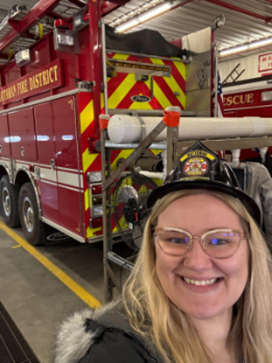
In February, NFJP Outreach and Enrollment Coordinator Abigail Frost completed an intensive four‑day Child Passenger Safety Technician training at the Mattawan Fire Department. The project focused on improving safety for farmworker families and their dependents by expanding access to proper child car seat installation, education and support.
The training covered national safety standards, vehicle restraint systems, and hands‑on instruction with child car seats. Abigail also strengthened her ability to communicate best practices to caregivers and support Spanish‑speaking families with child passenger safety needs.
Throughout the training, she worked alongside partners from InterCare, Telamon, the Van Buren County Police Department, Mattawan Fire Department, Samaritas, and Bronson Hospital, building stronger connections and sharing resources for protecting children in the farmworker community.
On the final day, Abigail participated in a public car seat check event, assisting caregivers with proper rear‑facing installation and guidance on next steps as children grow. She is now a certified Child Passenger Safety Technician with the ability to order free car seats for eligible families and coordinate community safety events with partner agencies.
This new capability provides NFJP with an important outreach tool that directly supports the safety and well‑being of MSFW caregivers and their children.
If you have family members or dependents who are farmworkers and would benefit from child passenger safety support, please contact the NFJP team at LEO-NFJP@Michigan.gov or complete the Agricultural Employment Interest Form.
|
Collaboration Key to Reaching Farmworkers at Regional Career Fairs
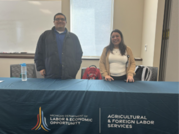
Strong collaboration across workforce partners played a central role in NFJP’s recent efforts to connect with farmworkers and expand access to employment and training opportunities.
On February 24 and March 4, Outreach and Enrollment Coordinator Cristo Garcia and Agriculture Employment Liaison Julia Briones partnered with West Central Michigan Works! at hiring events in Newaygo and Ludington. Working alongside Michigan Works! staff allowed NFJP to engage both agricultural and non‑agricultural jobseekers, share information about training services, and coordinate directly with the Agricultural Employment Services team to support farmworkers in developing employment plans tailored to their goals.
Collaboration continued March 18 at the Kalamazoo Michigan Works! Career Fair, where Outreach and Enrollment Coordinators Abigail Frost and Jesus Ruiz Santos met with a wide range of employers to explore job pathways suitable for NFJP participants. They also strengthened relationships with Michigan Works! staff, gathering information on apprenticeships and employment opportunities that could benefit MSFW families.
These events highlight how joint outreach across NFJP, Michigan Works! and community workforce partners create more effective access points for farmworkers and expand their connection to meaningful career opportunities.
|
Advancing Opportunity: SMA Office Showcases the Agricultural Recruitment System to Growers
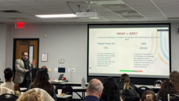
A key responsibility of the Monitor Advocate System is promoting the Agricultural Recruitment System, which connects U.S. job seekers with agricultural employers in need of workers. State Monitor Advocate (SMA) Gerardo Aranda and Compliance Monitoring Analyst Katalina Soria was invited to present this topic at the annual Southwest Michigan Migrant Resource Council Grower Meeting.
During the presentation, Gerardo outlined the differences between criteria (H‑2A) job orders and non‑criteria job orders for U.S. workers. He emphasized that Agricultural Recruitment System job orders focus solely on recruiting U.S. workers, while criteria job orders support both U.S. worker recruitment and H‑2A visa hiring. The Agricultural Recruitment System was widely used in the 1970s, bringing working families from states like Texas and Florida—many of whom settled in Michigan or returned seasonally for decades.
To strengthen connections between employers and U.S. workers, the SMA Office established a toll‑free hotline several years ago. Calls have steadily increased from out‑of‑state farmworkers seeking Agricultural Recruitment System opportunities in Michigan. Find more information on the State Monitor Advocate page or by calling 855‑633‑2373.
|
Planting Partnerships: Region 5 SMA Training and Convening Coming to Michigan

A key component of the Monitor Advocate System is strengthening partnerships with MSFW service providers both within Michigan and across the country. Michigan was selected as the host due to its standing as the fourth most MSFW-significant state in the nation. SMA Gerardo Aranda and Compliance Monitoring Analyst Katalina Soria have been actively engaging with other Region 5 Monitor Advocates and exchanging ideas on how all ten states can work together to better support MSFWs and agricultural employers.
In May 2026, the Michigan SMA Office will proudly host the annual SMA Training and Convening in the Holland, MI. Monitor Advocates from all ten states in the region will gather to receive annual training from federal and state partners. Agenda topics include Regulatory Essentials, State Performance Overview, Employer Outreach, Housing, and Worker Protections.
The SMA Office extends heartfelt appreciation to Michigan’s farmers and farmworkers, wishing everyone a safe and healthy 2026 harvest season.
|
Agricultural Employer's Conference Allows Foreign Labor Services Manager to Connect with Stakeholders
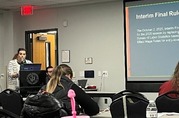
Foreign Labor Services manager Janet Garcia-Hobbs delivered an informative session on updates to the H‑2A Temporary Agricultural Program to an audience of agricultural leaders, growers, farmworker advocacy groups and partner agencies during the Agricultural Employer’s Conference in Lawrence.
Her presentation covered key updates, including the Interim Final Rule, AEWR wage methodology, and the much‑anticipated skill‑based tiers. The conference was a great success and allowed Janet to connect with several key stakeholders and Michigan agricultural employers.
|
Discover exciting job opportunities across Michigan!
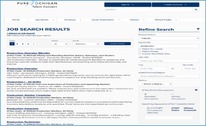
Michigan is hiring! Thousands of positions are available statewide across a wide range of industries. Whether you're looking to start a new career or take the next step, there are full-time jobs with benefits waiting, especially in the Food and Agricultural Industry and the Agri-business sector.
Explore your options on the Pure Michigan Talent Connect website (MiTalent.org) or click here to view a list of more agricultural industry related jobs.
View a list of agricultural jobs.
|
2026 Oceana Asparagus Day: Supporting Agricultural Employers Through Collaboration
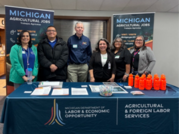
AFLS joined growers, employers and community partners at Oceana Asparagus Day in New Era during an annual gathering that marks the unofficial start of the growing season. The event offered more than presentations and data reviews, it created a space where the agricultural community could come together, share challenges and prepare for the months ahead.
AFLS staff spent the day listening to employers, answering questions and offering guidance on workforce resources that can help support a strong and reliable labor force. These conversations mattered. Employers shared what they are experiencing on the ground staffing needs, seasonal pressures and the realities of maintaining a productive operation. In return, the AFLS team provided information on programs designed to lighten those burdens and help connect them with the workers they depend on.
By showing up, building relationships and working side‑by‑side with growers and community partners, AFLS is helping strengthen the foundation for practical workforce solutions. These partnerships are essential for ensuring Michigan’s agricultural employers and the workers who keep the industry thriving have the support they need for a successful season.
|
Northwest Michigan Migrant Resource Council Hosts March Meeting at MSU Research Station

The Northwest Michigan Migrant Resource Council held its final winter meeting on March 20 at the MSU Extension Research Station in Bingham, home to vital research on apple and cherry production. This setting provided an excellent backdrop for discussing the upcoming 2026 agricultural season and the needs of local growers and farm workers.
The meeting centered on helping growers and farm managers understand the wide range of services offered by Council member agencies. Representatives from MDARD, Suttons Bay Schools, Benzie County Health Department, Telamon Migrant Head Start, LEO, MDHHS, Farmworker Legal Services, the Father Fred Foundation, and others highlighted programs that support employment, housing inspections, WIC services, vaccines, childcare/education, food assistance, outreach visits and advocacy efforts.
MSU Extension Specialist Nikki Rothwell offered a helpful overview of expected crop and weather conditions, followed by a discussion on national and local labor supply challenges as growers prepare for the season. Migran Resource Council Chairperson Beatriz Moreno welcomed attending employers, including Johnson Farms, Wunsch Farms, Bardenhagen Berries, 4 Ag Labor Services, and Dutchman Tree Farms/Arlene Resource Management.
|

The group also engaged in a constructive conversation regarding national and local labor supply challenges. The AFLS team shared information about available education and training services for farm workers.
The meeting concluded with a vibrant Mexican themed‑potluck featuring three varieties of birria, rice, tortillas, fresh fruit and desserts.
A heartfelt thank‑you to the Northwest Michigan Migrant Resource Council, partner agencies and growers for your participation, collaboration and commitment to supporting Michigan’s agricultural workforce. The Council looks forward to continuing monthly meetings throughout the season at various sites across Northwest Michigan.
|
Agricultural & Foreign Labor Services
Workforce Development
Michigan Department of Labor and Economic Opportunity
|