|
(Para una versión en español, haga clic aquí.)
Facing February: Protecting Michigan Agriculture and Farmworkers
February in Michigan brings some of the harshest winter conditions: frigid temperatures, icy winds, and unpredictable freeze-thaw cycles. These challenges affect not only crops, but also the health and safety of the agricultural workforce. Here’s what you need to know to keep farms productive and workers safe this season:
Cold Weather Risks and Worker Safety
Extreme cold can lead to hypothermia, frostbite and other cold-related illnesses. Farm managers should take proactive steps to protect workers:
-
Layer Up: Encourage workers to wear loose-fitting, layered clothing that covers hands, feet, ears and face.
-
Warm Breaks: Provide heated shelters and schedule frequent breaks to prevent cold stress.
-
Monitor Conditions: Use wind chill warnings and weather forecasts to adjust work schedules.
-
Training: Educate teams on early signs of cold stress and emergency response.
Supportive Services for Farmworkers
Michigan provides a strong network of resources to support farmworkers and their families. To explore these services, visit the Michigan Department of Health and Human Services’ Migrant Resource Councils page or call the toll-free number, 1-833-SIAYUDA (1-833-742-9832) to be connected to the service provider in your area.
Together, we can protect Michigan’s agricultural workforce and ensure a strong start to the growing season.
Connecting Michigan Agriculture to Talent: Great Lakes Trade Expo 2026
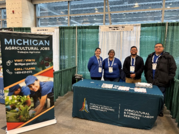
The Great Lakes Trade Expo, held at DeVos Place in Grand Rapids from Jan. 20–22, served as a dynamic hub for industry collaboration, bringing together agricultural employers, vendors and service providers from across the region. The event offered businesses exceptional opportunities to showcase innovative products, share best practices, and build partnerships critical to the success of Michigan’s agricultural industry.
The Agricultural Employment Services team and National Farmworker Jobs Program (NFJP) staff were onsite throughout the event, actively engaging with agricultural employers to share information about employment, recruitment and training services available through Michigan Works! Service Centers. Staff seized every opportunity to connect employers with resources designed to support their workforce needs while promoting services that benefit Migrant and Seasonal Farmworkers (MSFWs) statewide.
|
Agricultural Employment Practice Survey

The Foreign Labor Services office will be conducting the Agricultural Employment Practice Survey to collect and maintain information on prevailing agricultural employment practices and acceptable experience requirements. In addition to job requirements, the survey will gather details on:
- Employer-provided housing
- Transportation and food advances
- Frequency of pay
This information—organized by crop activity, occupation and wage reporting area—helps prospective agricultural employers prepare compliant job orders. It also plays a key role in ensuring job requirements do not adversely affect the wages or working conditions of U.S. workers similarly employed.
Outreach to Employers
This year, our team will be reaching out to agricultural employers to gather survey responses. You may hear from us through:
- Email
- Phone calls
- In‑person during post‑certification site visits
If you believe we do not have your current contact information, please email LEO‑FLCOffice@michigan.gov to ensure you are included on our contact list.
|
Turning the Wheel – NFJP Participant Obtains Commercial Driver’s License

Bryan grew up in a migrant and seasonal farmworker family; he was determined to build a future with greater economic stability. His goal? Transition from production work into a high-demand career that could provide long-term growth.
With guidance from Michigan Works! West Central, Bryan explored Commercial Driver’s License (CDL) training. While funding challenges initially slowed his progress, NFJP stepped in to remove barriers. Through NFJP enrollment and WIOA Adult co-enrollment, Bryan gained access to training resources and supportive services that made his dream possible.
Bryan’s educational journey began at 160 Driving Academy, where he successfully completed CDL training and earned his CDL Class certification. This achievement opened doors to a stable, high-demand career.
Today, Bryan is proudly working as a CDL driver and is already planning his next big step: owning and operating his own transportation business.
His story is a powerful example of how NFJP helps farmworker families turn aspirations into reality.
|
Strengthening Partnerships to Better Serve and Recruit MSFWs
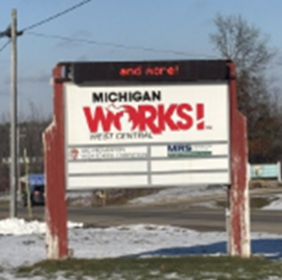
During an onsite visit to Michigan Works! West Central, Outreach and Enrollment Coordinator Cristo Garcia used the time to work with the Michigan Works! staff, inform customers about NFJP, and scheduled pre-assessments with individuals. The visit strengthened Michigan Works! staff's understanding of all available services, program benefits and referral resources, including new housing assistance services planned to come online next month.
This investment between Michigan Works! and the NFJP team aims to facilitate a smoother transition for customers and build trust during the outreach and enrollment process.
The NFJP team will continue these outreach efforts, working hand-in-hand with Michigan Works! in the coming months to ensure customers receive the best service.
|
Leveraging Connections, Community Experience and Institutional Knowledge

Outreach and Enrollment Coordinator Abigail Frost and Agricultural Employment Liaison Ruben Santellan conducted employer outreach in the Hudsonville/Zeeland area. Since most farms are in their off-season, the team focused on meeting local employers, including greenhouses, to establish connections for future referrals and service provision to MSFWs.
Employers expressed enthusiasm after learning about NFJP and mentioned they have workers who would be interested in applying, noting the lack of available work this season. Abby provided information about training and employment opportunities for eligible workers and Ruben offered to assist those individuals in finding employment. This example demonstrates the positive outcomes of collaborative efforts for unique programs, MSFWs and employers.
|
Discover Exciting Job Opportunities Across Michigan!
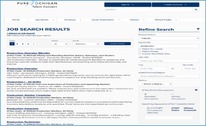
Michigan is hiring! Thousands of positions are available statewide across a wide range of industries. Whether you're looking to start a new career or take the next step, there are full-time jobs with benefits waiting, especially in the Food and Agricultural Industry and the Agri-business sector.
Explore your options on the Pure Michigan Talent Connect website (MiTalent.org) or click here to view a list of more agricultural industry related jobs.
View a list of agricultural jobs.
|
State Monitor Advocate
The State Monitor Advocate staff continue to monitor all Michigan Works! agencies to ensure compliance. This monitoring serves as a form of advocacy for MSFWs, ensuring they receive services that are qualitatively equivalent and quantitatively proportionate to those provided by the State Workforce Agency to non-MSFW customers. There are eight standards developed by the USDOL-ETA referred to as Equity Ratio Indicators:
- Received Basic Career Services
- Received Individual Career Services
- Received Staff Assisted Career Guidance Services
- Received Staff Assisted Job Search Activities
- Received Unemployment Insurance Claim Assistance
- Referred to Employment
- Referred to Federal Training
- Referred to Other Federal or State Assistance
During program years 2023 and 2024, the National Monitor Advocate team identified Michigan State Workforce Agencies met all eight Equity Ratio Indicators.
Through monitoring Michigan Works! agencies, the State Monitor Advocate identifies areas of service improvements to ensure the Equity Ratio Indicators are met by all 11 MSFW-significant offices. In program year 2023, the USDOL Employment and Training Administration identified California, Florida, Oregon, Texas and Michigan had the highest number of MSFW Significant offices.
State Monitor Advocate Gerardo Aranda and Compliance Monitoring Analyst Katalina Soria continue to schedule reviews of services provided to MSFWs in significant and non-significant Michigan Works! Service Centers throughout the state. Michigan Works! Service Centers are MSFW significant when the State Monitor Advocate staff identify ten percent or higher MSFW participants enroll in employment services.
What is the Employment Complaint System?
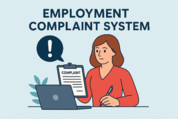
The Employment Complaint System, established under federal regulations, ensures job seekers and workers can report concerns about employment service activities, such as job referrals or compliance with employment-related laws. This system helps maintain fairness and accountability in workforce programs by providing a structured process for reviewing and resolving complaints.
The system is designed to protect the rights of individuals who use Michigan Works! services by offering a clear and accessible way to address issues. Complaints can involve violations of employment service regulations or employment-related laws, and the process ensures these concerns are handled promptly and fairly at both the state and federal levels.
Your voice matters—don’t hesitate to speak up! If you would like to submit a complaint, please visit your nearest Michigan Works! office. To find a location near you, visit michiganworks.org. For more information, you can contact the State Complaint System Representative at MiESCS@michigan.gov or 517-290-6374.
|
Are You an Agricultural Employer or Farm Manager?

Michigan State University (MSU) Extension offers a variety of webinars and events designed to support agricultural employers and farm managers.
Southeast Michigan farmers are invited to learn from and engage with MSU specialists and educators during this free educational event.
-
Continuing Education Credits:
- 4 Restricted Use Pesticide credits (pending approval)
- 5 Certified Crop Advisor credits (pending approval)
For additional details and event registration, please visit the MSU Extension Agriculture Events page.
|
February is Career & Technical Education Month

More than half of all jobs in Michigan require skills training—more than a high school diploma but less than a four-year degree. Career and Technical Education (CTE) programs may be the perfect fit to begin your training.
CTE programs prepare you for employment in current or emerging fields and help you obtain a high-skill, high-wage, and in-demand career. These programs are offered at colleges and some universities for the attainment of a certificate and/or associate degree in fields like healthcare, information technology, hospitality, manufacturing, and more.
This February, explore career options, training, and wages at Pathfinder.MiTalent.org.
|
Agricultural & Foreign Labor Services
Workforce Development
Michigan Department of Labor and Economic Opportunity
|