Protecting the wildest of Michigan’s wild places
Michigamme Highlands conservation easement established
By KERRY HECKMAN
Forest land administrator, Forest Resources Division
Michigan Department of Natural Resources
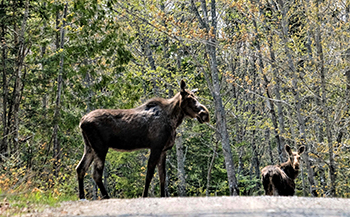
Deep in the Upper Peninsula’s Huron Mountains, among the wildest of Michigan’s wild places, the rugged Michigamme Highlands is comprised of vast forests, remote lakes, cold trout streams, moose-inhabited swamps and granite outcroppings.
Now, 73,000 acres of what is arguably some of the most important forest land in the Great Lakes region has been protected and is available for Michigan’s residents to enjoy – forever.
With funding entirely from grants and donations, the Michigan Department of Natural Resources has acquired a working forest conservation easement to secure these rights for the public while also supporting the state’s forest products industry.
The property
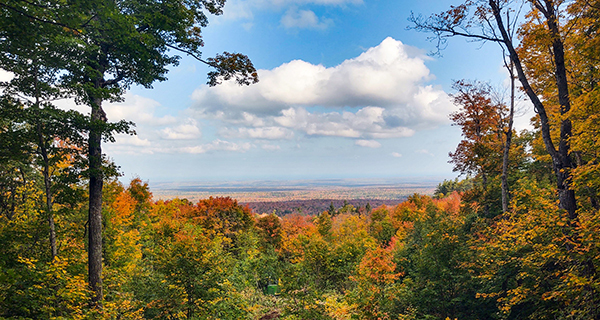
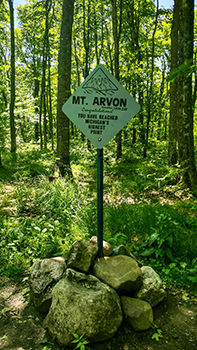
The sweeping views are spectacular from the top of Mt. Arvon, which, at 1,979 feet above sea level, is Michigan’s highest natural elevation. Rolling forests stretch for miles until they meet the dark blue waters of Lake Superior. On a clear day, the Abbaye Peninsula can be seen jutting out into the lake in the foreground while the Keweenaw Peninsula dominates the horizon. The Huron Islands can also be seen rising out of the cold Lake Superior waters.
Check out a map of the lands the easement covers.
As beautiful as this view is on a warm summer day, it doesn’t hold a candle to the breathtaking panorama on a sunny fall day during peak color – an experience that few Michiganders have yet had the opportunity to enjoy.
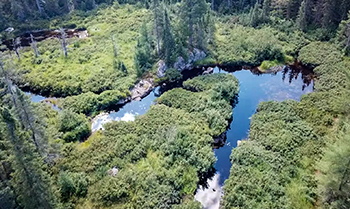
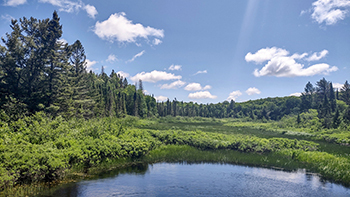
The forested peak of Mt. Arvon and its spectacular views are just one of the many incredible features of the Michigamme Highlands property. The 73,000-acre tract includes 37 miles of winding rivers, 220 miles of perennial streams, 96 lakes and ponds, and over 13,600 acres of wetlands. Coaster brook trout, brown trout, brook trout, rainbow trout, Coho salmon, pink salmon, largemouth and smallmouth bass and northern pike can all be found in these waters.
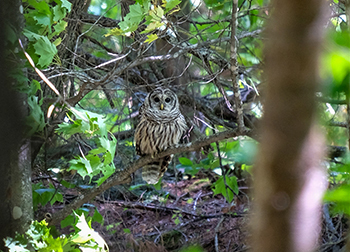
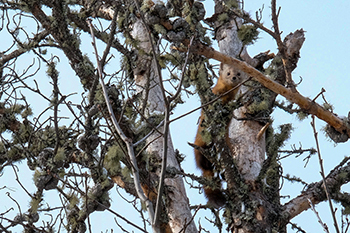
The tract also contains 4,800 acres of deer wintering complex, areas that provide both the food source and thermal cover that are critical to the survival of white-tailed deer during the harsh Upper Peninsula winters. Wildlife is abundant across the property, which provides habitat for a variety of species including moose, black bears, pine martens, fishers, wolves, grouse, eagles, hawks, owls and local rarities like boreal chickadees.
Nearly 2 miles of the Yellow Dog River flow through the property, immediately adjacent to and downstream of the federal McCormick Wilderness, where the river is designated as a Wild and Scenic River.
|
All these facets of the Michigamme Highlands property make it a truly exceptional landscape.
The vision
The Lyme Timber Company is a forest land investment company that manages 1.3 million acres of timberland throughout the U.S. In the Upper Peninsula and northern Wisconsin, it manages nearly 625,000 acres through its local operating company, Lyme Great Lakes Timberlands.
With a staff of 25 foresters and other professionals, Lyme Great Lakes focuses on sustainable timber production in this region – working with over 42 contractors and 55 sawmill customers – while seeking opportunities to permanently conserve these forests.
The vision for the Michigamme Highlands project began in 2021. With its long history of permanently protecting working forests throughout the nation, Lyme Timber approached the DNR about the potential to do a large-scale conservation project on the company’s property.
Specifically, there was interest in protecting the property through a working forest conservation easement. This type of conservation easement is a legally binding agreement between a landowner and either a government agency or a land trust that promotes ongoing sustainable forest management while permanently limiting certain uses of the land, specifically those that would have a negative impact on values such as forests, wildlife habitat and water features. Conservation easements last forever and remain in place regardless of who owns the land.
While Lyme Timber will continue to own and manage the property, thus maintaining local tax revenue, the conservation easement rights, including the rights for public access, will be held by the DNR on behalf of Michigan residents. This vision ensures all the special features on the land are protected forever, and it secures the right of the public to use these lands for recreation, including hunting and fishing.
|
The conservation easement
Bringing this vision to reality, Lyme Timber and the DNR developed the Michigamme Highlands conservation easement. Its tenets include:
- Permanent requirements to ensure long-term sustainable forest management and sustained economic benefits for the area. The easement requires that future timber harvests occur at a sustainable level. An estimated annual economic benefit of approximately $4 million to Baraga, Iron and Marquette counties is anticipated through forest management activities and the many associated jobs in the regional forest products industry.
- Full nonmotorized recreational access for the public maintained across the entire property for uses such as hunting, fishing, trapping, kayaking, biking, skiing and hiking, with additional rights for motorized access on over 77 miles of roads and trails for snowmobiling and 70 miles for off-road vehicle use. Also included is permanent access for motor vehicles on over 61 miles of roads that were not previously secured for the public. The project also includes 7 miles of trails specifically designated for nonmotorized use, including mountain biking, and 3 miles of equestrian trails. Remote recreation areas have also been established to provide opportunities for remote hunting, fishing and hiking with limited impacts from motorized activities.
- Protection of wildlife habitat and water quality for the numerous lakes, ponds, rivers and streams on the property.
- Protection of, and permanent public access to, the peak of Mt. Arvon.
- A requirement that the property remain as one large parcel of land and cannot be divided or developed – preventing additional fragmentation.
|
Partnerships
Over the past five years, a variety of grants were secured, which enabled the DNR to present a formal offer to the landowner to purchase the conservation easement in late 2025. Many partners came together to ensure the success of the Michigamme Highlands project.
U.S. Department of Agriculture Forest Service Forest Legacy Program
The purpose of the Forest Legacy Program is to provide federal grant funding to states to protect environmentally important forest land from being converted to nonforest uses. Funding for the program, administered by the Forest Service, is provided through the Land and Water Conservation Fund, which comes from revenue the federal government receives through offshore oil and gas leases. The program provides 75% of the funding necessary for states to protect forest land and ensures that it is sustainably managed forever.
“The Michigamme Highlands project is a prime example of what can be accomplished through the Forest Legacy Program to secure a host of benefits for the public,” said Ken Arney, Regional Forester with the USDA Forest Service. “By permanently conserving this working forest, we have helped to secure forest products in perpetuity, as well as protect water quality and wildlife resources and provide new public outdoor recreation opportunities. All of this has a positive economic impact on the region. There is truly something for everyone in the Michigamme Highlands project.”
The Michigamme Highlands project ranked No. 2 in the country among those competing for Forest Legacy Program funds. Over $15 million in grant funding was awarded to the Michigan DNR for this project.
Michigan Natural Resources Trust Fund
In 1976, to resolve concerns related to oil and gas development on state forest land in the Pigeon River Country State Forest, the Michigan Natural Resources Trust Fund was established. The intent of the Trust Fund was to use royalties earned from the development of state-owned minerals to acquire land for public recreation and natural resources protection.
|
The completion of a project as monumental as the 73,000-acre Michigamme Highlands conservation easement is the perfect way to celebrate the 50-year anniversary of the Trust Fund’s conservation work. Fund administrators awarded over $4.2 million for the project.
National Fish and Wildlife Foundation
The National Fish and Wildlife Foundation was established by Congress in 1984 as a nonprofit organization to act as a bridge between public agencies and private entities to support the conservation of fish, wildlife, plants and their habitats. As the nation’s largest private conservation foundation, it works to create financial leverage by pairing federal funding with private donations to further benefit conservation work.
In 2005, the foundation partnered with Walmart to establish the Acres for America program, which is focused on conserving wildlife habitat. In 2023, in collaboration with Acres for America, the Life Time Foundation – a nonprofit organization dedicated to fostering healthy people, a healthy planet and a healthy way of life – committed funding to support the permanent protection of forests.
"The Michigamme Highlands project exemplifies the Acres for America program’s commitment to large-scale, lasting conservation," said Chris West, Acres for America program director for the National Fish and Wildlife Foundation. "By conserving more than 73,000 acres through a working forest easement, this effort safeguards the rivers, wetlands and forests that support wildlife species including coaster brook trout, moose and northern long-eared bat.
“It shows how conservation and sustainable use can go hand in hand — protecting critical fish and wildlife habitat while keeping working forests working, supporting local economies and guaranteeing public access for hunting, fishing, hiking and other outdoor recreation across this extraordinary Upper Peninsula landscape."
|
The Michigamme Highlands project was awarded $550,000 from the Acres for America program and $450,000 from the Life Time Foundation for a total $1 million award from the National Fish and Wildlife Foundation.
Closing
After years of building a strong partnership and working closely with Lyme Timber — ensuring appropriate protections for the high-value natural resources on the Michigamme Highlands property, guaranteeing sustainable forest management, securing public recreational access and negotiating the transaction — the DNR, on behalf of the public, brought the process to a successful conclusion and completed the purchase of the Michigamme Highlands conservation easement on March 30, 2026.
“We are thrilled to have helped to achieve this important milestone for Michigan’s working forests and are particularly proud of the strong partnership we have established with the DNR,” said Sarah Kitz, managing director at Lyme Timber. “The Michigamme Highlands conservation easement will leave a lasting legacy that benefits Michigan’s forests, the public, the regional forest products economy and the environment – at scale.”
What’s next
With the acquisition of the Michigamme Highlands conservation easement complete, recreational access has been secured and the public is welcome to come and explore this wild and beautiful land in the western Upper Peninsula.
The DNR now has an obligation to conduct annual monitoring on the property to ensure that the terms and conditions of the conservation easement are being met. The funding needed to complete this work will be provided, in part, by an annual grant distributed to the DNR from the Conservation Easement Stewardship Endowment, held by the Grand Traverse Regional Community Foundation, accompanied by a contribution from the landowner.
“It is seldom that the opportunity to secure public recreational access and protect forest land at such a large, landscape level comes along,” said Scott Bowen, DNR director. “When we can protect critical deer wintering complexes, wildlife and fisheries habitat and help to secure sustainable forest management and support the forest products industry at the same time, as we have done with the Michigamme Highlands project, it is truly extraordinary.”
Find out more about the Michigamme Highlands property.
|
Check out previous Showcasing the DNR stories in our archive at Michigan.gov/DNRStories. To subscribe to upcoming Showcasing articles, sign up for free email delivery at Michigan.gov/DNREmail.
Note to editors: Contact: John Pepin, Showcasing the DNR series editor, 906-226-1352. Accompanying photos and a text-only version of this story are available below for download. Caption information follows. Credit Michigan Department of Natural Resources, unless otherwise noted.
Text-only version of this story.
Highlands 1: A barred owl is shown during the daylight in a woodland in the Michigamme Highlands.
Highlands 2: A sign shows the top of Mount Arvon in the Michigamme Highlands.
Highlands 3: On a summery day, a pond is shown in the Michigamme Highlands.
Highlands 4: A moose cow and calf, the signature species of this part of Marquette County, are shown.
Highlands 5: A pine marten, one of the numerous wildlife species found within the Michigamme Highlands area, looks out from the top of a tree.
Highlands 6: A lush green view from Mount Arvon shows extensive forest lands with Lake Superior in the background.
Highlands 7: An autumn view from Mount Arvon demonstrates the spectacular scenery of the area.
Highlands 8: An aerial photo shows a winding stream in the Michigamme Highlands.
|