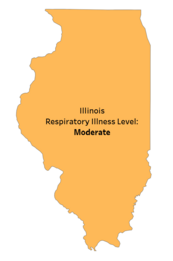
As of Friday, March 7, 2025, the IDPH Seasonal Respiratory Dashboard is showing Illinois to be at a moderate level with the flu making up most of the current cases of respiratory illness. The IDPH Seasonal Respiratory Illness Dashboard is updated weekly to keep track of COVID-19, flu, and RSV activity levels. You can also view trends, hospital admissions, and more.
Protect yourself and others by taking precautions from getting and spreading the flu. Prevent the spread of flu by:
- Covering coughs and sneezes
- Washing your hands with soap and water
- Staying home if you are feeling sick or test positive for a respiratory illness
Have you gotten your annual flu vaccine? It's not too late—flu activity can continue into spring. Everyone six months and older should get vaccinated against the flu. The flu vaccine can reduce flu illnesses, doctor’s visits, and hospitalizations. Talk to your healthcare provider if you have any questions.
Visit Vaccines.gov to find a location near you. For more information about the flu vaccine, visit the CDC’s Preventing Seasonal Flu page. You can also go to the CDC for more information about respiratory illnesses.
|
 |
 We are excited to announce the release of the Health Department's 2024 Annual Report! The 2024 Health Department Annual Report captures program achievements by the numbers while also showing a timeline of accomplishments and recognitions.
You can view the report in its entirety on our website.

Daylight Saving Time (DST) marks the time to “spring” ahead one hour. DST starts annually on the second Sunday in March and ends on the first Sunday in November. With the sudden time change, we experience less light in the mornings. Waking up in the dark can be challenging because our brain will think it is nighttime and signal our bodies to continue sleeping. The changes in light and time can affect our circadian system and disrupt our sleep.
Take steps leading up to and during daylight saving time to help your sleep and overall health:
-
Keep a sleep routine: Aim for seven to nine hours of sleep each night. The night before DST starts, go to bed one hour earlier than normal to prepare.
-
Get outside in the morning: For one to two days leading up to the switch to DST, get outside in the morning. More natural morning light can help preserve your circadian rhythm.
-
Eliminate sleep disturbances: Avoid excess amounts of caffeine, alcohol, and screentime one to two hours before bedtime.
-
Exercise in the morning: Activity raises your body temperature, which can increase your wakefulness and help reset your internal clock.
Visit the CDC for more sleep resources.
|
Did you know that more than 44 percent of the United States population depends on groundwater as a primary water source? Groundwater Awareness Week, occurring during the second week of March each year, is observed as a reminder of how important groundwater is to our health and environment while encouraging yearly water well testing and well maintenance.
Between March 10 and March 21, 2025, the Health Department will be offering a reduced well water testing fee for homeowners who use well water as their primary source of drinking water. The normal $25.00 fee for testing for bacteria and nitrates will be reduced to $20.00.
Sterile test bottles and sampling instructions are available at the Lake County Central Permit Facility at 500 W. Winchester Road, Libertyville, the Health Department's headquarters at 3010 Grand Avenue, Waukegan, and 19 township or municipal offices located throughout Lake County. To find a location nearest you, call (847) 377-8020 or visit lakecountyil.gov/726/water-wells. Water sampling kits can also be mailed out for $20.00 plus a postage fee.
Visit the Health Department’s Water Wells page or read the full press release for more information.
|
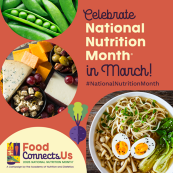
March is National Nutrition Month created by the Academy of Nutrition and Dietetics. National Nutrition Month encourages making informed food choices and developing healthy eating and physical activity habits. This year’s theme, “Food Connects Us." Food is a connecting factor for many of us. Food connects us to our cultures, our families and our friends. Health, memories, traditions, seasons, and access can all impact our relationship with food. While these factors influence the foods we eat, the foods we eat also affect our health.
This year’s National Nutrition Month weekly themes will focus on:
- Connecting with Food
- Connecting with a Nutrition Expert
- Exploring the Connection Between Food and Culture
- Building the Connection Across All Stages of Life
For more information about the themes, visit eatright.org. View the following helpful handouts for 20 Health Tips and Smart Tips for Successful Meals.
|
|
World Tuberculosis (TB) Day is recognized annually on March 24. This annual event honors the date in 1882 when Dr. Robert Koch announced his discovery of the bacteria that causes tuberculosis.
TB is one of the world’s leading infectious disease killers. There are two types of TB conditions: TB disease and latent TB infection. People with TB disease are sick from active TB germs. They usually have symptoms and may spread TB germs to others. People with latent TB infection do not feel sick, do not have symptoms, and cannot spread TB germs to others. But, if their TB germs become active, they can develop TB disease. If left untreated, 1 in 10 people with latent TB will get sick with active TB, which can spread to others and be deadly.
The Health Department’s Tuberculosis Clinic provides screening, testing, consultation, education, treatment, and home visits for anyone living, attending school, or working in Lake County. Visit our TB Clinic page for more information.
To learn more about Tuberculosis, visit the CDC.
|
|

Not counting some kinds of skin cancer, colorectal cancer is the fourth most common cancer in men and women. It is the fourth leading cause of cancer-related deaths in the United States. Colorectal cancer can be prevented with routine screening. Regular screening, beginning at age 45, is the key to preventing colorectal cancer (cancer of the colon or rectum). If you're younger than 45 and think you may be at high risk of getting colorectal cancer, or if you're older than 75, talk to your doctor about screening.
Visit the CDC to learn more about colorectal cancer.
|
Where do I find information about...
Who can I contact to ask a question about...
-
Lake County Health Department Services: Call (847) 377-8000
-
COVID-19 in Illinois: Contact the Illinois Department of Public Health at 1-800-889-3931 or DPH.SICK@ILLINOIS.GOV
|