|
In the past year, BHRS has made significant progress in the implementation of CalAIM. This newsletter covers a brief explanation of each implementation milestone and its current status. This is just a summary, each implementation milestone, in blue, includes many tasks. A more in depth explanation of each milestone will be discussed at the BHRS All Staff meeting on February 12, 2025!
|
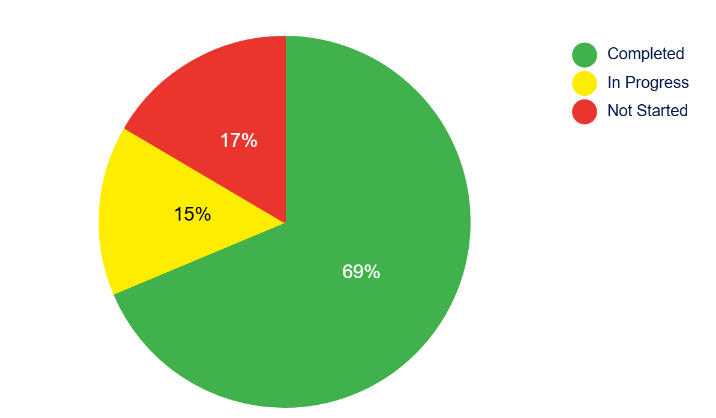
Check out the current breakdown of CalAIM Implementation - 69% of tasks have been completed as of December 2024!
|
|
 |
Payment Reform
The three components of Payment Reform are Provider Billing, Reimbursement Structure and the Financing Mechanism, which have all been implemented as of July 2024.
- Under Provider Billing, BHRS providers switched from Common Procedure Coding System (HICPICs) to Current Procedural Terminology (CPT) coding system.
- The Reimbursement Structure transitioned from a cost based reimbursement, a flat fee, to a fee-for-service system for contractors.
- The new Financing Mechanism, called Intergovernmental Transfers, is a way for public agencies to move funds between or within levels of government.
|
BHRS Implementation Effort
|
Status
|
|
Implement new CPT coding system
|
Complete
|
|
Implement new contracts with CalAIM language and new Fee-for-Service model
|
Complete
|
|
Intergovernmental Transfers
|
Complete
|
Screening Tool
The Screening Tool is a series of questions that the Access Call Center uses when they receive calls. It determines which system the beneficiary qualifies for, including either a Managed Care Plan (MCP), which would be Health Plan of San Mateo or Kaiser, OR the Mental Health Plan (MHP) which is us, BHRS.
|
BHRS Implementation Efforts
|
Status
|
|
Implement new Screening Tool
|
Complete
|
Transition Tool
The Transition Tool is used when completing a transition of services to the other delivery system (MCP or MHP) or when adding a service from the other delivery system to their existing mental health treatment. Dates for training to be determined.
|
BHRS Implementation Effort
|
Status
|
|
Transition Tool Implementation
|
Not Started
|
CalAIM Trainings for Contractors/BHRS Staff
BHRS Quality Management has hosted many trainings this year to support CalAIM implementation. To revisit a training, BHRS staff can visit LMS via Okta. Contracted providers can access here: https://sanmateocounty.csod.com.
|
BHRS Implementation Efforts
|
Status
|
|
Service Code Training
|
Complete
|
|
Progress Notes Training
|
Complete
|
|
Documentation Manual Training
|
Complete
|
|
Z Code Trainings
|
Complete
|
|
Access/Medical Necessity/Screening Tool Training
|
Complete
|
|
Assessment Training
|
Complete
|
|
Open Q & A
|
Complete
|
|
Care Planning/Problem List Part 1 & 2
|
Coming Early 2025
|
|
Transition Tool Training
|
Not Started
|
CalAIM Updates to Avatar
Updates must be made in Avatar NX to reflect the changes by CalAIM. A workgroup, made up of staff across departments, has been created to develop and implement solutions for Avatar NX barriers to CalAIM implementations.
|
BHRS Implementation Effort
|
Status
|
|
Workgroup collaboration with various departments on CalAIM updates to Avatar
|
In Progress
|
Drug Medi-Cal Organized Delivery System (DMC-ODS)
The AOD team has made significant progress in implementing DMC-ODS CalAIM initiatives, including Early Intervention Services, Evidence Based Practice requirements, Recovery Incentive Program, Medications for Medicated Assisted Treatment Expansion and more! We covered these a few months ago - see the August newsletter for a breakdown of AOD specific implementation milestones.
Behavioral Health Administrative Integration
CalAIM is requiring that Medi-Cal Specialty Mental Health (SMH) and substance use disorder (SUD) treatment services are combined into one, integrated specialty behavioral health program by January 1, 2027. The primary goals of Administrative Integration are to improve health care outcomes and the experience of care for Medi-Cal members—particularly those living with co-occurring mental health and SUD issues—by reducing administrative burden for members, counties, providers and the state. . BHRS is already set up for this integration, for example, our Access Call Center has one phone number for SUD and MH, whereas other counties have separate phone numbers for each. We've also integrated our MH and SUD Standard of Care practices, which refer to the established guidelines and best practices that BHRS providers follow when delivering mental health treatment.
|
BHRS Implementation Effort
|
Status
|
|
Implement Administrative Integration of Specialty Mental Health Services and AOD
|
In Progress
|
Justice Involved Initiative
The CalAIM Justice Involved Initiative aims to support the health and well-being of justice-involved individuals - those who are incarcerated or who have recently been released from jail or prison. The initiative provides a targeted set of services provided by Correctional Health Services (CHS) 90 days prior to release including enrollment in Medi-Cal, appointments with BHRS and Enhanced Care Management services. BHRS's role is to collaborate with CHS to get newly released adults and youth into MH and SUD services as quickly as possible.
|
BHRS Implementation Effort
|
Status
|
|
Readiness Assessment, Budget and Implementation Plan - these materials ensure we receive grant funding.
|
Complete
|
|
BHRS workflows for referrals from CHS to BHRS clinics and Full Service Partnership (FSP).
|
In Progress
|
Contractor Incentive Program
The Contractor Incentive Program is not a DHCS CalAIM Initiative, but was implemented by BHRS as a way to support our contracted providers transition to CalAIM. This program is funded by MHSA.
|
BHRS Implementation Effort
|
Status
|
|
Contractor Incentive Program Implementation
|
In Progress. First round of program deliverables is due December 31, 2024.
|
Be sure to check out the QM lightbulb which comes out the Friday before the Leadership meeting, which occurs on the third Wednesday of the month.
Please email Caprice Scott, CalAIM Project Manager, at cscott1@smcgov.org for any CalAIM questions.
For questions, feedback or to join this mailing list and receive this newsletter, please email Audrey Davis, BHRS Communication Specialist, at adavis2@smcgov.org.
|