The Watershed Approach to Landscaping and Pollution Prevention 🌎🌱 🌊
One of the benefits of living in Southern California is the ability to do year-round gardening! But, gardening activities also result in pollutants like fertilizers, pesticides, sediment, and yard waste being released into our storm drains. Pollutants that flow through our storm drains are not treated, eventually reaching our waterways. When combined with runoff from rainwater and over-irrigation, these pollutants can degrade our water quality, impact our recreational enjoyment, and harm aquatic life.
One way to mitigate this is by taking a watershed approach to landscaping. The watershed approach considers every garden as though it were a mini-watershed, holding onto and filtering all the water that runs through it. This not only creates a diverse habitat for plants and insects, but is also critical for building healthy soil, retaining water, and managing the release of pollutants into our waterways. Key principles of a mini-watershed include building healthy soil, designing a properly contoured landscape that allows for rain capture, and selecting climate-appropriate plants. These features, in conjunction with efficient irrigation practices, will help produce a water-efficient landscape aimed at minimizing pollutants from entering our storm drains and waterways.
|
The Key Principles of Mini-Watershed Landscaping
Build Healthy Living Soil – Without healthy living soil, our landscapes will never be healthy watersheds. Healthy living soil, if properly built and nurtured, will sponge up water and filter pollutants.
-
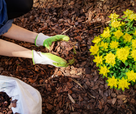
Improve your soil’s nutrient content and water retention by composting and mulching. Add organic matter in the form of good compost or worm castings to the soil. Compost boosts soil organisms that reduce pests and the need for fertilizers or pesticides that can be harmful if they enter our waterways. Mulch heavily to rebuild soil health, suppress weeds, and reduce irrigation. Use natural mulch (mixed leaf and wood mulch) to further enhance soil health. Check out this mulch landscape calculator to determine the quantity of mulch you’ll need for your gardening project.
-
Replace commercial pesticides and fertilizers with less-toxic alternatives and implement Integrated Pest Management practices to tackle pests. Pesticides and fertilizers not only kill soil microbes that are important for soil structure, but they can be toxic to both aquatic and human life if they reach our waterways. If you do need to use chemicals, follow all label requirements and use the least amount of product. Only apply chemicals when it is not windy and more than 48 hours from a rainstorm. Sweep up spills immediately and store all landscape chemicals in a contained, covered area.
Capture Rainwater as A Resource – Every hard or impermeable surface, like your roof, carport, or driveway, can channel valuable rainwater to your landscape. However, rainwater also presents a challenge. Every time it rains, water runs off impermeable surfaces, collecting pollutants such as particles of dirt, fertilizer, chemicals, oil, garbage, and bacteria along the way. This pollutant-filled water enters storm drains untreated and flows directly into our waterways. Harvesting rainwater can not only help protect our waterways from polluted runoff, but it also conserves water and nourishes your garden with clean (and free) water.
-
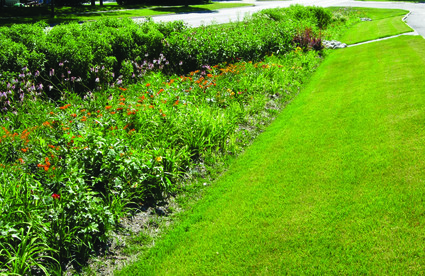
Configure your landscape to keep rain on your property to maximize water retention and prevent polluted runoff. This can be as simple as using existing depressions and slopes when planning your garden to installing rain or rock gardens. Contouring your landscape with features such as vegetated swales or rain gardens can further enhance your garden’s ability to capture and hold rainwater runoff. These features allow water to be filtered by vegetation and percolate into the soil, recharging groundwater aquifers and filtering out pollutants.
-
Re-route downspouts to landscaped areas to nourish your garden with clean rainwater. This will further enhance your soil and transform it into a living sponge to help keep plants healthy whether it’s raining or we’re in a drought.
-
Install rain barrels or cisterns to collect rainwater that can later be used to water your garden or wash your vehicles. Ideally, place rain barrels or cisterns where they can overflow onto permeable areas. Visit the County’s Rain Barrel webpage to learn more.
Select Local, Climate-Appropriate Plants – Planting climate-appropriate, or native plants, helps conserve water, minimizes polluted runoff, and attracts wildlife to your garden. Native plants both require less fertilizers and pesticides, and help reduce soil erosion. These can all be harmful if they reach our waterways.
Manage Irrigation Practices – Irrigation runoff can pick up pollutants that accumulate on the ground including dirt, yard waste, chemicals, trash, and more. Manage your watering either by adjusting your manual watering practices or through the installation of automatic irrigation systems.
-
Use highly-efficient irrigation ONLY when absolutely necessary to provide supplemental water (more than rain). Technologies include irrigation controllers, drip irrigation systems, rotating sprinkler nozzles, and water pressure regulators that can save you time from manual watering and help you manage your watering practices. ‘Smart’ technologies include weather-based and soil moisture-based sensor controllers that can target watering to specific plants or parts of your garden. They also better tailor watering schedules for landscapes, which reduces overwatering.
-
Adjust your watering practices to keep water from running off your property. Water in short cycles in the early morning or late evening when it’s cooler outside to allow water to absorb into the soil. Avoid watering within 48 hours of a measurable rainfall event. Repair leaking or broken sprinklers and adjust sprinkler heads so they don’t spray onto streets and sidewalks. Even simple actions like using hose nozzles with shut-off valves can help minimize polluted runoff and reduce water waste.
-
Learn even more ways to manage irrigation to prevent runoff pollution at the County’s Water-Smart Practices for Pollution Prevention Bulletin.
The County thanks its residents for your efforts to reduce water waste and gardening pollutants from leaving your property. The following San Diego County/California-based links are tremendous resources for learning more about watershed-based and water-efficient sustainable landscaping practices:
|