 DEQ NEWS
July 1, 2026 Vol. 5, No. 5
Henrico Fire Marshal's Office Sends Environmental Criminal to Prison
In 2023, dozens of barrels of hazardous waste were illegally dumped at
15 sites across the Richmond region, including 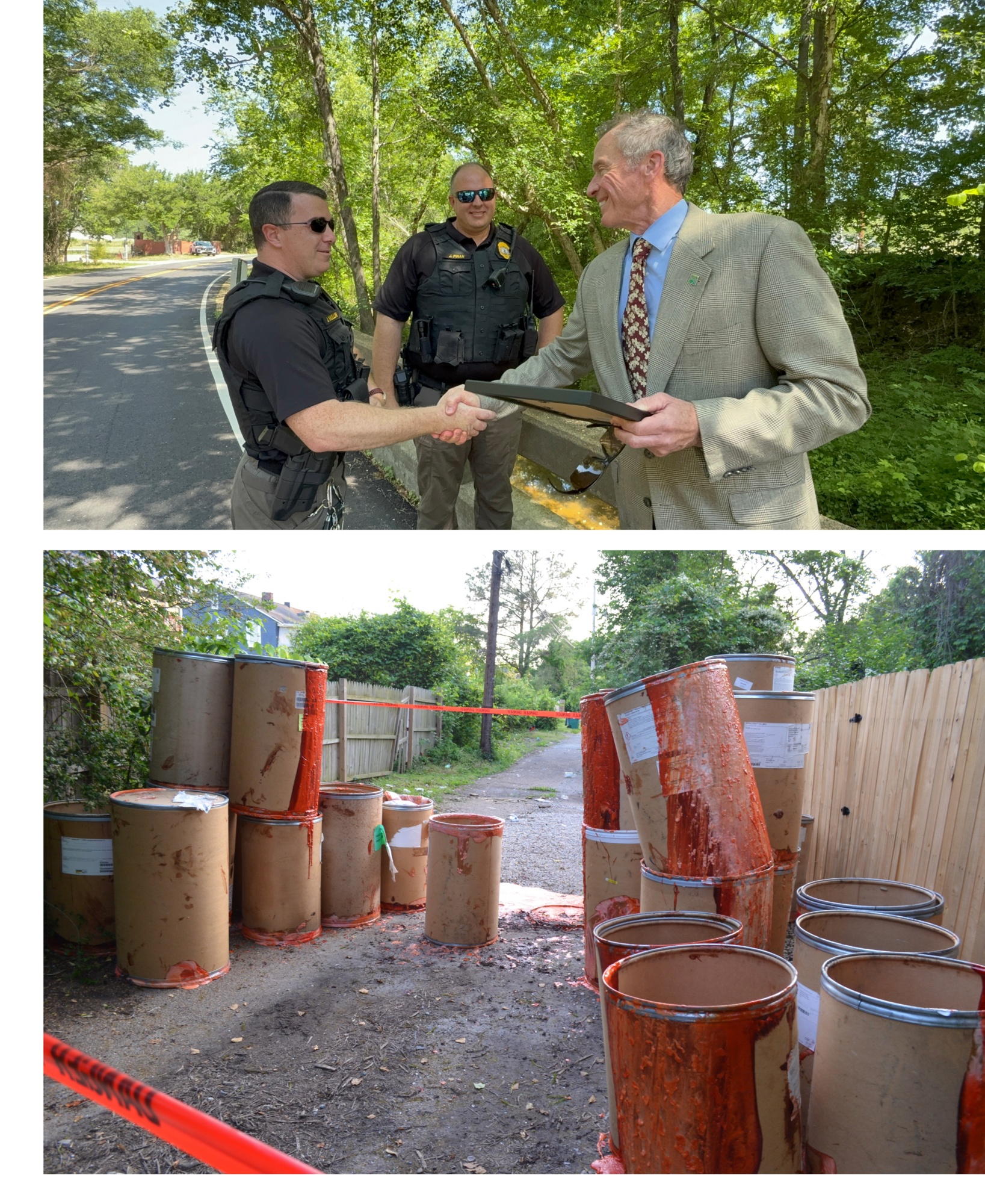 locations close to residential neighborhoods. What followed was a complex, two‑year investigation led by investigators Justin Finan and James Mullin of the Henrico County Fire Marshal’s Office.
Their thorough investigative work ultimately led to the identification and prosecution of three individuals involved in the operation. The ringleader was sentenced to prison earlier this spring. The presiding judge noted this case was one of the most egregious environmental crimes to come before his bench.
In May, DEQ’s John Giese presented an official commendation to Investigators Finan and Mullin in recognition of their exceptional efforts. The successful prosecution underscores the importance of strong collaboration among local and state partners in enforcing environmental laws and protecting Virginia’s communities.
DEQ is grateful for the vital role the Henrico County Fire Marshal’s Office played in bringing this case to a close and safeguarding the health of our environment. Congratulations to investigators Finan and Mullin on this well-deserved honor.
New Annual Water Quality Report
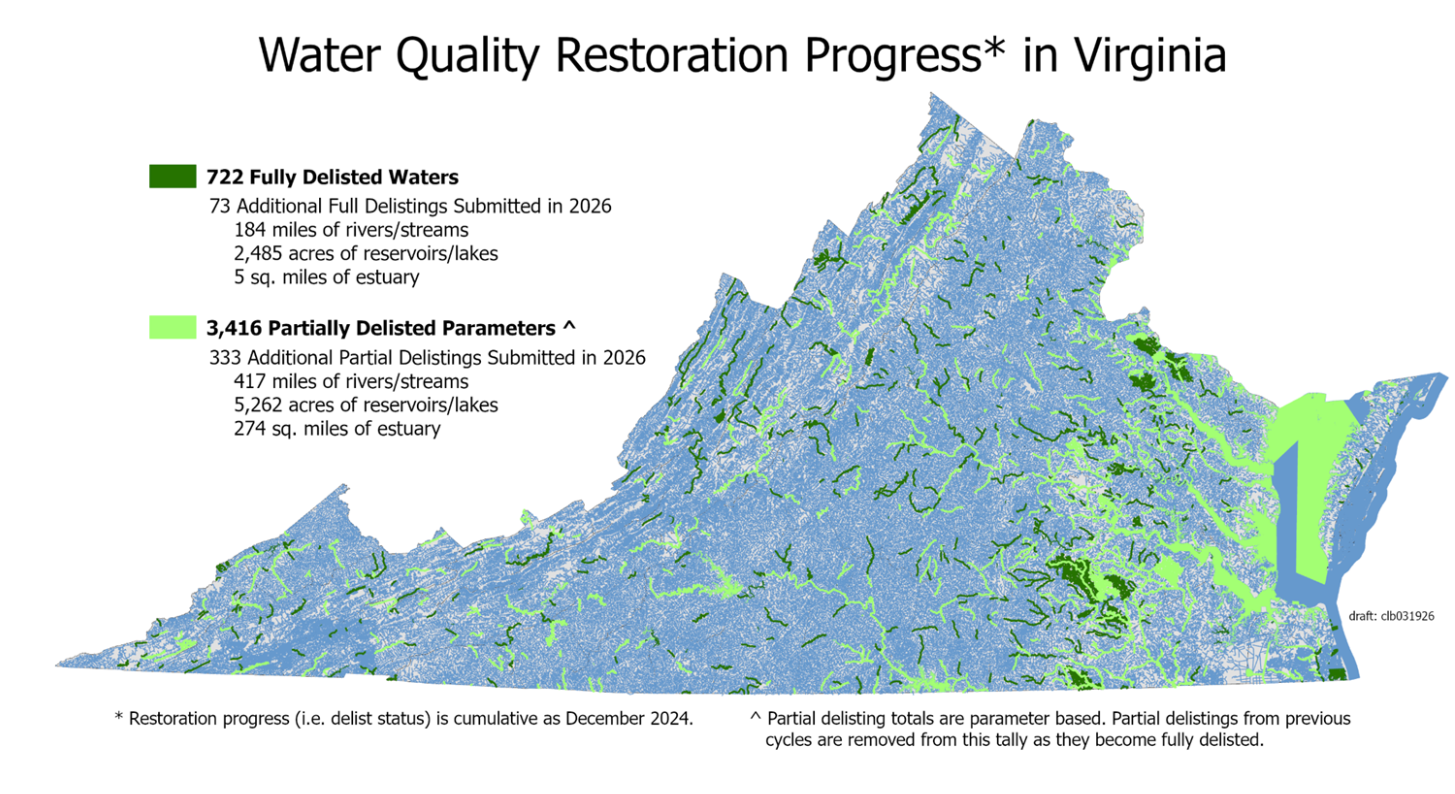
DEQ's new Integrated Report (IR) combines both the 305(b) Water Quality Assessment and the 303(d) List of Impaired Waters to provide a comprehensive look at conditions throughout the state. The IR is available for public comment now until July 15.
The IR is an analysis of data collected by DEQ staff from 3,542 locations, as well as data collected by nearly 50 external monitoring partners between 2019-2024. Of the DEQ collected data, over 110,000 observations of temperature, dissolved oxygen, pH, and salinity were used to make aquatic life use support determinations. Approximately 72,000 bacteria samples were used to make recreation use support determinations in freshwater and estuarine environments. Thousands of ammonia, nitrate, and chloride samples were analyzed to make wildlife and public water supply support determinations. The report found that bacteria, toxins in fish tissue, and low dissolved oxygen remain the leading causes of impairment in Virginia waters.
After a waterbody is classified as impaired, state statute directs DEQ to develop and implement a plan to clean up the waterbody by addressing the pollutant or pollutants causing the impairment. To do this, DEQ may initiate a watershed study, such as a Total Maximum Daily Load (TMDL). TMDLs are implemented in applicable discharge permits and by addressing sources of nonpoint pollution. In Virginia, an Implementation Plan, also known as a clean-up plan, is often used to guide implementation of nonpoint source controls. Waterbodies are removed from the impaired list by providing new data or information to the U.S. Environmental Protection Agency that shows attainment of all applicable water quality criteria for the waterbody segment.
In the 2026 IR, DEQ proposes fully or partially delisting 394 water segments from the Impaired Waters List. Of these, 73 are considered full delists, where all assessed uses for the given segment are attaining, and 321 are considered partial delists, where one or more parameters meet criteria, but others remain a cause of impairment. To date, the agency has completed TMDLs in nearly 1000 watersheds across the state.
The draft report is available for public comment through July 15. A public informational webinar summarizing the Integrated Report is scheduled for July 7 at 10 a.m. The draft report, appendices, and a link to an interactive web map are available on the DEQ Water Quality webpage.
Drought Monitoring Dashboard
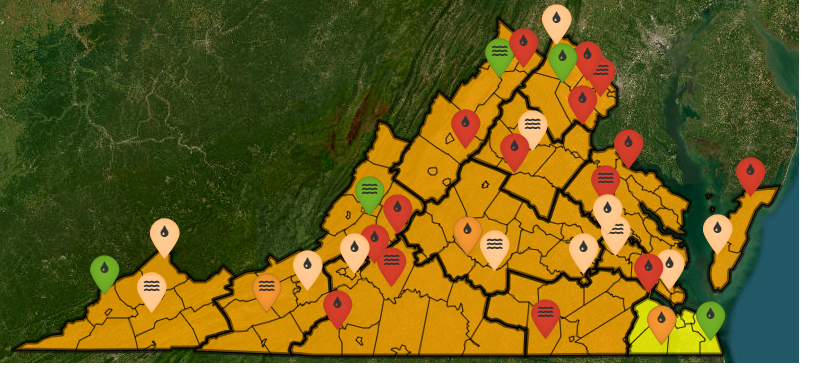
DEQ has developed an interactive and easy-to-use Drought Dashboard for viewing the drought tracking data used by Virginia’s Drought Monitoring Task Force (DMTF). The tool features an interactive map that presents drought monitoring indicators and spatial information. The map allows users to view the Drought Evaluation Regions and their current drought advisory status, groundwater observation wells, stream flow gages, soil moisture, and precipitation data. Stream gages and groundwater observation wells appear as selectable icons that use U.S. Geological Survey data to show how current water levels compare to historical normals. Additional precipitation and soil moisture layers incorporate information from the National Oceanic and Atmospheric Administration and the National Aeronautics and Space Administration to provide broader meteorological context. Below the map, tables display data summarizing drought indicators for a selected region. Separate tabs on the dashboard allow users to access additional maps and data from drought indicators. The Drought Dashboard allows users to quickly access a wide range of drought monitoring data and offers clearer insight into current conditions in a visual, accessible format for the public.
The DMTF meets bi-weekly to discuss current conditions of the drought and to determine the drought status of each of Virginia's 13 drought evaluation areas. DEQ releases their conclusion to keep the public informed. The most recent update on June 25 was a continuance of existing drought advisories. The next DMTF meeting is scheduled for July 7.
For more information on the Drought Dashboard and Virginia's ongoing drought, please see the Drought webpage.
Apply for Nonpoint Source Pollution Reduction Grants
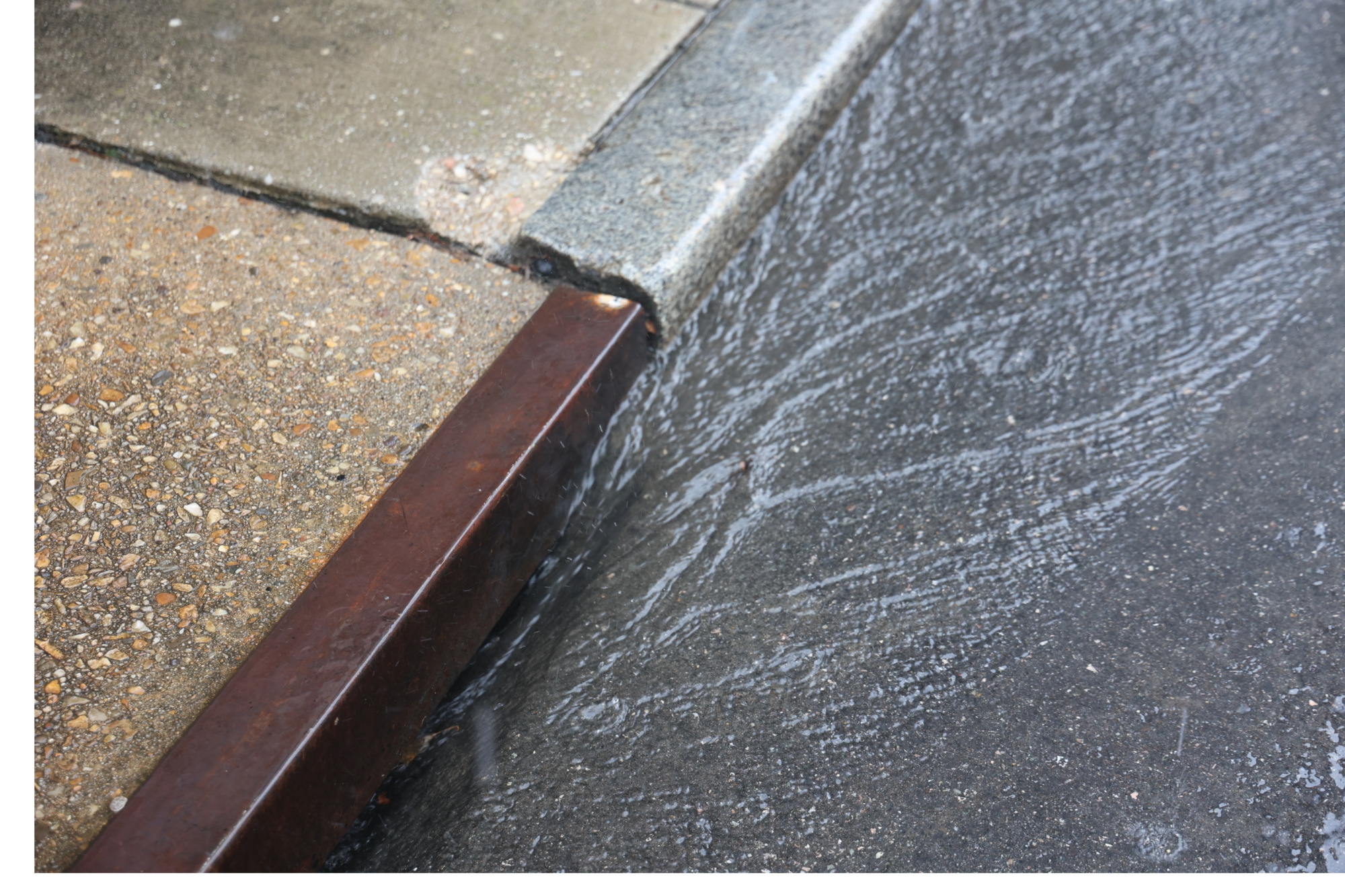
DEQ is accepting applications for for projects that address water quality issues caused by nonpoint source pollution, with up to $1.5 million in Clean Water Act (CWA) Section 319(h) grant funding solicited, with an additional up to $2 million for septic repair, replacement and connections. Awards are typically from $75,000 to $300,000 per agreement, for up to three years. Local governments, planning district commissions, soil and water conservation districts, regional commissions, non-profits, and state agencies are eligible to apply. The application deadline is August 31. For more information, please visit the DEQ Nonpoint Source Management webpage.
Expanded Polystyrene Ban Begins
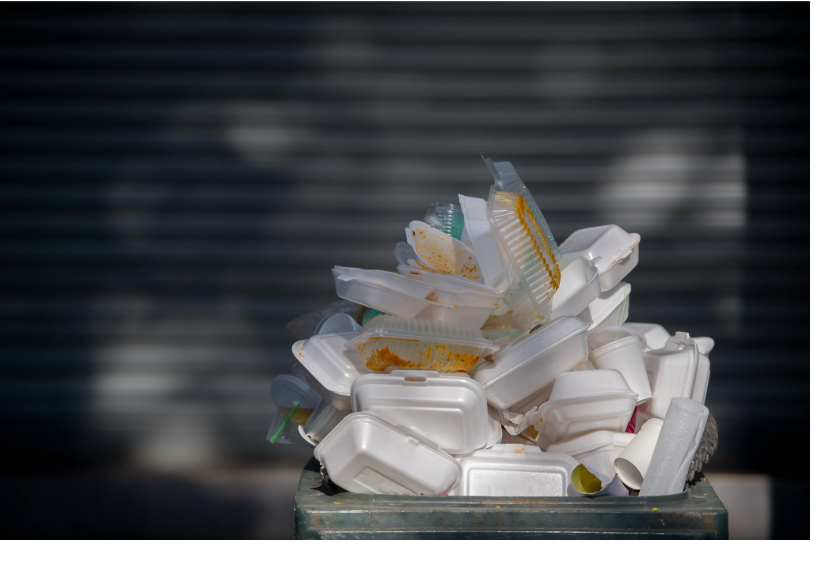
As of July 1, Virginia will ban the use of expanded polystyrene (EPS) containers, more commonly referred to as the Styrofoam brand. The ban applies to any establishment that serves prepared food including restaurants, cafeterias, food trucks, catering companies, and grocery store salad bars. The aim of this legislation is to reduce the use of EPS and promote alternatives such as compostable paper, cardboard, or reusable containers.
The statute allows food vendors to request an extension from their locality. The EPS contact list for some localities is available on this spreadsheet. Localities are the sole authority for this law and are responsible for exemptions and enforcement.
For more information on the EPS ban, visit DEQ's Foam-Free Resources webpage or email us with the subject line "EPS" at va-landr@deq.virginia.gov.
Financial Penalties Increasing

This year, the General Assembly strengthened DEQ’s unilateral penalty authority in special orders under Va. Code § 10.1-1186. The DEQ Director may issue a penalty for violations of air, water, or waste requirements in a special order following an informal fact-finding proceeding. Capped at $10,000 since 1996, the penalty authority increases to $32,500 effective July 1. DEQ will use this strengthened authority to encourage prompt returns to compliance and ensure recalcitrant violators pay appropriate penalties.
To learn more about DEQ’s enforcement program, visit the Enforcement webpage.
Apply for Volunteer Water Monitoring Grants
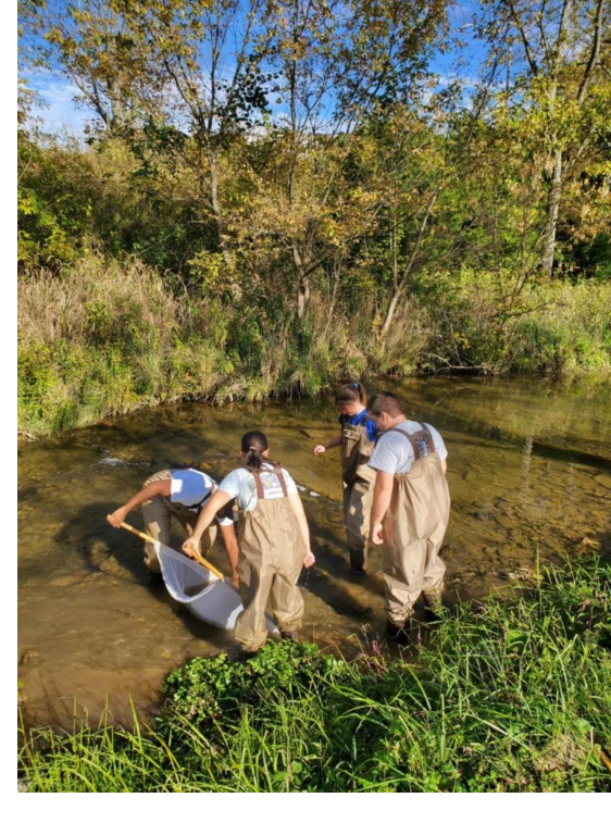
DEQ is accepting grant applications for the Citizen Monitoring Grant until Aug. 31.
The grant program provides guidance and support for activities promoting volunteer collection of water quality data, and community-based education on water quality monitoring and the environment.
Volunteer monitoring groups contribute essential data to help DEQ assess the health of local waterways as well as develop and prioritize clean-up plans. From 2017-2022, volunteer monitoring data was used to assess 2,333 miles of rivers and streams, 74 square miles of estuaries, and 21,737 acres of lakes.
For more information visit the Monitoring Partner Resources webpage, email citizenwater@deq.virginia.gov, or call Meighan Wisswell at 571-866-6494.
Public Town Hall on Environmental Justice in Permitting
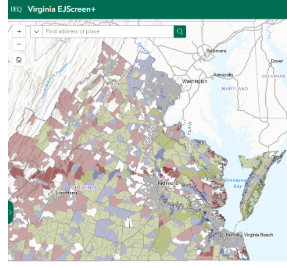
DEQ is developing an updated draft of the Environmental Justice in the Permitting Process Guidance. DEQ will host the first of two public town hall meetings to discuss the guidance. DEQ would particularly like to hear your ideas regarding how to assess the cumulative impacts of certain DEQ-issued permits, as well as recommended outreach strategies to engage communities potentially impacted by such permits.
First Public Town Hall
Date/Time: July 22, 2026, 6 to 9 p.m.
Location: J. Sargeant Reynolds Community College
1651 E. Parham Rd., Richmond, VA 23228
Lipman Auditorium (located in the Massey Library Technology Center)
The draft guidance will be posted as soon as it is available. DEQ plans to hold a second town hall to discuss these topics at the end of July. Details for the second town hall will be announced once DEQ has secured an appropriate location. Visit the Environmental Justice Permitting Guidance webpage for updates.
Stormwater Updates: Stop Work Orders and Streamlined Review
Stop Work Orders
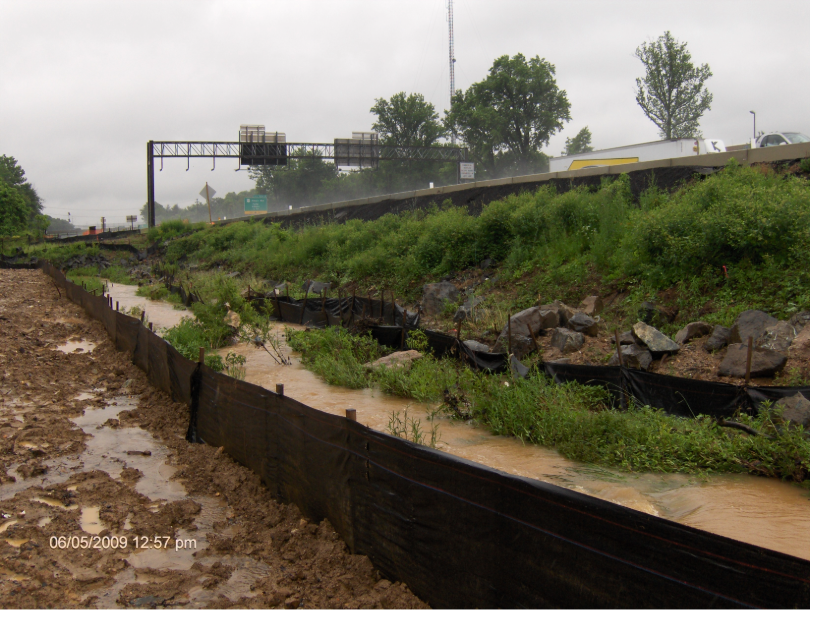
In an effort to protect Virginia’s natural water resources and ensure adherence to erosion and sediment control requirements, DEQ will now issue stop work orders to halt land‑disturbing activities at sites with significant or repeated non‑compliance. While not intended to be routine, stop work orders will be used when the alleged noncompliance is causing or presents an imminent and substantial danger of causing harmful erosion, or when compliance issues persist. Activities may not resume until an offending site is brought back into compliance.
Operators are expected to correct deficiencies promptly and maintain effective controls throughout construction. Projects may be shut down if serious or recurring issues are not addressed.
Save Time with Streamlined Plan Review
DEQ's streamlined plan review process allows a certified Dual Combined Administrator (DCA) to certify SWM and ESC plans for regulatory compliance in lieu of DEQ's standard plan review.
Plans prepared in accordance with the Virginia Stormwater Management Handbook and certified by a DCA move through an administrative completeness check rather than a full technical review. Streamlined plan review timeframes can be as much as 75% shorter than standard plan review timeframes.
This process is available for localities where DEQ serves as the Virginia Erosion and Stormwater Management Program and/or Virginia Stormwater Management Program authority. If you have questions about eligibility or want help preparing a submission, please contact planreview@deq.virginia.gov to schedule a pre-application meeting.
DEQ Welcomes Summer Interns
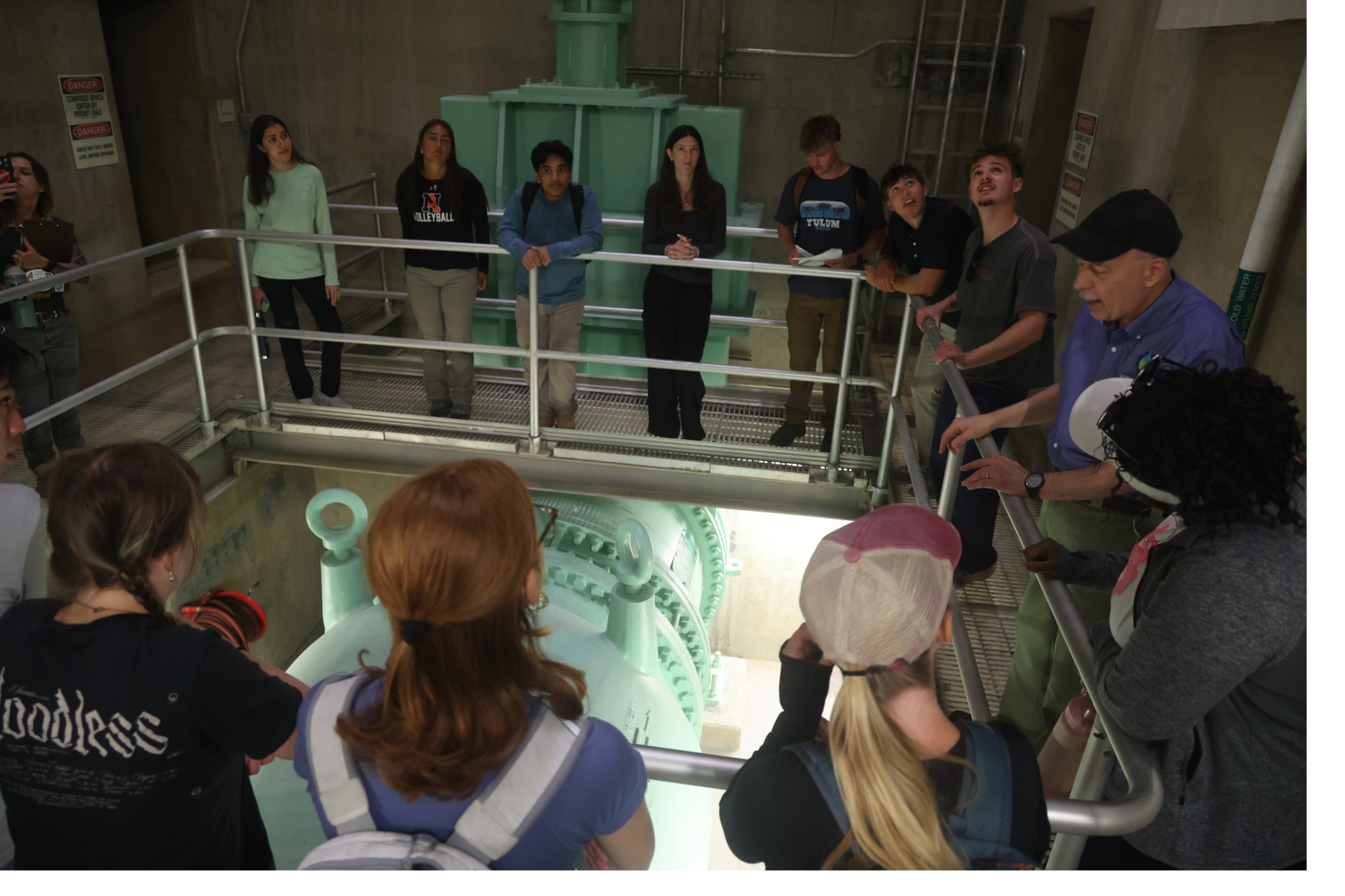
DEQ is proud to welcome a new cohort of summer interns. This year, 11 first-year interns and three returning interns are gaining hands on experience with DEQ’s environmental programs, regulations, and field operations. Our returning interns are spending the summer working on specialized projects that deepen their skills and support meaningful agency initiatives.
During their first week, first-year interns visited DEQ’s Central Office for an overview of the agency's technical programs, permitting and compliance processes, and the laws and regulations that guide the agency's work. They also joined staff on site visits to experience firsthand the breadth of facilities regulated by DEQ.
These visits provided invaluable insight into how environmental stewardship is put into practice and will be essential in their career development.
DEQ extends our sincere appreciation to the facilities that generously hosted our interns for discussions and tours:
• Henrico Water Reclamation Facility (Henrico Water, Department of Public Utilities)
• The Nature Conservancy / VCU Rice Rivers Center Mitigation Site
• Cobbs Creek Reservoir, Henrico Water, Department of Public Utilities
• Old Dominion Landfill, Republic Services
• Luck Stone Quarry (Virginia Environmental Excellence Program member)
• Allan Myers Asphalt Plant
Boosting Efficiency with Mobile Inspections
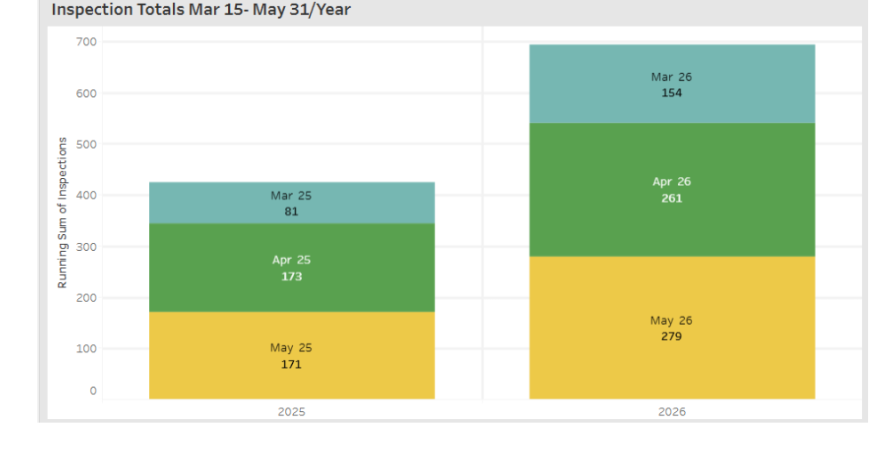 Since moving to a mobile platform in March, DEQ's erosion and sediment control (ESC) and stormwater construction inspectors have become more efficient than ever.
DEQ's new mobile tool empowers staff to collect inspection data quickly, accurately, and directly from the field using a mobile phone or tablet and follow up rapidly with an inspection report. The inspection data from March to May shows that we increased the number of inspections completed by over 70% over the same period - allowing DEQ to follow-up on inspections with re-inspections when corrective actions are needed and help prevent problems. Stormwater inspectors completed over 100 more inspections in May of 2026 than 2025.
With the added efficiency of Esri ArcGIS Survey123, stormwater and ESC inspectors can focus on what matters most – ensuring strong compliance across the Commonwealth. Read more about our mobile data collection process on our webpage. On this webpage, DEQ provides, at no cost, information for government agencies, and private companies to access the DEQ tool and make their inspections more effective.
EPA Announces $10.1 Million in Revitalization Funding for Virginia
On June 24, the Environmental Protect Agency (EPA) announced more than $10 million in Brownfields Multipurpose, Assessment, and Cleanup grants for Virginia agencies and localities. DEQ will be granted $2 million for conducting brownfield inventories, planning, environmental assessments, and community outreach. DEQ recently celebrated success with the brownfields program in aiding Tazewell County with the Clinch River Pavilion project and is eager to use this funding to further help communities achieve positive redevelopment in Virginia.
New Septage Hauling Resources
After a septage treatment facility closed in King George County, the Virginia Association of Counties had questions about the availability of septage acceptance across the state. Septage acceptance is not solely regulated by DEQ, but staff identified a need for increased clarity surrounding the issue. To promote transparency, DEQ has developed a webpage to communicate information regarding septage acceptance. This includes information and resources for septic tank owners, septic haulers, and septage treatment facilities. Additionally, an interactive map was developed to illustrate the locations of facilities that accept hauled wastes, including septage, across the Commonwealth. This map also communicates the facility restrictions, operating hours, and contact information, increasing transparency between interested parties.