
Hoback River Mountain Whitefish Survey
Wyoming Game & Fish Department sent this bulletin at 07/26/2013 03:08 PM MDT 
|
|
Having trouble viewing this email? View it as a Web page.
|

JACKSON – Fish biologists with the Wyoming Game and Fish Department recently conducted the first-ever mountain whitefish population survey on the Hoback River south of Jackson. In three separate passes on a three-mile stretch of the river, fish biologists were able to capture and release approximately 600 whitefish.
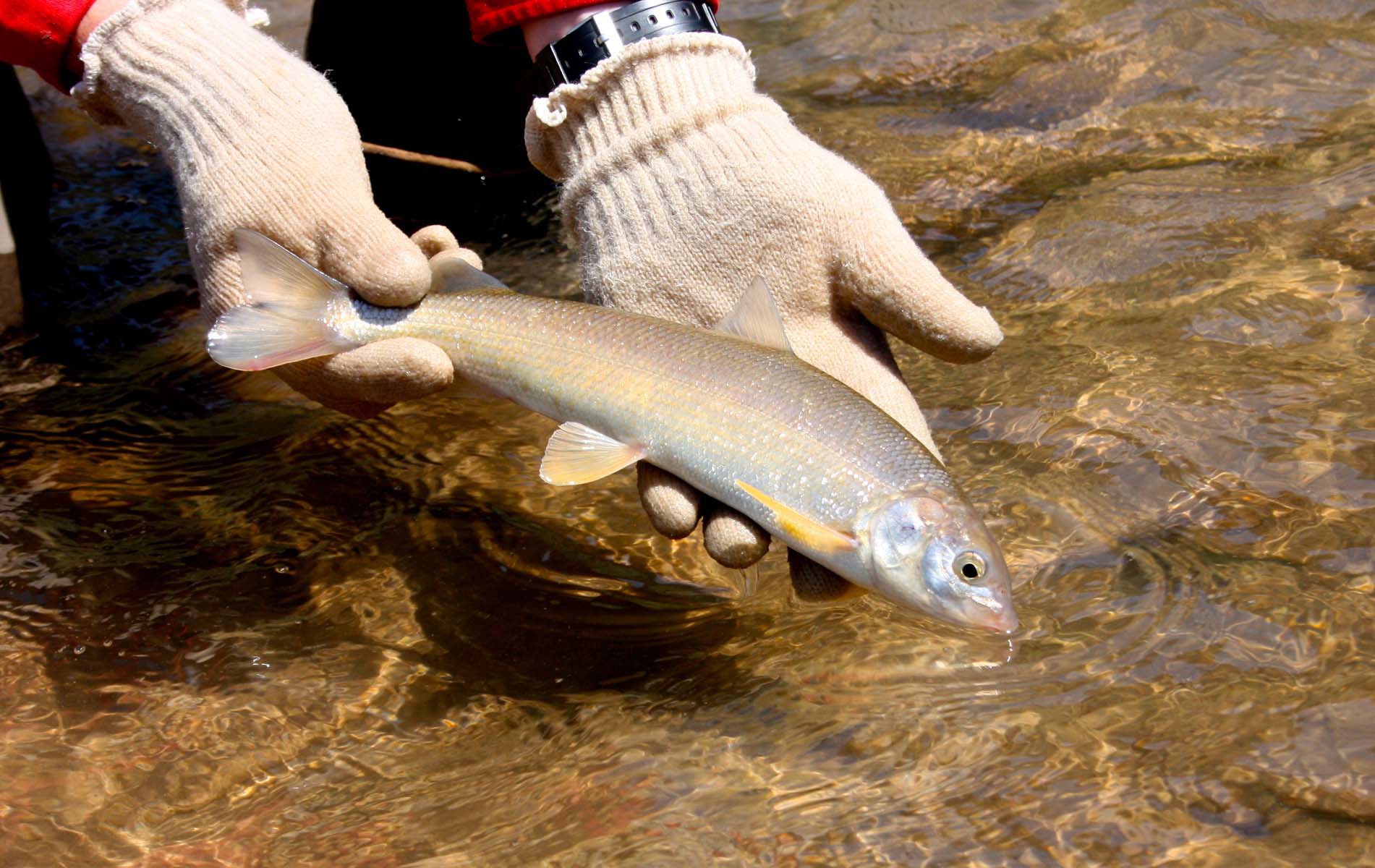 All Photos courtesy Taylor Watson
In 2010, with neighboring states noticing a decrease in their whitefish populations, fish managers in Wyoming initiated a statewide effort to take a closer look at the state’s mountain whitefish populations across their range. In Wyoming, mountain whitefish generally occur in mountain streams of the western part of the state, including as far east as the Bighorn Range in the northcentral part of the state.
Extensive population surveys have never been done in Wyoming, so biologists are gathering baseline population information in order to detect any future declines. So far, whitefish populations have been surveyed in the Salt, Smiths Fork, Green, Wind, Popo Agie, Shoshone, Clarks Fork, and Hoback rivers with healthy populations being found in them all.
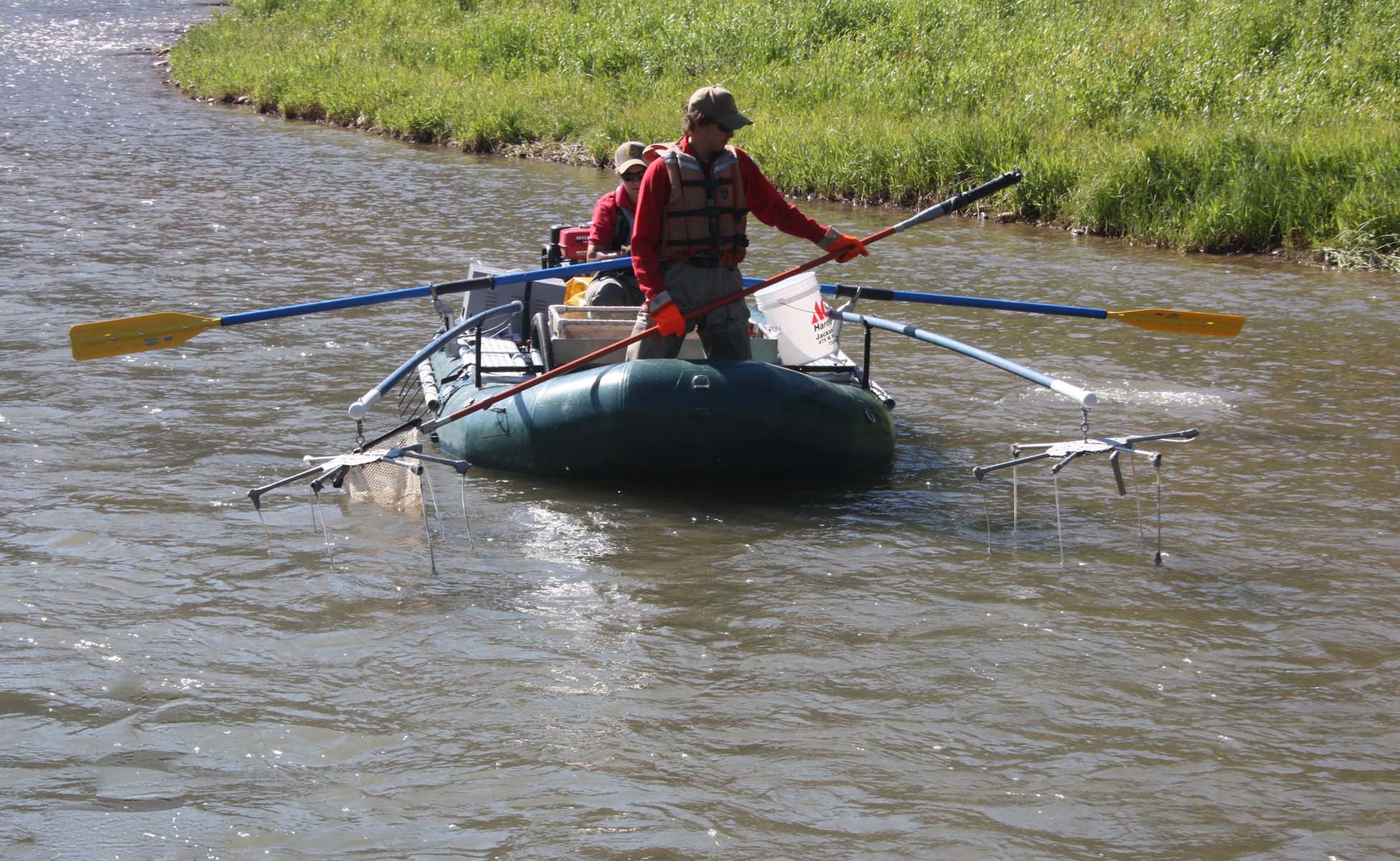
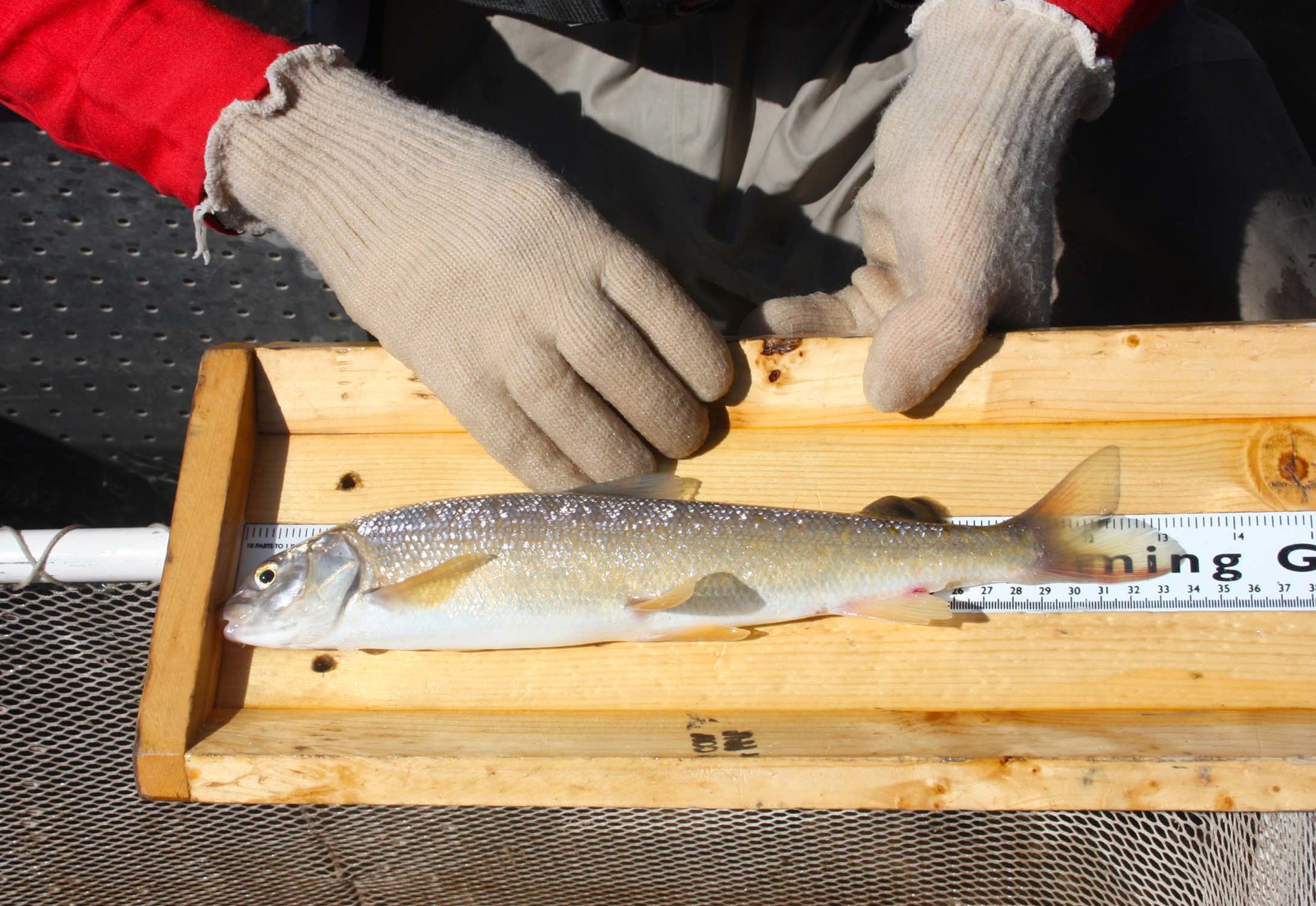
In order to survey a population, fish managers float a river in rafts equipped with electrodes that extend into the water, which temporarily stun the fish. This way the fish are easy to scoop up with a net and are transferred to a live well on the raft. The effects of the electricity wear off within minutes. The team stops periodically to weigh, measure, mark, and release the fish back into the stream.
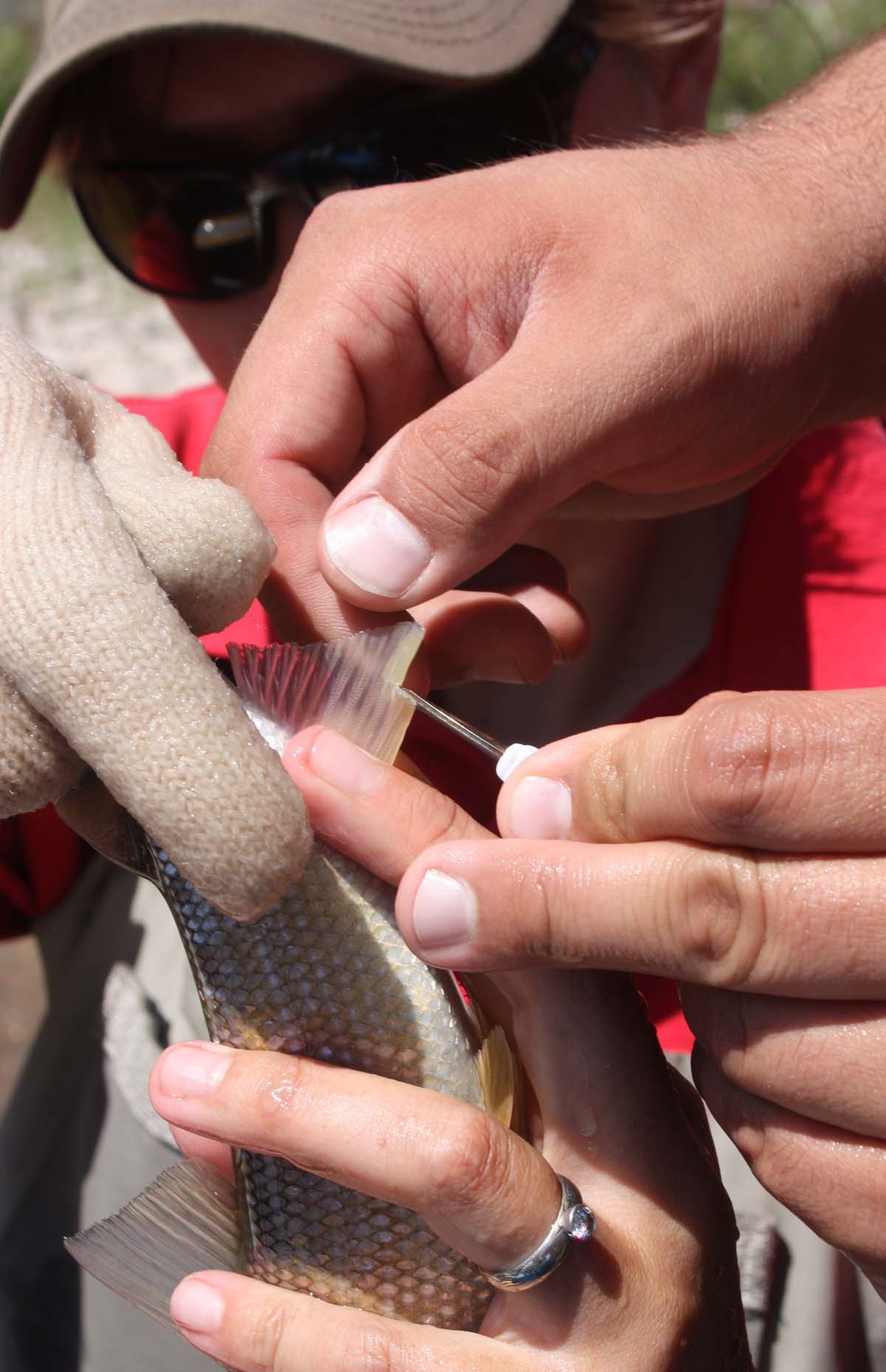
Each captured fish is marked by simply clipping a portion of one of its fins. By floating the same stretch of river multiple times, they record how many fish are re-captured, and from that can estimate the actual population.
For most anglers, a mountain whitefish is not as prized as other sport fish, such as trout, primarily due to a bone structure that makes them harder to eat. However, the presence of this native fish is just as crucial to the overall health and function of an aquatic ecosystem.
Without baseline population data, biologists may not be able to detect declines until populations are critically low. Baseline population data will allow biologists to detect future declines and, if necessary, initiate management actions to reverse these declines. Additionally, understanding the state’s whitefish populations is important to establish appropriate fishing regulations. For example, the creel limit of mountain whitefish was recently lowered statewide from 25 fish to 6 fish, partly due to the lack of data. The population estimates conducted in recent years, along with the support of mountain whitefish anglers, allowed the Wyoming Game and Fish Department to move forward with increasing this limit back to 25 in the Snake River drainage in 2014. Fish managers with the Wyoming Game and Fish Department will continue their survey efforts across the state, but for now populations appear to be healthy.
~ WGFD ~

|
Wyoming Game and Fish Department mark.gocke@wyo.gov |
| STAY CONNECTED: | |||||||
 |
 |
 |
 |
||||

SUBSCRIBER SERVICES:
Manage Subscriptions | Unsubscribe All | Subscriber Help