New World Screwworm advances towards United States
Situation updates and available outreach materials
The first case of New World Screwworm (NWS) in Mexico was reported to the U.S. in November 2024. When NWS fly larvae (maggots) burrow into the flesh of a living animal, they cause serious, often deadly damage to the animal. NWS can infest livestock, pets, wildlife, occasionally birds, and in rare cases, people.
Cases have continued to occur in Mexico and detections of NWS have been found 700 miles south of the Texas border. In efforts to prevent the northern spread of NWS, the USDA suspended live cattle, horse, and bison imports through U.S. ports of entry along the southern border on May 11, 2025. Additionally, increased efforts in releasing sterile male flies have been intitated to stop NWS spread across Mexico.
What can veterinarians and producers do?
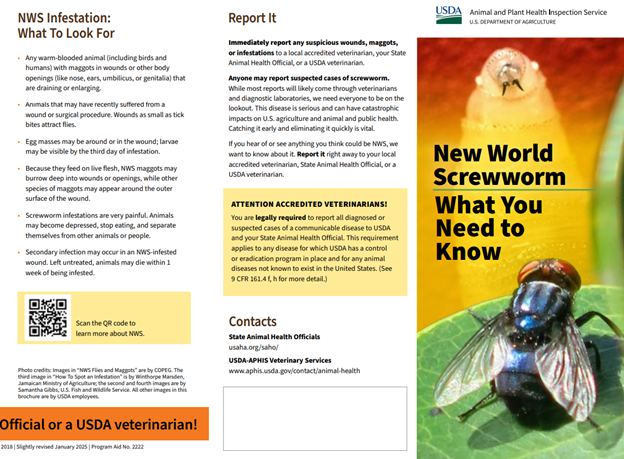
- Know the signs of NWS in warm-blooded animals (livestock, pets, birds, humans)
- Maggot infested wounds
- Foul odor
- Irritated behavior
- Head shaking
- Decreased appetite
- Seclusion from the herd
- Monitor livestock and pets for wounds and the signs listed above
- Contact your veterinarian for appropriate wound care
- Immediately report signs to your veterinarian or the Wyoming Livestock Board
- New World Screwworm is REPORTABLE in Wyoming
- If you travel to regions affected by screwworm with your pet, know the requirements for returning to the U.S.
**Accredited Veterinarians**
- A new module on New World Screwworm (Module 41) has been added to the National Veterinary Accreditation Program (NVAP) website. It is highly recommended to review this video even if your accreditation is up to date.
For further information on NWS and eradication efforts, please visit the USDA-APHIS website and view the attached information documents.
|