THE BOUNTY AND
THE PESTS

I gave two
talks this week that reflect the ups and downs of a diverse economy. The
construction industry is booming, but Wisconsin’s agriculture industry is
struggling with the pesty floating prices of their products. While the
huge Taiwanese company, Foxconn, will require 10,000 construction workers to
build their new Wisconsin mega-campus, and homeownership is finally on the rise
for the first time since 2004, the construction industry has so much work
they’re struggling to find enough talent. I shared with the Construction
Resource Network our commitment to apprenticeship and teaching young people
about the trades with Fabrication Laboratories and Academic and Career Planning
in schools.

I also stopped
by the Corn and Soy Expo to salute the men and women who get up before the rest
of us to farm the land that feeds the world. Soybeans are the second largest
source of income for Wisconsin’s crop farmers and are used to make the
vegetable oil we use for cooking, as well as to feed livestock. The corn
growers have recently been disappointed by the prices people are willing to pay
for corn. It costs them $3.60 to grow corn but the commodity is only
fetching $3.20. These commodities have reduced prices because the growing
seasons have been so good that farmers produced more than what consumers
demanded. When you have a glut of product, of course, the prices are driven
down. This means it’s important to continue to develop new customers to sell
to, particularly in other countries.
BRIGHT IDEAS ON HOMELESSNESS
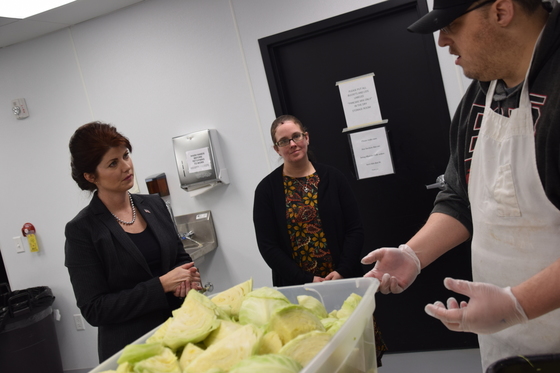
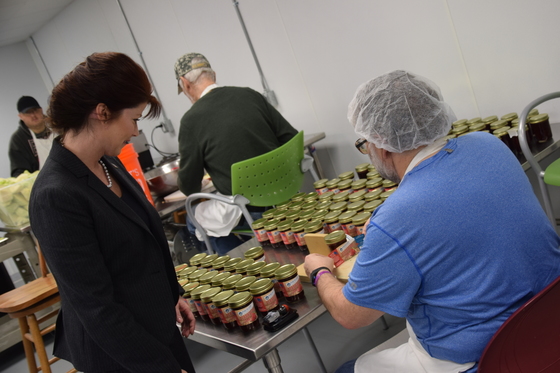
At Porchlight Inc. in Madison, I was impressed this
week. The nonprofit gives people not just one of their 330 housing units for a
percentage of their income, but gives them a path to that income. Porchlight
runs its own food production company, making things like apple butter, jam and
sauerkraut which they sell at grocery stores.
The group also does something called "eviction prevention". Evictions are bad. When someone is evicted, it not only thrusts them into homelessness, but dings their credit (affecting whether they can buy a car, a house, or even hold a job), frequently creates chaos in finding shelter, upends their stability and often wrecks their kids’ feeling of security and routine, causing academic trouble. Plus- that landlord never got paid. There is a domino effect of bad, so preventing an eviction...intervening before someone ever becomes homeless, makes sense. At Porchlight, a unique program requires a person with an eviction notice to produce whatever money they can pay, and Porchlight will provide the other half of the cash to pay the landlord, or auto mechanic or energy company- whatever the bill is that led to the eviction notice. After 1000 cases, they’ve discovered that usually $220 makes the difference between that cascade of terrible consequences and remaining housed. (Porchlight gives the money- the renter’s and Porchlight’s match- directly to the person who is owed.) After a year, 85% of the people who were once served eviction notices were still housed. That’s a shocking success rate, and I’m impressed.
Forward,
 Rebecca Kleefisch
Lt. Governor
|