|
|
|
|
MORE THAN JUST MILK

This baby cow has some time to go before she produces milk,
but for now, she’s contributing to Vir-Clar Farm’s energy output. (You've
heard me talk for a few years now about a renewable and plentiful Wisconsin
energy source at the back end of livestock.) Years ago Vir-Clar Farms,
just outside Fond du Lac, invested in a biodigester that converts
organic waste from the farm into renewable energy. They then sell the
Kilowatts they make in the biodigestion process back to the energy company
which uses the electricity to power about 800 homes.
Vir-Clar
is family-owned but big; they have about 2000 animals. Many have asked me
whether biodigesters- expensive investments- are even within reach for a small
farm. My answer can be found in our Public Service Commision's exploration of
suggestions for the future of WI biodigesters... some think a "hub and
spoke" model...with a central, shared biodigester (the hub) and a number
of contributing farms (spokes) is a way to get more farms involved in this
novel way to reuse waste.
Biodigesters' byproducts are not limited to electricity, either... some suggest
that natural gas and vehicle fuel are more valuable outputs. Regardless of the
energy output, the biodigesters will also reliably produce fluffy dry bedding
for livestock, a condensed crop fertilizer and water. Because of this, there's
less of a "dairyair" smell that neighbors may not love, and more
potential electric grid security as we identify new energy
"micro-providers"... farms.

Coincidentally this week I spoke at the 2017 Wisconsin
Energy Providers Conference about the importance of renewable energy. Wisconsin
has 34 farms deploying biodigesters and is a national leader.
Wisconsin is also home to several companies and colleges that know
how to design, engineer, build and operate these systems. The way I
see it, biodigesters are a win-win-win-win for the environment, farmers, renewable
energy, and jobs.
|
|
Are You Smarter Than
a 5th Grader?
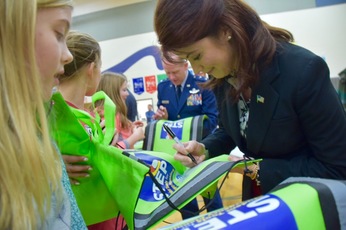 You may not need to
be smarter than a 5th grader if they have been through the STEP (Student Tools
for Emergency Planning) program! These 5th graders learn to be family and
community leaders in the event of a disaster. Along with Adjutant General
Donald Dunbar from the Wisconsin National Guard, I talked with students from
Waubesa Intermediate School in McFarland about the importance of having a
family readiness plan in a worst case scenario. Thanks to a partnership
between AT&T and Wisconsin Emergency Management, each student in the STEP
program received a bag that they will fill with emergency go-to items like
radios and flashlights.
|
Never Have I Ever...
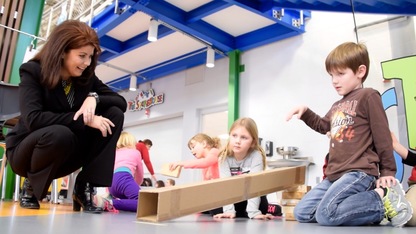
Never have I ever seen a school STEM (science, technology,
engineering, math) learning lab look so much like a fantastic children's
museum. Go up the road on highway 151, pass Fond du Lac and drive north
along the eastside of Lake Winnebago and you’ll come to Brillion
Elementary. For those who are frequent followers of my newsletter you
know that I have been to lots of Fab Labs (fabrication laboratories) and
Innovation and Design Centers across the state. Brillion, however, is the
first elementary school in the state to have a STEM Center. The 3,500
square foot facility was an investment that the school board and the
community both voted to support. Most of the funding came through private
donations. Talk about local control! By the time these students are in
the fifth grade, they will have already been exposed to elementary
concepts in chemical and biomedical engineering, laying the foundation for
future careers in high-demand fields.
|
TopTech Awards
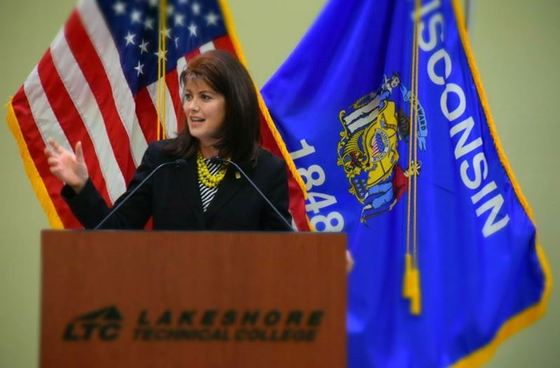
Another week, another stop at a Wisconsin tech college!
At Lakeshore Technical College I was honored to give the keynote address at the
TopTech awards, which recognized educators and businesses for their
efforts to bring technical education into the K-12 classroom. Everywhere
you look in Wisconsin, there are teachers working long hours to assemble
and implement STEM curricula in their classrooms or business leaders
partnering with the members of the school board to coordinate the
funding. They know that the future of Wisconsin’s economy hinges on workforce
development, and schools like Brillion show the benefits. The jobs in
Wisconsin exist; this week we had about 85,000 open jobs...our task is to work
together to create skills training opportunities so we have
people ready to fill them.
 This week I also visited our Drug Abuse
Correction Center and our Winnebago Mental Health Institute. In both cases I
met with both providers and customers. Each week I get a binder that includes
reports from each of our agencies, chronicling the hard and good work they are
doing. In the case of our Depts. of Corrections and Health Services, that often
includes dealing with some of the most intense cases of troubled lives and
mental health concerns in our entire state. Whether they are being
de-stigmatized or simply diagnosed more, mental health and addiction cases are
more frequently a part of the wellness conversation. I'm glad to have the first
hand knowledge of what goes on behind the scenes at these facilities.
|
Forward,
 Rebecca Kleefisch
Lt. Governor
|
|
|
|
|
|