|
No Atlantic Slope species has ever been found this far west
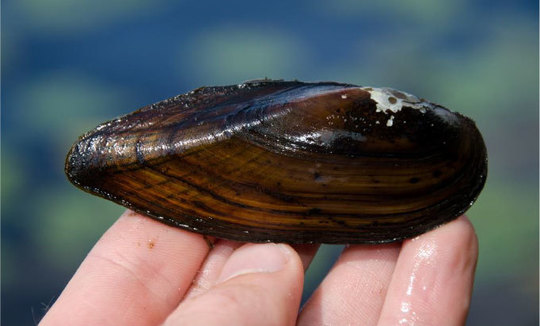 Eastern Pondmussel. Photo courtesy of Brenton Butterfield.
About the mussel species
NHC staff have helped to confirm the presence of the Eastern Pondmussel (Ligumia nasuta) in Wisconsin's waters. The first specimens were pulled from Medicine Lake in Oneida County last summer. It has since been found in other connected lakes.
While it is new to Wisconsin, its historic range includes Michigan and Ohio. It is not an invasive or Wisconsin state-endangered species.
|
Is Wisconsin a safe haven?
This species is considered east coast in distribution, but like many of the east coast species its range extends into the Great Lakes, where it has declined due to the invasive zebra mussel.
The Wisconsin lakes in which it has been reported have been kept clear of zebra mussels, thanks in part to the Clean Boats, Clean Waters Program, so we may serve as a refuge for this species as it declines elsewhere.
|
|
|
 Eastern Pondmussels. Photo courtesy of Brenton Butterfield. |
How did it get here?
This species likely got here on the gills of a fish. To complete development, mussel larvae must attach to the gills of the right host fish. The host fish for the Eastern Pondmussel are not known.
Like the Black Sandshell
The Eastern Pondmussel is similar to our Black Sandshell (Ligumia recta), but is found in small streams and shallow lakes and ponds, whereas the Black Sandshell is found in medium and big rivers. |
|
About Wisconsin's native mussels
Wisconsin has over 50 species of native mussels. Over half of those species are special concern, threatened or endangered. You can help Wisconsin's mussels, by participating in the Mussel Monitoring Program.
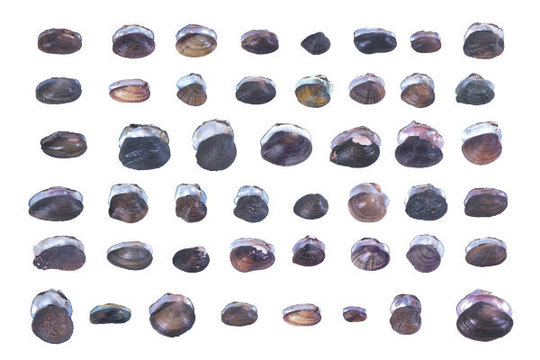 Photos courtesy of the Minnesota Department of Natural Resources.
|
|
 |
Get a FREE subscription to the Wisconsin Natural Resources Magazine
Donate $25 to the Bureau of Natural Heritage Conservation and get a year subscription as a thank-you gift. |
|
|


