|
|
|
Images may appear blurry in some web browsers. We recommend opening newsletter links in Google Chrome.
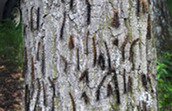
Spongy moth caterpillars began hatching at the end of April in 2025 and are now actively feeding on leaves. In most Wisconsin locations, though, the population will not be as high as it has been in the last few years.
Wisconsin has had the largest outbreak in state history over the past few years. Fortunately, the outbreak collapsed in many areas of the state in 2024. Although some hot spots still exist in south central and northeast Wisconsin, we expect those populations to decline in 2025.
Read the full article here ...
|
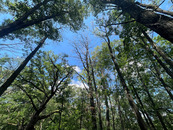
Oak wilt symptoms typically begin to appear in southern Wisconsin in late June and in northern Wisconsin during July.
Watch for browning leaves, starting at the top of the canopy and progressing downward. Most leaves will fall from infected trees as they die, typically within two to four weeks.
Read the full article here ...
|
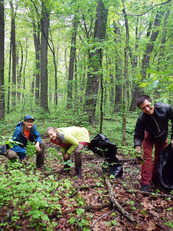
June is Invasive Species Action Month in Wisconsin. This tradition of spreading awareness and taking action began back in 2005.
In Wisconsin, invasive species are defined as non-native species that harm the environment, economy or human health. We often hear about the ecological impacts of invasive species, as they can create dense monocultures that crowd out native vegetation and degrade wildlife habitat.
Read the full article here ...
|
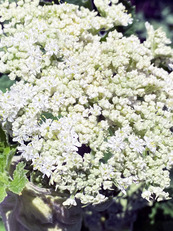
With 145 invasive plants regulated under Wisconsin’s Invasive Species Rule NR40, it can be challenging to identify some of these plants while out in the woods. The task can be further complicated by the presence of native lookalikes – plants that have a similar appearance to harmful invasive species but are actually native plants that benefit wildlife, pollinators and ecosystems in Wisconsin.
Here’s how to correctly identify six pairs of commonly confused plants that are in bloom right now.
Read the full article here ...
|
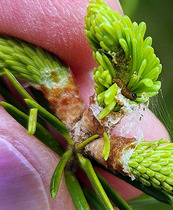
From early indications, the spruce budworm outbreak in some areas of northern Wisconsin is preparing to continue for yet another year.
During the third week of May, expanding buds on balsam fir trees were already showing damage from the tiny larvae.
Read the full article here ...
|
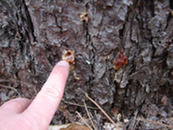
Red turpentine beetle and pine root collar weevil are the most common insects found attacking near the base of red pine trees in Wisconsin, whether near ground level or just below ground level.
Here are some tips on identifying and controlling these pests.
Read the full article here ...
|
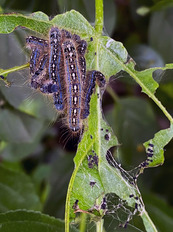
Forest tent caterpillar (FTC) populations do not appear to be making a significant return this growing season.
Spring egg mass surveys indicate that populations continue to remain low, continuing the longest documented interphase between outbreaks on state record, at 22 years and counting.
Read the full article here ...
|
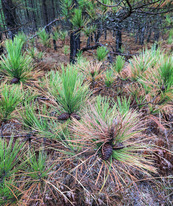
Conifers such as hemlock, pines and fir can lose moisture from their needles during the winter. If too much moisture is lost, those needles can quickly turn yellow or brown once the weather warms up in the spring.
Extensive browning of needles on hemlock — sometimes more than 50 percent of the needles – was observed in scattered areas of Oneida and Bayfield counties by the second week of April.
Read the full article here ...
|

They talked about pulling it, smothering it, using herbicide on it, making turkey calls and making curtain rods from it. They even wondered if they should just “kill it with fire.” But it seems Midwestern foresters’ never-ending battle against buckthorn requires a brainier approach.
Read the full article here ...
|
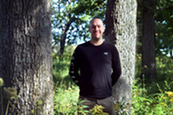
Michael Hillstrom, Invasive Forest Pest Coordinator for the Wisconsin Department of Natural Resources (DNR), will present a public talk on invasive species and forest health at Kegonsa State Park in Stoughton on Sunday, June 22.
Read the full article here ...
|
Division of Forestry News
Forest Products News
Private Forestry News
Reforestation News
Urban Forestry News
Wildland Forestry News
|
|
|
Wisconsin DNR - Division of Forestry, 101 S Webster St, Madison, WI 53703
DNRForestryWebmail@Wisconsin.gov
|
|