|
 Spring is fast approaching, and along with it comes new opportunities for habitat management. When deciding what practices to implement, it is important to consider your goals and the best tool for the job. One of the most versatile and effective tools is prescribed burning. Whether you want to create a new food plot, enhance habitat for deer or turkey or tackle invasive species, prescribed fire has an application. Like all tools, though, it must be used properly to be effective. This month's "Herd and Habitat Happenings" is designed to help you determine if prescribed fire is the right tool for your goals and, if so, how to safely and effectively use it.
|
|

Site visit season is right around the corner. In the next couple of weeks, the DMAP biologists will begin reaching out to schedule site visits. For those new to DMAP, site visits are an excellent opportunity for us to learn about your property, better understand your management goals and help identify the best tools and resources to meet those goals. Follow these tips to ensure your site visit is successful:
-
Watch your email. All communication (including scheduling your visit) will occur via email, so please check regularly.
-
Complete all pre-site visit tasks. Before we can visit your property, a couple of items must be completed, including paying your DMAP fee and having all landowners sign the Landowner Agreement. Information on how to complete these tasks can be found on the "Resources" page of MyDMAP.
-
Update MyDMAP. Update your property information (acres, cover type, MFL plans, etc.), deer harvest data and contact information in MyDMAP. If you are receiving a re-enrollment site visit, please also update the management you have completed by clicking the "Update Actions Completed" button on the "Your Management Plan" page.
-
Come prepared. We suggest identifying five to eight locations we can walk together to make site visits as beneficial as possible. These can be spots you want advice on, areas of concern or ones you really love – it is up to you. We also strongly recommend taking notes on the tour. Some of our best information is shared in the field!
-
Ask questions. Whether it is during your site visit or while reading your Site Visit Summary or Management Plan, please ask questions. We are always happy to help.
|
|

Thermal Drones For White-Tailed De
May 15, 2025 | 7 p.m. – 8:30 p.m.
Technological advances are everywhere, including white-tailed deer management! In this workshop, David Delaney, Ph.D., postdoc researcher at Iowa State University, will cover the use of thermal imaging drones in deer management. In addition to discussing application at the state level, via county-level deer density estimates, he will also cover its aid in private land deer management.
To learn more about the workshop, view the agenda online.
|
To register and access the Zoom link:
-
Log into MyDMAP.
- Select the "Resources" page.
- Scroll down to the "Workshops and Events" section.
-
Select "RSVP" next to "Thermal Drones For White-tailed Deer Management" to register.
-
Click “Link” next to the workshop name to access the Zoom call.
Photo Credit: David Delaney
Herd & Habitat – Elk Management In Wisconsin
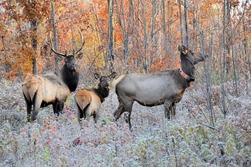
The DMAP team would like to thank everyone who attended March’s Elk Management In Wisconsin workshop. For those who could not join, the Elk Management Specialist Josh Spiegel discussed the following topics:
-
The history of elk populations in Wisconsin.
-
An overview of habitat types preferred by elk.
-
An explanation of the translocation and distribution of elk.
-
A breakdown of future elk management goals.
For convenience, the recording is accessible at the link below. It can also be found, alongside other workshop recordings, in the "Resources" page of MyDMAP.
|
Prescribed Fire Training For Wisconsin Landowners
May 9–10, 2025 | 8 a.m. – 5 p.m. | Tomah, WI
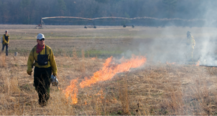
The Wisconsin Prescribed Fire Council is hosting a training to teach prescribed fire techniques and strategies. This entry-level training course will cover fire ecology, planning and implementation through a mixture of classroom and field instruction, giving Wisconsin landowners the ability to safely participate in prescribed burns of low-to-moderate complexity. Visit the Wisconsin Prescribed Fire Council website to learn more and register.
For questions regarding this training program or assistance with registration, contact the Wisconsin Prescribed Fire Council.
Photo Credit: Tom Lynn
|
Aug. 21–24, 2025 | Kemp Natural Resources Station | Woodruff, WI
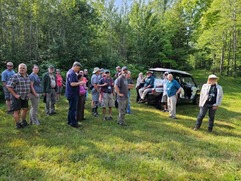
The Wisconsin Coverts Project is a free, three-day workshop for private landowners interested in enhancing their woodlands. The event is organized by UW-Madison Extension Wildlife Specialists and the Ruffed Grouse Society to educate participants on managing woodlands for ruffed grouse, songbirds, small mammals and more! Because space is limited to 30 participants, applications must be submitted before June 15.
For more information about the Wisconsin Coverts Project and how to apply, please visit the project website or contact Jamie Nack, project coordinator, at JLNack@wisc.edu.
Photo Credit: Jamie Nack
|
|
|

Kaleb Bolder, northeast DMAP biologist
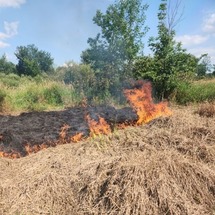
Prescribed fire is an effective tool for converting open areas into food plots to provide more value to wildlife and can be implemented with limited equipment. In this feature article, Northeast DMAP Biologist Kaleb Bolder details his firsthand experience converting open areas of reed canary grass into lush brassicas.
Read “Prescribed Fire For Food Plots.”
|
|
|

Haley Frater, DMAP/private lands coordinator
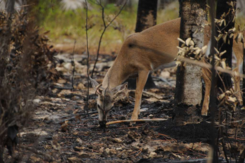
When managing habitats for deer and turkey, we often focus on adding new elements. However, enhancing existing elements can be just as, if not more, impactful. One of the most effective and efficient ways to accomplish this is through prescribed fire. This article discusses the benefits of using prescribed fire and how it can enhance forage and cover for deer and turkey.
Read “Prescribed Burning As A Habitat Management Tool For Deer And Turkey.”
Photo Credit: Josh O'Connor
|
|
|

Liam Stevens, northwest DMAP biologist
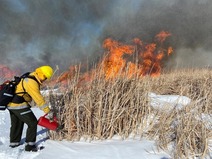
As you have read this month, prescribed fire can be a useful tool to complete various habitat projects. The DNR does not conduct prescribed fires on private property, making it important to have a reliable list of professionals who do. The Wisconsin Prescribed Fire Council has a list of contractors to simplify finding the right professional for your needs.
Visit the Wisconsin Prescribed Fire Council website for more resources.
At the DNR, we are committed to providing accurate and relevant information to ensure the safety of our residents. If you are a DMAP member planning to use prescribed fire on your property, please take all necessary precautions and familiarize yourself with the relevant regulations before burning. You can find additional information on the benefits, permit requirements, safety and resources on the DNR's Prescribed Fire webpage.
|
|
|

A 2001-2008 study conducted in an upland hardwood stand located in Tennessee compared the benefits for white-tailed deer forage availability of different prescribed fire management strategies. When conducted every two to four years, which of these strategies increased deer forage availability the most?
A. Prescribed Fire Only
B. Prescribed Fire + Shelterwood Cutting (an even-aged timber management strategy that retains certain trees to shelter regenerating trees)
C. Prescribed Fire + Retention Cutting (removing undesirable tree species from the stand and retaining certain desirable trees)
D. Prescribed Fire + Retention Cutting + Herbicide Treatment
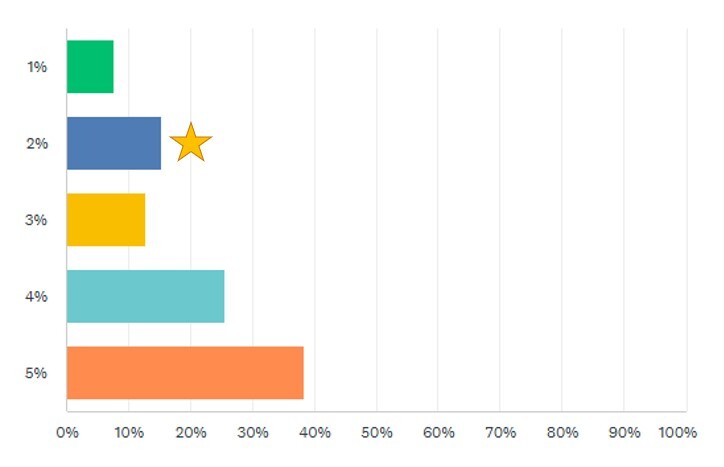
Last month, we asked you what percentage of their body weight a deer needs to consume each day during non-energetically taxing times. The answer was 2%. For a deer to maintain its body weight it needs to consume 1.8-2.3% of its body weight daily in dry matter to maintain its size. However, the amount of food a deer needs to consume varies seasonally as their energy demands change. During lactation, gestation, and the rut the amount they need increases to 3.1%, 4.8%, and 3-3.5% respectively.
|
|
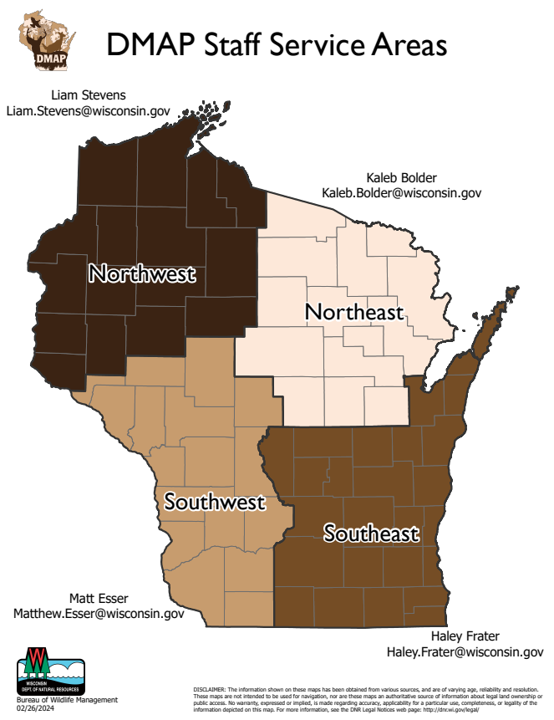
 Have questions or suggestions? Reach out to your local DMAP biologist.
|
|
|
|
|