|
|
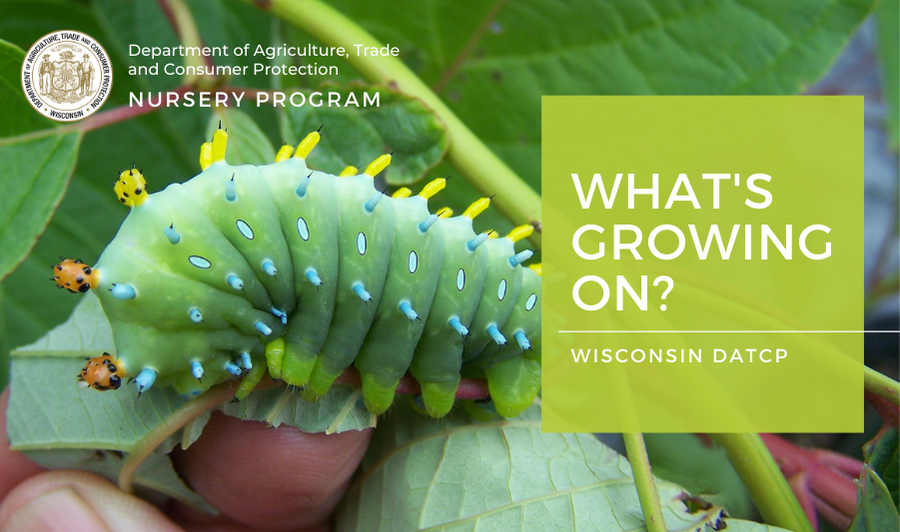
'What's Growing On?' text over a close-up of a caterpillar
Dear Wisconsin nurseries, Christmas tree growers, and gardeners:
Growing degree days (GDD) (simple B50) as of October 14 were 2025 in Bayfield; 2472 in Cumberland; 2296 in Medford; 2720 in Hancock; 2866 in Green Bay; 3010 in Racine; 3133 in Madison; 3181 in La Crosse; and 3546 in Dubuque, IA.
As the active growing season winds down, a few pests in vulnerable stages for fall applications include second applications windows for viburnum crown borer and zimmerman pine moth at 2700-2900 GDDs. Fall applications for cooley and eastern spruce gall adelgid at 2800-3000 GDDs, spruce spider mite and woolly apple aphid at 2900-3100 GDDs, and spruce needle miner at 3000-3200 GDDs.
Take a moment to read through a few updates from the DATCP nursery program and send any feedback, questions, or ideas for future e-news updates to datcpnursery@wisconsin.gov.
Having trouble viewing this email? View it as a Web page.
_____________________________________
|
|
|
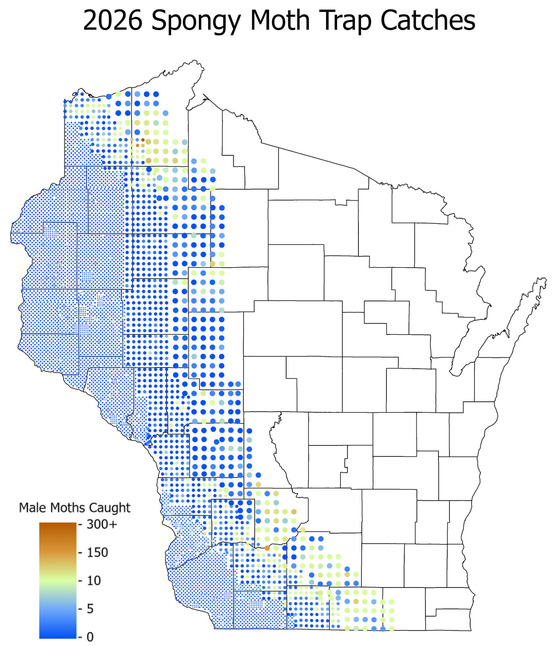
2026 Spongy Moth Total Catch Dot Map | DATCP map
In 2026, the Wisconsin Spongy Moth Program set 6,697 traps in 36 counties spanning from central to western Wisconsin. The statewide male spongy moth catch total was 8,263—a drastic decline which marks Wisconsin’s lowest catch in over 25 years of recorded program history. The average moths per trap was 1.2 this year, compared to the peak catch of 40.8 moths/trap recorded in 2023 at the height of the most recent outbreak.
Spongy moth has been established in central and eastern Wisconsin for many years and as expected, the highest trap catches were found in those regions again this year. However, scattered pockets of outlier moth catches were also identified across western Wisconsin. These outlier locations were selected for follow up egg mass surveys, which are currently underway. Egg mass surveys will help determine whether these high trap counts in historically uninfested areas reflect persistent populations that require management intervention.
_____________________________________
|
|
|
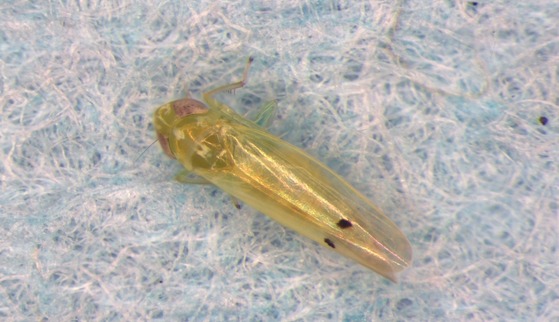
Two-spot cotton leafhopper adult | DATCP M. Lannan
DATCP inspectors recently intercepted the two-spot cotton leafhopper at two Wisconsin nursery dealers with multiple retail locations throughout the state. A pest abatement order was issued for all tropical hibiscus plants from two Florida nurseries that shipped infested stock into Wisconsin. Plants were removed from sale and destroyed to prevent establishment of this invasive insect whose host range includes potato crops.
The two-spot cotton leafhopper, Amrasca biguttula, (TSCL) is an invasive pest new to the United States that threatens agricultural crops and ornamental plants. Adults are light green, 2-3 millimeters long, and typically have two dark spots on their wings, although newly emerged adults may lack these markings. Nymphs or immatures are pale green, wedge-shaped, wingless, and usually found feeding on leaf undersides.
Feeding damage begins with yellowing along leaf margins, followed by browning, necrotic areas, curling, and leaf distortion. Prolonged injury can reduce plant vigor, and heavy populations may cover the entire leaf surface.
Native to areas of Iran and Southeast Asia, including Indonesia and Japan, TSCL has also become invasive in Africa. It was detected in Puerto Rico in 2023 and in Florida in December 2024. By August 2025, it had been confirmed in 101 counties across Florida, Georgia, South Carolina, and Alabama, with additional detections in Texas, Louisiana, Mississippi, North Carolina, and Tennessee.
Primary hosts of TSCL include cotton, cucumber, eggplant, grapevine, gourds, okra, potatoes, sesame, sunflower, hibiscus, and watermelon. Incidental hosts include basil, cilantro, croton, marigold, pepper, poinsettia, rose, and tomato. The pest can complete up to 11 generations annually, although it may not be able to overwinter in northern states, including Wisconsin. Development from egg to adult takes 15–46 days. Nymphs pass through five instars in eight to 11 days, and adults live about two to three weeks. U.S.-specific studies on the biology, distribution, and host range of TSCL are ongoing.
If you suspect you have detected TSCL, collect a sample of the insect and/or affected plant, and contact the DATCP pest hotline at datcppesthotline@wi.gov or (866) 440-7523.
_____________________________________
|
|
|
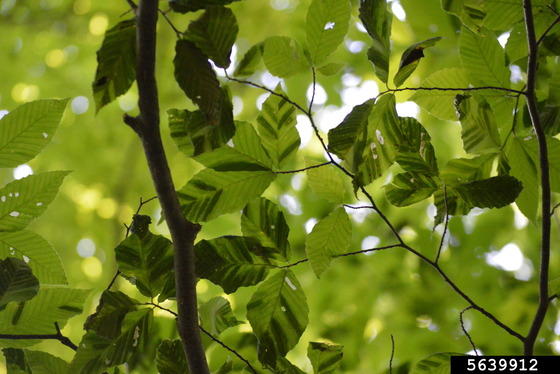
Dark bands on beech leaves caused by beech leaf disease | Mitchell Lannan, bugwood.org
DATCP surveyed for beech leaf disease (BLD) in parks, forests, and urban areas in 2026, finding no indication of this invasive pest in Wisconsin. BLD was first found in the United States in 2012, spreading to 14 eastern states including Michigan and Ohio. BLD is associated with a foliar nematode (Litylenchus crenatae mccannii). This nematode initially infects and feeds inside the leaf buds, eventually consuming tissue between veins and causing visible damage to the leaves. Over time, buds become further damaged and unable to leaf out, thus leading to branch dieback, canopy loss, and eventual death of the tree. Mature beech trees may take as long as 10 years to die from this disease, but younger saplings with BLD will usually die within one to four years. While nematodes cannot move long distances on their own, but they could make their way to Wisconsin through the movement of nursery stock or even by hitching a ride on birds traveling between states.
In 2026, a total of 25 surveys in 10 counties were conducted in the eastern half of the state where beech trees naturally grow, ranging from Milwaukee to Door County. These visual surveys looked for characteristic pest damage, including dark bands between leaf veins and leaf puckering. Staff conducting surveys looked at multiple random trees at each survey location, including both the native American beech and planted European beech, as both are susceptible to this pest. Several leaves were examined from each tree by holding them up to a light for the best chance of seeing banding. Any suspect leaves were bagged and transported to the Plant Industry Bureau Laboratory for testing. To date, beech leaf disease has never been found to be established in the Wisconsin environment.
DATCP plans to continue visual surveys for this pest in 2027 along with the continued inspection of beech being sold in the nursery trade. If you suspect you have seen signs of beech leaf disease in Wisconsin, please report to the Pest Hotline at (866) 440-7523 or email a photo and your location to datcppesthotline@wisconsin.gov.
_____________________________________
|
|
|
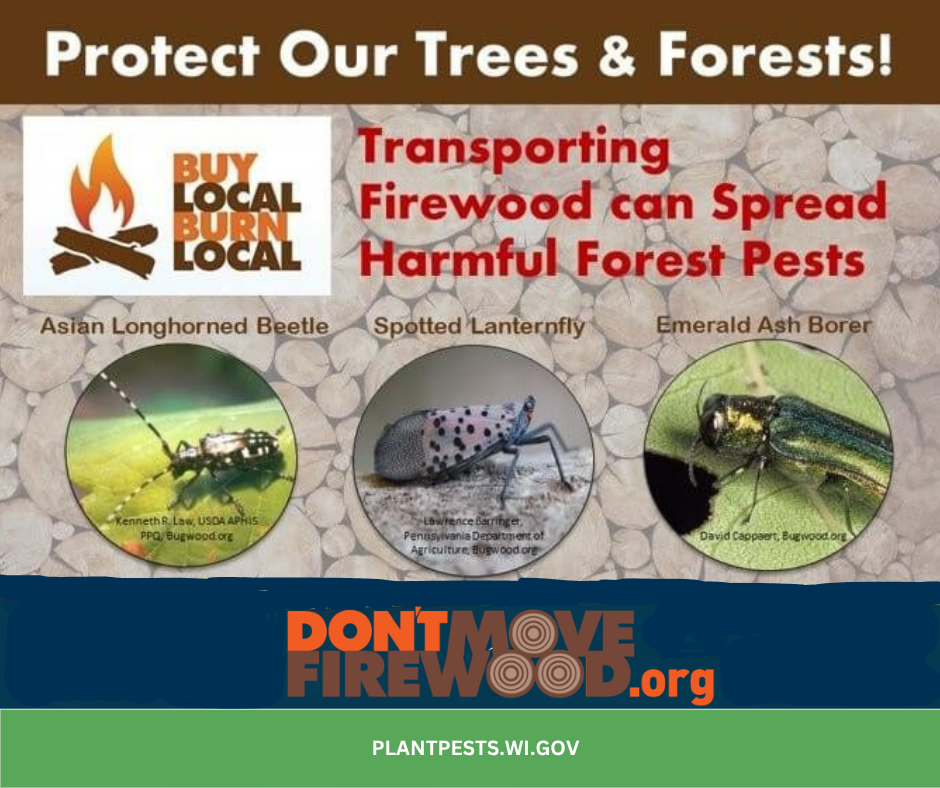
Protect our trees and forests by not moving firewood, which can spread harmful forest pests | Dontmovefirewood.org image
October is National Firewood Awareness Month and October 18-24, 2026, is National Forest Products Week. Celebrate by learning about Wisconsin’s firewood regulations and about the pests and diseases that could be living in and spread through the movement of firewood and other wood products.
Because firewood and other wood products can harbor tree-killing pests and diseases, it is crucial to avoid moving uncertified firewood long distances, and to inspect all wood products before moving them. Unchecked movement spreads dangerous insects like the emerald ash borer, Asian longhorned beetle, spongy moth, and mountain pine beetle. Another emerging plant pest to check for is spotted lanternfly as this invasive inspect continues to spread through the 19 states where reproducing populations have been confirmed, and new sightings are popping up regularly. Wood can also be infected with pathogenic fungi like those associated with oak wilt or thousand cankers disease.
Don’t move firewood. Instead, make one of these safer choices:
- Buy firewood close to where you’ll burn it.
- Buy certified firewood that has been heat-treated or seasoned to reduce pest risks.
- Gather firewood on site when permitted.
Visit Wisconsin's Firewood Rules and Resources page before visiting Wisconsin Department of Natural Resources properties because uncertified firewood is prohibited if it originated more than 10 miles from the property. Federal properties also have restrictions on the use or movement of firewood, like Chequamegon-Nicolet National Forest, which prohibits the possession, storage, or transport of uncertified firewood that originates more than 25 miles from your campsite. Contact Tribal properties for their policies. If you are in doubt, buy it where you burn it! If you need information about where to purchase from local firewood vendors in Wisconsin, visit the Firewood Scout website or check DATCP's list of Certified Firewood Dealers in Wisconsin.
Contact DATCP’s Forest Pest Regulatory Coordinator, Meg Sanders, with your forest pest and firewood questions, or if you plan to import/export forest or other plant products, because you may need a compliance agreement with DATCP or the U.S. Department of Agriculture. Call or text Meg at (715) 891-8158 or email MeganT.Sanders@wisconsin.gov.
Check out the final Firewood Month Webinar:
_____________________________________
|
|
|
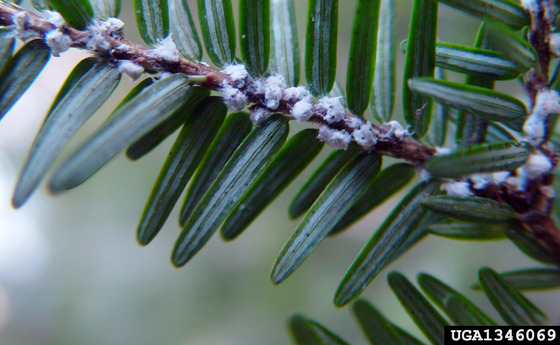
Hemlock Woolly Adelgid (HWA) on hemlock branch | University of IL C. Evans, Bugwood.org
Are you interested in learning how to help protect the health of Wisconsin’s hemlocks? A new interactive opportunity is being offered by DATCP later this month to monitor for hemlock woolly adelgid (Adelges tsugae (Annand), or “HWA”).
HWA is a tiny, fluid-feeding insect that kills eastern hemlock trees (Tsuga canadensis) within a few years of infestation. Although this non-native forest pest has not yet established in Wisconsin, populations are spreading in neighboring Michigan. DATCP has an exterior quarantine in place to keep this insect out of Wisconsin, but there are many high-risk pathways that make unintentional spread possible. This makes ongoing monitoring a necessary precaution.
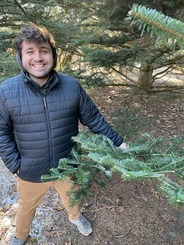
Finding a non-native species early decreases response costs and increases the potential for successful containment. For these reasons, DATCP conducts annual early detection surveys to search for HWA. To further expand these surveys, DATCP is launching a collaborative volunteer monitoring training. Participants will gain knowledge of how to conduct HWA surveys on their own property and/or in their communities, report suspect HWA sightings to the DATCP Pest Hotline, and submit their results to a statewide database. Collective results will be shared with participants at the end of the survey season. (image right: DATCP Forest Entomologist Mitch Lannan)
Hemlock Woolly Adelgid Survey Training
When: October 27, 2026, 9:30 a.m. – 12:30 p.m.
Where: Pines Shelter at Reforestation Camp across from NEW Zoo in Green Bay, Wisconsin. Recommended Equipment: hiking clothes, a smartphone, and a water bottle. Register via Microsoft Forms.
Anyone interested in participating in the program can attend the free in-person training. Registration is required since space is limited, so make sure to secure your spot early! Highlights from the training will be recorded and posted on YouTube later for those who are not able to attend the training in person but would still like to participate in the volunteer monitoring program.
|
_____________________________________
|
|
- tHRIve webinar, December 1, 12 p.m. CST: From Chaos to Contentment: The making of a garden. Register via Zoom.
-
Non-Chemical Management of Terrestrial Invasive Plants. Melinda Myers and her team have created a new short video on non-chemical management of invasive plants in gardens. This video was created in partnership with the Wisconsin Department of Natural Resources and is available to stream anytime.
_____________________________________
|
|
|
A compliance agreement is a written agreement between DATCP or USDA and a business engaged in growing, handling, importing or exporting regulated articles (e.g., plants and plant parts) outside of a plant pest quarantine. The business with the compliance agreement is granted a limited exemption to a quarantine to facilitate the movement of regulated articles, provided that risk mitigation measures are taken, such as notifying state or federal plant regulatory officials about shipments leaving a quarantine, and/or treating or inspecting regulated articles so material can be certified to prevent artificial plant pest spread to new areas. Nursery growers, nursery dealers, and Christmas tree growers are some of the businesses that may need compliance agreements. Compliance agreements are valid for one year and must be renewed annually. There is no fee to enter into a compliance agreement. Compliance agreements are generally pest-specific, so depending on what plant species you move, you may need multiple agreements.
To help you determine what compliance agreements you may need, DATCP created an interactive guide to generate a list of potential, applicable compliance agreements based on how you operate. By simply answering a series of yes/no questions you can quickly learn what compliance agreements will help you facilitate the movement of the stock you’re bringing in or shipping out. Fill out the guide to determine what agreements you may need.
_____________________________________
|
|
|
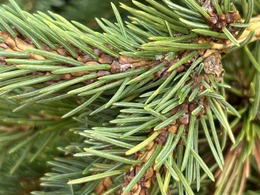
Pine tortoise scale on scotch pine in Dane Co. | DATCP M. Lannan
|
|
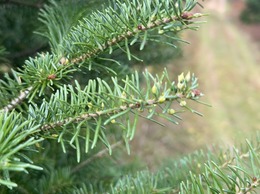
Spruce gall midge on spruce in Lincoln Co. | DATCP L. Meils
|
|
|
Balsam gall midge on balsam in Marinette Co. | DATCP M. Sanders
|
|
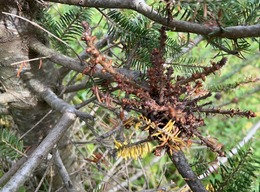
Broom rust of fir on balsam in Marathon Co. | DATCP G. Meysembourg
|
|
|
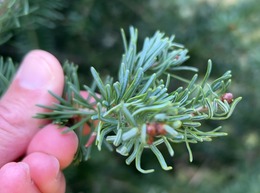
Balsam twig aphid on balsam in Langlade Co. | DATCP J. Oestreich
|
|
Zimmerman pine moth damage on white pine in Marquette Co. | DATCP L. Meils
|
|
|
_____________________________________
|
|
|
For more information about Wisconsin's Nursery and Christmas Tree Programs, visit DATCP's Nursery and Christmas Tree Program webpage.
Read past issues of What's Growing On?
If you haven't yet, please take this brief feedback survey for our monthly What's Growing On? e-newsletter. With this survey, we aim to measure your satisfaction regarding the format, frequency, and quality of the content provided. Please give us your most transparent feedback. The survey is anonymous.
For current counts during the growing season from our insect monitoring networks around the state, visit our Pest Survey webpage. To read articles on economically important plant pests affecting Wisconsin's field crops, fruits, and vegetables, read our Field Notes publication put out weekly during the growing season.
|
|
|
|
|