|
|
What's Growing On? monthly e-newsletter
Dear Wisconsin nurseries, Christmas tree growers, and gardeners:
Growing degree days (GDD) (simple B50) as of September 13 were 1866 in Bayfield; 2228 in Cumberland; 2083 in Medford; 2452 in Hancock; 2553 in Green Bay; 2650 in Racine; 2788 in Madison; 2829 in La Crosse; and 3134 in Dubuque, IA.
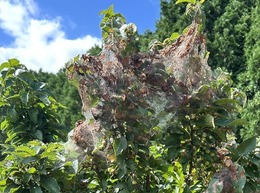
A few pests in vulnerable-to-treatment stages include locust borer and fall webworm at 1800-2100 GDDs; and final applications for two-spotted spider mite at 2100-2200 GDDs. Apply second applications for viburnum crown borer and zimmerman pine moth at 2700-2900 GDDs. Other pests soon to be in vulnerable stages for fall applications include cooley and eastern spruce gall adelgid at 2800-3000 GDDs, spruce spider mite and woolly apple aphid at 2900-3100 GDDs, and spruce needle miner at 3000-3200 GDDs.
Take a moment to read through a few updates from the DATCP nursery program and send any feedback, questions, or ideas for future e-news updates to datcpnursery@wisconsin.gov.
Having trouble viewing this email? View it as a Web page.
_____________________________________
|
|
|
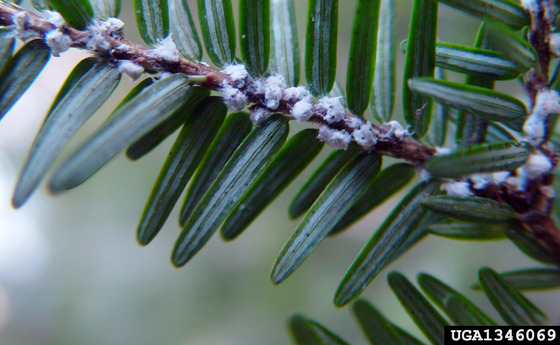
Hemlock Woolly Adelgid (HWA) on hemlock branch | University of IL C. Evans, Bugwood.org
Are you interested in learning how to help protect the health of Wisconsin’s hemlocks? A new interactive opportunity is being offered by DATCP this fall to monitor for hemlock woolly adelgid (Adelges tsugae Annand) or “HWA”.
HWA is a tiny, fluid-feeding insect that kills eastern hemlock trees (Tsuga canadensis) within a few years of infestation. Although this non-native forest pest has not yet established in Wisconsin, populations are spreading in neighboring Michigan. DATCP has an exterior quarantine in place to keep this insect out of Wisconsin, but there are many high-risk pathways that make unintentional spread possible. This makes ongoing monitoring a necessary precaution.
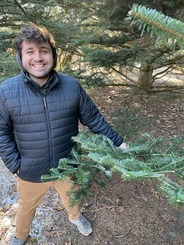
Finding a non-native species early decreases response costs and increases the potential for successful eradication or containment. For these reasons, DATCP conducts annual early detection surveys to search for HWA. To further expand these surveys, DATCP is launching a collaborative volunteer monitoring training. Participants will gain knowledge of how to conduct HWA surveys on their own property and/or in their communities, report suspect HWA sightings to the DATCP Pest Hotline, and submit their results to a statewide database. Collective results will be shared with participants at the end of the survey season. (image right: DATCP Forest Entomologist Mitch Lannan)
Anyone interested in participating in the program can attend the free in-person training.
Hemlock Woolly Adelgid Survey Training
When: October 27, 2026, 9:30 a.m. – 12:30 p.m.
Where: Pines Shelter at Reforestation Camp across from NEW Zoo in Green Bay, Wisconsin. Recommended Equipment: hiking clothes, a smartphone, and a water bottle. Register here.
Registration is required since space is limited, so make sure to secure your spot early! Highlights from the training will be recorded and posted on YouTube later for those who are not able to attend the training in person but would still like to participate in the volunteer monitoring program.
|
_____________________________________
|
|
|
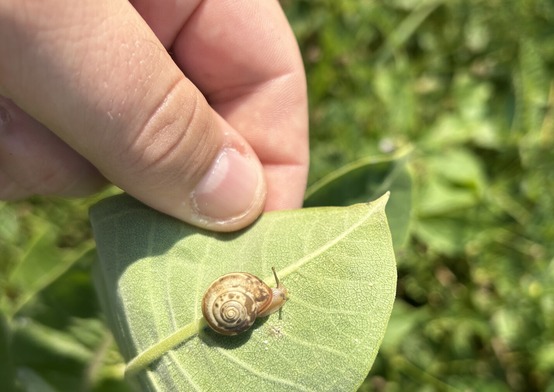
Carthusian nun snail on milkweed | DATCP image
DATCP staff have detected the invasive Monacha cartusiana, or Carthusian nun snail, in Wisconsin for the first time. Though this species is reported to behave as a moderate pest elsewhere in the world, no noteworthy economic or environmental impacts have been reported in the U.S. since its introduction in 1999. As a result, this species was downgraded by the U.S. Department of Agriculture's Animal and Plant Health Inspection Service (USDA-APHIS) in May of this year to non-quarantine status.
On June 29, DATCP staff followed up on an iNaturalist post showing a potential nun snail in a parking lot within the city of Black River Falls. Staff collected snail specimens, which were confirmed by USDA-APHIS identifiers to be M. cartusiana on July 7. During follow up surveys, inspectors found specimens up to 2,000 feet from the initial detection site, including a few small areas of dense infestation in which as many as one dozen snails per plant were present. These findings came as a surprise, as the plant hardiness zone of Black River Falls (4b) is well outside of what is expected for M. cartusiana (6-10). Despite this seemingly high rate of spread, however, no notable feeding damage was observed on any plants.
M. cartusiana has a large host range, feeding on many garden plants, ornamentals, fruit trees, and field crops. Damage is reportedly similar to other mollusks, creating large uneven holes in leaves. The snails are roughly 1-2 centimeters in length, have a flattened, white shell, and can often be found sitting on leaves during the day.
Though DATCP staff did not observe this species behaving as a plant pest, follow-up monitoring surveys are planned to ensure these populations continue to not cause noteworthy impacts. Reports of this species from elsewhere in Wisconsin, if present, would help DATCP staff learn more about the prevalence, distribution, and spread pathways associated with this organism. Suspected sightings of M. cartusiana can be submitted to the DATCP Pest Hotline (datcppesthotline@wisconsin.gov).
_____________________________________
|
|
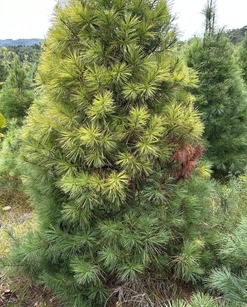
White pine blister rust is a fungal disease caused by Cronartium ribicola. It moves between Eastern white pines (and other five-needle pines) and its alternate host, Ribes spp. (gooseberries and currants). The symptoms on white pine include yellow-brown spots on needles, swollen or sunken cankers on branches, or the trunk may ooze resin and appear “blistered.” Branches beyond a canker will die (known as “flagged branches”) and trunk cankers will girdle and kill the entire tree. (image left shows a white pine tree with a white pine blister rust trunk canker causing trunk girdling.)
Reduce risks of white pine blister rust by removing nearby Ribes plants (commonly known as currents or gooseberries), which are the alternate host of this disease; reducing long periods of needle wetness, avoiding overhead irrigation; and improving airflow between trees. There is no cure once the infection spreads to the main trunk. When white pine blister rust is present, prune out infected branches well below areas with visible canker symptoms and remove any trees with trunk cankers from your field to reduce further spread of this disease.
|
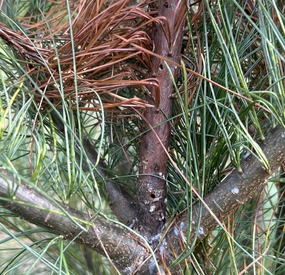
White pine weevil (Pissodes strobi) can infest Eastern white pine, Scotch pine, and spruce; other pines can also be susceptible. It is a native insect whose larvae feed beneath the bark of the terminal leader of a pine or spruce. In March to April, adult weevils will feed and lay eggs on the terminal leader, leaving feeding damage on the top shoot. In June to August, look for a dead or dying leader often forming a “shepherd’s crook.” Trees may become crooked or forked when side branches compete for apical dominance.
Monitor leaders in spring and when needed, apply a labeled insecticide to the top shoot leader in early spring as adults begin feeding and egg-laying. Prune and destroy infested leaders early (before mid-summer when new beetles hatch), then select a single healthy lateral to become the new leader. (image above right shows a dead white pine leader and multiple round exit holes from white pine weevil.)
|
_____________________________________
|
|
|
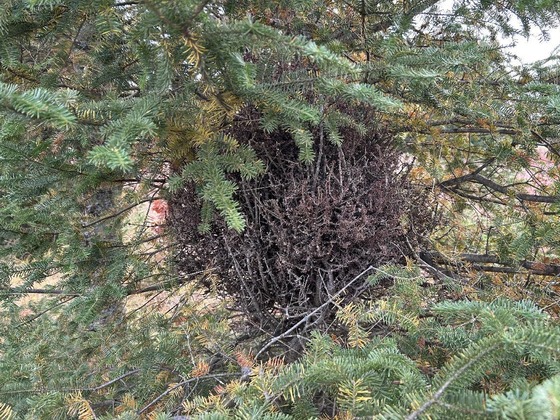
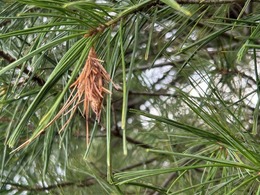
Broom rust on balsam fir in September when needles have dropped from the broom | DATCP image
Broom rust is a disease of true firs (Abies) caused by the rust fungus Melampsorella caryophyllacearum. Fir hosts include Balsam, Fraser, and white fir. The alternate host is chickweed (Cerastium spp.) Understanding the connection is the key to managing the problem in fir trees.
The most noticeable sign is an upright “witches’ broom,” a dense cluster of shoots on a branch that can look like a small, pale yellowish tree growing out of the fir in June. From July to August, infected needles can produce orange, dusty-looking spores, which help the fungus spread to nearby plants. The underside of needles has orange-yellow pustules. In September, needles in the broom fall to the ground, leaving a mass of stunted, thick shoots.
In the spring, spores produced on infected chickweed can infect new fir needles and buds. Over time, the fungus becomes established in twigs and branches and forms long-lived brooms. Spores produced on fir in July and August infect chickweed, where the rust disease spreads through the plants to restart the cycle the following spring. Because the fungus depends on both hosts, chickweed near firs can keep infections going year after year.
The most practical controls are removing chickweed to break the cycle and to avoid planting fir close to known infected areas. The easiest time of the year to remove chickweed is when the plant is in bloom in early spring when you can easily identify it. Pruning out brooms in trees may improve appearance, but it does not reliably eliminate the fungus from the tree. Broom rust is best managed by reducing nearby chickweed to help lower the chances of persistent, repeating infections.
_____________________________________
|
|
|
MSU Extension Webinar Series on Improving Nursery Production:
- September 16, 11 a.m.-12:15 p.m. CST: Nursery Pest Scouting: Methods for Trapping and Monitoring Nursery Insect Pests
- September 23, 11 a.m.-12:15 p.m. CST: Three Sides to Every Story: Managing the Disease Triangle in Container Nursery Production
Register here.
MSU Extension Fall Christmas Tree Webinar:
- September 17, 11:30 a.m.-12:30 p.m. CST: Learn what Christmas tree customers value, best methods of marketing, and what growers could implement to increase demand. Register here.
tHRIve Webinars:
- October 7, 12 p.m. CST: Bee Banquet in the Sky: Trees and Shrubs for Urban Pollinator Conservation. Register here.
- December 1, 12 p.m. CST: From Chaos to Contentment: The Making of a Garden. Register here.
Upper Midwest Invasive Species Conference (UMISC)
_____________________________________
|
|
|
A compliance agreement is a written agreement between DATCP or USDA and a business engaged in growing, handling, importing, or exporting regulated articles (e.g., plants and plant parts) outside of a plant pest quarantine. The business with the compliance agreement is granted a limited exemption to a quarantine to facilitate the movement of regulated articles, provided that risk mitigation measures are taken, such as notifying state or federal plant regulatory officials about shipments leaving a quarantine and/or treating or inspecting regulated articles so material can be certified to prevent artificial plant pest spread to new areas. Nursery growers, nursery dealers, and Christmas tree growers are some of the businesses that may need compliance agreements. Compliance agreements are valid for one year and must be renewed annually. There is no fee to enter into a compliance agreement. Compliance agreements are generally pest-specific, so depending on what plant species you move, you may need multiple agreements.
To help you determine what compliance agreements you may need, DATCP created an interactive guide to generate a list of potential, applicable compliance agreements based on how you operate. By simply answering a series of yes/no questions you can quickly learn what compliance agreements will help you facilitate the movement of the stock you’re bringing in or shipping out. Fill out the guide now to determine what agreements you may need.
_____________________________________
|
|
|
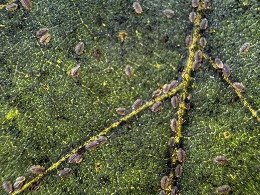
Parthenolecanium scales on a Chinkapin oak leaf in Washington Co. | DATCP L. Meils
|
|
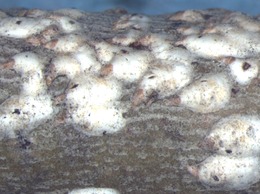
Phylloxera on oak branch in Washington Co. | DATCP L. Meils
|
|
|
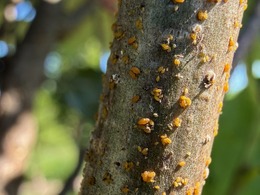
Willow scale on aspen | DATCP M. Lannan
|
|
Bagworm on white pine in Washington Co. | DATCP G. Meysembourg
|
|
|
Fall webworm on assorted stock in multiple Wisconsin counties | DATCP image
|
|
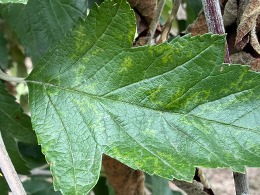
Apple Chlorotic Leaf Spot Virus on 'Prairie Rose' crabapple in Dane Co. | DATCP J. Gutierrez
|
|
|
_____________________________________
|
|
|
For more information about Wisconsin's Nursery and Christmas Tree Programs, visit DATCP's Nursery and Christmas Tree Program webpage.
Read past issues of What's Growing On?
If you haven't yet, please take this brief feedback survey for our monthly What's Growing On? e-newsletter. With this survey, we aim to measure your satisfaction regarding the format, frequency, and quality of the content provided. Please give us your most transparent feedback. The survey is anonymous.
For current counts during the growing season from our insect monitoring networks around the state, visit our Pest Survey webpage. To read articles on economically important plant pests affecting Wisconsin's field crops, fruits, and vegetables, read our Field Notes publication put out weekly during the growing season.
|
|
|
|
|