|
 Field Notes August 20, 2026
|
|
|
Cooler, drier air behind a passing cold front replaced the hot, humid weather pattern across Wisconsin. Temperatures were seasonable for mid-August, with daytime highs generally in the 70s to mid-80s and overnight lows ranging from the upper 40s to lower 70s. Precipitation was variable and mostly light (less than 0.5 inch), although scattered storms produced localized downpours of 1.5-2.0 inches the southeastern counties.
The ongoing dry conditions have led to the introduction of extreme drought (D3) into northern Wisconsin (U.S. Drought Monitor) and contributed to further decline in crop condition ratings. As of August 17, an estimated 67% of the state’s corn and 66% of soybeans were rated good to excellent, down two percentage points from the previous week. Crop development remained on pace with or slightly ahead of the five-year average.
In Wisconsin orchards, the apple picking season has arrived. Several orchards in DATCP’s pest monitoring network opened this week, offering early-ripening varieties such as Paula Red, Ginger Gold, State Fair, and Zestar.
__________________________________
|
|
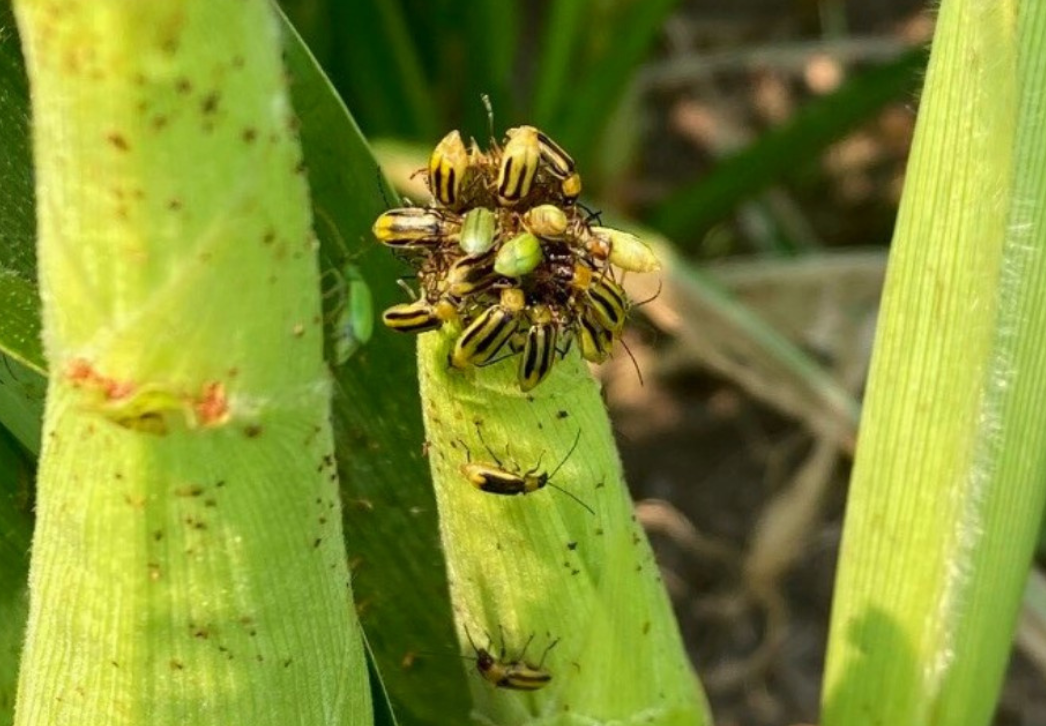
The annual corn rootworm survey continued this week in central and northern Wisconsin, where surveyors are finding fewer beetles than in 2025. Preliminary results show a marked decrease in beetle pressure statewide as compared to the previous season. The most pronounced drop recorded so far has been in southeastern Wisconsin, where the district average count fell sharply from 0.9 beetle plant in 2025 to 0.2 beetle per plant in 2026. Substantially lower counts have also been found across the south-central, east-central, and north-central areas. District averages in all three regions dropped to less than half their 2025 level.
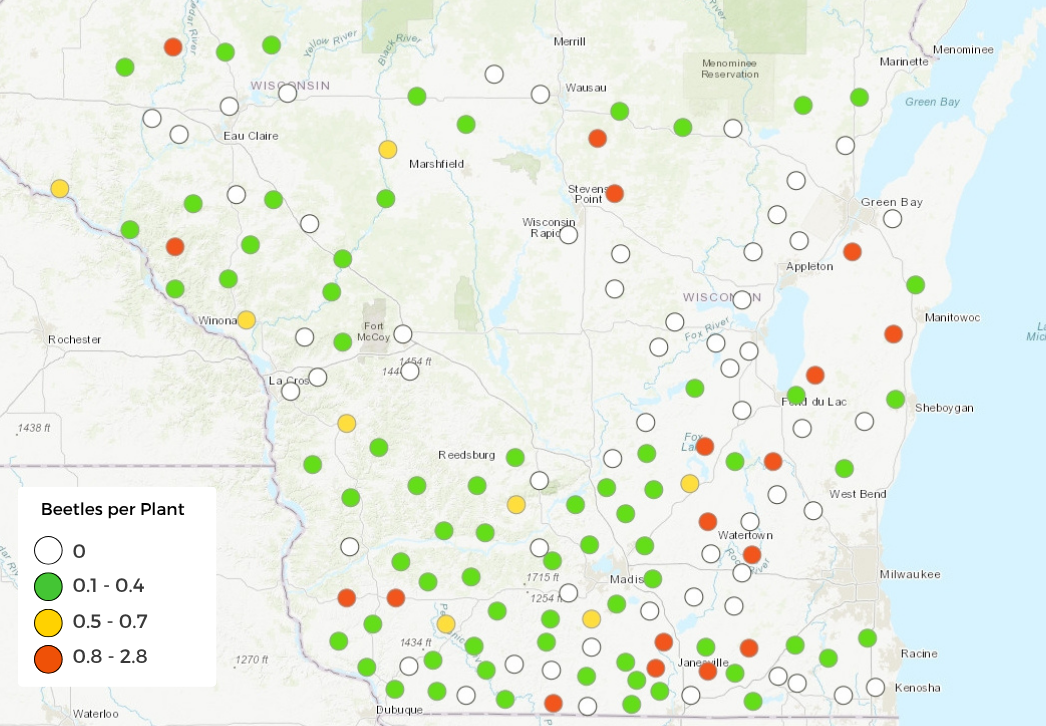
In addition to the statewide low population trend, the proportion of individual corn fields with high average beetle counts exceeding the economic threshold of 0.75 beetle per plant has declined, from 19% in 2025 to 11% in 2026. Most of the fields with high rootworm pressure have been scattered in the south-central and east-central regions, with a few high-count sites in the southwest, northwest, and north-central areas (as shown by the 17 red circles shown the map below). |
|
Sampling has been completed in 152 of the expected 180 fields and will be finalized next week. Continuous corn in at-risk areas should be scouted before the end of the month to evaluate both adult rootworm pressure and the performance of Bt trait packages. |
|
 __________________________________
|
|
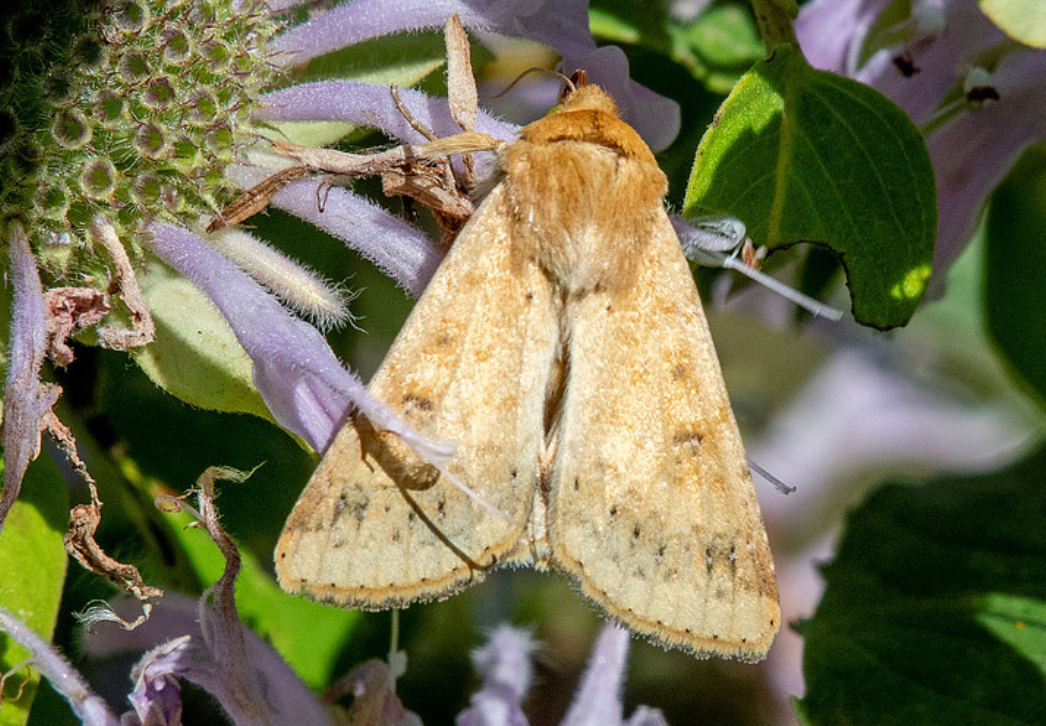
The primary late-season migration of corn earworm moths escalated this week. DATCP’s pheromone trap network captured 2,518 moths August 13-19, for a cumulative total of 4,019 moths in 16 traps (194 moths per trap average). The monitoring site near Williams Bay in Walworth County reported the week’s highest catch of 676 moths, the trap at Janesville in Rock County captured 520 moths, and counts at three sites in Dane County were also very high, ranging from 100 to 250 moths per trap (refer to weekly map).
The surge in corn earworm moth activity signals a high risk of egg laying in sweet corn fields with green silks. Sweet corn growers are encouraged to continue monitoring fields and following DATCP’s corn earworm migration reports through mid-September. Treatment schedules based on nightly corn earworm moth trap catches are available at 2025 Commercial Vegetable Production in Wisconsin (A3422 pg. 280). |
|
 __________________________________
|
|
|
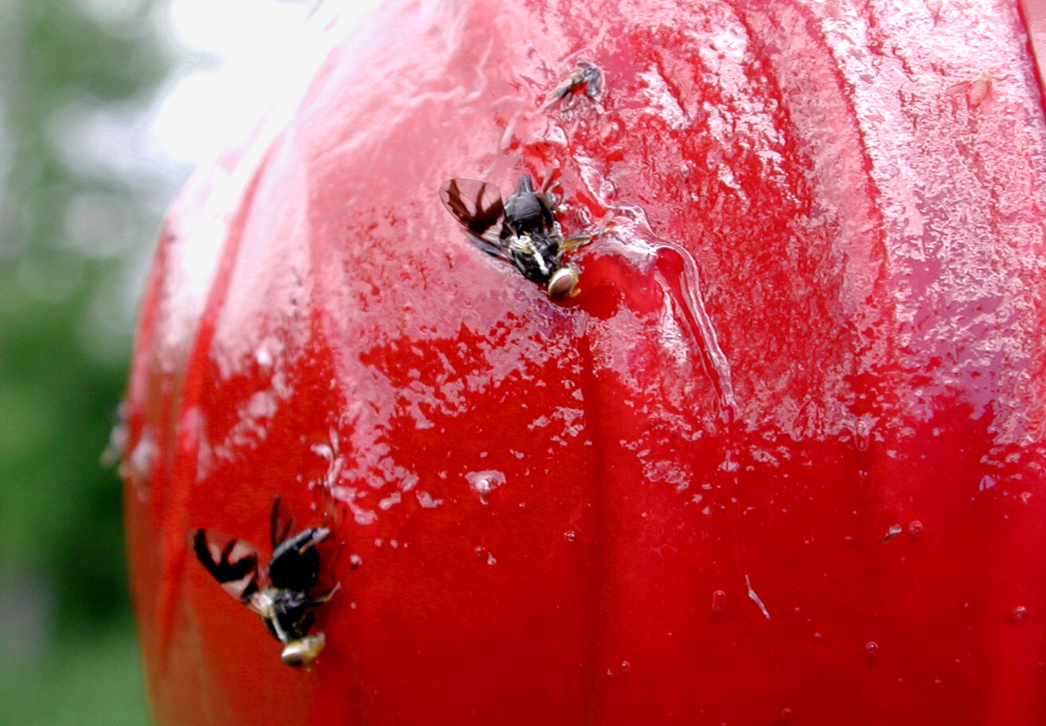
As harvest season begins in Wisconsin orchards, apple maggot (AM) egg laying is still in full swing. Apple maggot activity is likely to continue well into September, until 2,800 degree days have been reached (modified base 50 degrees Fahrenheit). Degree-day accumulations as of August 19 were 2,472 at Beloit, 2,403 at Madison, and 2,295 at Racine. Orchards with moderate or high AM fly counts this summer should check for fruit injury in trees where red spheres have caught the highest numbers of AM flies and at the end of rows, where inadequate spray coverage may have allowed larvae to escape control.
The summer obliquebanded leafroller (OBLR) flight is also expected to continue into harvest. This season, the second OBLR flight has been smaller than the first flight at most monitoring locations, suggesting the overwintering generation and larvae from the first flight were well managed. Although late-season OBLR larvae feed directly on ripening fruit and have greater damage potential than the earlier generation, the OBLR trap counts reported by trap network cooperators since mid-July have not been particularly high and significant fruit damage from this pest seems unlikely. The two or three cooperating orchards in Bayfield and Fond du Lac counties that recorded elevated OBLR counts earlier this month should scout for fruit injury at harvest and consider setting extra traps in 2027 to determine higher pressure areas or blocks.
Several orchards noted a sharp increase in redbanded leafroller (RBLR) catches this week as a large third and final flight of the season gained momentum. Redbanded leafroller has a broad host range and it is normal for traps to catch many male moths, which means high trap counts do not necessarily correspond to an increase in larval populations in the orchard. Large late-August RBLR flights are a reminder to begin trapping early next spring and to monitor the spring generation to ensure it is well controlled. Redbanded leafrollers overwinter as pupae in rolled leaves and ground cover and are often the first moth pests to emerge in April.
|
|
|
|
|
 __________________________________
|
|
|
|