|
 Field Notes August 12, 2026
|
|
|
Unsettled, humid weather with periods of rain and thunderstorms prevailed in Wisconsin during the second week of August. Average temperatures were near normal, with daytime temperatures ranging from the 70s to mid-80s and overnight lows remaining warm in the 50s to mid-70s. Weekly rain totals August 9-13 varied widely from 0.01 inch in parts of northern Wisconsin to nearly 3.0 inches in the southeast. The heaviest precipitation occurred August 9 along a northwest-to-southeast corridor across the state.
Despite increased rainfall this month, an estimated 91% of Wisconsin is abnormally dry or in moderate to severe drought. According to the current U.S. Drought Monitor, severe (D2) drought has expanded in the northern region, and now includes parts of Ashland, Bayfield, Burnett, Douglas, Iron, Oneida, Price, Rusk, Sawyer, Washburn, and Vilas counties. Moderate drought (D1) extends across the northern half of the state.
Crop ratings have shown gradual decline since peaking in mid-July. Corn was rated 69% percent good to excellent at the start of the week, down three percentage points from the previous week and 14 points since July 13. Soybean were rated 68% good to excellent, a two-point decrease from last week and 10 points since mid-July.
__________________________________
|
|
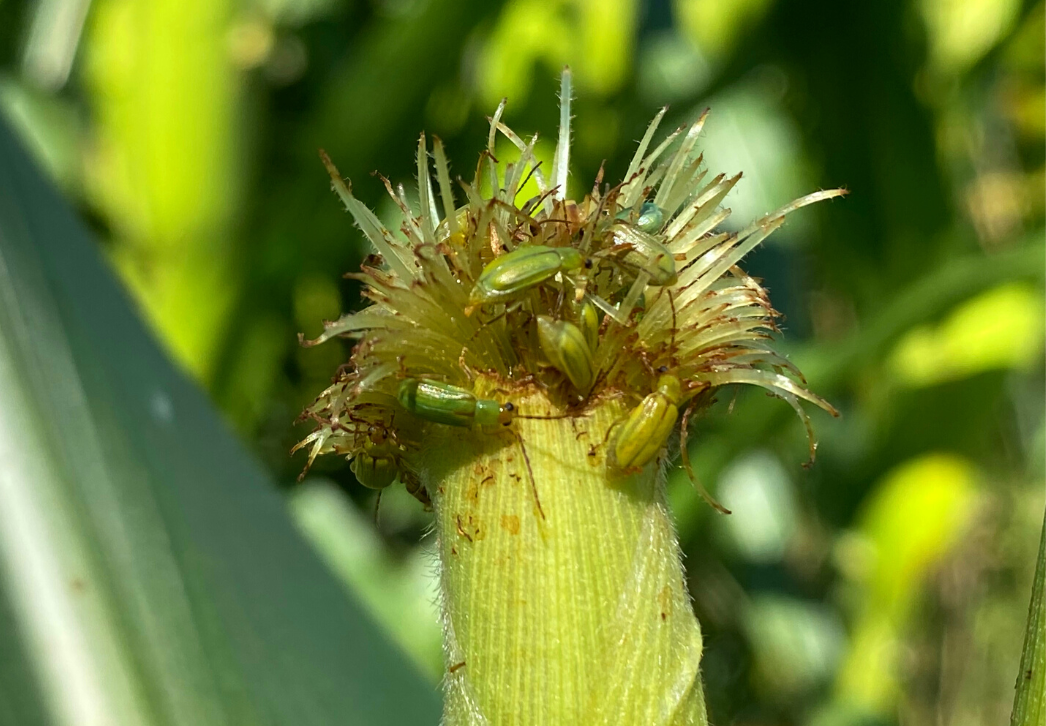
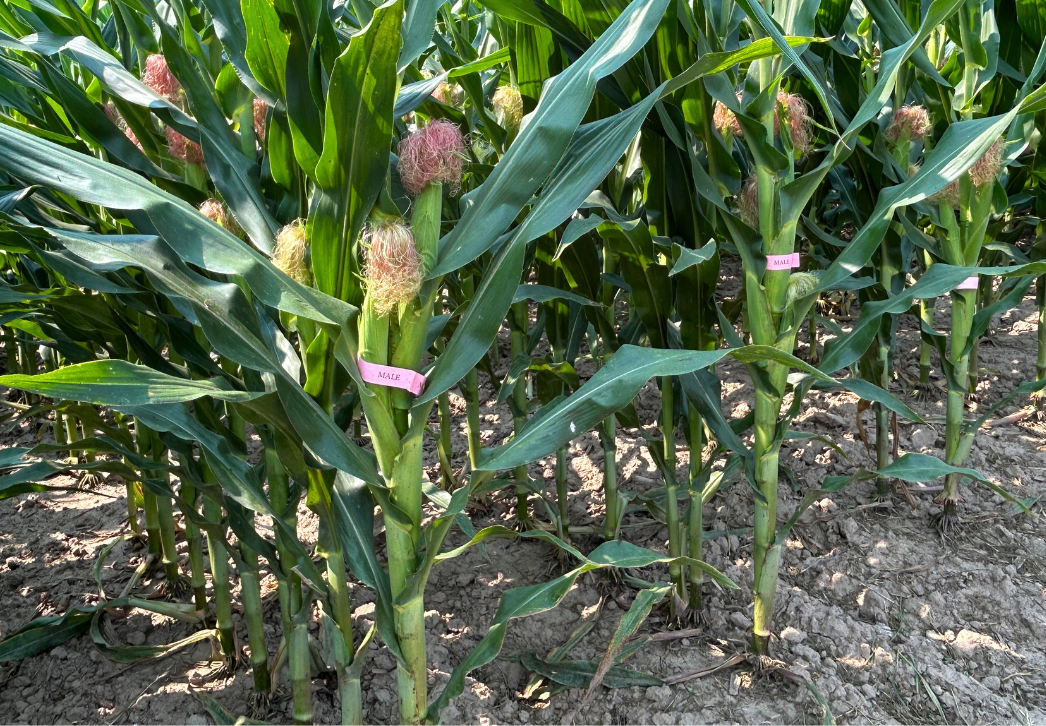
Pest Survey specialists continued counting beetles in corn fields this week as part of DATCP’s annual corn rootworm survey. The survey has been conducted each August since 1971 and provides an estimate of current corn rootworm beetle pressure and a risk forecast to help corn producers make management decisions for the next planting season. Rootworm populations are determined by counting the number of northern, southern, and western corn rootworm beetles on 10 plants per field and calculating the average number of beetles per plant. An average count of 0.75 beetle per plant in a field indicates high beetle pressure and the potential for larval damage to corn roots the following year.
The survey has surpassed the halfway point, and preliminary results suggest that overall rootworm pressure may be lower than in 2025, although beetle activity has not yet peaked in all areas of the state. Beetle counts per plant in the 128 grain corn fields surveyed in the past two weeks have been mostly below the economic threshold for corn rootworm, with 105 fields averaging low counts of 0.0-0.4 beetles per plant and eight sites having moderate beetle counts in the range of 0.5-0.7 per plant. Above-threshold averages of 0.75 or more beetles per plant have been observed at 15 sites, represented by red circles in the map below. |
|
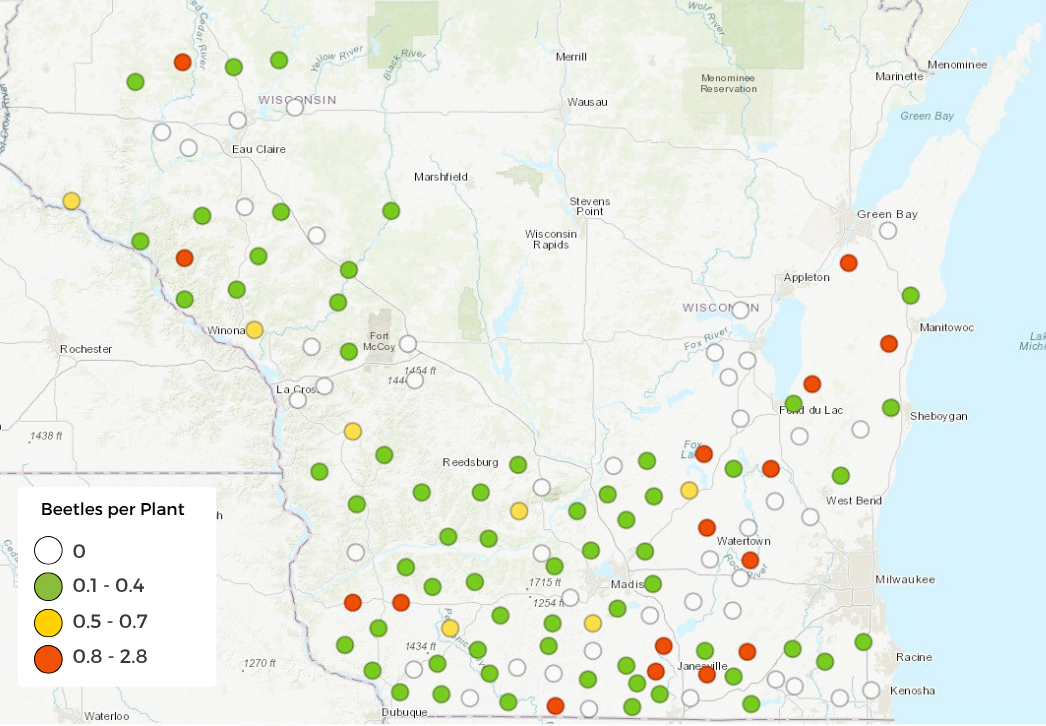 The map above shows 128 corn fields sampled for corn rootworm beetles July 31 to August 12. Counts were low in the 105 fields indicated by white and green circles; moderate in the eight fields with yellow circles, and high in the 15 fields represented by red circles.
|
|
This season's hotspots for beetle pressure are primarily in south-central Wisconsin and extend into the east-central area. The 2026 running state average of 0.3 beetle per plant is a decrease from the 0.5 beetle per plant at this time last season. As the preliminary results map illustrates, there are still several counties in the central and northern areas left to sample before the survey is finalized by the end of the month.
August is the critical window for assessing corn rootworm beetle populations. Crop advisors and corn growers interested in evaluating this year’s beetle pressure should sample corn fields now through early September, ideally on warm, sunny afternoons when beetle activity is highest. For the most accurate estimates, UW-Extension recommends visiting fields at least three times, approximately one week apart, since the beetles are highly mobile and often move to late-planted fields offering green silks and pollen. |
|
 __________________________________
|
|
|
DATCP has a long history of conducting fall surveys for the European corn borer (ECB). Our experienced scouting team is skilled at recognizing signs of ECB and can help determine if larvae are damaging your fields. The 85th annual ECB survey starts September 1, and our program is looking for non-Bt, conventional corn fields to assess populations. In recent years, the survey has been upgraded to include sampling both Bt and non-Bt fields. This approach is intended to help identify if and where in Wisconsin ECB may be developing resistance to Cry Bt proteins. Since 2023, collaborative work between DATCP and the University of Minnesota have led to confirmation of the Cry2Ab2 resistance allele in ECB collected in Richland, St. Croix, and Waupaca counties, marking the first documentation of Cry2Ab2 resistance in Wisconsin.
For the fall 2026 survey, non-Bt corn sites are most needed in the state’s top corn producing counties (Dane, Grant, Rock, Lafayette, Dodge, and Columbia), although all Wisconsin counties will be considered. Corn growers, crop advisors, and Extension educators who manage or know of non-Bt corn fields that could be surveyed for ECB are asked to email krista.hamilton@wisconsin.gov by August 24 with:
- Your name
- Phone number
- Field location (county, GPS coordinates, and description of field)
We are hoping to sample 40-50 non-Bt fields between September 1 and October 23. The survey involves examining 25 consecutive corn stalks for signs of ECB infestation and dissecting two stalks to count larvae. Fields that are relatively accessible from the roadside are preferred. Growers will be notified of the ECB population in their fields once the survey is complete.
|
|
__________________________________ |
|
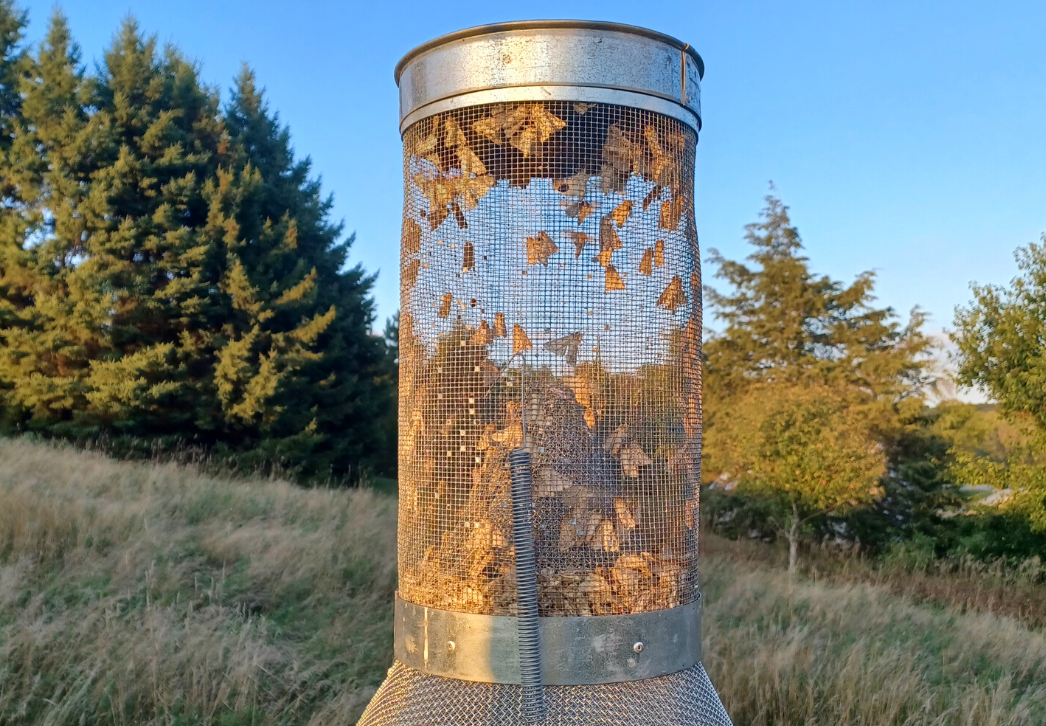
Late-season corn earworm moth migrations into Wisconsin picked up this week, with 507 moths captured in 16 pheromone traps, an increase from 183 moths the previous week. Locally, heavy flights of 100 or more moths were reported from the Williams Bay (134 moths) and Burlington (111 moths) monitoring locations (refer to weekly map).
A cumulative total of 1,501 corn earworm moths have been captured in network traps as of August 12, far fewer than the 3,926 moths collected by this time last season. The recent escalation in corn earworm activity signals that egg laying is intensifying and management programs should be underway for fresh market and processing sweet corn. Treatment schedules based on nightly corn earworm moth trap catches are available at: Commercial Vegetable Production in Wisconsin—2024 (A3422 pg. 278). |
|
 __________________________________
|
|
|
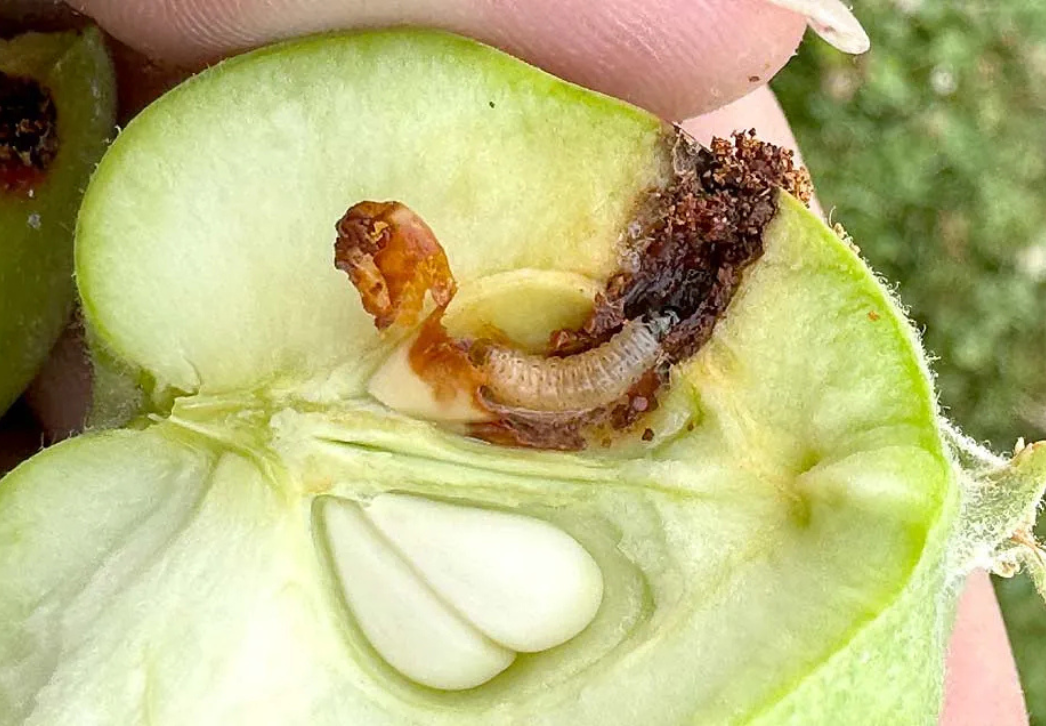
Codling moth flights continued in Wisconsin apple orchards this week, with very high captures of 15-30 moths per trap reported from Columbia and Fond du Lac counties. Apple growers are reminded that maintaining traps throughout August and checking fruits to evaluate for second-generation larval damage will help to forecast first-generation codling moth pressure next season. Orchards with weekly captures exceeding 10 moths per trap since the second flight began in July will likely find visible fruit damage at harvest when the population originates inside the orchard. Sites with no observed damage this fall or feeding on less than 1% of the fruits may be catching moths from outside the orchard.
Orchardists are also encouraged to keep checking apple maggot (AM) traps well into September. Activity has increased in a few monitoring locations in the past week, and the most recent round of flies could cause problems in late cultivars. As is usually the case, AM pressure has been highly variable since emergence began in late June. Ten of 26 cooperating orchards have reported zero flies so far this season, 11 sites have captured a total of one to 10 flies, and five sites have recorded high cumulative counts of 11-45 flies in July and August. Apple maggot activity usually persists in orchards until 2,800 degree days have been reached (modified base 50 degrees Fahrenheit). Degree-day accumulations as of August 12 were 2,324 at Beloit, 2,251 at Madison, and 2,139 at Racine. Orchards with moderate or high AM fly counts this summer should check for fruit injury at the end of rows, where inadequate spray coverage may have allowed larvae to escape control.
Continued obliquebanded leafroller (OBLR) trap maintenance is also recommended through mid-September. Second-generation OBLR larvae occasionally cause severe fruit damage late in the growing season, and moth counts in late August and September can be a predictor of damage potential of the overwintered larval population next spring. Even low catches of five OBLR moths per week may indicate risk of fruit injury.
|
|
|
|
|
|
 __________________________________
|
|
Pest Survey Program specialists are currently conducting field inspections and laboratory testing for regulated pathogens, pests, and weeds as part of DATCP’s seed field inspection program.
Foreign countries and other states may require a growing season inspection of a standing crop before accepting imports of agricultural, horticultural, and specialty crop seed. DATCP provides these inspections to Wisconsin seed producers annually, before the crops are harvested, to meet domestic and foreign phytosanitary requirements. This work prevents the movement of plant pathogens and insect pests while supporting international trade critical to the state’s agricultural economy. For 2026, 13 seed companies and growers have requested inspection of 64 fields.
Commonly regulated diseases, pests, and weeds among countries receiving Wisconsin seed include Stewart’s wilt, Goss’ wilt, sugarcane mosaic virus, European corn borer, and witchweeds. The top four importers in 2026 are Mexico, Chile, Canada, and Ukraine. |
|
__________________________________ |
|
DATCP’s fall armyworm (FAW) trapping network is up and running and will continue for the next five weeks, until September 18. The network begins much later in the season than the other six pest monitoring networks because FAW migrations into Wisconsin typically occur in August.
Although FAW historically has not been a major pest in Wisconsin and the upper Midwest, the changing climate and a recent outbreak across the eastern and southern U.S. have brought new interest in tracking flights of this migratory insect. The goal is to provide advanced warning of potential late-season larval infestations in alfalfa, field corn, sweet corn, and pasture grasses.
As of August 12, the network’s 33 pheromone traps have captured just 102 FAW moths. A total of 69 moths were collected this week (August 6-12), an increase from 33 moths the week before (July 30-August 5). Last year at this time, counts were markedly higher with a total of 1,279 moths for the week and an individual high trap count of 377 moths. This week’s highest count was 30 moths near Calumetville in Fond du Lac County (refer to weekly map).
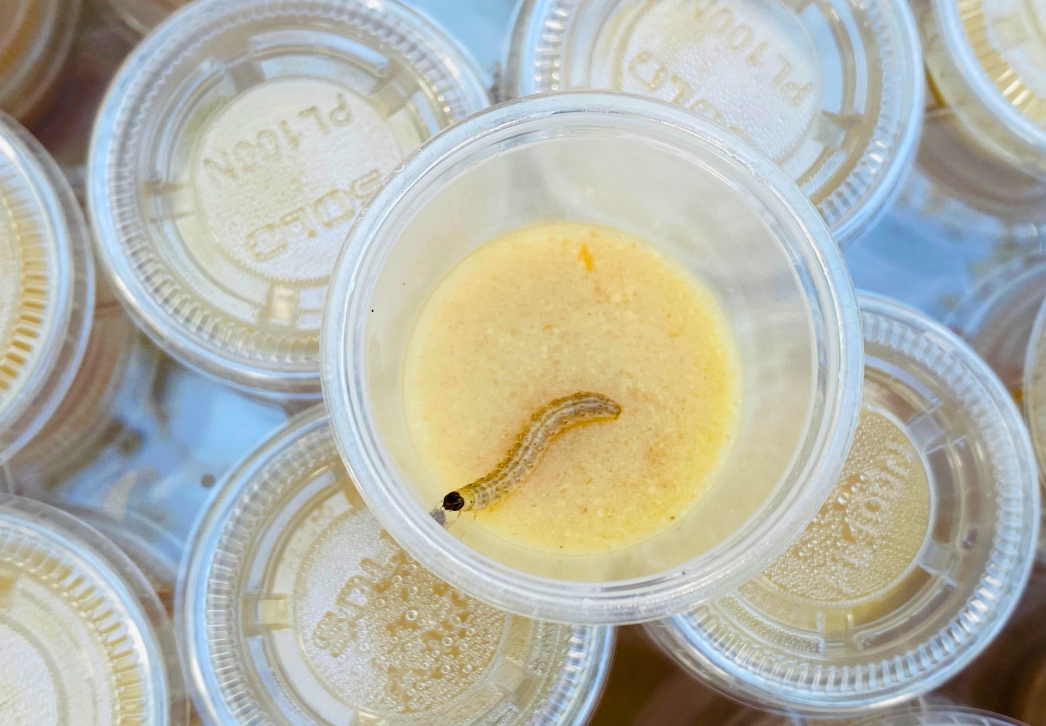
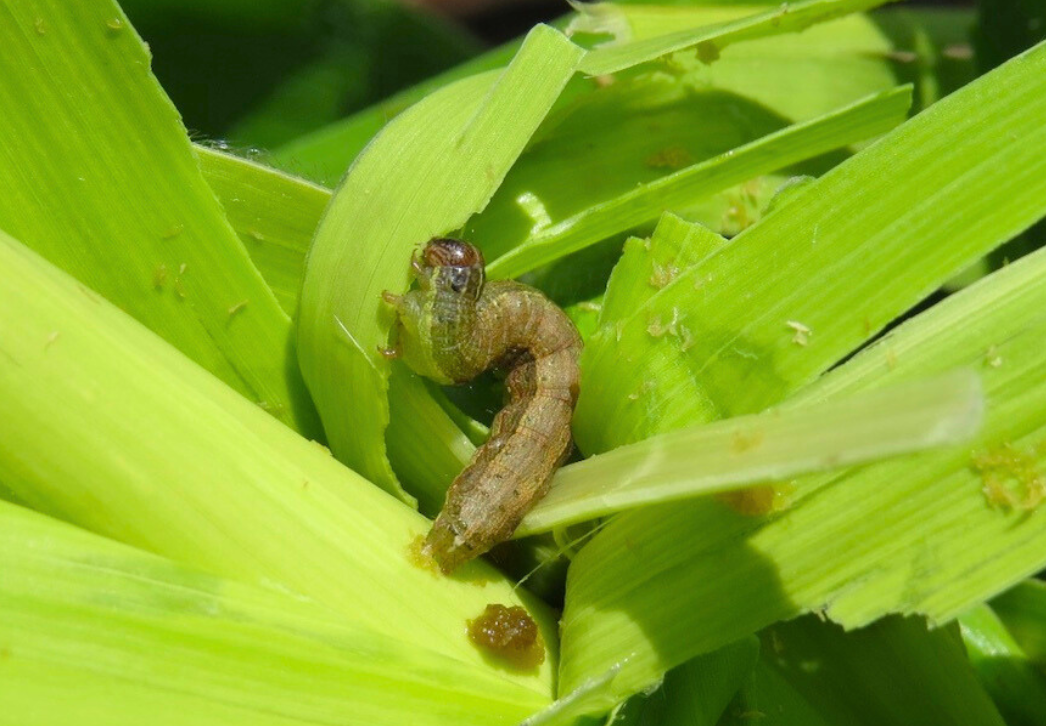
The recent moth activity suggests that limited migration flights have occurred and egg laying is underway in late-planted corn fields. Larvae were found at low levels during rootworm surveys in Buffalo, Dane, and Pierce counties this week. Small FAW larvae are easy to confuse with other ear feeding caterpillars, such as corn earworm and western bean cutworm, and insect identification apps or online resources are helpful for distinguishing the three species: Know Your Worms in the Ear | Purdue University Pest&Crop newsletter. |
|
|
__________________________________
|
|
|
|
|