|
|
What's Growing On? monthly e-newsletter
Dear Wisconsin nurseries, Christmas tree growers, and gardeners:
Growing degree days (GDD) (simple B50) as of August 13 were 1436 in Bayfield; 1674 in Cumberland; 1596 in Medford; 1877 in Hancock; 1914 in Green Bay; 1985 in Racine; 2138 in Madison; 2167 in La Crosse; and 2415 in Dubuque, Iowa.
A few pests in vulnerable-to-treatment stages include flat-headed and round-headed apple tree borer, oystershell scale (brown), and pine needle scale at 1600-1700, locust borer and fall webworm at 1800-2100 GDDs, and final applications for two-spotted spider mite at 2100-2200 GDDs. Apply second applications for Viburnum crown borer, and Zimmerman pine moth at 2700-2900 GDDs. Other pests soon to be in vulnerable stages for fall applications include cooley and eastern spruce gall adelgid at 2800-3000 GDDs, spruce spider mite and woolly apple aphid at 2900-3100 GDDs and spruce needle miner at 3000-3200 GDDs.
Take a moment to read through a few updates from the DATCP nursery program and send any feedback, questions, or ideas for future e-news updates to datcpnursery@wisconsin.gov.
Having trouble viewing this email? View it as a Web page.
_____________________________________
|
|
|
The U.S. Department of Agriculture (USDA) has designated August as “Tree Check Month,” encouraging the public to spend time checking trees for invasive pests or diseases. While USDA elected this month as such primarily for the invasive insect Asian longhorned beetle (ALB), there are other forest dangers we can all monitor for. One emerging disease to look for signs and symptoms of is Beech Leaf Disease (not to be confused with Beech Bark Disease). This disease - you guessed it - impacts beech trees.
Beech Leaf Disease (BLD) was first identified in Ohio in 2012 and has since been documented in 14 states east of Wisconsin, including Michigan. BLD is associated with a foliar nematode, microscopic roundworm (specifically Litylenchus crenatae mccannii), discovered in 2017. Other potential associations are still being researched. The vast majority of nematodes are harmless or beneficial, but some nematode species can cause plant diseases. In the case of BLD, the nematode initially infects and feeds inside the buds, eventually consuming leaf tissue between veins, causing visible damage to the leaves. The nematode populations increase from spring to fall, and then they overwinter in buds and leaf litter. Over time, buds become further damaged and unable to leaf out, thus leading to branch dieback, canopy loss, an inability of the tree to photosynthesize, and eventual death of the tree. A single tree can contain both heavily infected and unaffected branches. Mature beech trees may take as long as 10 years to die from this disease, but younger saplings with BLD will usually die within one to four years.
What to look for:
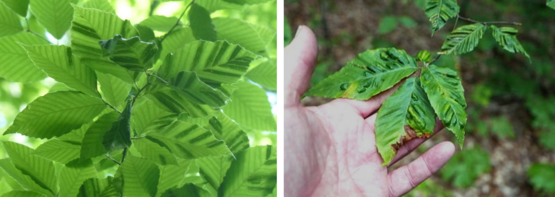
- Dark bands or stripes forming between leaf veins are an early sign of BLD that can be observed in spring after bud-break (position yourself under the canopy and look upwards with sun behind the leaves, when possible)
- Leaf puckering, distortion, and/or leathery texture can appear as the growing season advances
- Reduced leaf and bud production
- Leaf withering, drying, yellowing, and loss (after heavier infestations overtime)
Note that European beech trees and American beech cultivars with dark foliage also develop the leaf striping, but it can be more difficult to see. European beech symptoms often include a blighted appearance similar to anthracnose.
Beech leaf disease (BLD) early signs of dark, thickened stripes between leaf veins (left) and late stage puckering or raised areas between veins as well as further leaf distortion and curling (right). | OSU Extension J. Chatfield
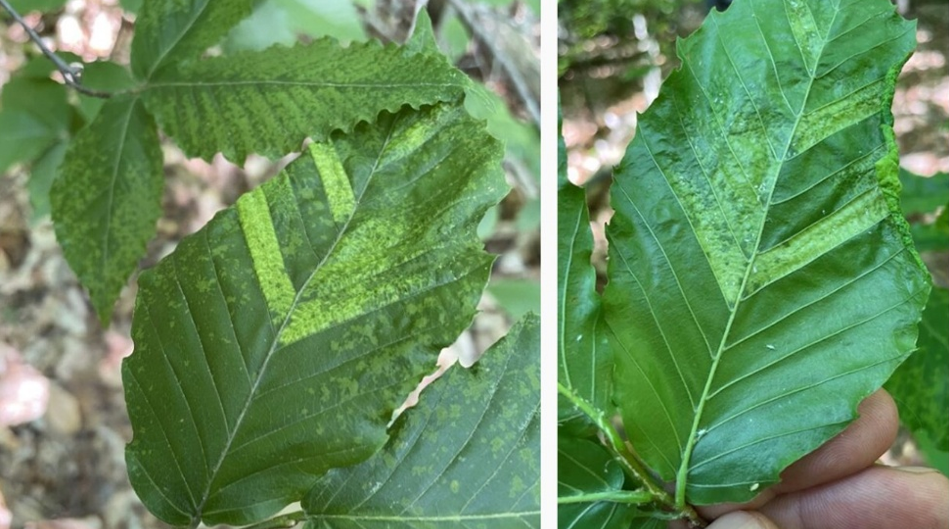
Be aware of some look-a-like leaf symptoms you may observe on beech trees such as aphid damage (see image below), erineum patches caused by mites, or an anthracnose fungal infection.
Pale or yellow banding between leaf veins with a stippled appearance caused by woolly aphids. | National Park Service images
Check out these articles for more information on possible BLD "mistaken identities:"
Diagnostics of Beech Leaf Disease: The Ultimate Beech Read | BYGL
American Beech: Anthracnose and Erineum Patches | BYGL
Beech Leaf Disease: Mistaken Identity (U.S. National Park Service)
American beech is not a major component of Wisconsin’s forests and it is highly concentrated in the eastern part of the state. However, beech is a beautiful and rare tree species in our state that provides valuable wildlife sustenance and habitat worthy of protection. BLD could also impact your ornamental beech trees. While there has been some early research and trials of product success in potential suppression of BLD, there is no commonly approved treatment for the disease at this time, and the manner in which BLD spreads is still poorly understood. Early detection is key to implement management strategies so that we can limit spread as much as possible while researchers continue studying this disease. To learn more about BLD and early research on treatment options, check out Beech Leaf Disease » HF&G.
An official diagnosis for this disease must be confirmed by laboratory testing. If you believe your beech nursery stock may be infected with BLD, please contact your Wisconsin nursery inspector. If you suspect BLD in the landscape, please report to the Pest Hotline at (866) 440-7523 or email a photo and your location to datcppesthotline@wisconsin.gov.
_____________________________________
|
|
|
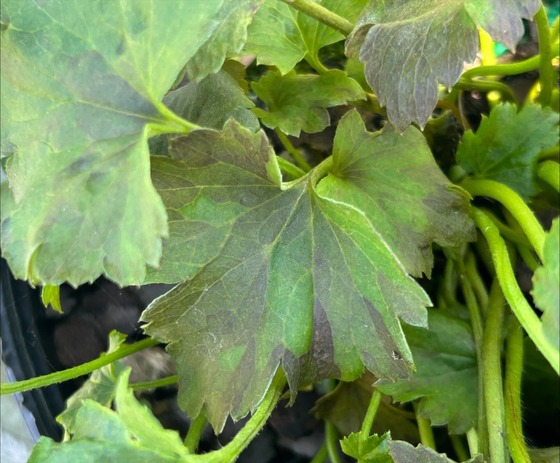
Purplish brown patches following leaf veins on Anemone indicate a foliar nematode infection | DATCP G. Meysembourg
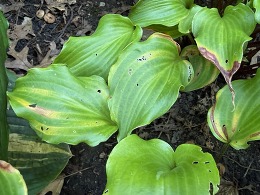
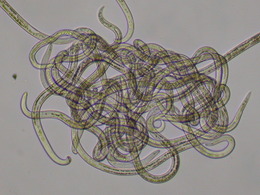
With September on our heels and August half done, it’s the time of year that we see the development of foliar nematode symptoms. Foliar nematodes (Aphelenchoides sp.) are microscopic roundworms that feed on the plant tissue of a broad range of both woody and herbaceous hosts. These pests feed throughout the season, but symptoms don’t develop until later in the summer. Symptoms typically appear as irregular, straight-edged patches or ‘V’ shapes defined by the leaf veins that can range in color from yellow to purple to black, depending on the host. In the nursery, we typically see hosts such as hostas become defoliated as infested foliar patches drop out later in the season.
|
|
|
Hostas infected with foliar nematodes | DATCP L. Meils
|
|
Foliar nematodes under a microscope | DATCP S. Fieweger
|
|
|
Foliar nematodes primarily spread through dew, overhead irrigation, and rain splashing off infected plants, which typically cause symptoms to appear in clustered ‘hotspots’ as they move to neighboring plants. This pest cannot move or infect without water on leaves, so avoiding overhead irrigation and increasing airflow between plants will help limit spread. They can also be spread by dividing infected plants. Removing infected material throughout the summer and cleaning up plant debris at the end of the season can help prevent continued spread, as these nematodes overwinter on infected plant material. Composting does not reliably kill this pest, so removed debris should be bagged and trashed. Foliar nematodes can also overwinter in dormant buds of host plants. Since foliar nematode-infected nursery stock cannot be sold, it is often easier to cull affected plants; however, hot water treatments or nematicides can be effective in certain instances.
_____________________________________
|
|
|
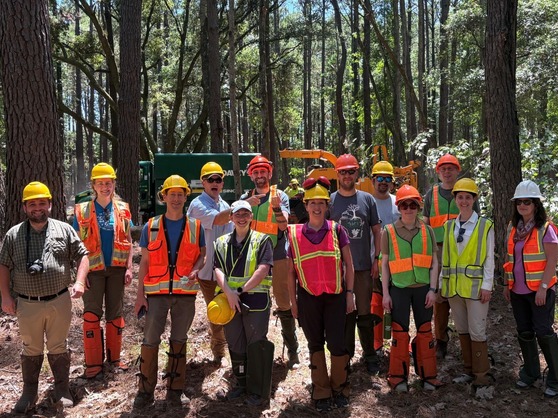
Forest Health staff from Manitoba, Michigan, Minnesota, and Wisconsin visited forests in South Carolina to learn how to detect and manage Asian longhorned beetle | DATCP image
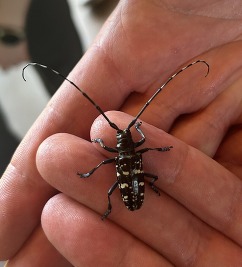
Asian longhorned beetles (ALB, Anoplophora glabripennis) are large, invasive wood-boring beetles that feed on and kill 12 genera of hardwood trees, often taking the largest toll on maples. (refer to image left of adult ALB; DATCP image) They have not been found in Wisconsin to date, and the Wisconsin Department of Agriculture, Trade and Consumer Protection (DATCP) has imposed an exterior quarantine that coincides with a federal quarantine imposed by the U.S. Department of Agriculture Animal and Plant Health Inspection Service (USDA APHIS) to help prevent their introduction into the state. In addition to the quarantine, DATCP surveyors and inspectors spend countless hours each year inspecting trees for signs and symptoms of this pest.
|
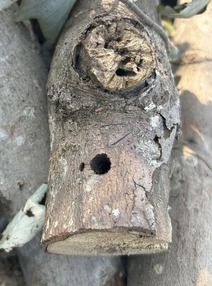
The larvae of this beetle tunnel and feed under the bark and within the wood of trees, disrupting water and nutrient flow. This feeding damage weakens the tree and eventually leads to tree mortality. With no known chemical control options for infested trees, an introduction of this pest would be a major threat to our state’s forests and plant industries.
The adult beetles are easy to spot with long bodies and white spots on their shiny, black wings, along with very long, banded antennae. They resemble our native pine sawyers, which are common throughout the state, although pine sawyers never infest hardwoods or kill healthy trees. When adult beetles chew their way out from under the bark, they leave circular exit holes that are 3/8 inch in diameter, wide enough to stick a pencil in. (refer to image above of round ALB exit hole; DATCP image)
While pest quarantines help prevent pest movement, there will always be a risk of spread through the movement of firewood, lumber, logs, nursery stock, and other plant products. Because of this risk, DATCP’s Pest Survey Team has begun their annual surveys for this pest in both urban and industrial areas, focusing on spots with high rates of interstate wood product movement. Surveys in 2026 are occurring along the eastern shores of Wisconsin, including Milwaukee, Sheboygan, Manitowoc, and Door County.
Asian longhorned beetle is known to be established in a handful of eastern states and provinces, including Massachusetts, New York, Ohio, Ontario, and South Carolina. Earlier this summer, DATCP and the Wisconsin Department of Natural Resources got the opportunity to visit an active ALB infestation site near Charleston, South Carolina. Staff got practical experience with surveys, monitoring, research, and management. By learning from experts, we hope to enhance Wisconsin’s ability to detect ALB and respond rapidly to a detection.
If you suspect you’ve found ALB, please report it and send photos to DATCP's Pest Hotline at DATCPPestHotline@wisconsin.gov or (866) 440-7523.
|
_____________________________________
|
|
|
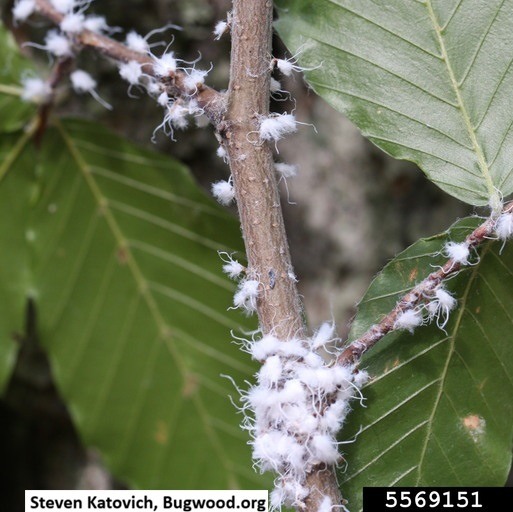
Beech blight aphids on beech | USDA Forest Service S. Katovich, Bugwood.org
Beech blight aphids are small insects in the order Hemiptera that feed on American beech tree sap where those trees are distributed in eastern Wisconsin, or on beech nursery stock or scattered beech trees in other parts of the state. Beech blight aphids gather in dense colonies on twigs and leaf undersides. Their distinctive white, fluffy wax coating makes them look like bits of cotton on the branch. When disturbed, they move in a coordinated defensive “dance,” earning the nickname boogie-woogie aphids.
The waxy hairs are made of secreted fibers that help protect the aphids from predators by creating a sticky, unappetizing mess. If a predator bites, it gets wax rather than a soft-bodied meal. As an extra warning, the aphids wave their abdomens and waxy tufts in the air, amplifying the “dancing” effect. While feeding, they excrete excess sugar as honeydew, which commonly attracts ants and wasps that harvest the sweet droplets.
Because they are a late-season pest, beech blight aphids generally do not harm their host trees. Their honeydew can support sooty mold fungus (Scorius spongiosa), which grows on the sticky coating rather than on the tree itself. The mold can change appearance through the seasons—black to brown to yellow, then black again in winter—leading some people to assume the tree is diseased. This buildup is a nuisance, and often mistaken for damaging fungi associated with tree decline. However, neither the aphids nor the mold cause any significant damage to beech trees and can easily be washed off with a hose.
_____________________________________
|
|
|
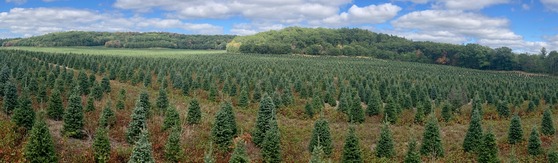
Wisconsin Christmas tree farm in Jackson County | DATCP image
Christmas tree field inspections will begin in September. If anything has changed since completing your Christmas tree grower application, such as additional fields or change in shipping status, notify DATCP at DATCPnursery@wisconsin.gov or (608) 590-5138 now to ensure fields will be inspected prior to harvest. Inspectors prioritize growers that are shipping out of state or receiving a Plant Health Certificate, typically completing these inspections by mid-October.
After field inspections are completed, inspectors begin Christmas tree lot inspections in late November. Growers or lot operators purchasing conifer trees or decor from out of state will have to comply with Elongate Hemlock Scale (EHS) regulations. If purchasing cut trees, wreaths, or roping material from EHS infested states - Connecticut, Delaware, Georgia, Kentucky, Maine, Maryland, Massachusetts, Michigan, New Hampshire, New Jersey, New York, North Carolina, Ohio, Pennsylvania, Rhode Island, South Carolina, Tennessee, Vermont, Virginia, West Virginia, and the District of Columbia - the stock must be certified free of EHS. The certificate must include at least one of the following three statements:
- The stock has been inspected and found to be free of EHS,
- The stock has been effectively treated to destroy EHS (and include detailed treatment information), or
- The stock originates from an area known to be free of EHS.
If you plan to purchase cut trees from a grower in an infested state, confirm that the producer can provide this certification. Failure to comply with the EHS quarantine may result in stock being removed from sale and destroyed in addition to civil forfeitures or other enforcement actions.
_____________________________________
|
|
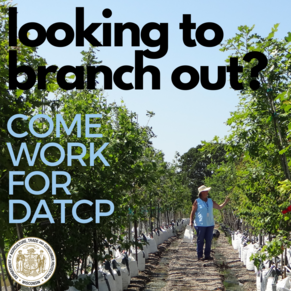
DATCP's Plant Protection Section has an open full-time Plant Pest & Disease Specialist/Nursery Inspector position. This position is responsible for inspecting assigned nurseries, Christmas trees, logs, and other plant products for insects, diseases, and other pests in northeast Wisconsin. Additionally, this position implements and coordinates the statewide potato program, including conducting potato harvest inspections, facilitating audits for regulatory compliance, and providing outreach to potato producers.
This is a field-based position and routine statewide travel is required. The selected applicant can select a headquarter in one of the following counties: Brown, Florence, Forest, Langlade, Marinette, Menominee, Oconto, or Shawano.
The deadline to apply is August 19, 2026. Visit https://wj.wi.gov/21703 to apply.
Image caption: A nursery inspector walking among rows of nursery trees with the text "Looking to branch out? Come work for DATCP."
|
_____________________________________
|
|
|
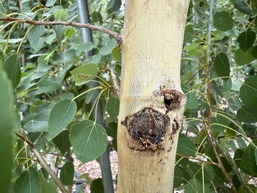
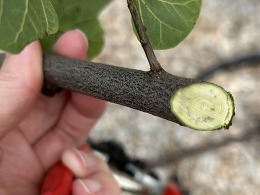
Poplar borer damage on quaking aspen in Washington Co. | DATCP L. Meils
|
|
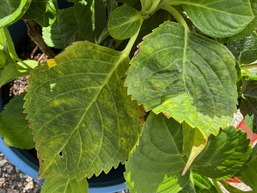
Hydrangea ringspot virus on hydrangea in Jackson Co. | DATCP T. Boyle
|
|
|
Symptom of verticillium wilt on redbud in Jefferson Co. | DATCP L. Meils
|
|
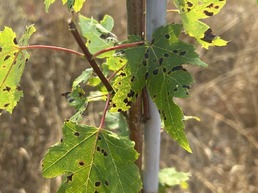
Tar spot on maple in Oneida Co. | DATCP M. Sanders
|
|
|
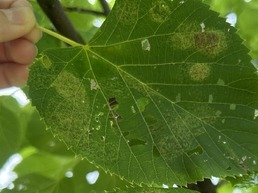
Lace bug feeding damage on linden in Kenosha Co. | DATCP G. Meysembourg
|
|
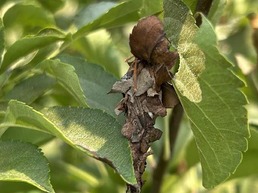
Bagworm on crabapple in Kenosha Co. | DATCP G. Meysembourg
|
|
|
_____________________________________
|
|
|
For more information about Wisconsin's Nursery and Christmas Tree Programs, visit DATCP's Nursery and Christmas Tree Program webpage.
Read past issues of What's Growing On?
If you haven't yet, please take this brief feedback survey for our monthly What's Growing On? e-newsletter. With this survey, we aim to measure your satisfaction regarding the format, frequency, and quality of the content provided. Please give us your most transparent feedback. The survey is anonymous.
For current counts during the growing season from our insect monitoring networks around the state, see our Pest Survey webpage. To read articles on economically important plant pests affecting Wisconsin's field crops, fruits and vegetables, see our Field Notes publication put out weekly during the growing season.
|
|
|
|
|