|
 Field Notes August 6, 2026
|
|
|
A dry July weather pattern ended across much of Wisconsin as scattered storms delivered much-needed precipitation, with the highest amounts (2.0 inches or more) recorded July 31 and August 1 in the southeastern counties. The rain reduced stress on summer crops after a mid-summer drying trend, and the majority of the state’s corn and soybean acres continue to fare well overall. Approximately 72% of the state’s corn and 70% of soybeans were rated in good to excellent condition at the start of August, despite decreases of 1-2 percentage points from the previous week. Crop development remains on pace with or slightly ahead of the five-year average. Seventy-two percent of the state’s corn acreage is past the silking stage and 53% of soybeans are setting pods, according to the latest USDA NASS crop progress report.
DATCP's Pest Survey Program has shifted focus to late season survey work, including assessing corn rootworm beetle populations, checking spongy moth traps, surveying for symptoms of corn stunt disease, and monitoring flights of various corn insect pests.
__________________________________
|
|
|
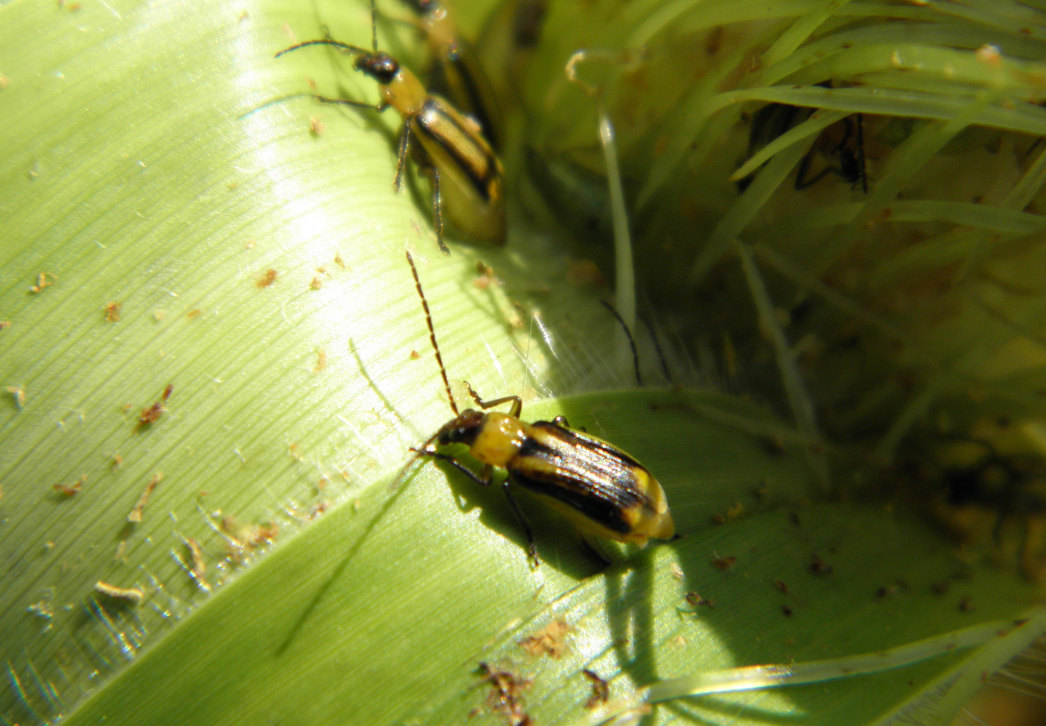
DATCP’s annual corn rootworm beetle survey began this week. Field specialists are assessing this season’s adult rootworm pressure and egg laying potential by estimating beetles per plant in grain corn fields throughout the state. Surveyors have so far sampled 85 of the planned 180 survey sites, and it is still too early to speculate on this year’s corn rootworm pressure. Beetle counts in the majority of the fields checked as of August 5 have been below the economic threshold of 0.75 beetle per plant. Following is a summary of results so far:
-
Low Pressure: 70 fields (82%) with average counts of 0.0-0.4 beetles per plant
-
Moderate Pressure: Four fields (5%) with average counts of 0.5-0.7 beetles per plant
-
High Pressure: 11 fields (13%) with average counts of 0.8-2.8 beetles per plant
The highest counts recorded to date have been at scattered sites in Dodge, Grant, Jefferson, Rock, and Walworth counties, areas that traditionally see localized fields with heavy populations. Adult corn rootworm emergence and egg laying are expected to peak by mid-August, making this month the most opportune time to scout for beetles. The UW-Extension recommends sampling corn fields three times at seven to 10-day intervals from early August to early September during the peak egg-laying period. This multi-trip approach tracks current adult beetle populations to support management decisions for the following year.
|
|
 __________________________________
|
|
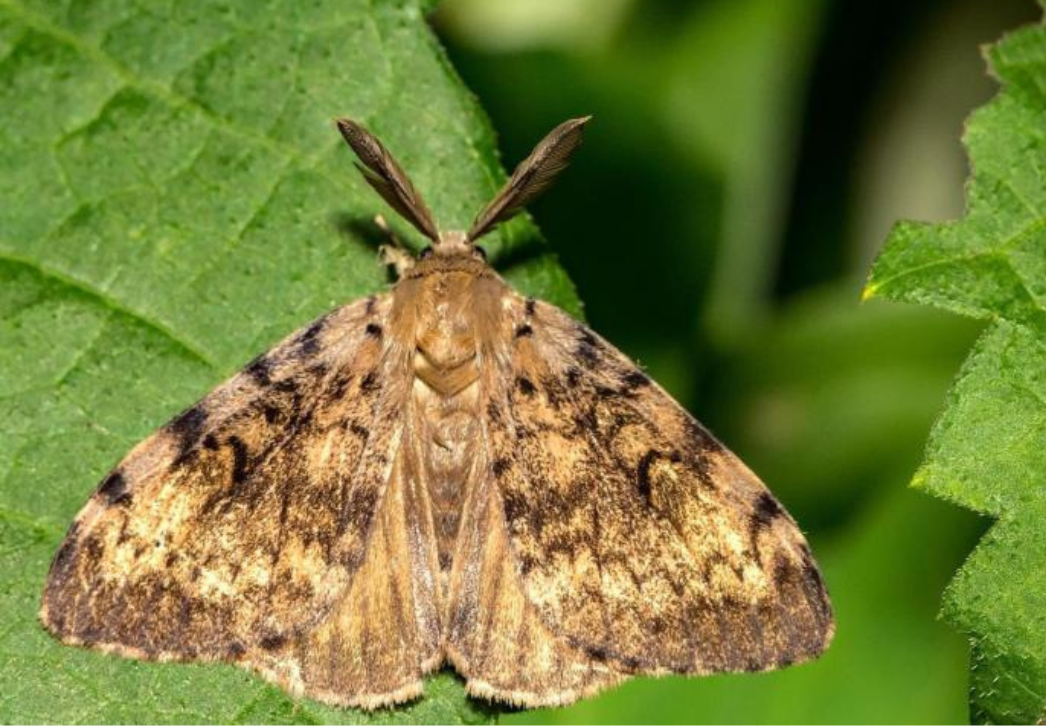
The start of the spongy moth flight period in Wisconsin marks a critical biological deadline for DATCP staff, as all Slow the Spread (STS) trapping and mating disruption treatments must be completed prior to the onset of moth flight. For the 2026 season, the first spongy moths were trapped on July 10 in Dane and Jefferson counties. These initial moth catches came 10 days later than in 2025 and seven days later than predicted by BioSIM forecasting models based on 2026 weather data. This discrepancy between predicted and observed moth flight dates is likely reflective of the “crash” phase of the population cycle since there are simply far fewer spongy moths flying now than there were in previous years.
Although complete data from the roughly 7,000 spongy moth traps will not be available until fall, 2026 mid-season trap checks show markedly fewer moths compared to this time in 2025. As of July 31, DATCP’s spongy moth trapping staff have caught only 211 moths in 1,432 STS Action Zone traps (0.15 moths per trap), which is 72% lower than the trap catches recorded at this point last year (0.53 moths per trap). These preliminary results suggest the continuation of a downward trend in spongy moth populations, a welcome relief following the state’s record-setting outbreak that peaked in 2023 with nearly 400,000 acres of defoliation.
Despite overall low populations, pockets of outlier moth catches have been noted in the otherwise sparsely infested regions of western Wisconsin. DATCP will target these high-risk locations for follow up egg mass surveys, high density trapping delimits, and, if necessary, 2027 aerial treatment efforts. |
|
 __________________________________
|
|
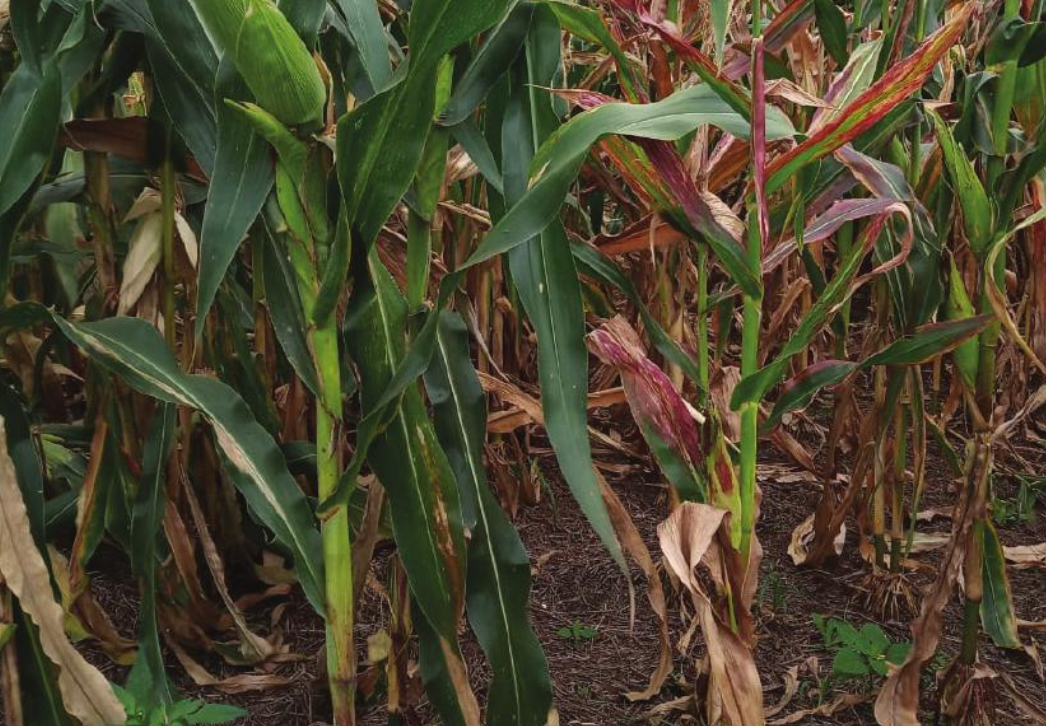
DATCP plant pathologists are conducting an August survey for corn stunt pathogens in Wisconsin. Once a significant corn disease in the southern U.S. from 1945-1980, widespread outbreaks of corn stunt re-emerged again during the 2024 and 2025 growing seasons, driven by wind patterns and warmer weather that pushed the corn leafhopper vector northward into the Midwest. This yield-reducing disease causes severe stunting and poorly filled ears with loose kernels. The predominant pathogen involved in the corn stunt disease complex, the corn stunt spiroplasma, was reported in Wisconsin in 2024 at two Dane County sites.
In the U.S., this disease is caused by a complex of two bacterial pathogens and one virus: corn stunt spiroplasma (Spiroplasma kunkelii), maize bushy stunt phytoplasma (Candidatus Phytoplasma asteris 16SrI-B subgroup), and maize rayado fino virus (MRFV). These three pathogens may infect plants singly or in combination. The maize bushy stunt phytoplasma is known to occur in Wisconsin. Maize rayado fino virus has not been reported in the state. All of the pathogens are transmitted by the corn leafhopper, which has begun migrating farther north from its traditional, warmer climates in the Gulf region, Mexico, and South America. Although corn leafhopper does not overwinter in Wisconsin, it occasionally arrives late in the season via long-distance migration on wind currents from southern regions.
Symptoms of corn stunt typically begin with chlorosis or reddening of the leaf tips, followed by showing red leaf streaks, shortened internodes, and severe stunting. Additional symptoms include tillering, over production of small or deformed ears with few kernels, male flower sterility, and delayed senescence. Symptoms can be confused with sugar mosaic virus, crazy top of corn, and other diseases, as well as nutrient deficiency. Laboratory testing is the only way to confirm the presence of the corn stunt pathogens.
Corn stunt has the potential to significantly impact corn production in Wisconsin. Curative treatments are not available and future management of this disease will rely on monitoring seasonal migrations of the corn leafhopper, which are tracked by the Midwest Suction Trap Network, and through field surveys in participating states. |
|
 __________________________________
|
|
The summer western bean cutworm moth flight has been underway since mid-June and is winding down for the season. DATCP’s network of 86 pheromone traps has captured a cumulative total of 7,471 moths, or an average of 87 moths per trap since emergence began eight weeks ago. This preliminary average count is below both the 10-year average of 100 moths per trap and the all-time record of 227 moths per trap set in 2024 (refer to weekly trap table for data).
While moths still appeared in high numbers in a few northern survey traps this week, activity at southern and central sites has decreased markedly following peak flight July 16-29. With the exception of one trap in Oconto County and another in Barron County that captured 155 moths and 127 moths, respectively, most of DATCP’s 86 monitoring locations reported low counts. The Western Bean Cutworm Network's total weekly capture of 995 moths is a sharp decrease from 2,323 moths last week.
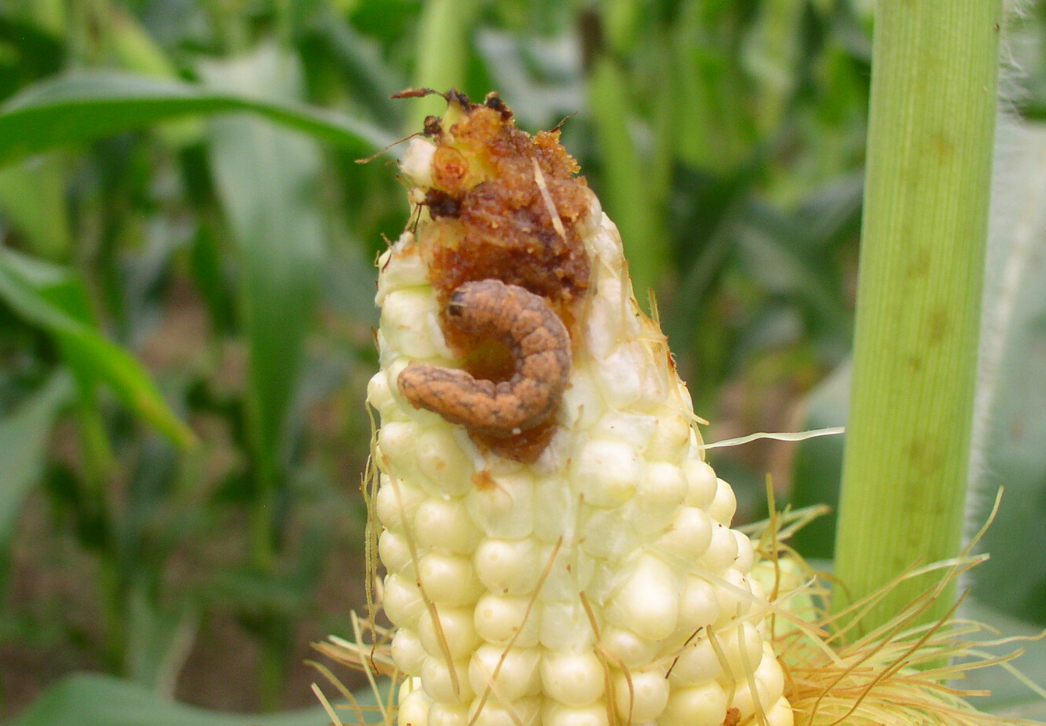
Chemical control is no longer effective in most areas where corn fields are well beyond tassel emergence and larvae are feeding in the tips of corn ears. However, scouting for larvae this month is recommended to help assess current infestation rates and determine high-pressure fields, especially for corn acreage in the central and southern areas of the state with a history of damaging western bean cutworm populations. |
|
 __________________________________
|
|
|
Maps for the five apple pests monitored by DATCP’s Apple Orchard Pest Trap Network are available at the links below:
|
|
 __________________________________
|
|
|
|
|