|
 Field Notes July 23, 2026
|
|
|
Mild, more comfortable weather arrived in Wisconsin following a mid-July heat wave. A cold front brought refreshing change, with lower dewpoints and cooler daytime highs mostly in the 70s and lower 80s. Average temperatures across the state July 17-23 were primarily in the 70s and closer to seasonal normals (1.0-6.0 degrees above normal) for this time of year.
Scattered thunderstorms dropped beneficial rain over the western region where soils have become abnormally dry (DO) this summer, while much of the eastern half of Wisconsin missed out on significant rainfall, causing pockets of moderate drought (D1) coverage to expand (U.S. Drought Monitor). Accumulated weekly precipitation varied widely from 0.0-3.0 inches, though most stations recorded under 0.25 inch outside of heavier downpour zones such as Eau Claire, which received 2.91 inches.
Meanwhile, hazardous air quality from wildfire smoke lingered into the third week of July, as 30 counties experienced readings in the unhealthy to very unhealthy categories (index values of 151-300). An Air Quality Alert that began July 14 remained in effect until July 20, when the cold front and storms helped clear the smoke.
__________________________________
|
|
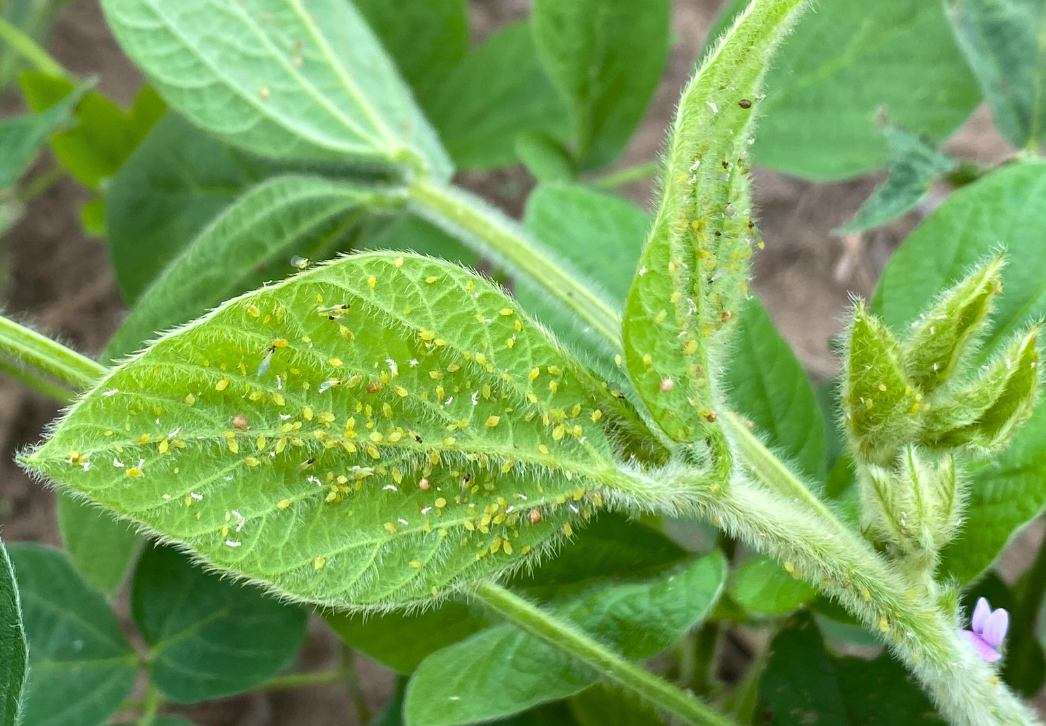
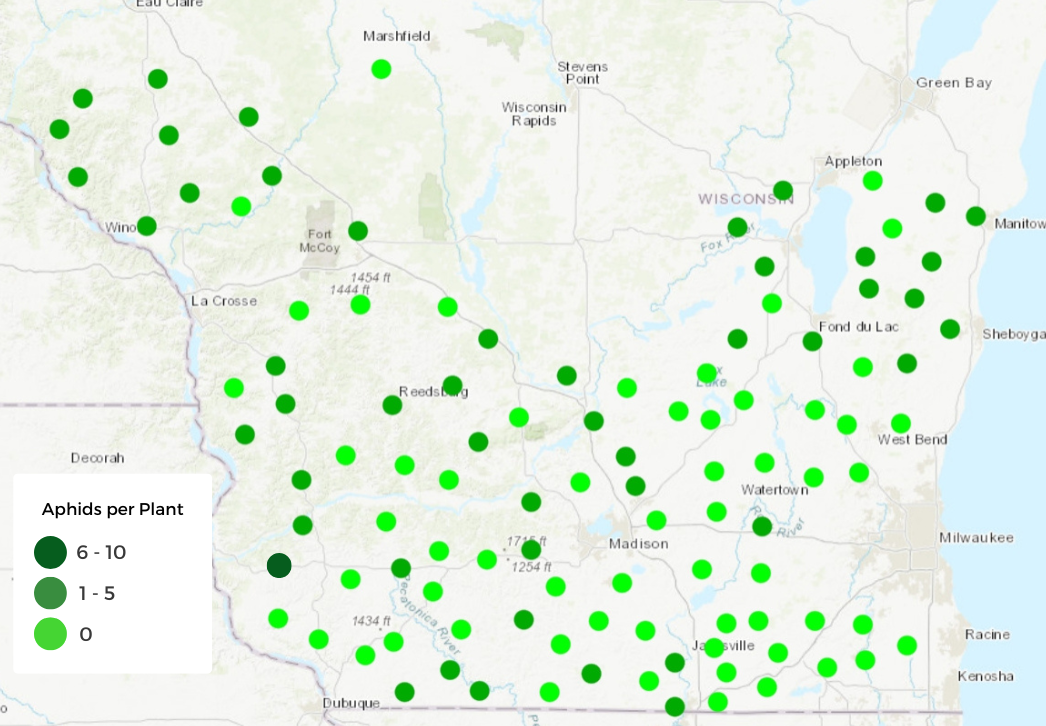
Mid-season soybean surveys across the southern half of Wisconsin indicate that soybean aphid populations, and insect pressure in general, are still very low. Based on observations in 105 fields sampled July 7-23, aphids have not yet dispersed fieldwide and are colonizing fewer than 30% of the plants in most fields. The typical average count is less than five aphids per plant.
While soybean aphid pressure is currently low, populations can double in less than a week under favorable conditions. As colonies begin multiplying more rapidly toward the end of July and into the first half of August, growers and crop advisors are reminded that the treatment threshold for soybean aphid remains at 250 aphids per plant on 80% of the plants. Insecticide application is not economical until this threshold is met. Aphid counts were still far below this level in the soybean fields surveyed by DATCP in the past two weeks.
In addition to aphids, soybean fields are also showing 1-10% of plants with light to moderate leaf injury caused by Japanese beetles, bean leaf beetles, green cloverworms, obliquebanded leafrollers, and other defoliators. The sampling method for defoliators is to select 10 plants throughout the field, choosing a trifoliate from the upper, middle, and lower canopy on each plant, for a 30-leaf sample. Compare the 30 leaflets with an online defoliation estimating guide to determine the average percent defoliation. Defoliation that meets the 20% threshold between the bloom and pod-fill stages may warrant control. Scouting several areas in the field interior, in addition to field edges, is required for accurate assessment. Routine scouting will be most critical in the next two weeks as soybeans advance to the later reproductive growth stages. |
|
Soybean field scouting in late July and August should include looking for two newer soybean pests: soybean gall midge (SGM) and soybean tentiform leafminer. Neither insect has been observed in Wisconsin to date, but both have been found in neighboring Minnesota and soybean gall midge also occurs in eastern Iowa.
According to the Soybean Gall Midge Alert Network, larvae have been observed since late June at all soybean field monitoring sites in Iowa and at one site in Rock County in southwestern Minnesota. The closest known detection of SGM to Wisconsin was in 2025, in Dakota County, Minnesota, just across the river from St. Croix and Pierce counties. The current recorded distribution of SGM includes 185 counties in seven Midwestern states (Iowa, Kansas, Minnesota, Missouri, Nebraska, North Dakota, and South Dakota).
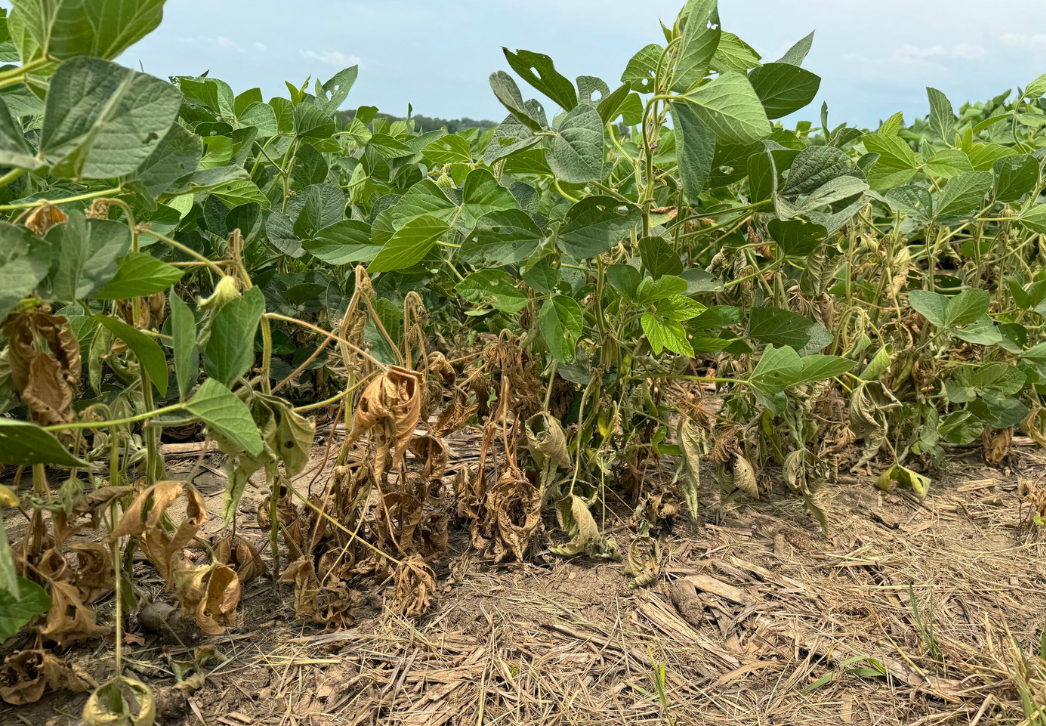
In southwestern Minnesota, the recent SGM finds in Rock County were identified based on wilted and dead soybean plants in the field margins. Adult gall midges are weak fliers that emerge and fly to the nearest soybean plants to lay eggs—usually infesting plants along field edges next to last year’s soybean fields. Symptoms to scout for are stems with blackened or discolored bases and deformed, stunted, or wilted plants. Infested plants become brittle and break easily along the stem. The larvae can be found by peeling back the epidermis tissue, as shown in the photo below. |
|
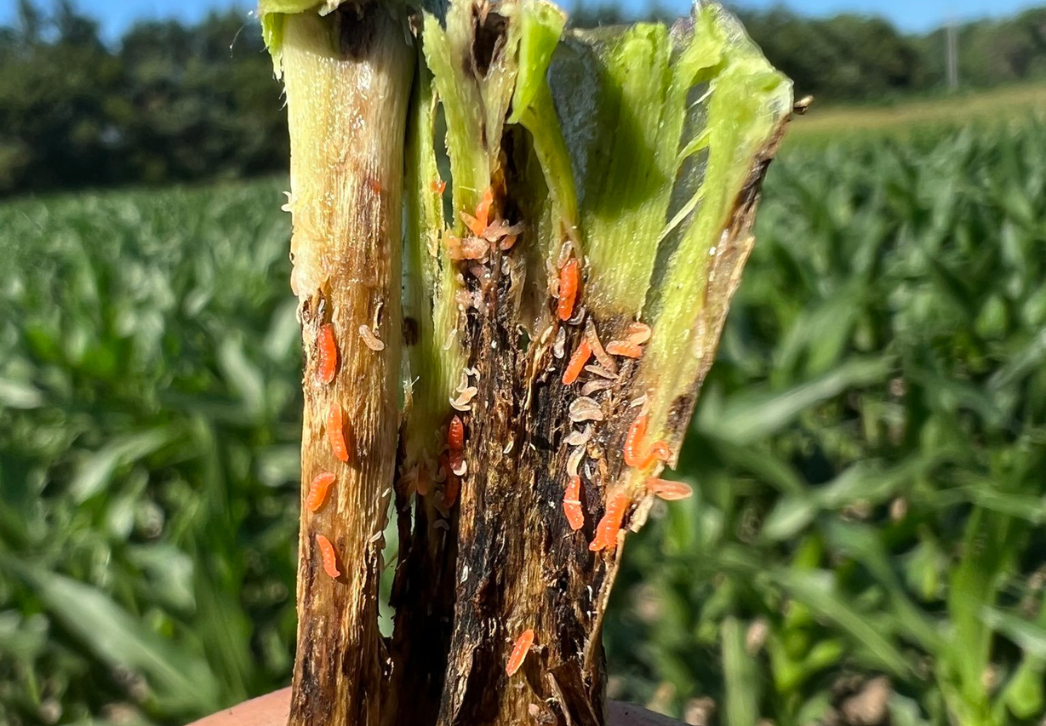 Soybean gall midge | Justin McMechan UNL
A second new soybean pest to be alert for in late July and August is the soybean tentiform leafminer (STLM). Similar to SGM, infestations of this insect also develop along field edges, especially near wooded areas. Signs of STLM on soybean leaves are raised, blister-like mines that form in a speckled oval pattern on the upper surface (refer to leaf at the left below). On the reverse side of the leaf, the larvae feed internally between the tissues and form distinctive hollowed-out leaf blotches or mines (refer to leaf on the right below).
|
|
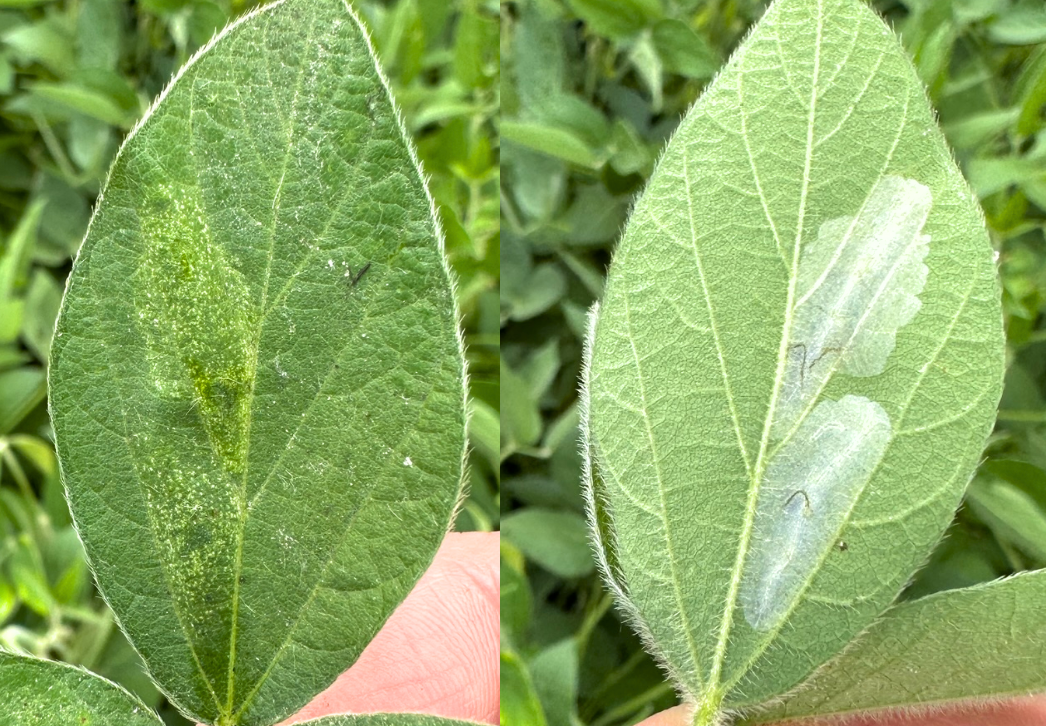 Soybean tentiform leafminer | UMN Extension
Several mines can develop per leaf and heavy mining may impact soybean productivity by reducing photosynthesis. Any suspected SGM or STLM infestations can be reported to the DATCP Pest Survey Program by emailing a photo to Krista Hamilton at Krista.Hamilton@wisconsin.gov.
Agricultural professionals and soybean growers interested in learning more about soybean gall midge are encouraged to attend the UW-Madison Extension’s Soybean Gall Midge Scouting Field Day on August 7 at UW River Falls. Details about the event are available on the UW Crops and Soils page: Soybean Gall Midge Field Day 2026
|
|
 __________________________________
|
|
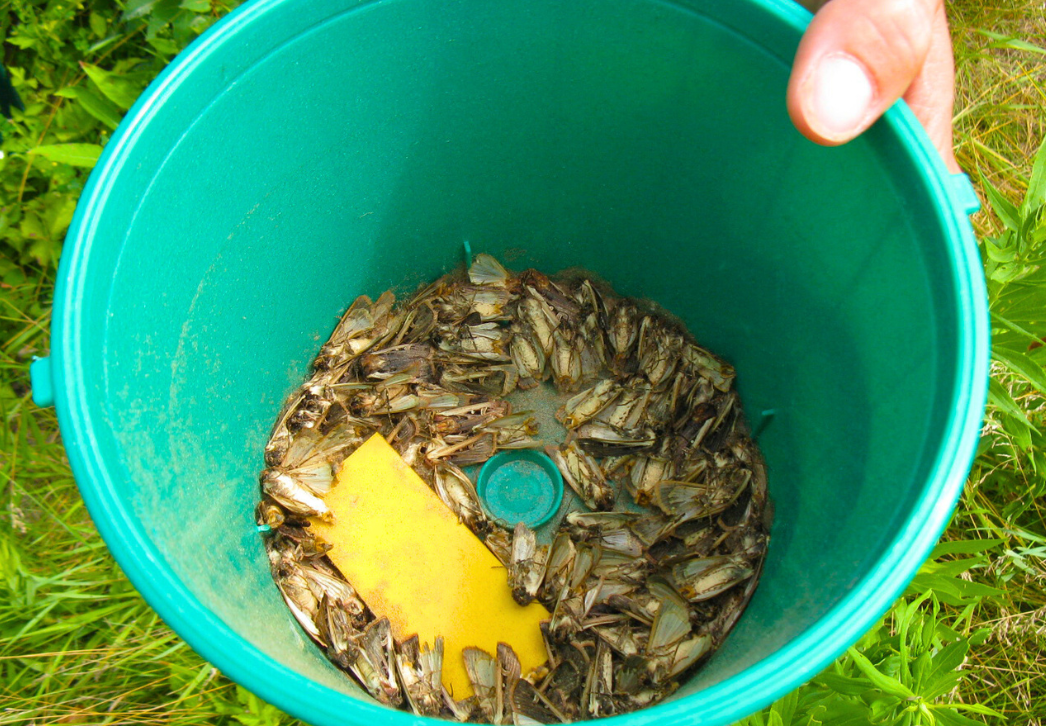
Peak western bean cutworm moth flights have occurred in the last two weeks (July 9-23) across southern and central Wisconsin. As expected, trap network counts rose sharply, with the total count at 86 sites increasing from 1,072 moths last week to 2,666 moth this week, and 20 of the locations reporting 50 or more moths. The highest individual pheromone trap count for the current monitoring period was 200 moths near Lake Mills in Jefferson County.
The term “peak flight” refers to 50% emergence of the annual western bean cutworm moth population and coincides with the accumulation of 2,704 degree days (modified base 38 degrees Fahrenheit). This degree-day threshold has been surpassed in all areas of the state south of Highway 29. Near Wausau and areas northward, the flight is still beginning and 25-50% of the moth population should emerge July 29-Aug 7. Scouting remaining pre-tassel corn for egg masses and small larvae will be most critical during this window, especially for acreage with historic western bean cutworm pressure.
As of July 23, the cumulative state count is 4,153 moths (48 per trap average), which well above the 1,507 moths (19.1 per trap average) at the same time last year but below the 7,290 moths in 69 traps (106 per trap average) in 2024 when the annual emergence was on track to set an all-time high catch record.
Local and regional trap count data for the 2026 season are available in DATCP’s Western Bean Cutworm Network map and table, as well as on the Great Lakes and Maritimes Pest Monitoring Network page. The Great Lakes map shows trap counts less than 300 moths per trap throughout the monitoring range in the past week, with the exception of western Nebraska, where very heavy flights of 501-1,000 or more moths were registered. |
|
 __________________________________
|
|
 Maps for the five apple pests monitored by DATCP’s Apple Orchard Pest Trap Network at available at the links below:
|
|
 __________________________________
|
|
|
|
|