|
 Field Notes July 9, 2026
|
|
|
Seasonable weather returned following a dangerous heat wave leading up to Independence Day. Afternoon high temperatures dropped to a more comfortable range in the 70s and 80s, bringing relief from the extreme heat and humidity (index values of 100-110 degrees) that scorched Wisconsin and much of the U.S. last week. Rainfall soaked parts of the state several days as an active mid-summer precipitation pattern continued. Amounts varied significantly by region, with the heaviest 24-hour totals (3.0-5.0 inches) recorded July 2 across a swath extending from La Crosse County eastward to Brown County. Lower weekly totals of 1.0 inch or less were common in other parts of the state, including the southeastern and northeastern areas.
Meanwhile, crop development continued on pace with the five-year average. At the start of the week, 20% of this season’s soybean crop was flowering compared to a 22% long-term average. Harvest of second-crop alfalfa was 48% percent complete, almost even with the average of 49%. Crop conditions held steady, and the latest USDA NASS crop progress report shows 82% of the corn crop, 81% of oats, 78% of soybeans, and 76% of hay are rated good to excellent.
Along with the hot and rainy start to July, a noticeable shift in insect pressure began as the complex of mid-season insect pests, such as Japanese beetles, apple maggot flies, corn earworm moths, rose chafers, and western bean cutworm moths, started appearing in more locations across the state.
__________________________________
|
|
|
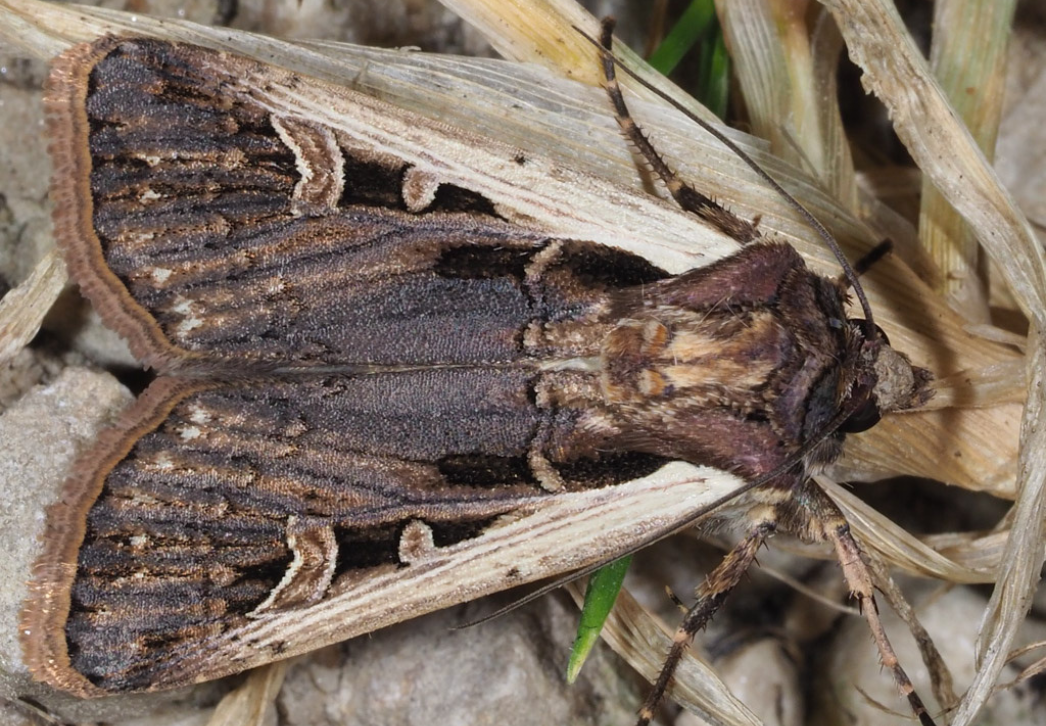
Emergence of western bean cutworm moths is gradually accelerating. DATCP’s pheromone trap network captured a total of 268 moths for the monitoring period ending July 8, an increase from 113 moths collected over the previous three weeks. The current state cumulative count is still fairly low at 381 moths in 68 traps, or an average of seven moths per trap. Counts are expected to rise sharply in the next two weeks (July 9-23) as 25% of this year’s moth population emerges across southern and central Wisconsin.
Scouting for western bean cutworm in corn should focus on fields in the late-whorl and pre-tassel stages. If egg masses and small larvae are found on 5% or more of the plants and control is warranted, the optimal timing for insecticide treatment is at 90-95% tassel emergence. This application timing increases the chance that the small, newly hatched caterpillars will be exposed to the insecticide. The eggs are laid on the upper surface of the top three to four leaves, often on the flag leaf, and the larvae can be found in developing tassels (the primary food source for young larvae).
Moth counts will be available through mid-August on DATCP's Crop Pest Trap Networks page and on the Great Lakes and Maritimes Pest Monitoring Network site. In addition, WBC degree days are provided in the modified base 38 degrees Fahrenheit column in our degree days table. Note that the lower threshold for WBC is 38 degrees and the upper threshold is 75 degrees. Once 2,577 degree-days are reached, 25% of the WBC flight has occurred and scouting should begin.
|
|
 __________________________________
|
|
|
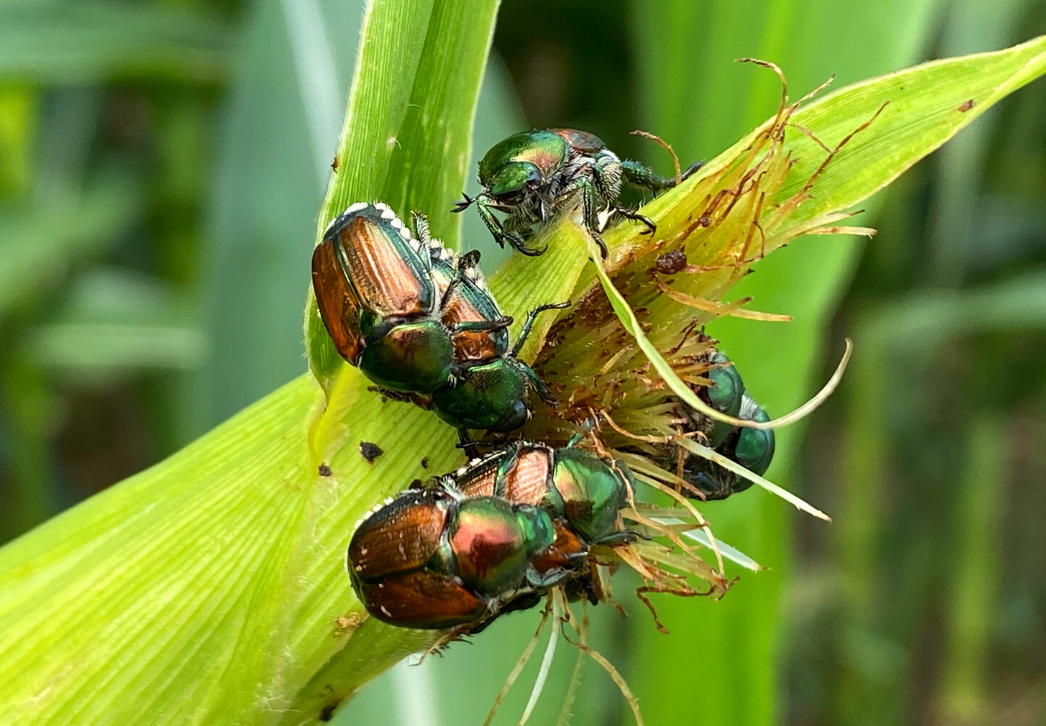
Japanese beetles are becoming more prevalent in Wisconsin corn, soybeans, and fruit crops, and perimeter damage can be expected during the second half of July. This familiar invasive insect has long been established in the southern half of the state where growers have contended with it for decades, but in the last five to 10 years, populations have expanded into the northern counties and gardeners and farmers are just beginning to experience its impact.
For the most part, the Japanese beetle is a generalist defoliator that warrants control only in rare circumstances. Most infestations on smaller ornamentals and landscape plants can be reduced by hand-picking beetles in the early morning (when they are sluggish) and dropping them into a bucket of soapy water. On a field-scale, beetle feeding is usually concentrated along the perimeter and rarely extends more than a few rows from the edge—emphasizing the importance of obtaining a representative sample from several areas throughout the field before making control decisions. In cases where economic thresholds are exceeded, limited spot treatment is often sufficient for minimizing damage. Specific economic thresholds for field crops are provided below:
In corn, the primary concern is to protect the silks from clipping since heavy beetle feeding on corn silks can impair pollination. Treatment of corn for Japanese beetle control is generally not needed in Wisconsin, but may be considered for fields showing:
- three or more beetles per ear and
- the majority of silks clipped to ½ inch during the pollination window and
- pollination less than 50% complete
For soybeans, the sampling method is to select 10 plants throughout the field, choosing a trifoliate from the upper, middle, and lower canopy on each plant, for a 30-leaf sample. Compare the 30 leaflets with an online defoliation estimating guide to determine the average percent defoliation. Defoliation that meets the 30% threshold in the pre-bloom stages and 20% between bloom and pod-fill may justify control. Scouting several areas in the field interior, in addition to field edges where Japanese beetles are most numerous, is required for accurate assessment.
|
|
 __________________________________
|
|
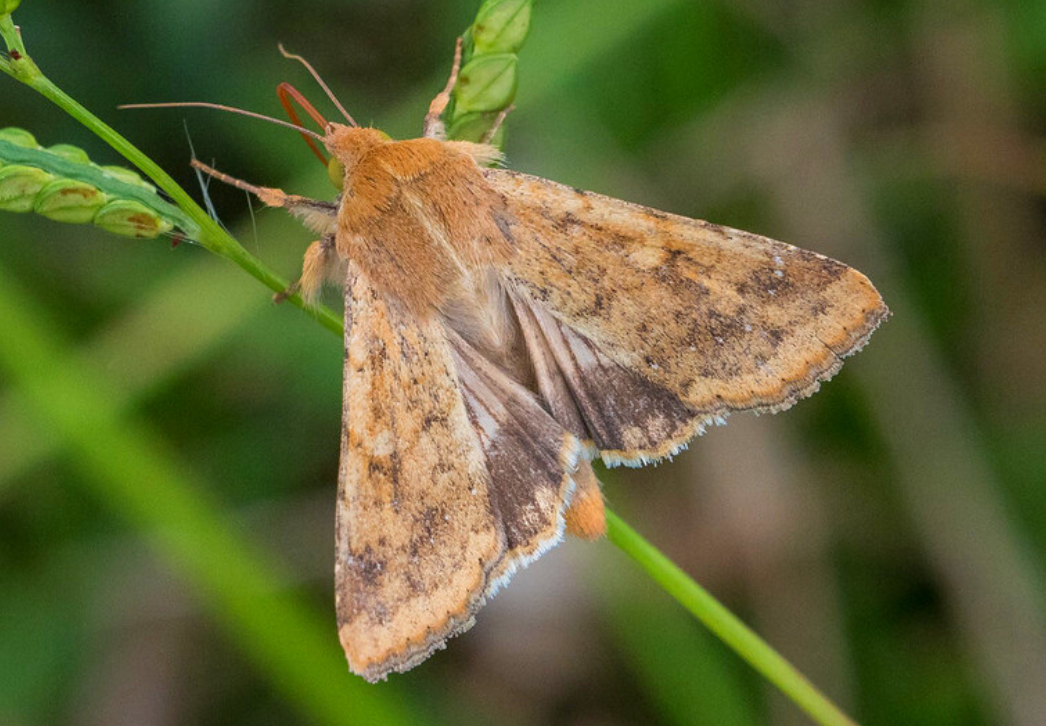
Early corn earworm migrants are arriving in Wisconsin, according to reports from DATCP’s corn earworm network. Six of nine pheromone trap sites, including traps near Beaver Dam, Burlington, Hancock, Lodi, Wausau, and Williams Bay, registered counts of one to 36 moths during the first week of monitoring. The total catch July 2-8 was 95 moths.
For sweet corn in the silking stage, the standard treatment threshold is 10 or more moths per Hartstack trap for three consecutive nights, reapplying every two to five days until silks turn brown. Refer to the UW-Extension publications Commercial Vegetable Production in Wisconsin (A3422) and Pest Management in Wisconsin Field Crops (A3646) for more information on insecticides and management practices.
Corn earworm counts for the state’s 14 Hartstack trap locations will be published each Thursday through mid-September on DATCP’s Corn Earworm Network page and in a weekly summary map. |
|
 __________________________________
|
|
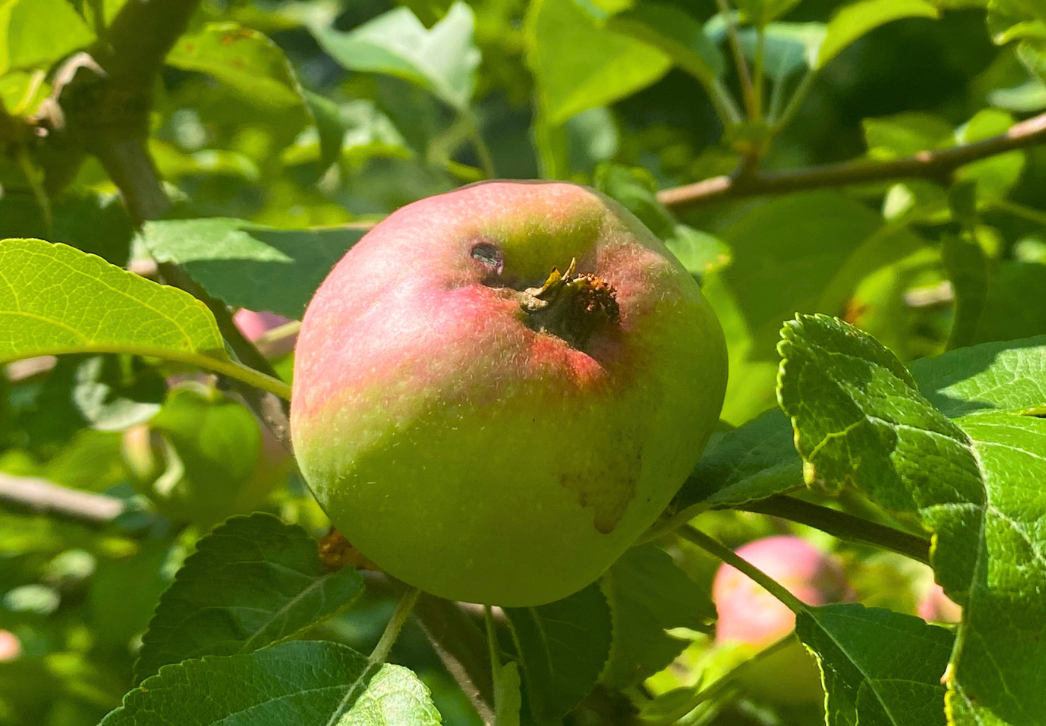
The spring flight of codling moths is winding down in southern and central Wisconsin orchards, although trap counts were still high (five to 14 moths per trap) at a few monitoring sites. Fruit damage is becoming apparent as larvae reach the larger development stages, and the summer flight is expected to begin in the next two weeks.
Apple growers are advised to check their records for the spring biofix to estimate the second biofix, which generally occurs 1,000 degree days later (base 50 degrees Fahrenheit). In preparation for the summer flight, cooperators should replace pheromone lures and begin more frequent trap checks. Larvicides or other controls should be maintained as long as trap counts remain above five moths per trap per week. Second-generation codling moth control may be particularly important this season for orchard locations where weather-related challenges (heavy rain, high winds, etc.) impeded management programs in early June.
Apple maggot flies are also active in orchards and recent wet weather has created more favorable soil moisture conditions for their emergence. Captures continued for the third consecutive week, with flies appearing on red sphere traps at eight of 22 cooperating locations. The highest count was a total of five flies on an unbaited trap in Fond du Lac County.
Maintaining sticky traps will be important as emergence and egg laying on apples intensifies throughout the month. As a reminder, weekly trap catches can directly inform management decisions. Orchards following a conventional apple maggot control program will begin applications immediately after the first fly appears on a red sphere, continuing as needed every 10-14 days as long as counts exceed one fly per unbaited trap per week or five flies per baited trap per week. |
|
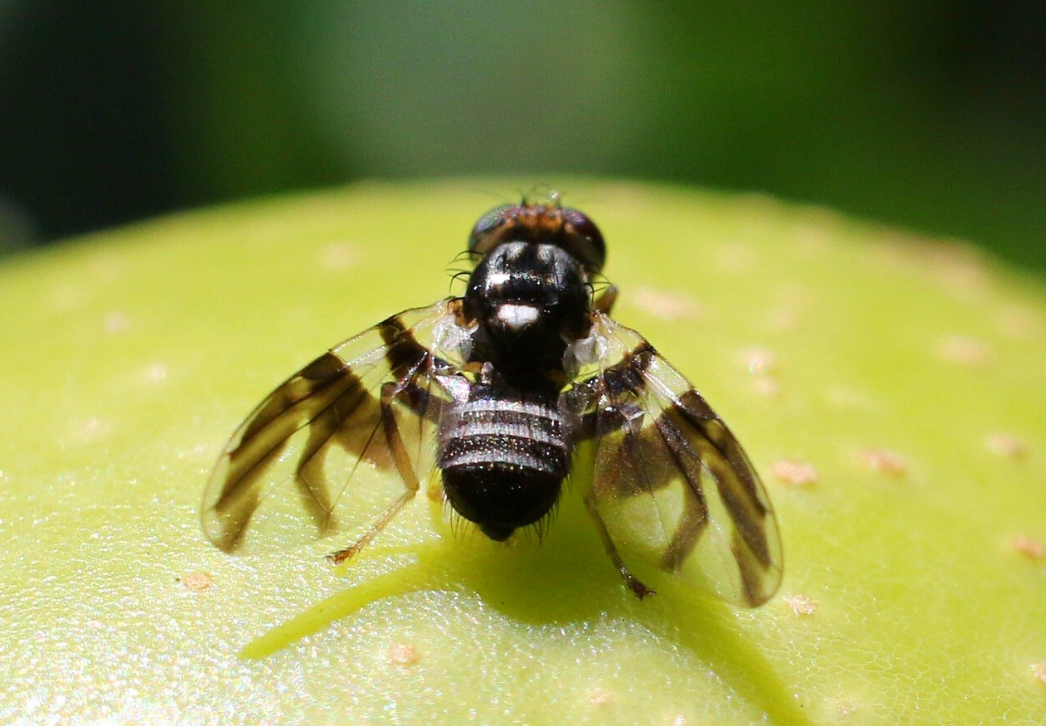 Apple maggot fly| Adobe stock randimal
|
|
In addition to apple maggot activity, apple growers are also reporting an increase in Japanese beetle pressure. Damage to fruit trees and ornamentals is likely during the second half of the month and into early August. Insecticide options for this insect are limited, and most chemical treatments offer only short-term repellency when applied before large aggregations of beetles begin to appear. For large populations, spot treating the blocks or perimeter areas with the highest beetle pressure with a “knock-down” or contact insecticide may offer temporary control. Strategies for reducing Japanese beetle damage without use of insecticides are discussed here: https://fruit.wisc.edu/2022/07/28/japanese-beetle-management-without-insecticides. |
|
__________________________________ |
|
|
|
|