|
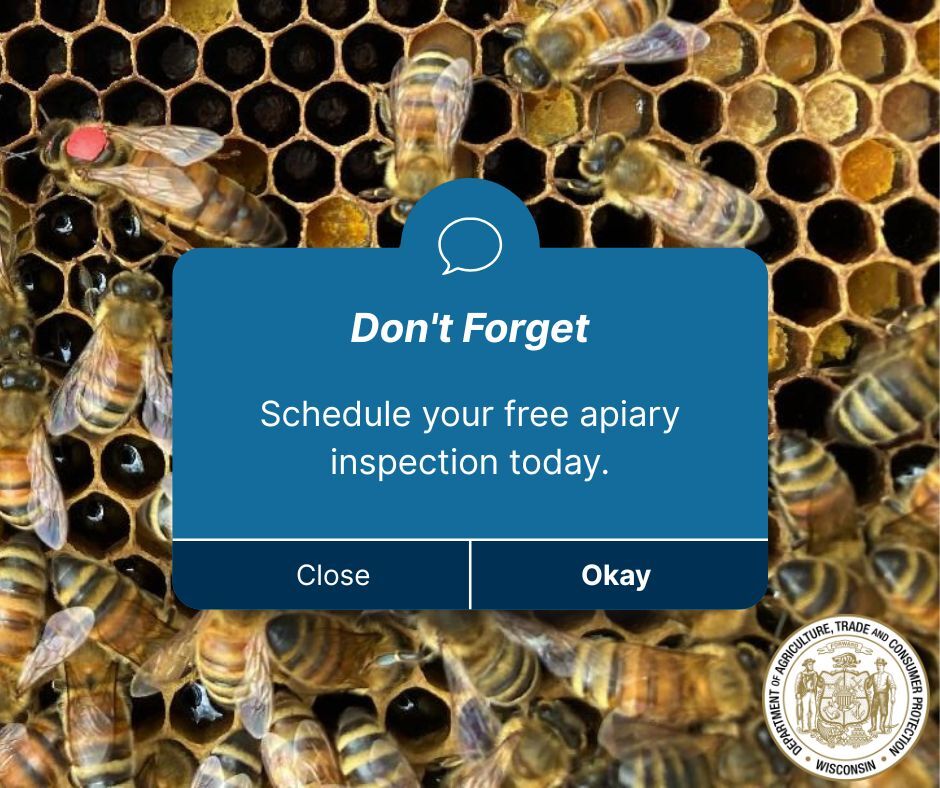
Honey bees, along with the wording "Don't forget to schedule your free apiary inspection today."
Whether you're a new beekeeper managing your first colony or an experienced beekeeper overseeing dozens of hives, regular colony assessments are an important part of maintaining healthy bees. That's why the Wisconsin Apiary Program offers free apiary inspections to beekeepers across the state.
During an inspection, trained apiary staff evaluate colony health, assess brood pattern, and look for signs of pests and diseases that may impact colony survival. Inspections can help identify issues such as Varroa mites, brood diseases, nutritional stress, queen problems, and other factors affecting colony performance.
Apiary inspections are also an opportunity for beekeepers to ask questions and discuss management strategies. Apiary inspectors can provide information on integrated pest management, seasonal colony management, sampling techniques, and available resources to support beekeepers and colony health.
If you are looking for a routine health check, assistance troubleshooting a problem, or certification for interstate movement of honey bees, the Wisconsin Apiary Program is here to help!
To schedule a free apiary inspection or colony health assessment contact your local apiary inspector or submit an Apiary Inspection Request. To contact us with general questions about pollinators or honey bees, or to report a suspected invasive like the Yellow Legged Hornet, email DATCPapiary@wisconsin.gov.
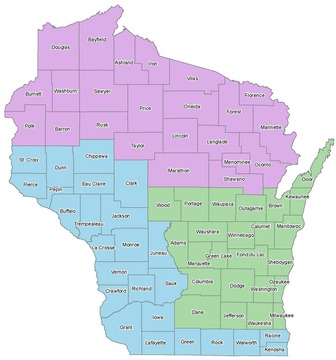
Apiary Inspection Territories
Eastern Territory (green):
Zac Nelson zachary.nelson1@wi.gov
(608) 354-3859
Western Territory (blue): Patrick Sizemore patrick.sizemore@wi.gov (715) 492-0814
Northern Territory (purple):
Brooke Nikkila-Somerfeldt brooke.sommerfeldt@wi.gov
(715) 807-6589
Image: A map of Wisconsin showing the three apiary inspection territories.
|
National Honey Bee Survey
Are you a beekeeper with 10 or more colonies and interested in expanding the dataset for honey bee health surveillance? Would you like to receive detailed information about pests and diseases in your colonies? Consider participating in the National Honey Bee Survey (NHBS).
Wisconsin's Apiary Program has been voluntarily participating in the NHBS since 2011. This survey, which yields important scientific baseline data, is sponsored by the United States Department of Agriculture (USDA) Animal and Plant Health Inspection Service (APHIS) in collaboration with the USDA Agricultural Research Service (ARS). It is primarily geared at establishing the absence of exotic pests like Apis cerana and the parasitic Tropilaelaps mite in the U.S. to safeguard crop pollination. Participating beekeepers volunteer to have their apiary inspected, and to have samples collected and processed by the University of Maryland. Participants later receive diagnostic data related to those samples.
Contact DATCPapiary@wisconsin.gov to see if we can include your apiary in the USDA APHIS National Honey Bee Survey.
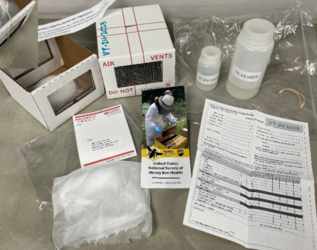
Image: Supplies provided to participants of the National Honey Bee Survey.
|
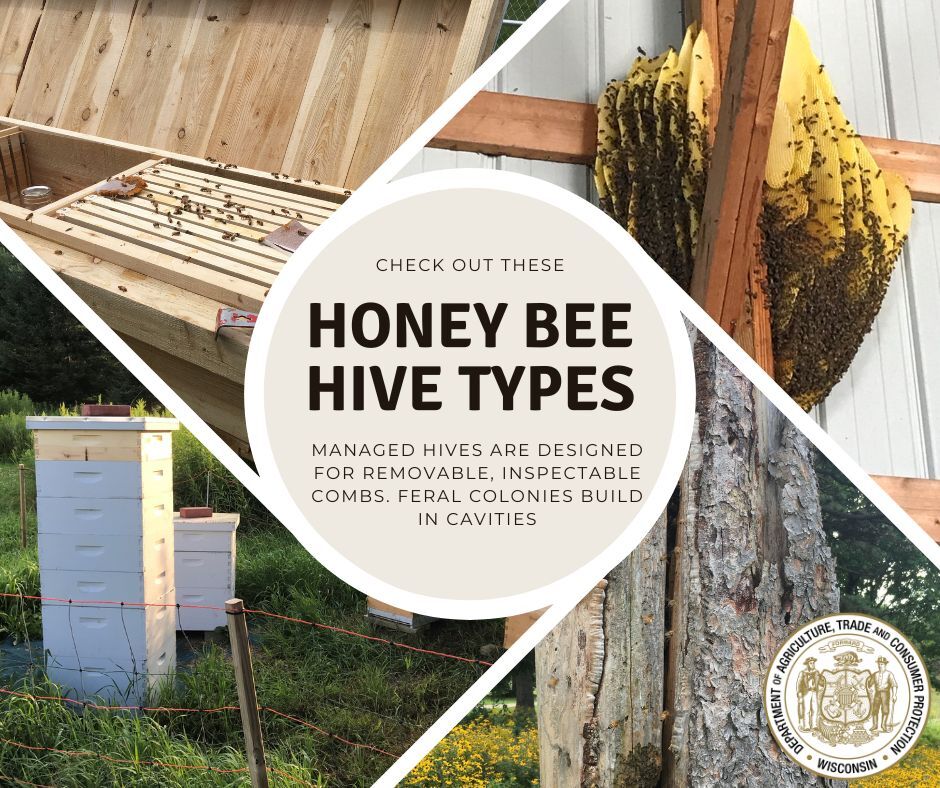 A collage of images of four different honey bee hive types, along with the wording "Check out these honey bee hive types. Managed hives are designed for removable, inspectable combs. Feral colonies build in cavities."
Honey bees can live in a variety of structures, from hollow trees and wall cavities to purpose-built hives managed by beekeepers. While the appearance and design of these hives may differ, the goal remains the same: providing a safe environment for honey bee colonies to grow, store food, and raise brood.
In the wild, honey bees establish colonies in natural cavities such as hollow trees, rock crevices, or even abandoned structures. These are known as feral colonies. Bees build comb freely within these spaces, and the colony develops without direct human management.
Managed colonies, on the other hand, are housed in equipment designed by beekeepers. Unlike feral nests, managed hives must allow combs to be removed and inspected by regulatory staff. In fact, while there are many types of hives that are legal, Wisconsin state law, outlined in Wis. Stat. 94.76 (3) requires honey bees to be kept in movable frame hives, so whatever option you choose must conform to that requirement. This is an important feature because it enables beekeepers to monitor colony health, detect pests and diseases, assess food stores, and perform necessary management activities. Early detection is one of the most effective tools for protecting honey bee colonies.
Regardless of hive design, regular inspections are critical for maintaining healthy honey bee colonies. Inspections help beekeepers:
- Monitor colony strength and queen performance
- Detect brood diseases such as American foulbrood
- Identify pest infestations, including Varroa mites
- Evaluate food stores during periods of nectar dearth
- Ensure colonies are prepared for winter survival
The ability to remove and inspect comb is a cornerstone of responsible beekeeping and supports both colony health and broader pollinator protection efforts. Identifying concerns before they become serious problems can improve colony health, reduce losses, and help prevent the spread of pests and diseases to other hives, apiaries, and bee species.
Choosing the Right Hive
There is no single "best" hive type for every beekeeper. The ideal hive depends on an individual's goals, experience level, physical abilities, management preferences, and desired honey production. Success ultimately depends on regular monitoring, sound management practices, and a commitment to maintaining healthy colonies.
Honey bee hives may look different on the outside, but healthy colonies share one important requirement: attentive care and the ability to assess colony health through regular inspections.
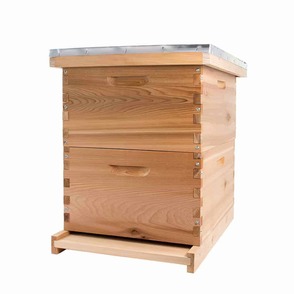
The Langstroth Hive
The Langstroth hive is the most widely used hive type in the United States and around the world. Developed by Reverend Lorenzo Langstroth in the 1850s, its design is based on the concept of "bee space"—the precise gap bees naturally maintain between combs.
A Langstroth hive consists of stacked wooden boxes containing removable frames. Bees build comb within these frames, allowing beekeepers to easily inspect individual combs without damaging the colony.
Advantages of Langstroth hives include:
- Easy colony inspections
- Efficient honey harvesting
- Standardized equipment and replacement parts
- Compatibility with most commercial beekeeping operations
- Effective pest and disease monitoring
Because of their versatility and ease of management, Langstroth hives are often recommended for beginning beekeepers.
Image: Example of a Langstroth hive.
|
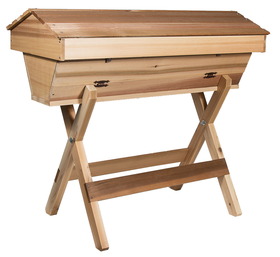
The Top-Bar Hive
Top-bar hives offer a different approach to beekeeping. Rather than using stacked boxes, these hives are typically long and horizontal. Bees build comb from removable wooden bars suspended across the top of the hive.
Many hobbyists appreciate top-bar hives because they allow bees to construct natural comb without foundation. Individual combs can still be removed for inspection, although they are generally more fragile than framed combs in a Langstroth hive.
Benefits of top-bar hives include:
- Simpler construction
- Reduced lifting of heavy hive boxes
- Natural comb building
- Lower equipment costs
However, honey production is often lower, and management practices may differ from those used with Langstroth equipment.
Image: Example of a Top-Bar hive.
|
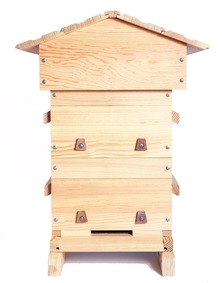
The Warre Hive
The Warre hive was developed by French beekeeper Abbé Émile Warré and is designed to mimic the conditions of a natural tree cavity. It consists of stacked boxes that are typically added beneath the colony rather than above it.
Like other managed hive systems, Warre hives must be maintained in a manner that allows comb inspection. The design emphasizes minimal disturbance while encouraging bees to build natural comb.
Supporters of the Warre hive appreciate:
- Natural colony development
- Excellent insulation
- Reduced management intensity
- Compact design
Although less common than Langstroth hives, Warre hives have gained popularity among beekeepers interested in natural beekeeping practices.
Image: Example of a Warre hive.
|
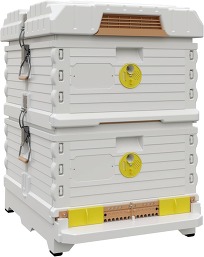
The Apimaye Hive
The Apimaye hive is a newer hive design that combines the familiar structure of a Langstroth hive with modern materials and features. Made from high-density insulated plastic, Apimaye hives are designed to provide improved temperature regulation, moisture control, and durability compared to traditional wooden equipment.
Features commonly associated with Apimaye hives include:
- Built-in insulation to help regulate colony temperature
- Ventilation systems designed to reduce moisture buildup
- Durable, weather-resistant construction
- Compatibility with standard Langstroth frames and management techniques
- Integrated feeding and pest-monitoring options
Supporters of Apimaye hives appreciate their durability and potential benefits for overwintering colonies in regions with harsh winters.
Image: Example of an Apimaye hive.
|
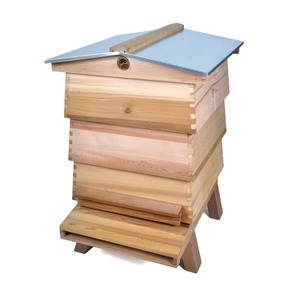
The William Broughton Carr Hive
The William Broughton Carr (WBC) hive is a traditional hive design that originated in the United Kingdom and remains popular among hobbyist beekeepers. Developed in the late 1800s, the WBC hive is known for its distinctive appearance, featuring an outer shell of sloped, overlapping boxes that surround the inner hive body.
Unlike many other hive designs, the outer walls of a WBC hive are primarily intended to provide additional protection from weather and temperature fluctuations. Inside the decorative outer casing, bees are housed in removable frames that allow beekeepers to inspect colonies, monitor pests and diseases, and harvest honey.
Benefits of WBC hives include:
- Attractive, traditional appearance
- Additional weather protection from the outer shell
- Good ventilation between the inner hive and outer lifts
The primary disadvantage of the WBC hive is that inspections can take longer because the outer lifts must be removed before accessing the colony. Additionally, the design is less commonly used in commercial operations due to the extra equipment and labor required.
Image: Example of a William Broughton Carr hive
|
 |
"FieldWatch is a non-profit company with a FREE and VOLUNTARY mapping registry that promotes communication between producers of specialty and row crops, beekeepers, seed companies and pesticide applicators in support of ongoing stewardship activities. With easy-to-use, reliable, secure and FREE mappings tools, FieldWatch is a trusted source of data in North America, promoting sustainability for plants, pollinators, people and planet."
Whether you manage bee hives near crop fields, practice organic farming, or grow bee-friendly plants, protecting pollinators is essential. Ensuring safe habitats and minimizing pesticide exposure helps sustain healthy bee populations which in turn supports crop pollination and ecosystem balance.
BeeCheck™, DriftWatch™, and FieldCheck™ are free online registries that allow beekeepers and growers to communicate with pesticide applicators about their locations to help prevent accidental exposure to pesticides.
-
Beecheck™ is a registry for hive owners. Registrants list their bee yard(s) which is mapped so that applicators can view them.
-
Driftwatch™ is a registry for growers of organic crops, grapes, fresh market fruits and vegetables, and other sensitive crops grown on a half-acre or more.
-
FieldCheck™ is a registry for pesticide applicators to view the FieldCheck map before spraying to locate sensitive areas and improve decision-making to avoid damage from spray drift.
Wisconsin law (ATCP 29.53) requires applicators to notify adjacent residents that provide them with a written request in the same calendar year at least 24 hours in advance of any aerial pesticide application. Additionally, applicators are also required to notify beekeepers who make a written request at least 24 hours before a pesticide labeled “Highly Toxic to Bees" or containing the active ingredient methomyl is applied to any site that is 1.5 miles or closer to their colonies (ATCP 29.51). The notice may be written or oral and must include the date and time of application, brand or common name of the pesticide, and the location of the application site. Finally, Wisconsin law (ATCP 29.50) also states that “No person may use or direct the use of a pesticide in a manner that results in pesticide overspray or significant pesticide drift.”
Letting aerial applicators know where your hives are located prevents accidental exposure of bees to chemicals. This notification helps applicators avoid spraying areas near hives and organic crops which helps protect pollinator health and supports pollination. communicating your hive or crop locations fosters better relationships between beekeepers, farmers, and applicators and ensures compliance with local regulations or guidelines regarding pesticide use near pollinators. Overall, keeping them informed safeguards your bees and promotes safer agricultural practices.
Although some pesticides may “volatilize” or evaporate after application, causing the pesticide to drift even if applied properly, cases of suspected pesticide misuse impacting your bees should be reported immediately to (608) 224-4500 or email datcppesticideinfo@wisconsin.gov.
|