|
 Field Notes June 11, 2026
|
|
|
Wisconsin experienced a weather pattern change this week as heat, humidity, and widespread heavy rainfall replaced an extended period of dryness. Afternoon highs reached the 80s to mid-90s, while oppressive, tropical humidity pushed heat index values into the upper 90s to near 100 degrees. On June 10, the heat and instability fueled rounds of damaging thunderstorms, with heavy downpours, severe wind gusts reaching up to 70 miles per hour, and scattered storm damage throughout the state. Some of the most severe damage was reported from Dodge County in southern Wisconsin.
The storms dropped beneficial rain statewide, helping alleviate the abnormally dry conditions that developed during the fourth driest May in Wisconsin history (U.S. Drought Monitor). Seven-day totals generally ranged from 0.5-3.0 inches, though a few locations recorded over 5.0 inches of precipitation. Pest survey activities for the week included scouting alfalfa and wheat fields in between rains, checking true armyworm pheromone traps, and preparing for the start of western bean cutworm trapping.
__________________________________
|
|
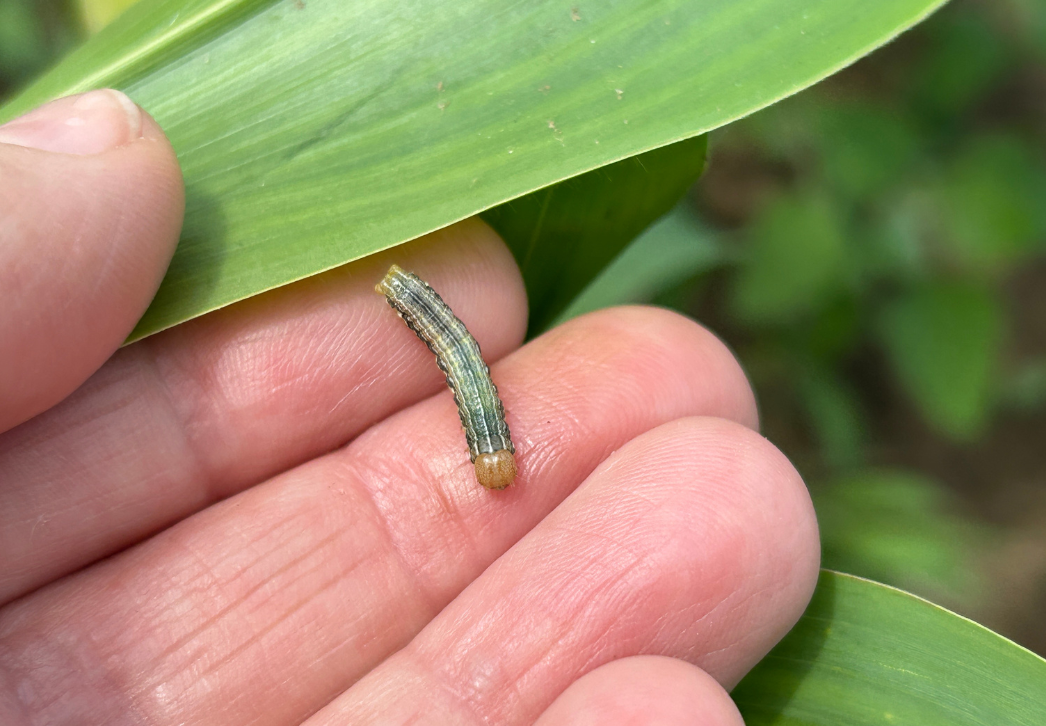
True armyworm larvae are common in Wisconsin corn and wheat fields, and reports of localized infestations are beginning to circulate. DATCP surveys this week found small larvae in about one-quarter of the wheat fields sampled, at economically insignificant levels. Numbers of armyworm caterpillars collected at sites in Dane, Dodge, Fond du Lac, and Manitowoc counties were low and ranged from 1-9 larvae per 100 sweeps, with an average of one larva per 100 sweeps. Larvae in eastern Wisconsin were approximately 0.75-1.0 inch long and in the third or fourth instars as of June 10.
While the counts noted during recent DATCP wheat surveys are not concerning, isolated problems are emerging and now is the time of year when damage to corn and small grains by first-generation armyworms can appear seemingly overnight. Routine scouting and early detection of emerging problems, including wheat lodged during recent storms, will be especially important through the end of the month.
Armyworm control decisions are based on the percent of plants in a field with feeding damage, the number of larvae present, and the size of the larvae. Treatment efficacy is greater when larvae are small and under 1.0 inch long. |
|
- For corn fields, sample five sets of 20 plants, 100 total. Spot treatment is justified when 25% of the plants have two armyworms (0.75 to 1.0 inch or smaller) or 75% have one armyworm per plant.
- In wheat and other small grains, check the soil surface between two rows at several points in the field for larvae. Infestations of three or more armyworms per square foot warrant treatment.
|
|
|
Current maps and trap count data from DATCP’s True Armyworm Trap Network are available at the links below:
|
|
 __________________________________
|
|
Surveys were conducted June 8-11 in southern and east-central Wisconsin wheat fields, from Dane County northeast to Brown County, where most of the state’s wheat crop is grown. DATCP specialists sampled 41 fields to assess populations of cereal leaf beetle, aphids, true armyworm larvae, and other small grains pests.
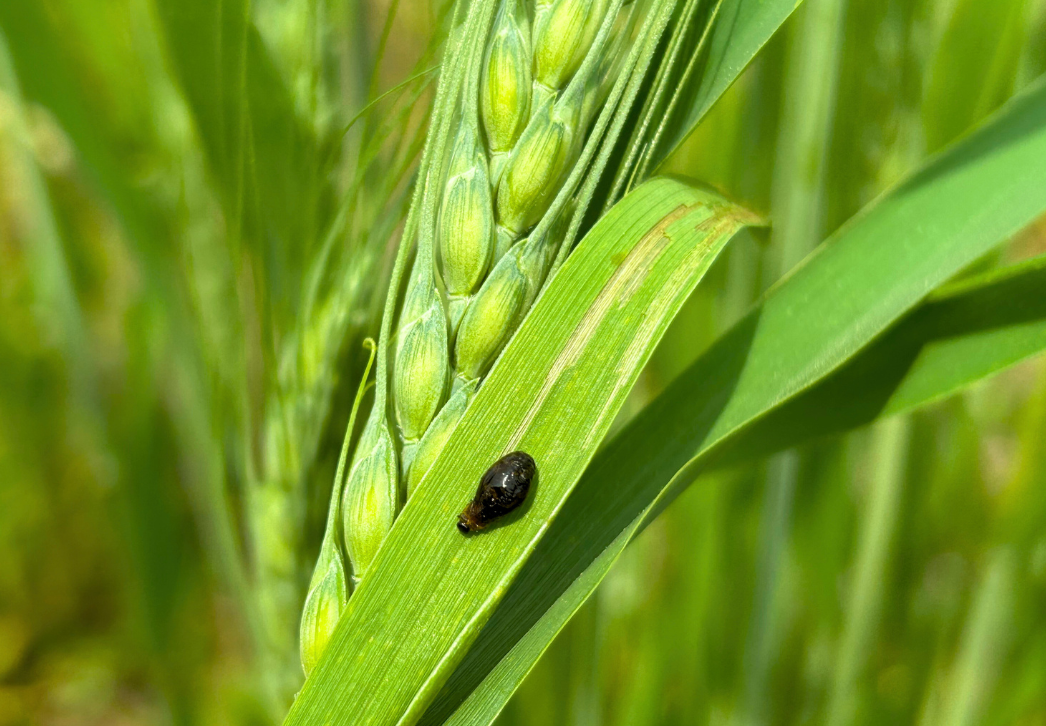
All wheat fields surveyed had generally low insect pressure. Cereal leaf beetle larvae were collected from 12 of the fields, true armyworms were found in 11 fields, and aphids (including bird cherry-oat aphid and English grain aphid) were common at low levels in 40 of the fields. Overall, insect counts were below economic levels and damage was not apparent.
The highest number of cereal leaf beetles observed was four larvae per 100 sweeps (in Sheboygan County) and fewer than 2% of plants per field had visible “windowpane” defoliation. Although the infestations were minor, peak cereal leaf beetle feeding is expected June 14-20 and scouting efforts should be increased for fields in the heading stage. Populations of one larva per flag leaf when grain is heading or flowering qualify for treatment. |
|
 __________________________________
|
|
Northern Wisconsin is entering the peak alfalfa weevil damage season while southern and central areas of the state move past the threat. As shown in the UW-Madison VDIFN alfalfa weevil forecast tool, potential for weevil feeding is currently highest in counties north of Highway 29.
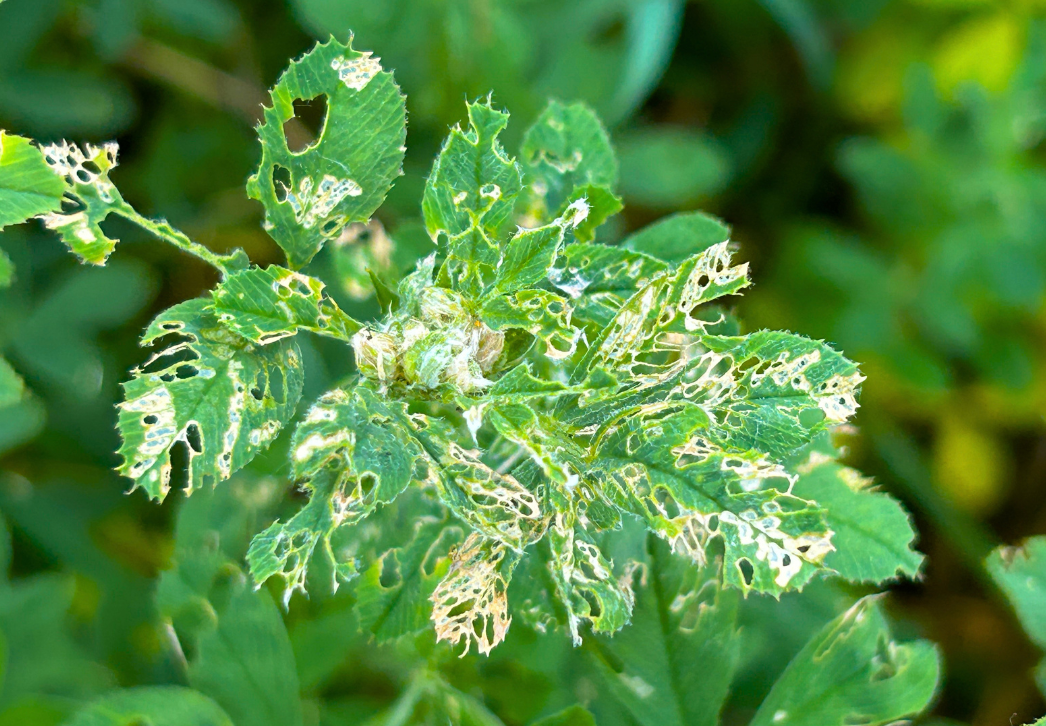
Alfalfa surveys in the previous four weeks found typical spring alfalfa weevil populations and defoliation levels. Average counts in 115 fields ranged from 0.1-7.2 weevil larvae per sweep and heavy tip feeding was observed in 12% of the fields (in Dane, Green, Grant, Lafayette, and Rock counties). Most of these southern Wisconsin fields were harvested weeks ago and the weevil season is winding down.
In contrast, approximately one-half of the alfalfa acreage in northern Wisconsin remains uncut as maximum weevil feeding is getting underway. The window for peak defoliation is from 600-800 degree days (sine base 48 degrees Fahrenheit) and could extend for two more weeks. For alfalfa fields north of Highway 29, scouting uncut first-crop acreage should be prioritized in the week ahead. |
|
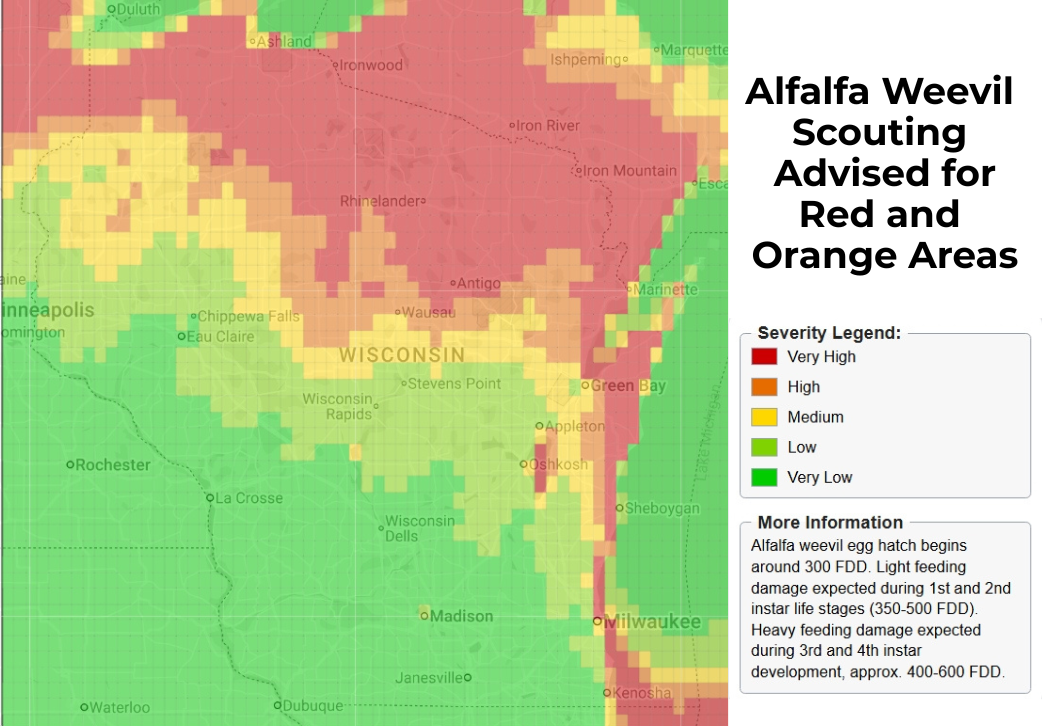 Alfalfa weevil forecast map | UW VDIFN

|
|
 Maps for the five apple pests monitored by DATCP’s Apple Orchard Pest Trap Network at available at the links below:
|
|
__________________________________ |
|
|
|