|
|
What's Growing On? monthly e-newsletter banner
Dear Wisconsin nurseries, Christmas tree growers, and gardeners:
Growing degree days (GDD) (simple B50) as of June 14 were 418 in Bayfield; 531 in Cumberland; 509 in Medford; 646 in Hancock; 609 in Green Bay; 679 in Racine; 792 in Madison; 805 in La Crosse; and 964 in Dubuque, IA.
A few pests in vulnerable-to-treatment stages include lilac borer, oystershell scale (brown), euonymus caterpillar at 275-500 GDDs; black vine weevil, bronze birch borer, oystershell scale (gray), elm leaf beetle at 400-600 GDDs; leaf crumpler, peach tree borer, flat and round-headed apple tree borer, viburnum crown borer at 500-600 GDDs; and euonymus scale at 500-700 GDDs. Other pests soon to be in vulnerable stages include woolly apple aphid at 800-900 GDDs, followed by cottony maple scale, European elm scale, fletcher scale, lecanium scale as well as two-spotted spider mite, European pine shoot moth and Japanese beetle all at 900-1200 GDDs.
Take a moment to read through a few updates from the DATCP nursery program and send any feedback, questions, or ideas for future e-news updates to datcpnursery@wisconsin.gov.
Having trouble viewing this email? View it as a Web page.
_____________________________________
_____________________________________
|
|
|
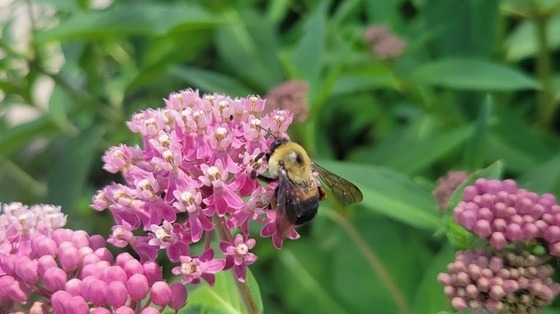
Bumble Bee on Swamp Milkweed | DATCP S. Werner
Pollinator Week, observed June 22-28, 2026, is an annual celebration dedicated to raising awareness about the importance of pollinators and the actions we can take to support them. Coordinated by the Pollinator Partnership, Pollinator Week highlights the essential role that pollinators play in maintaining healthy ecosystems, supporting biodiversity, and contributing to food production.
While honey bees often receive the most attention, Wisconsin is home to over 400 species of native bees as well as wasps, flies, moths, butterflies, beetles, hummingbirds, and bats that contribute to pollination. Together, these animals help reproduce 80% of flowering plants and support production of one in three bites of food that we eat including many fruits, vegetables, nuts, and seeds that are important to both people and wildlife.
Pollinators face numerous challenges, including habitat loss, pests and diseases, pesticide exposure, and climate-related stressors. Pollinator Week provides an opportunity for individuals, communities, and organizations to learn about these challenges and take steps to create healthier environments for pollinators. Simple actions such as planting native flowering plants, reducing pesticide use, preserving nesting habitat, and providing blooms throughout the growing season can make meaningful difference.
Throughout Pollinator Week, the Pollinator Partnership will host educational events and activities including the Pollinator Power Party, a virtual celebration that encourages participants to learn more about pollinators, conservation efforts, and ways to support pollinator health in their own communities.
Whether you manage agricultural land, maintain a backyard garden, or simply enjoy Wisconsin’s natural landscapes, Pollinator Week is an opportunity to recognize the value of pollinators and the essential services they provide. By working together to support pollinator populations, we can help ensure healthy ecosystems, productive agricultural systems, and vibrant landscapes for future generations.
To learn more about Pollinator Week and the Pollinator Power Party, visit Pollinator Partnership’s website and join the celebration using #PollinatorWeek and #PowerInPollinators.
|
_____________________________________
|
|
|
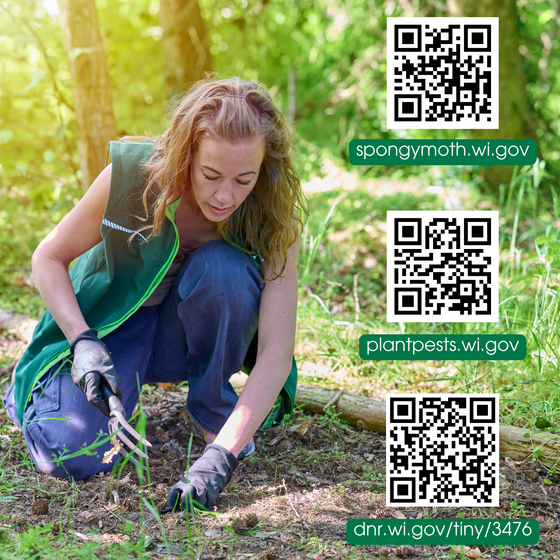
An image of a woman pulling weeds from the ground, along with QR codes for reporting to spongymoth.wi.gov, plantpests.wi.gov, and dnr.wi.gov/tiny/3476
Hiking and trail mix. Morning and coffee. Awareness and action. Having the right ingredients to achieve your goals can make all the difference. June is Invasive Species Action Month here in Wisconsin, creating opportunities for people to take that perfect combination of awareness and action and apply it to protect our environment and economy from the negative impacts of invasive species.
Awareness of invasive species is key to understanding how to prevent introducing them into a new area, how to identify invasive species, and which actions to take when invasive species are found. A great example is spongy moth (Lymantria dispar). Though a state quarantine currently covers 56 of 72 Wisconsin counties to prevent the spread of this forest pest from where it is currently established in the eastern and central parts of the state, spongy moth populations can still make leaps westward when people accidentally transport them on firewood, vehicles, and other items stored outdoors. People in quarantined counties can help slow the spread of spongy moth by checking their gear before moving it to a non-quarantined area, while people living in non-quarantined counties in western Wisconsin can make a difference by looking for spongy moth life stages, taking a photo, and reporting it to the Spongy Moth Hotline at spongymoth@wisconsin.gov. DATCP staff can then take those reports into account with other data to plan management efforts to slow the spread of this pest. Learn more about spongy moth and quarantines at spongymoth.wi.gov.
Looking to build your awareness of other non-native plant pests? Visit plantpests.wi.gov to learn more about beech leaf disease, hemlock woolly adelgid, spotted lanternfly, and more! After you’ve built your awareness, you can take action by watching for these plant damaging species and reporting suspected sightings to the DATCP Pest Hotline at datcppesthotline@wisconsin.gov. Your report could help with early detection and successful interception of an emerging invasive pest.
For interactive invasive species awareness and action opportunities, join Wisconsinites across the state during Invasive Species Awareness Weekend June 19-21, 2026. There are educational activities, guided hikes, control efforts, and combination education/control events available. Visit the Wisconsin Department of Natural Resource’s Invasive Species Events and Volunteering page to learn more.
Whether you choose to learn more about invasive species on your couch in the morning while sipping a cup of coffee or on a guided hike while snacking on some trail mix, your state thanks you for the effort you take to gain awareness and take action this month, and all throughout the year!
_____________________________________
|
|
|
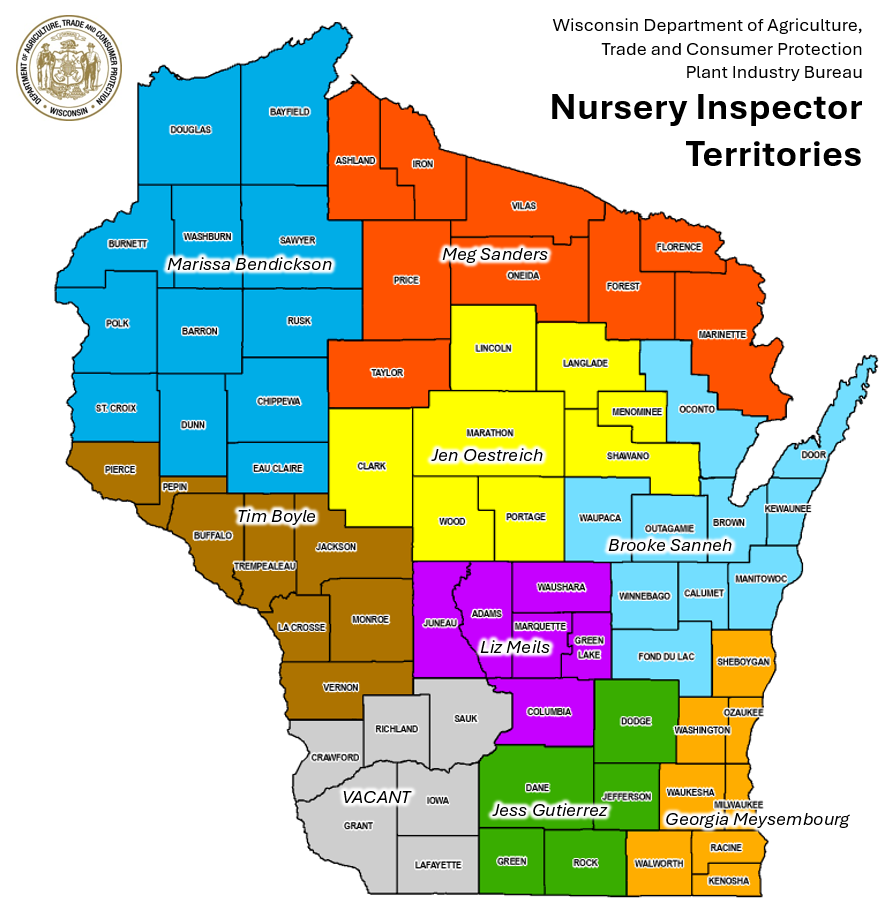
A color-coded Wisconsin map showing the state divided up into the territories of DATCP's Nursery Inspectors.
As regular WGO readers may recall, the Plant Protection Section has had a lot of retirements recently. So far, we have been elated to welcome two new inspectors in the month of May; Marissa Bendickson for northwest Wisconsin and Georgia Meysembourg for southeast Wisconsin.
Bendickson has a bachelor’s degree in Field Biology, a Master’s in Horticulture from the University of Minnesota, and over 14 years of plant regulatory experience. Her work experience includes serving as a Plant Health and Trade Compliance officer with APHIS PPQ, which included conducting plant inspections, responding to plant diseases like Ralstonia, issuing phytosanitary certificates for plant exports, and Smuggling, Interdiction & Trade Compliance (SITC) work; as an EAB biocontrol technician with the Minnesota Department of Agriculture; and working for several seasons as a spongy moth trapper with DATCP.
Meysembourg has a bachelor’s degree in Conservation & Environmental Sciences from the University of Wisconsin-Milwaukee, volunteer experience as a certified master gardener, and over three years working as a seasonal nursery Inspector with DATCP. In her role, she has completed hundreds of nursery, Christmas tree, seed, and firewood inspections; addressed a variety of plant regulatory issues, including hemlock woolly adelgid, elongate hemlock scale, and ramorum blight regulatory interceptions, quarantine, and licensing compliance; and detected spongy moth, invasive plants, and various other plant pests. Additionally, Meysembourg has worked with DATCP for the past two years as a Licensed Permit Program Associate, where she gained experience with nursery and seed licensing renewals.
We hope to fill the current vacant southwest position on this map within the next few weeks and the northcentral vacant position (not currently shown on this map) by early fall. For this growing season, refer to the above territory map of our nursery inspectors, and visit the DATCP website for inspector contact information.
_____________________________________
|
|
|
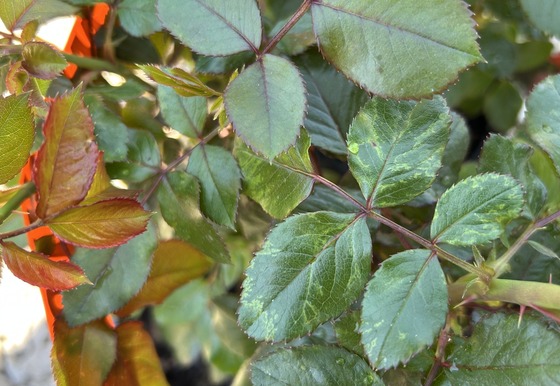
Virus-like symptoms on rose nursery stock | DATCP L. Meils
Plant viruses are microscopic agents that can infect plants and cause diseases that affect the quality and viability of those plants. Some plant viruses have large host ranges while others only infect one host. Symptoms of viral infections vary greatly between viruses and even between hosts infected with the same virus. Some general symptoms of a viral infection include leaf mottling, mosaic, ringspot, necrosis, turgidity, distortion, stunting, and death. Insects, nematodes, plant sap, plant propagation, and humans can transmit viruses between plants. Once infected, there is no good way to eliminate or treat the virus without damaging the host plant. One of the best ways to manage plant viruses is to remove and destroy symptomatic plants. To learn more about how viruses are transmitted, refer back to our three-part series in our March, April, and May WGO issues from 2024.
The DATCP Plant Industry Bureau Laboratory created the Gallery of Ornamental Plant Virus Symptoms to help nursery professionals, growers, diagnosticians, and plant enthusiasts recognize the symptoms of different viruses on common ornamental plants. The final diagnosis of a viral infection must include appropriate test methods and cannot be based on visual symptoms alone.
DATCP inspectors collected 135 ornamental samples for virus testing at the lab in 2025. Tobacco rattle virus (TRV) was detected most often, with 38 positives (mainly in astilbe, bleeding heart, hosta, and peony). Dahlia mosaic virus (DMV), confirmed on 23 dahlias, was the second most detected virus. Tobacco streak virus (TSV) was confirmed on 12 astilbes and five dahlias. Hosta virus X (HVX) was diagnosed in 11 hosta samples. In addition, potyviruses were confirmed in hosta (1), iris (3), miniature hollyhock (1), phlox (1), and sedum (2), for a total of eight detections.
Other virus finds included alfalfa mosaic virus (1), arabis mosaic virus (1), clematis chlorotic mottle virus (1) cucumber mosaic virus (2), cycas necrotic stunt virus (3), elderberry virus C (1), elderberry virus D (1), impatiens necrotic spot virus (1), lilac leaf chlorosis virus (1), tomato spotted wilt virus (1), and tradescantia mild mosaic virus (2). Laboratory test results are summarized in the PIB Annual Report.
_____________________________________
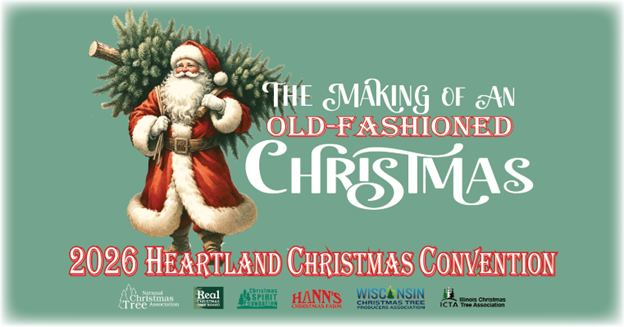
The 2026 Heartland Christmas Convention: The Making of an Old-Fashioned Christmas will take place August 6–8 at Hann’s Christmas Farm in Oregon, Wisconsin.
Wisconsin Christmas tree growers and nurseries have a unique opportunity this summer to take part in a national-level industry event right here in Wisconsin. The Wisconsin Christmas Tree Producers Association (WCTPA) is co-hosting the 2026 Heartland Christmas Convention August 6-8 at Hahn’s Christmas Tree Farm in Oregon, Wisconsin, along with the Illinois Christmas Tree Association (ICTA), with national Christmas tree organizations also meeting in conjunction with the event.
Typically, WCTPA summer convention attendance is geared toward association members. However, because of the expanded national component and the breadth of programming being offered this year, licensed Christmas tree growers are encouraged to consider attending. For growers who may not regularly participate in WCTPA events, this is a valuable chance to connect with other farms, learn from experienced growers and industry experts, see equipment and production practices in action, and bring home ideas that can directly benefit their own operations.
DATCP Christmas tree program coordinator Brooke Sanneh will co-present an update on insects, diseases, and plants affecting Wisconsin Christmas tree health on August 7, along with Wisconsin Department of Natural Resources Invasive Forest Pest Coordinator Mike Hillstrom. DATCP will also exhibit at the event with information about licensing, the spongy moth quarantine, elongate hemlock scale, and other regulatory pests of concern.
The convention will include more than 60 vendors, interactive learning opportunities, practical demonstrations, peer networking, and on-farm tours of Summer’s Christmas Tree Farm and Ottman Family Christmas Trees. Family activities, including kids’ field trips to the Capitol and the zoo, are also planned.
Space is filling quickly, so be sure to register as soon as possible at https://christmastrees-wi.org/heartland. We look forward to seeing you there!
|
|
|
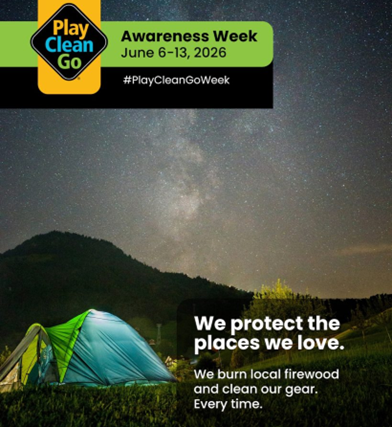
A lit-up tent with a star-filled sky behind it to promot PlayCleanGo Awareness Week.
Take action this June, and year-round, in protecting the places you love. The PlayCleanGo® campaign encourages everyone to take simple actions to prevent the spread of invasive species. The month of June includes PlayCleanGo® Awareness Week, which occurred last week, June 6–13. This year’s theme was “We Protect the Places We Love,” highlighting our shared responsibility to protect our natural resources and areas we love such as parks, trails, forests, and waterways for generations to come. There were some great educational webinars throughout the awareness week that will soon be available on the PlayCleanGo YouTube Channel.
As you continue to camp, hike, and explore this summer, be mindful of how invasive species can spread through various outdoor recreations.
Here are some things you can do:
-
Don’t move firewood! Buy it where you burn it, buy certified firewood, or gather on site when permitted.
- Stay on designated trails and clean your shoes, clothes, packs, and pets before and after exploring.
- Clean, drain, and dry your watercraft and angling equipment to stop qquatic hitchhikers!
- Before traveling to new areas, inspect and clean your trailers and vehicles (including off-road toys) with water or compressed air to remove mud, plant parts, and hidden pests.
- Clean your horse’s hooves and feed them weed-free certified hay before your adventure.
To learn more about PlayCleanGo® and how you can get more involved this year, visit PlayCleanGo.org.
_____________________________________
|
|
|
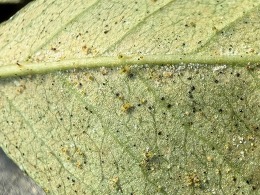
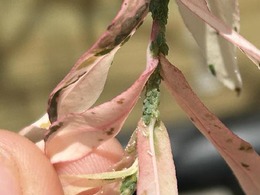
Two-spotted spider mites and eggs on rose in Columbia Co. | DATCP L. Meils
|
|
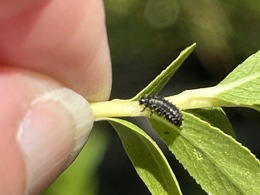
Imported willow leaf beetle larva on willow in Fond du Lac Co. | DATCP B. Sanneh
|
|
|
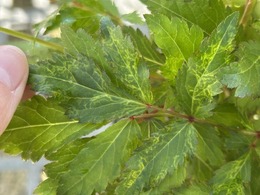
Virus-like symptoms on astilbe in Waukesha Co. | DATCP G. Meysembourg
|
|
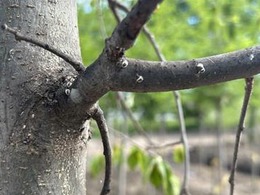
European elm scale on American elm in Milwaukee Co. | DATCP G. Meysembourg
|
|
|
Crown rust on fine line buckthorn in multiple WI counties | DATCP J. Oestreich
|
|
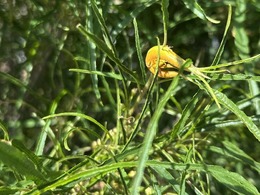
Aphids on dappled willow in Kenosha Co. | DATCP G. Meysembourg
|
|
|
_____________________________________
|
|
|
For more information about Wisconsin's Nursery and Christmas Tree Programs, visit DATCP's Nursery and Christmas Tree Program webpage.
Read past issues of What's Growing On?
If you haven't yet, please take this brief feedback survey for our monthly What's Growing On? e-newsletter. With this survey, we aim to measure your satisfaction regarding the format, frequency, and quality of the content provided. Please give us your most transparent feedback. The survey is anonymous.
For current counts during the growing season from our insect monitoring networks around the state, visit our Pest Survey webpage. To read articles on economically important plant pests affecting Wisconsin's field crops, fruits, and vegetables, read our Field Notes publication put out weekly during the growing season.
|
|
|
|
|