|
|
Another warm and dry week across Wisconsin promoted a rapid planting pace and emergence of summer crops. Above-normal temperatures prevailed, with daytime highs reaching the 70s and 80s, and parts of the state recording anomalies of up to 10 degrees above average. Appreciable rainfall (0.25 inch or more) for the week was limited to the west-central area, mainly south of Interstate 90/94. Otherwise, a nearly month-long dry spell has brought abnormally dry (DO) pre-drought conditions to parts of southern and northwestern Wisconsin. In the southeastern counties, topsoil moisture is currently short or very short for 64% of agricultural lands (USDA NASS).
Meanwhile, crop planting progress accelerated ahead of five-year averages and is approaching the finish line. Corn producers had planted 93% of the state’s corn by June 1 compared to the average of 89%, and 65% of the acreage had emerged. Eighty-nine percent of the 2026 soybean crop is now planted, four percentage points ahead of the 85% long-term average.
__________________________________
|
|
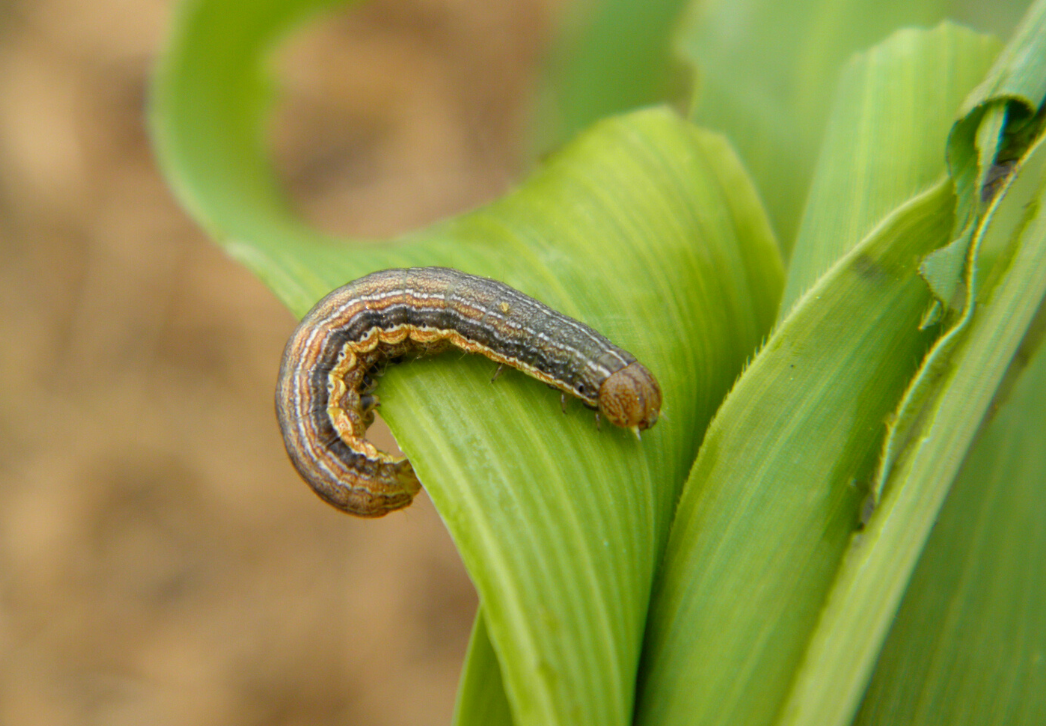
True armyworm larvae are beginning to migrate into corn field edge rows and should be detectable in taller fields by scouting for plants with irregular, ragged edges and frass. As a reminder, it is normal to see a few edge row plants with armyworm feeding. Counts must reach two or more armyworms (0.75 to 1.0 inch or smaller) per corn plant on 25% of the plants, or one worm per corn plant on 75% of the plants, to qualify for treatment. No significant infestations have been observed by DATCP as of June 4, but early to mid-June is a critical time to step up scouting outer corn rows and lodged areas of wheat fields for larvae. |
|
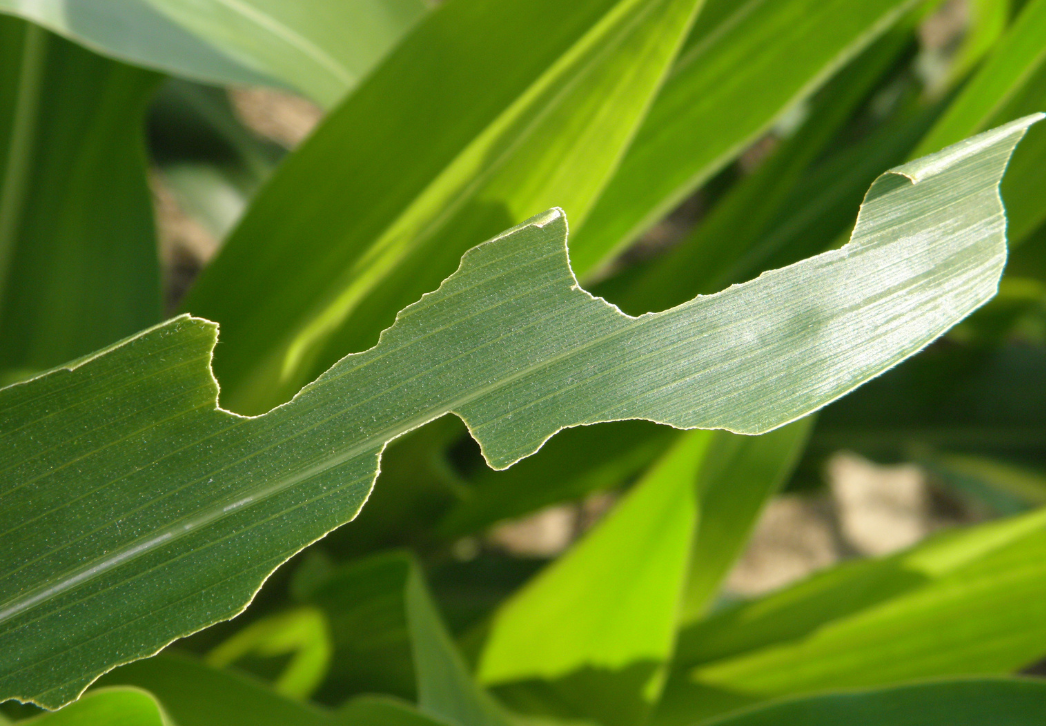 Typical armyworm leaf feeding | K. Hamilton
|
|
DATCP’s True Armyworm Network has completed week 10 of monitoring and the cumulative count is 9,981 moths in 61 traps, or 164 moths per trap average. Last year at this time, the average was 148 armyworm moths per trap. The lull in moth activity reported by cooperators over the past three to four weeks signals that most armyworms are now in the feeding larval stages rather than the mating adult stage. Activity in traps will pick up again by late June and the new round of moths, expected during weeks 12-14, will produce second-generation eggs. The late summer generation of armyworms will be even more critical to scout for to prevent July and early August infestations. |
|
 __________________________________
|
|
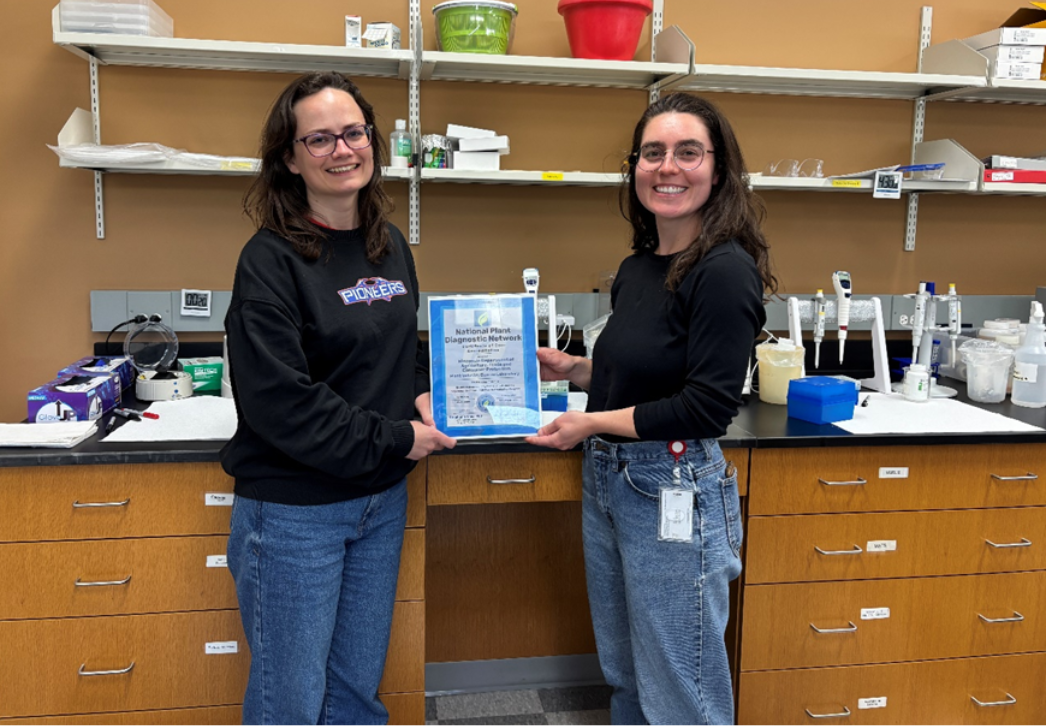
Did you know DATCP’s Plant Industry Bureau (PIB) has a nationally accredited laboratory? The PIB lab in Madison provides plant pest and disease diagnostic services to the bureau's programs and conducts early detection surveys for pests and diseases of economic and regulatory significance. This work supports the interstate and international plant trade and protects Wisconsin's agricultural and horticultural industries and native plants from invasive pests and pathogens.
Plant samples with insect damage or diseases caused by bacteria, fungi, nematodes, viruses, and other microorganisms are submitted to the lab by DATCP inspectors and survey specialists trained to recognize disease symptoms. Diagnostic methods including microscopy, culturing, enzyme-linked immunosorbent assay (ELISA), lateral flow device (LFD), polymerase chain reaction (PCR), recombinase polymerase amplification (RPA), and sequencing are used to identify pests and pathogens.
As a member laboratory in the National Plant Diagnostic Network (NPDN), the PIB lab represents Wisconsin as part of an extensive diagnostics system of labs throughout the United States. The NPDN system of more than 70 labs protects national plant health by providing accurate, rapid pest and disease identification and reporting. The lab officially earned accreditation by the NPDN on May 1, 2026. |
|
 __________________________________
|
|
Apple orchards in DATCP's pest monitoring network are reporting increased codling moth captures and the onset of flights for two other key pests. The spring obliquebanded leafroller (OBLR) and dogwood borer (DWB) flights began last week in a few southern Wisconsin locations, and several more trap sites recorded their first DWB and OBLR trap catches during the May 28-June 4 reporting period.
For obliquebanded leafroller, inspecting terminals for larvae over the next two to three weeks will help to determine the potential for problems later this season. Although there is no direct correlation between OBLR trap counts and larval populations, scouting is important since orchards that register even low counts (less than five moths per trap) can develop significant larval problems a few weeks after a flight has occurred. Control of OBLR is warranted for populations averaging three or more larvae per tree.
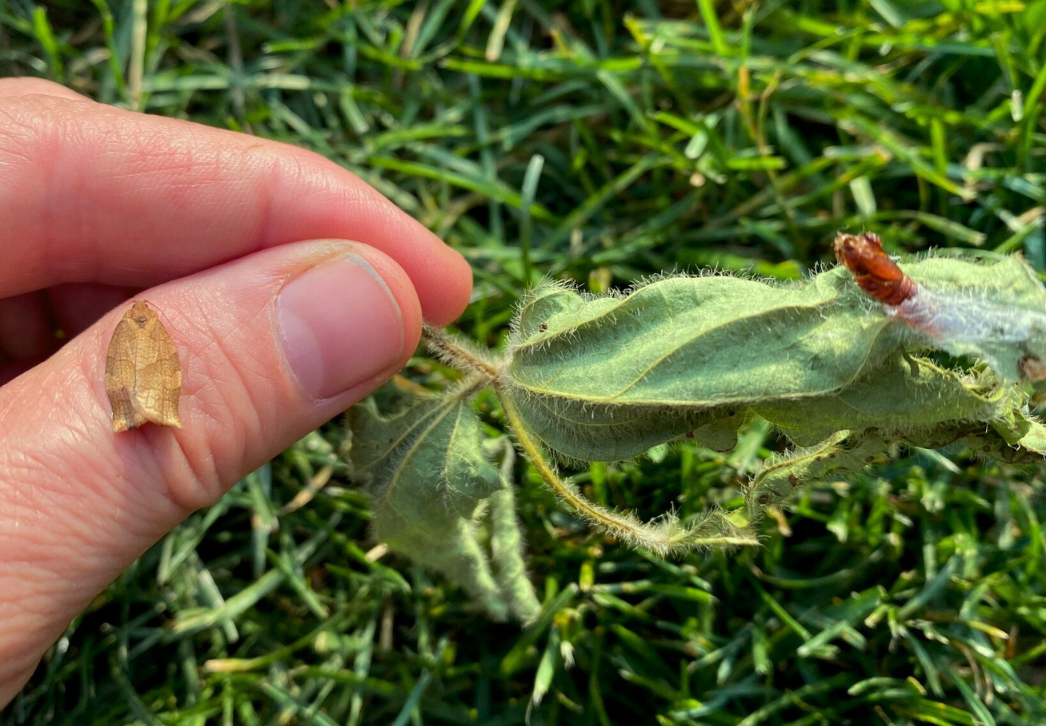
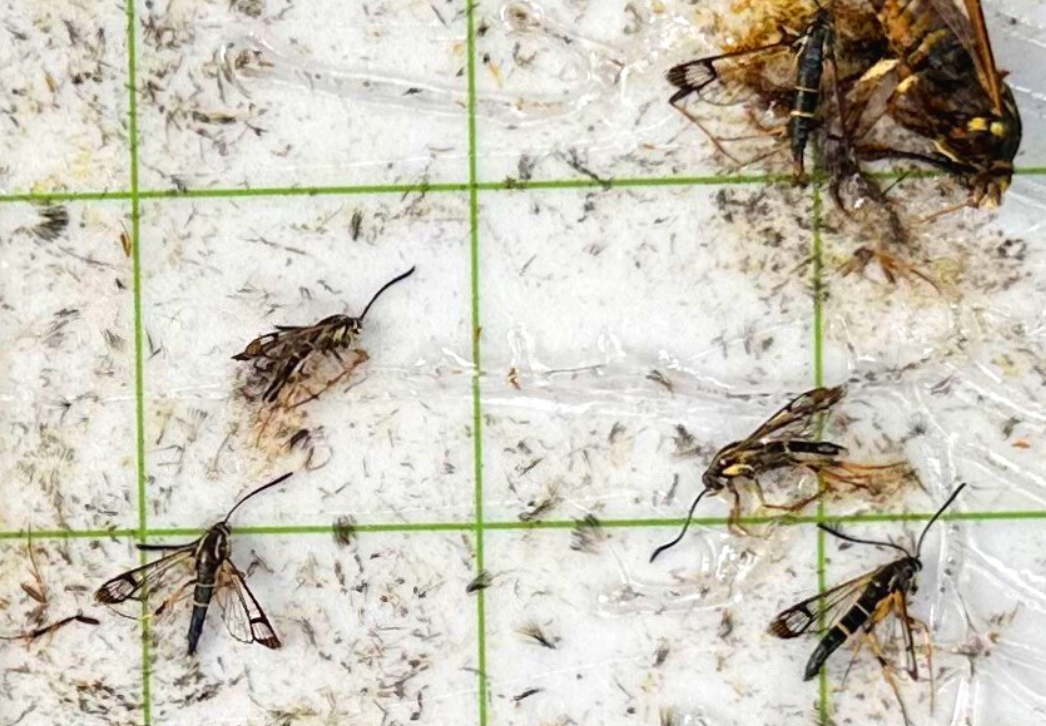
In the case of dogwood borer, trap counts do not indicate the need for control but instead suggest when to start scouting for evidence of larval feeding, such as frass around the graft union of trees. The correct height for traps is 3-4 feet above the ground. Scouting for this pest is most critical for orchards with new trees planted in the last five years. DATCP cooperators should be aware that the dogwood borer pheromone lure attracts several native clearwing moth species and accurate identification is important. In the photos below, the smaller specimens are male dogwood borers while the larger insects are non-targets. Male dogwood borers can be identified by the two bands on the abdomen (see enlarged second photo).
|
|
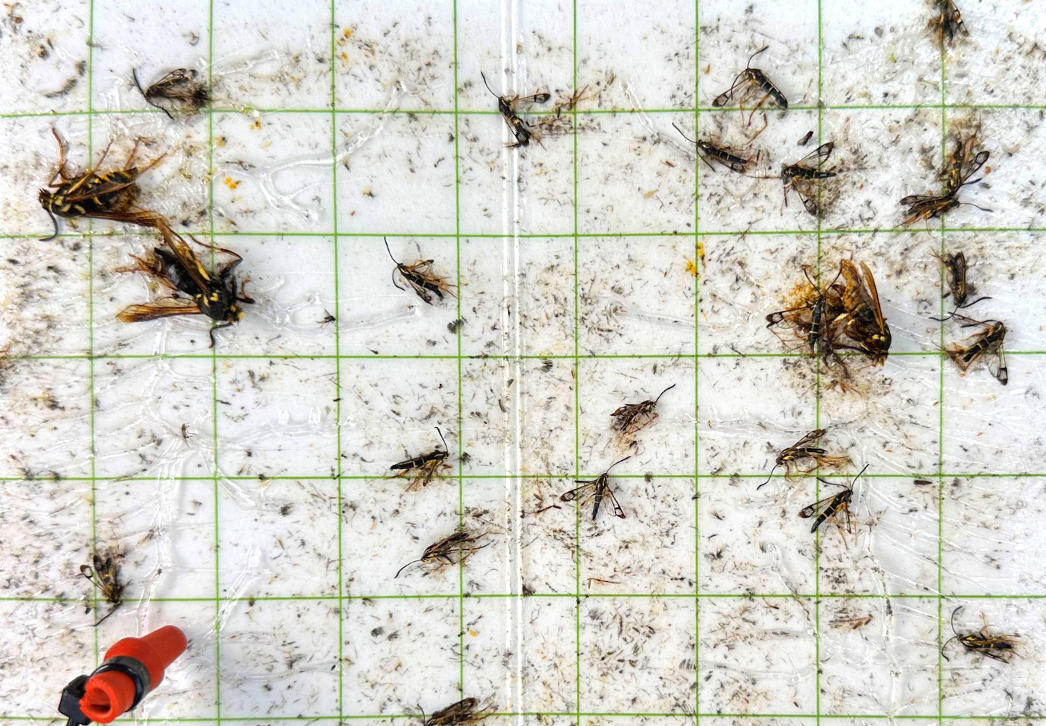 Dogwood borer males (smaller), Non-target (larger)
Laura Tisch Munchkey Apples
 Male dogwood borers have two bands on abdomen
Laura Tisch Munchkey Apples
|
|
|
Codling moth flights continued for the third week and have been fairly consistent due to warm evening temperatures and dry weather. Initial larvicide treatments will begin June 5-7 in southern Wisconsin locations that have accumulated 250 degree days (base temp 50 degrees Fahrenheit) since the biofix was set May 14-20. For the week ending June 2, 10 of 21 orchard sites reported high or economic counts of five to 23 moths (refer to codling moth map) and, overall, catches increased from the previous week.
Lastly, redbanded leafroller (RBLR) moth counts fell to an eight-week low at monitoring locations. The weekly total across all orchards was just 89 moths, down from the peak total of 1,103 moths May 7-13. The low number of moths appearing in traps means that the first RBLR flight has ended, and populations are primarily in the larval stages. The second moth flight is expected to begin by mid-June. Apple growers are reminded to refresh pheromone lures in advance of the second flight. With the exception of apple magot red ball traps which are set in late June, all five pheromone traps supplied by DATCP should now be up in cooperating orchards.
Maps for the five apple pests monitored by DATCP’s Apple Orchard Pest Trap Network at available at the links below:
|
|
__________________________________ |
|
|
|
|