|
|
Summer-like warmth with mostly dry conditions supported fieldwork and crop emergence in Wisconsin. Temperatures gradually increased during the last week of May and peaked in the upper 80s and lower 90s on May 27. The first alfalfa harvest advanced at a rapid clip, particularly in the southwest and south-central areas, where alfalfa weevil surveys found few unharvested fields left to sample. Meanwhile, corn planting reached 82 percent complete by Memorial Day, one percentage point behind last year but three points ahead of the average. Soybean planting was 75 percent complete, four points ahead of the long-term average of 71 percent.
Although soil moisture has been adequate this month following the wettest April on record in the state (since 1895), the latest U.S. Drought Monitor shows that abnormal dryness (DO) has set in across large swath of southern Wisconsin. Aside from areas in the north-central region where 1.5-2.0 inches of heavy rain on Wednesday caused localized flooding, soil moisture has declined with the recent overall dry pattern, and more rain will be needed soon to ensure uniform crop establishment and growth.
__________________________________
|
|
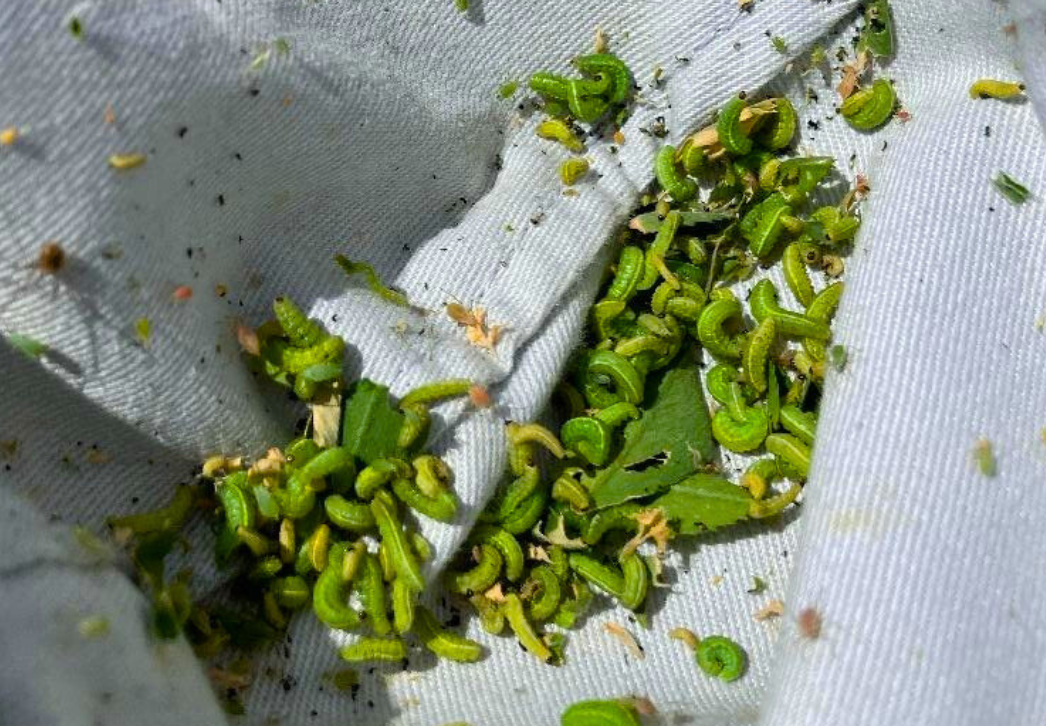
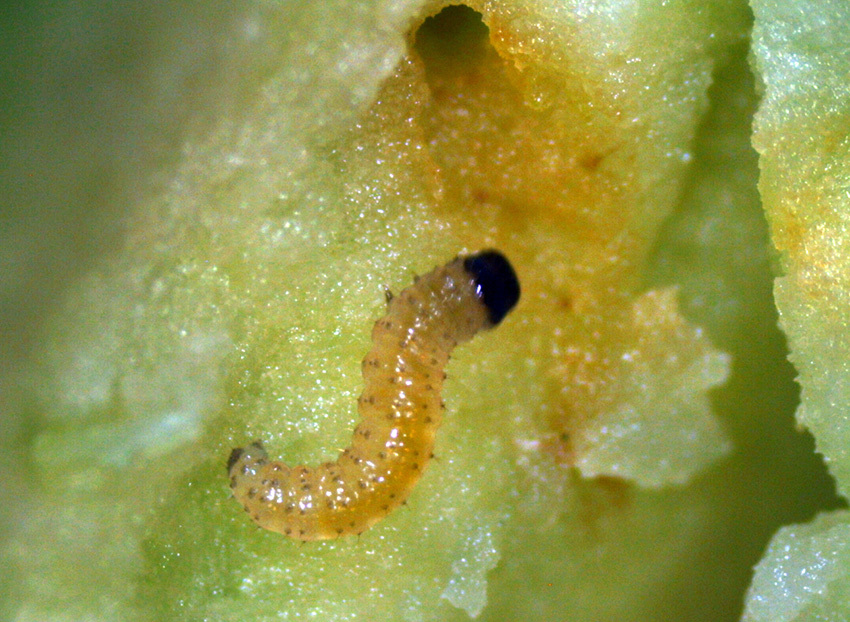
DATCP field specialists conducted spring survey work in first-crop alfalfa this week. The survey measures levels of a variety of early-season pests, with emphasis on alfalfa weevil leaf feeding damage. Random sampling of 56 alfalfa fields south of Highway 33 found light defoliation in 30 fields (53%) and moderate leaf feeding in 15 fields (27%). Heavy defoliation at or above the 40% threshold was observed in 11 of the fields (20%). Counts of larvae in the fields with economic defoliation ratings ranged from 2.4-7.2 per sweep and averaged 4.7 per sweep. The heaviest alfalfa weevil defoliation was found in Dane, Grant, Green, Lafayette, and Rock counties during the May 22-28 sampling period. |
|
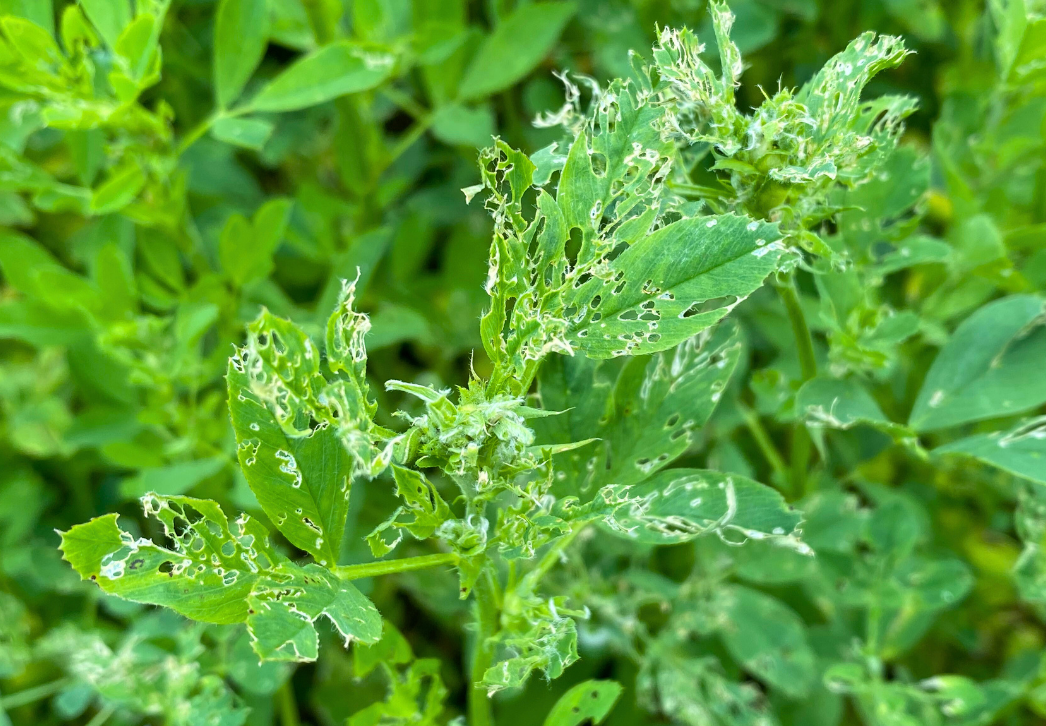 Alfalfa weevil leaf feeding | K. Hamilton DATCP
|
|
|
Across the lower one-third of the state where the harvest of first-crop alfalfa is approaching the halfway point (USDA NASS), the alfalfa weevil threat will subside as remaining acreage is cut by early June. Alfalfa regrowth should be checked for signs of weevil injury about five days after harvest and until new growth of the second crop is established. The economic threshold for regrowth is reached if 50% of new stems or crown buds show damage and weevil larvae are still actively feeding in the field.
In contrast, the alfalfa weevil feeding period is entering the most damaging phase in central and northern Wisconsin fields. Scouting for alfalfa weevil larvae and leaf tip feeding should be prioritized for uncut alfalfa north of Highway 21 in the week ahead.
|
|
 __________________________________
|
|
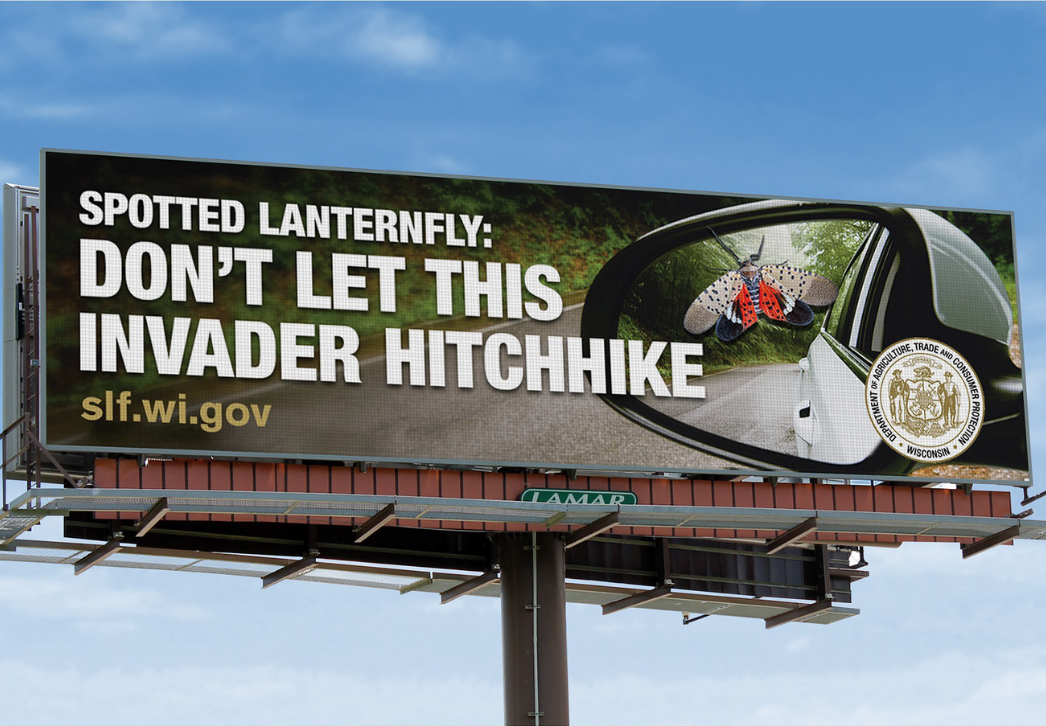
As the summer tourism season officially begins, DATCP’s Pest Survey Program is reminding travelers that a variety of invasive pests are looking to hitch a ride on firewood, in potted plants, with outdoor equipment and gear, and even in or on vehicles. One hitchhiking insect at high risk of invading Wisconsin is the spotted lanternfly (SLF). DATCP has anticipated the introduction of SLF for several years and has taken steps to keep it out of the state with outreach (including the billboard above) and early detection surveys in urban and industrial areas of southeastern Wisconsin.
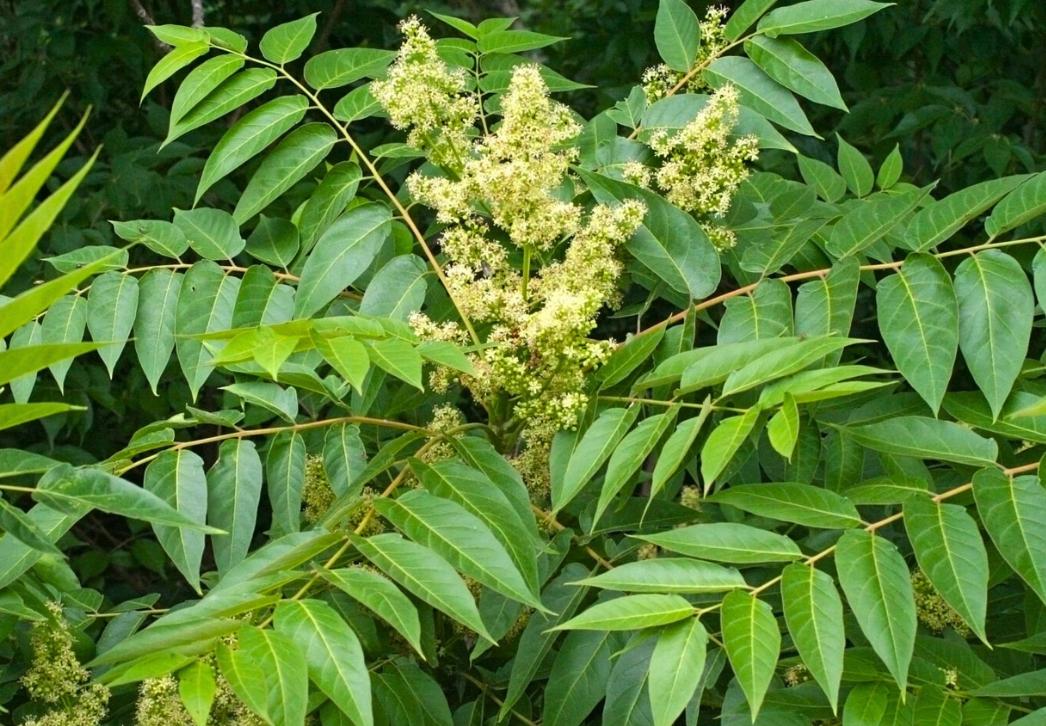
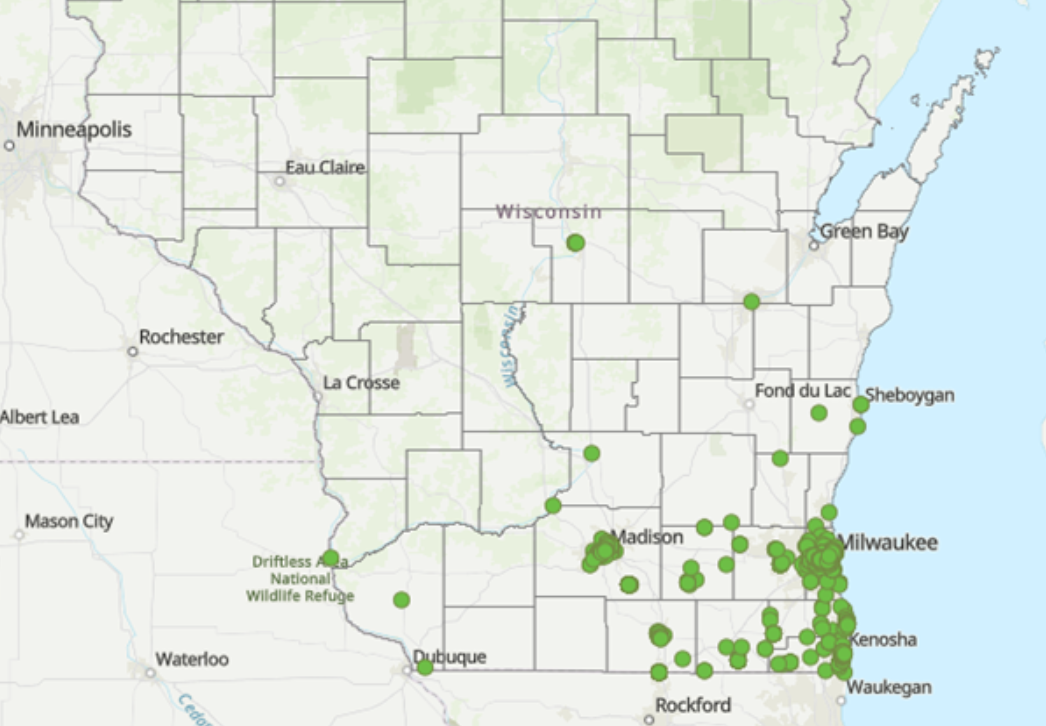
Mapping tree-of-heaven sites is a key part of DATCP’s SLF detection strategy. Tree-of-heaven (Ailanthus altissima) is the preferred plant host of SLF and, for now, this invasive tree is primarily found in southeastern Wisconsin. Records for tree-of-heaven are most concentrated in the Kenosha, Madison, Milwaukee, and Racine areas. While the lanternflies can feed on over 70 plant species, tree-of-heaven supports higher survival and egg production than other hosts. Where tree-of-heaven occurs, SLF is also more likely to establish. |
|
Currently, DATCP’s tree-of-heaven distribution map includes 1,006 confirmed locations in the area of the state south of Manitowoc County and east of Dane County (shown as green circles in the map below). DATCP field staff added 504 new sites in 2025 alone. Although most populations are in southeastern Wisconsin, some sites exist as far north as Portage County.
A comprehensive tree-of-heaven map will help inform future SLF survey planning when this damaging pest is detected in Wisconsin. To date, DATCP has intercepted dead SLF specimens several times, but no live SLF or active infestations have been found in the state. Public awareness is critical to finding SLF before it invades and gains a foothold. Readers who suspect SLF are asked to snap a photo and send it to DATCP’s SLF reporting form. Sightings of tree-of-heaven can be reported to the EDDMapS app. For instructions on using EDDMapS, visit the Wisconsin First Detector Network and click on “I want to report invasive species.” |
|
 __________________________________
|
|
|
Spring codling moth flights continued for the second week in Wisconsin apple orchards. Eleven of 21 reporting orchards registered moth catches May 22-28, with six sites reporting high or economic counts of five to 12 moths (refer to codling moth map). Most southern and central monitoring locations have documented a sustained flight and biofix as of May 28.
Apple orchards with a history of high codling moth pressure that register a large first flight of more than 10 moths per week are candidates for a first larvicide application at 250 degree days (base 50°F) from the biofix. At this time of year, 250 degree days are equal to about 14-21 calendar days, depending on location. For example, orchards that set a biofix on May 20 will likely begin applying first larvicides sometime between June 5 and 14.
Monitoring sites that have not yet set a biofix should keep up with daily trap checks until five or more moths are caught cumulatively across traps or moths are captured on consecutive days (indicating a sustained flight). Codling moth emergence and flights are expected to increase next week in central and northern Wisconsin.
In addition to the map summarizing this week's codling moth trap counts, maps for the other key apple pests monitored by DATCP’s Apple Orchard Pest Trap Network at the links below:
|
|
__________________________________ |
|
|
|