|
|
Brisk, dry, and breezy conditions prevailed in Wisconsin during the first week of May. Temperatures fell abruptly following a cold front May 4, and highs reached only the 40s to upper 50s while lows dropped below freezing on several nights. In addition to the widespread threat of frost, an elevated fire risk due to low relative humidity and gusty westerly-northwesterly wind was a concern for much of the state.
Crop producers made incremental progress on spring field preparations and planting, with tillage approximately 35% complete statewide (up from 17% last week). Limited corn and soybean planting was reported in the southern counties, while seeding of oats gained momentum and is currently 29% complete—six percentage points behind last year and 12 points behind the 41% five-year average.
In addition to curbing fieldwork, the abnormally cold weather put the brakes on plant development and reduced insect activity across all the DATCP trap networks.
__________________________________
|
|
|
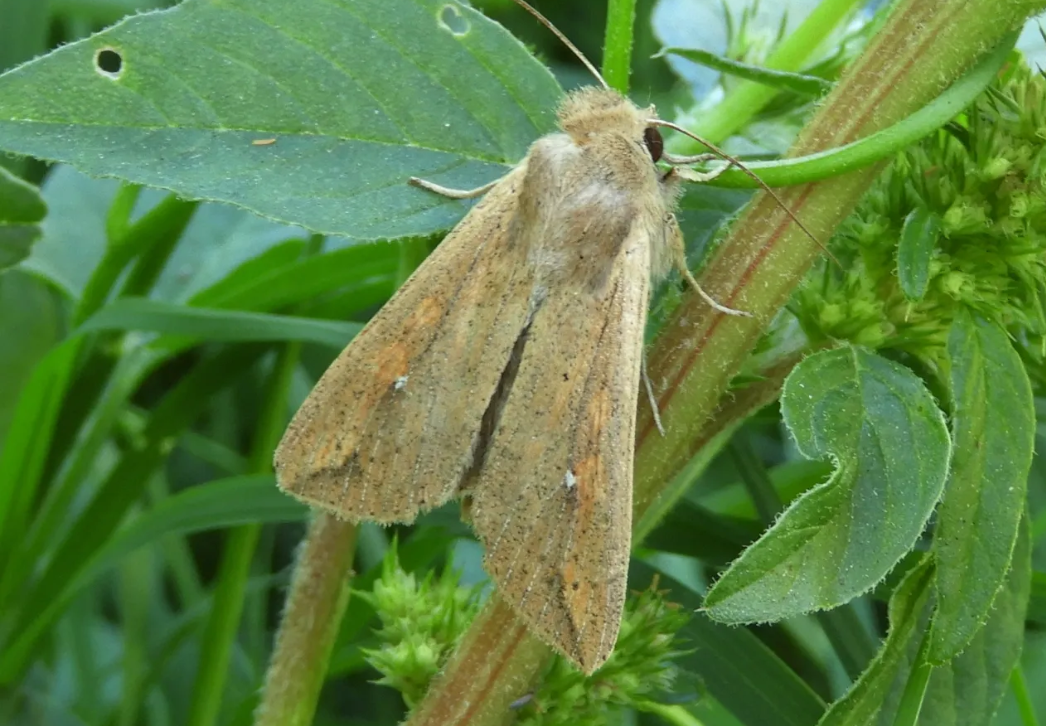
This week’s temperature drop was matched by a decline in true armyworm trap counts. DATCP’s True Armyworm Trap Network documented a marked decrease in moth flights. For the April 30-May 6 reporting period, the total count was 1,088 moths in 42 traps (average of 26 per trap), which is considerably lower than last week’s 3,538 moths (average of 80 per trap). The individual high trap count at Brodhead in Green County fell from 550 moths to 208 moths, as did the number of sites with catches of 100 or more moths. Only three trapping sites caught more than 100 moths this week in comparison to nine sites last week.
Despite the temporary slow-down, the 2026 true armyworm migration has brought high trap counts to several Wisconsin locations. This spring’s cumulative count of 8,274 moths in 59 traps (average of 140 per trap) so far exceeds the 6,537 moths in 53 traps (average of 123 per trap) recorded by the network at the same time last season.
Although these heavy flights rarely produce damaging first-generation larval armyworm infestations in June, they can lay the groundwork for second-generation armyworm problems in July. This was demonstrated in 2025 when heavy armyworm outbreaks developed in western Wisconsin. At a minimum, this spring’s trap counts are a red flag to continue following armyworm flight reports and to plan regular field checks starting next month. Scouting for larvae in small grains, corn, and pastures approximately three weeks after a large flight is the only decisive way to know if armyworms are an active threat in fields.
 __________________________________
|
|
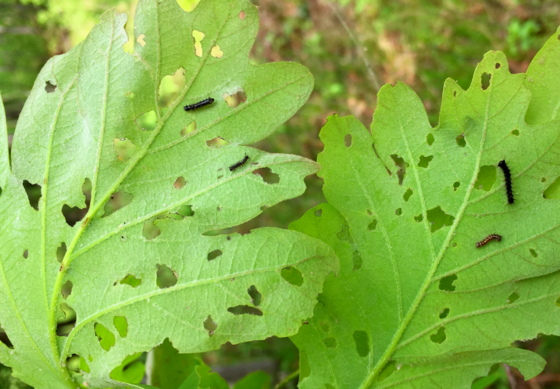
Preparations are underway for the annual spongy moth aerial spray season in western Wisconsin. DATCP precisely times applications using insect and tree phenology models, site observations, and BioSIM software to project egg hatch and when larvae will reach the most vulnerable developmental stages for control measures. Egg hatch was observed in Dane County on April 22 this spring, and spongy moth development forecasts for 2026 are about 10 days ahead of those in 2025 and the 30-year averages.
DATCP plans to treat sites in eight western Wisconsin counties for spongy moth this year using the organic treatments Foray® 48B and SPLAT GM-O™. Control efforts will be focused in areas where populations are still isolated and low, or starting to build. The following counties are scheduled for aerial treatments: Barron, Buffalo, Dunn, Grant, Lafayette, Pepin, Trempealeau, and Washburn. Maps of treatment areas are available at SMAerialSpray.wi.gov.
Annual aerial treatments are part of the National Slow the Spread Program, an ongoing, long-term effort to slow the spread of spongy moth and delay the impacts associated with outbreaks. Wisconsin experienced its worst spongy moth outbreak on record in 2023 and 2024, with defoliation affecting nearly 373,000 and 334,000 acres, respectively. Populations crashed in 2025, and a continued downward trajectory is expected for 2026. DATCP’s spongy moth treatment program remains important for protecting the state’s trees and forests from defoliation.
To receive information on treatment plans, visit SMAerialSpray.wi.gov; sign up for email updates; call the hotline at (800) 642-6684; or follow DATCP on Facebook, Instagram, and X. |
|
__________________________________ |
|
Development of black cutworm larvae has slowed with the cold weather, but growth and feeding will resume once seasonable temperatures return. The opening of the peak seedling corn damage window in Wisconsin is expected during the last two weeks of May.
Regional cutting dates are determined by calculating 300 gdds from the first intense moth captures in traps (also referred to as the “biofix”), which reflect the heat units required for black cutworm to reach the damaging fourth-instar larval stage. This spring, the earliest intense captures were recorded on April 14. Trap locations have accumulated approximately 100-175 degree days over the last three weeks, and the warmest southwestern sites will surpass the 300-degree-day-threshold by May 19. Other southern and central Wisconsin locations will accrue degree days more gradually and the peak corn cutting widow is forecast to open between May 21 and 27.
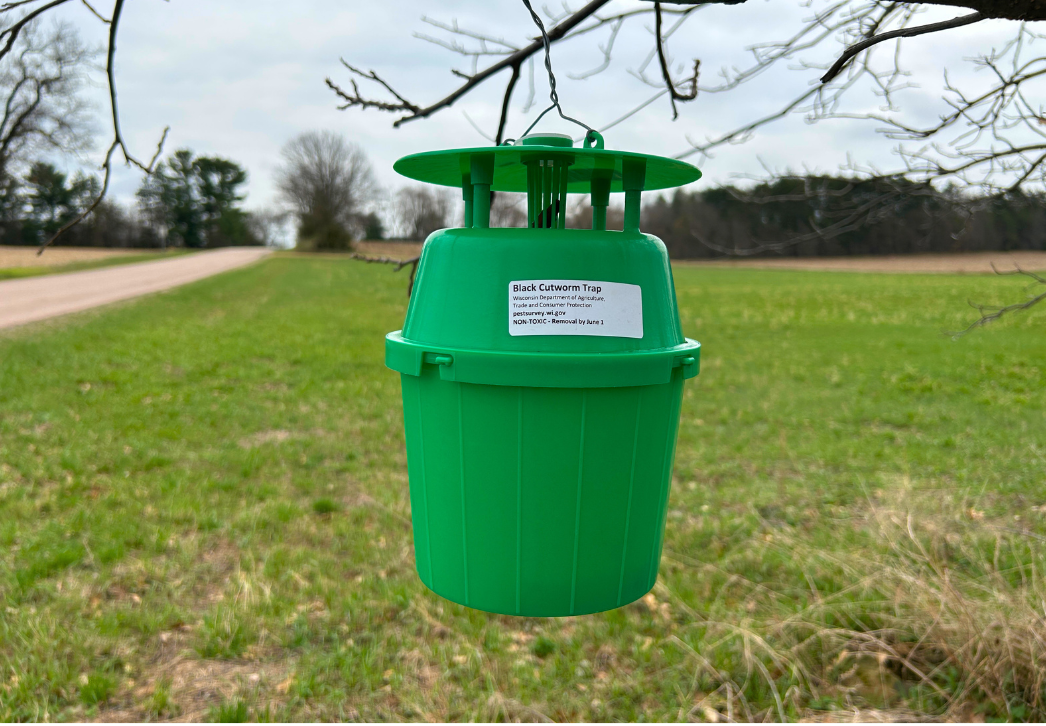
The Black Cutworm Trap Network has now completed week six of the 11-week trapping survey (March 25 to June 11). During the monitoring period ending May 6, the network’s 99 traps collected 542 moths, a steep decline from 1,336 moths the previous week. The cumulative count of 2,637 moths is similar to the 2,096 moths captured by this time in 2025. |
|
__________________________________ |
|
|
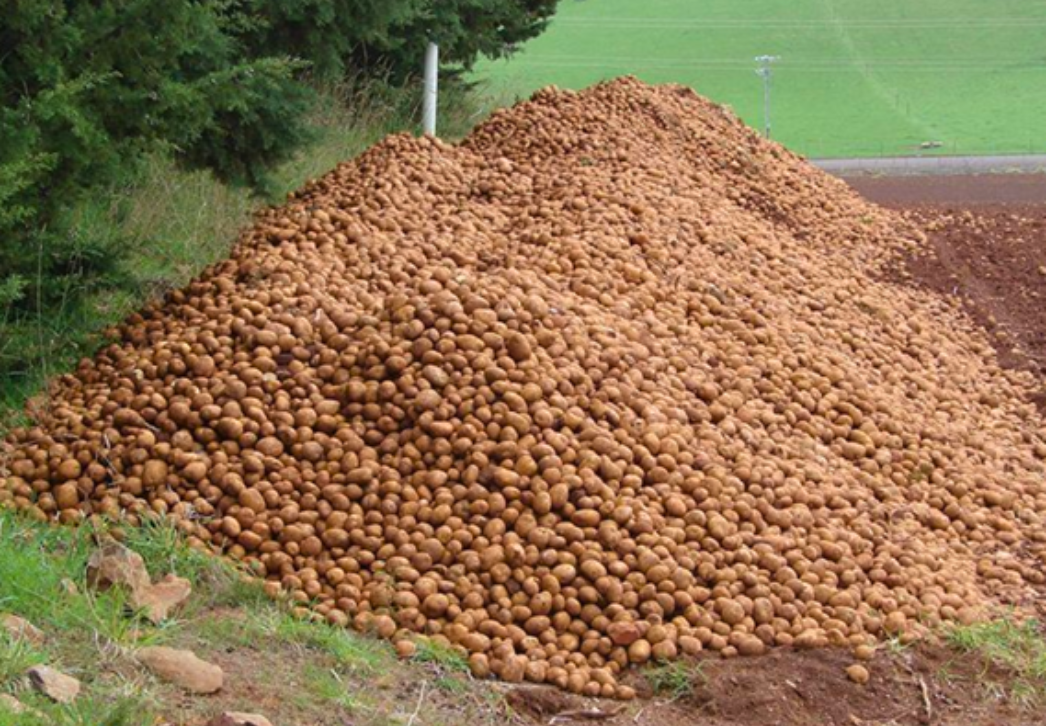
Wisconsin potato producers must take steps to dispose of potato cull piles by May 20, 2026, as per ATCP 21.15 Wis. Admin. Code. Cull piles include waste piles of harvested potatoes, seed cutting slivers and waste, storage remnants, and sweepings. The purpose of this regulation is to prevent overwintered tubers from sprouting volunteer plants that can serve as an early-season source of Phytophthora infestans inoculum, the causal agent of late blight. Compliant options for cull pile disposal include:
- Feeding potatoes to livestock so that they are completely consumed by May 20.
- Spreading on fields and incorporating into the soil.
- Depositing the cull potatoes in a licensed landfill with the written permission of the landfill operator.
- Another method by which the Wisconsin Department of Agriculture, Trade and Consumer Protection (DATCP) approves in writing.
Growers seeking additional information should contact DATCP Northern Field Services Unit Supervisor Jennifer Oestreich at (715) 701-1375 or by email at Jennifer.Oestreich@Wisconsin.gov.
|
|
__________________________________ |
|
|
|
|