|
|
April ended with widespread showers and cool weather, limiting opportunity for spring fieldwork in Wisconsin. Although above normal temperatures allowed for corn and soybean planting to begin mid-month in drier areas of the state, few acres have been sown and progress is currently behind the five-year average pace. In contrast, plant and insect phenology are one to two weeks ahead of last year and the long-term average. As an example, the 300 degree days required for alfalfa weevil egg hatch were surpassed near Madison on April 27 this season, 15 calendar days earlier than the May 12 hatch date in 2025. In orchards, mild, rainy spring weather expedited the bloom period and early apple tree cultivars in southern Wisconsin are now in the petal fall stage.
Pest Survey staff spent the week checking survey traps and preparing for the upcoming spongy moth treatment program. This first Field Notes issue of the new growing season features summaries from the black cutworm and true armyworm trap networks, along with updates on insect activity in apple orchards throughout the state and surveys planned for 2026.
__________________________________
|
|
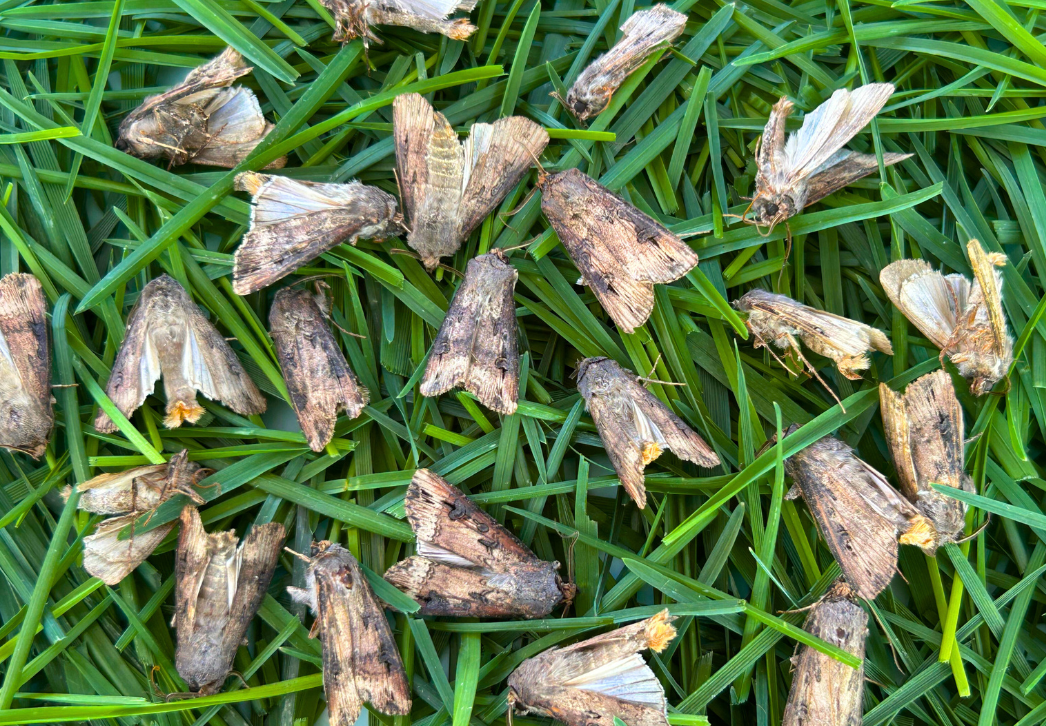
Ahead of spring corn planting, DATCP’s Pest Survey Program and many volunteers have been tracking the northward migration of black cutworm and true armyworm moths into Wisconsin using pheromone traps. The annual trap networks include 151 traps supported by 47 cooperators, including agronomists, crop consultants, farmers, UW-Extension specialists, and DATCP field staff. As migratory moths continue arriving in the state, the traps are supplying data on local moth flights that will be useful in forecasting optimal scouting windows next month.
As of April 29, the black cutworm network has collected a cumulative total of 2,085 moths in 93 traps, or an average of 21 per trap. Thirty-six of the trap sites have reported intense flights (i.e., a biofix) and a forecast of the peak black cutworm seedling corn damage window for Wisconsin will be issued May 7. True armyworm network traps have registered larger flights this month, which is normal and expected for this pest. Five trap sites reported 250 or more moths in the past week and the highest individual catch was 550 moths at Brodhead in Green County. The cumulative total true armyworm count is 7,173 moths in 58 traps as of April 29, or an average of 124 per trap.
While black cutworm trap counts can confirm a biofix (or intense flight) to start counting degree days until a peak seeding corn damage window, true armyworm traps provide only general information on moth arrival and flight trends, but there is no specific trap catch threshold for true armyworm that corresponds to the onset of field damage or predicts an armyworm outbreak. In addition, heavy armyworm and black cutworm flights do not inevitably lead to damaging larval populations. Last season’s astonishing July armyworm outbreaks will not influence this season’s armyworm outlook since this pest does not overwinter in Wisconsin.
Current trap network maps and weekly moth count data tables are available on DATCP’s Crop Pest Trap Networks web page (note that links to the tables are below the six pest maps). The maps and data tables will be updated each Thursday afternoon throughout the growing season. Brief synopses of the week’s trap network results will be published in issues of Field Notes. Please review DATCP’s maps, together with the Great Lakes and Maritimes Pest Monitoring Network and Corn ipmPipe maps, for a more complete picture of regional black cutworm and true armyworm moth flights this spring. |
|
__________________________________ |
|
Overwintered alfalfa weevil adults are resuming activity much earlier than in 2025 and the 10-day forecast calls for the start of spring egg laying in southern Wisconsin alfalfa fields. Minimum winter temperatures were not low enough to significantly reduce adult weevil winter survival, and it will be important to plan for sampling first-crop alfalfa in May. Based on Wisconet two-inch soil temperature data, adult weevils protected in alfalfa stubble or beneath leaf debris were probably not exposed to lethal cold temperatures below the 13°F threshold for this insect, even during the most intense cold period January 22-25.
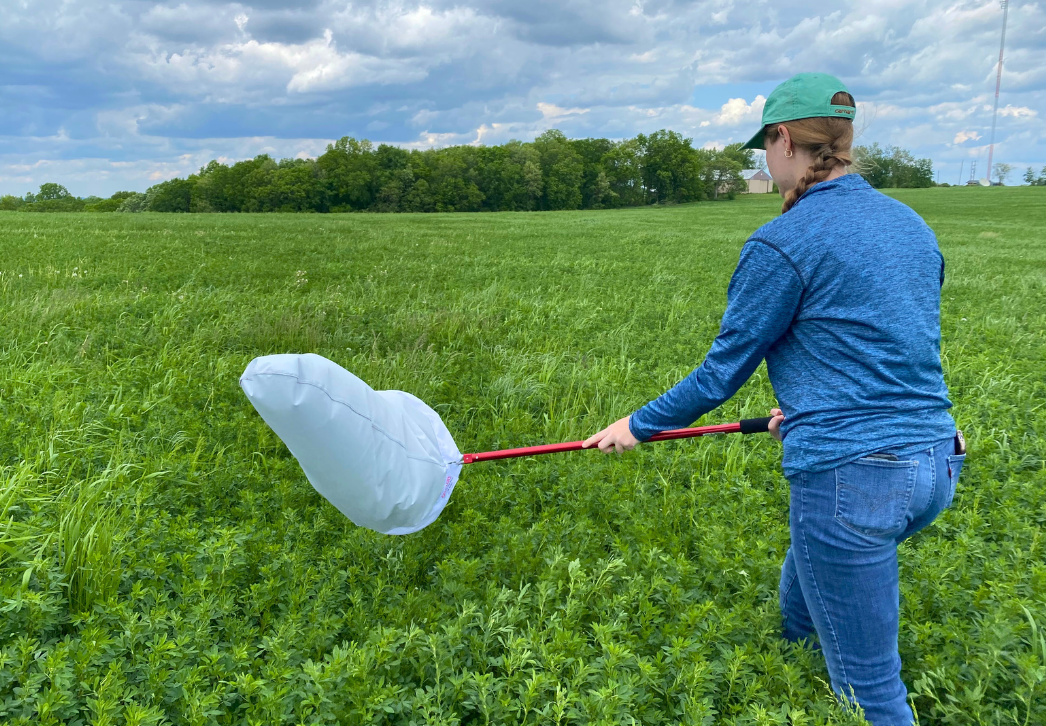
DATCP’s alfalfa surveys are scheduled to begin the week of May 10-16 and crop advisors should likewise start checking fields for weevil larvae at that time, or as 300 degree days are reached across the state (sine base 48°F calculation method). The earliest larvae are likely emerging in Grant County eastward to Rock County. A map showing current alfalfa weevil degree day accumulations is available on the UW-Extension Vegetable Disease and Insect Forecasting Network (VDIFN) site. |
|
__________________________________ |
|
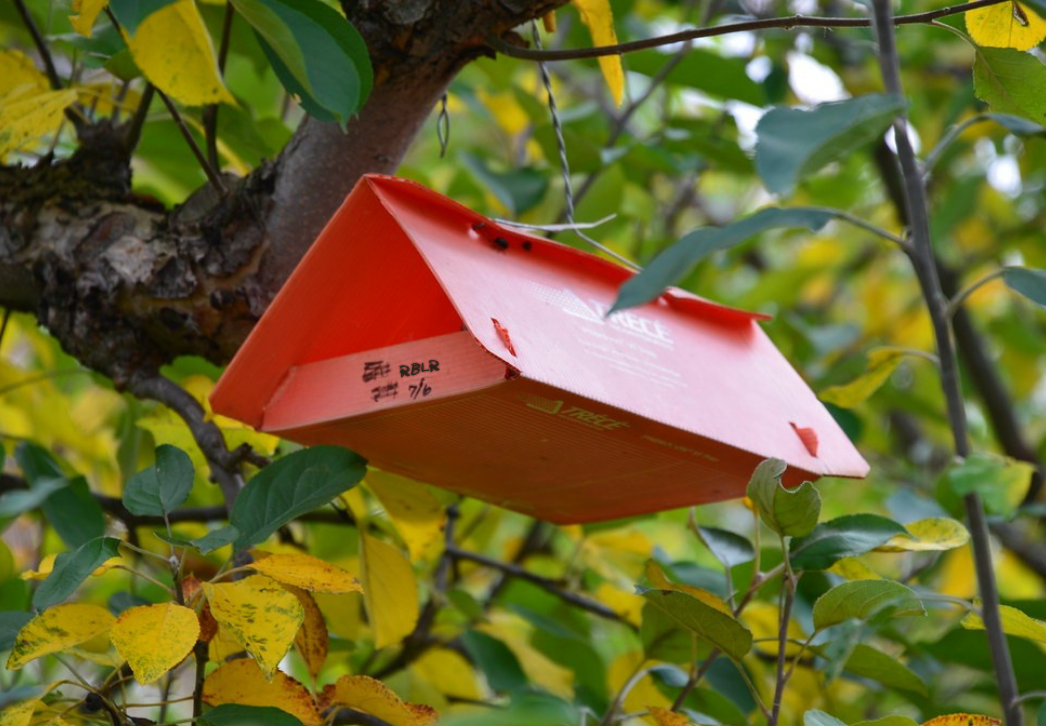
Above normal April temperatures roused the earliest spring orchard pests from overwintering sites, including moths in the green fruitworm group, redbanded leafroller, and spotted tentiform leafminer, all of which routinely appear during the pre-bloom period. For DATCP’s apple pest cooperator network, represented by 27 orchards from Burlington to Bayfield, insect monitoring started two weeks ago with the placement of redbanded leafroller (RBLR) traps. The RBLR pheromone trap is the first of six traps growers will set in their orchards this season to provide data on pest timing and enable more precise management.
The RBLR overwinters as a pupa in leaves on the orchard floor and moths appear in traps at the green tip stage of bud development. The first reported RBLR capture of 2026 was on April 7 and weekly counts have so far ranged widely from 3-206 moths per trap.
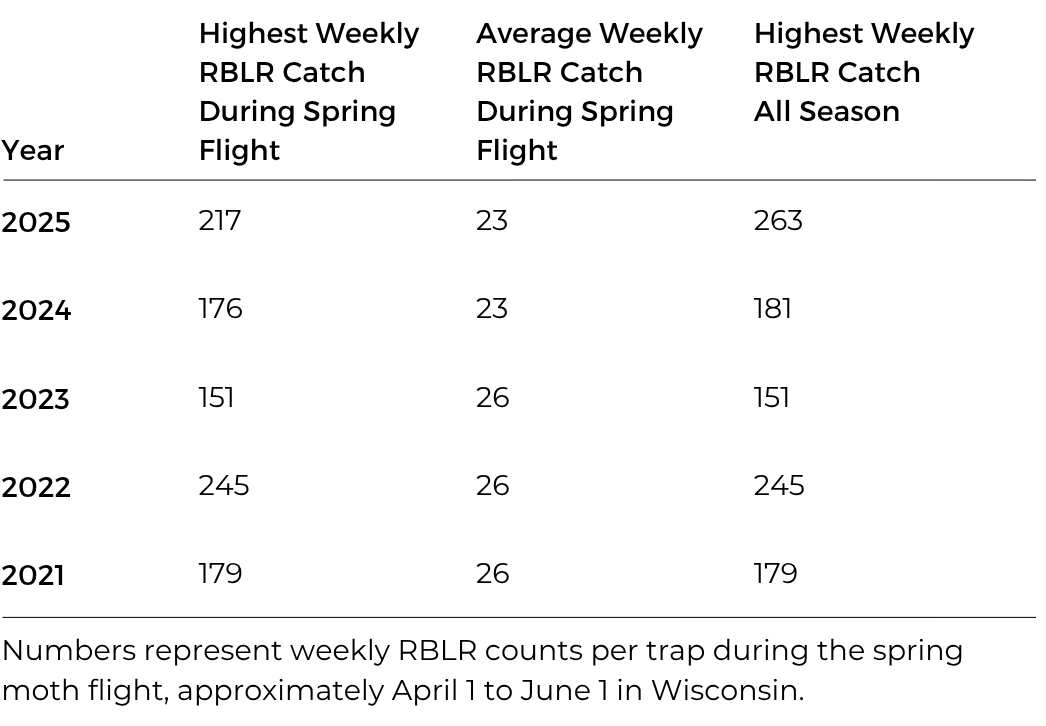
Apple growers new to trapping RBLR and other insects in their orchard often ask, “what constitutes a typical versus a high RBLR catch?” Five years of DATCP trap data (refer to 2021-2025 table below) show that maximum spring RBLR catches have reached 151-245 moths per trap per week in reporting orchards, although the majority of orchards usually see much lower activity. The mean spring RBLR catch across all orchard sites has been remarkably consistent year to year at 23-26 moths per trap per week. |
|
The utility in monitoring RBLR traps is to determine the start, peak, and end of each of the three flights that occur annually in Wisconsin orchards. A peak or maximum catch signals to begin scouting for larvae in folded leaves. For RBLR, the spring flight peaks at the tight cluster and pink stages, and peak egg hatch coincides with petal fall.
Trap counts of RBLR and five other economically important insects will be posted on DATCP’s Apple Orchard Pests page each Thursday from today through August 31. Thank you to the dedicated apple growers who have returned for another season of documenting insect activity in their orchards and contributing data to our program. |
|
__________________________________ |
|
|
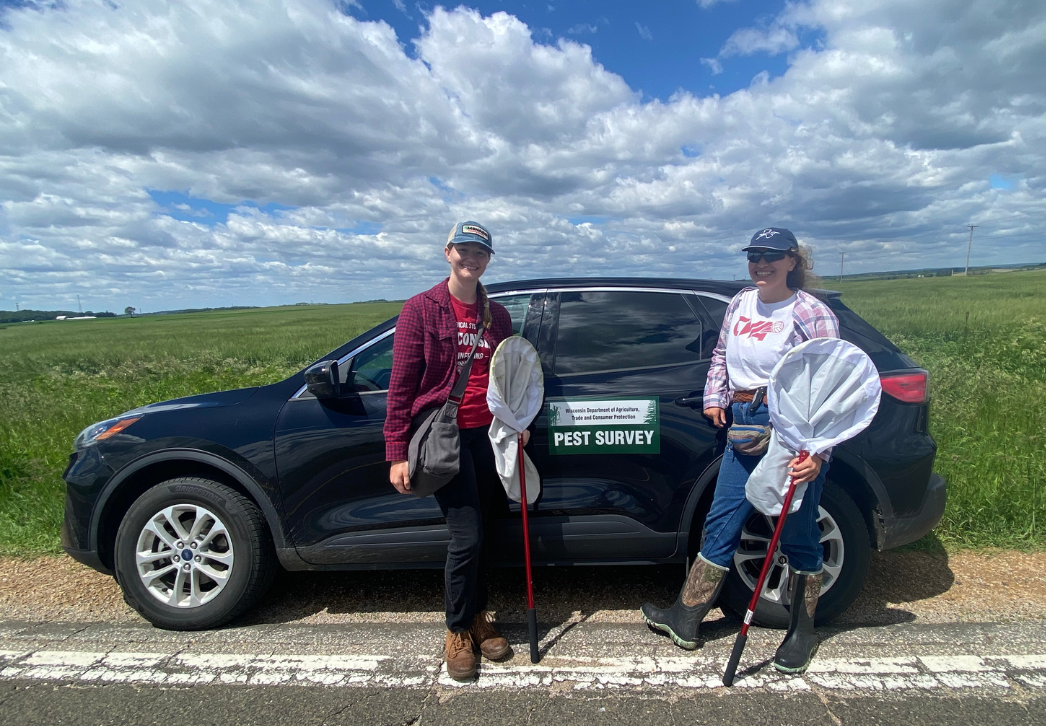
For the 2026 growing season, DATCP’s Pest Survey Program will continue its long-term monitoring of major crop pests, with trapping activities and field sampling scheduled from late March through September. Volunteer cooperators and staff are using pheromone, black light, and Hartstack traps to track key species, providing data to help farmers and agricultural professionals make scouting and treatment decisions. In addition, program specialists will sample hundreds of crop fields across the state to evaluate pest pressure. DATCP is also conducting early detection surveys for several high-priority forest pests not yet found in the state. Below is a summary of surveys planned for the season ahead.
Pest Survey Schedule and Target Species for 2026:
-
March-April: Pest monitoring begins with the apple orchard, black cutworm, and true armyworm cooperator networks. Alfalfa surveys start as new growth reaches 8-12 inches tall.
-
May-June: Sampling alfalfa continues in May, and corn and wheat surveys begin in June. Cooperator network transitions to western bean cutworm trapping by mid-June. Detection work for forest pest targets (i.e., bark beetle, box tree moth, spongy moth, wood-boring beetle trapping) also starts.
-
July-August: Focus shifts to corn and soybean fieldwork, including annual surveys for corn rootworm beetle and soybean aphids. Cooperator networks concentrate on corn earworm, western bean cutworm, and fall armyworm. Forest pest surveys target spotted lanternfly, Asian longhorned beetle, and beech leaf disease, along with ongoing trapping for non-native bark beetles and wood-boring beetles.
-
September: Fall European corn borer and Bt corn resistance survey gets underway. Trap network attention turns to tracking late-season migration of corn earworm and fall armyworm moths. Visual surveys for spotted lanternfly, Asian longhorned beetle, and beech leaf disease conclude. Final trap samples are collected and traps are removed from sites by month’s end.
In all, the program will conduct surveys for 21 crop pests and 17 forest pests in 2026, plus collect data on over 50 common insects and diseases found in crop fields. Follow weekly issues of Field Notes for pest forecasts, surveys results, and updates on new pest detections.
|
|
__________________________________ |
|
|
|
|