|
|
Dear Wisconsin honey bee and pollinator enthusiasts:
Cheers to the start of another bee season! We hope you are as excited to start seeing dandelions, Dutchman's breeches, and spring beauty bloom as we are. With the joys of new blooms, bees, and beginnings, we hope this quarterly update from the Wisconsin Department of Agriculture, Trade and Consumer Protection’s (DATCP) Apiary Program finds you and your family happy and healthy. This newsletter shares seasonal news, resources, and reminders to support apiary and pollinator health. If there is a topic you would like us to cover in a future issue, please contact us at DATCPapiary@wisconsin.gov.
 |
|
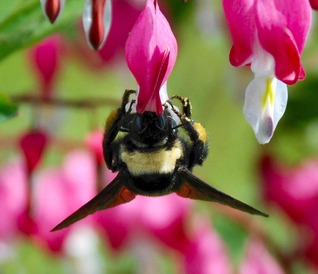
Community gardens bring people together while creating spaces that support local food production, pollinators, and healthier communities. During Community Garden Week (April 6-12), take time to celebrate the gardeners, volunteers, and organizations that help these spaces grow and thrive. |
Consider visiting a local garden, volunteering, or planting some pollinator-friendly flowers in your own space! Planting diverse flowers, providing blooms throughout the season, and reducing pesticide use all help ensure bees and other pollinators have the resources to thrive. Check out the links below to help choose flowering plants that will work best in your community.
Pollinator Planting Resources (tool)
Native Bees Habitat Pocket Guide for the Great Lakes Region.
Wisconsin Pollinator Protection Plan BMPs to Protect Pollinators: Garden and Lawns
Want to keep the community gardening spirit alive after early April? Join Johnson's Nursery, the Wisconsin Department of Natural Resources, and the Friends of Lakeshore State Park for the Monarch Flyway event on June 13 from 10 a.m. to 2 p.m. in the heart of downtown Milwaukee. There, you can help plant 2,000 monarch-favorite native perennials in the existing prairie at Lakeshore State Park. This effort will rapidly enhance the ecosystem and make Lakeshore an even greater destination for witnessing monarch migration and other native insects. Once established, these native plant species will potentially attract hundreds of monarchs at a time, creating excellent viewing and educational opportunities. The goal is for this to be one of the largest monarch- focused planting events in the country!
Photo by Timothy Boyle
|
|
|
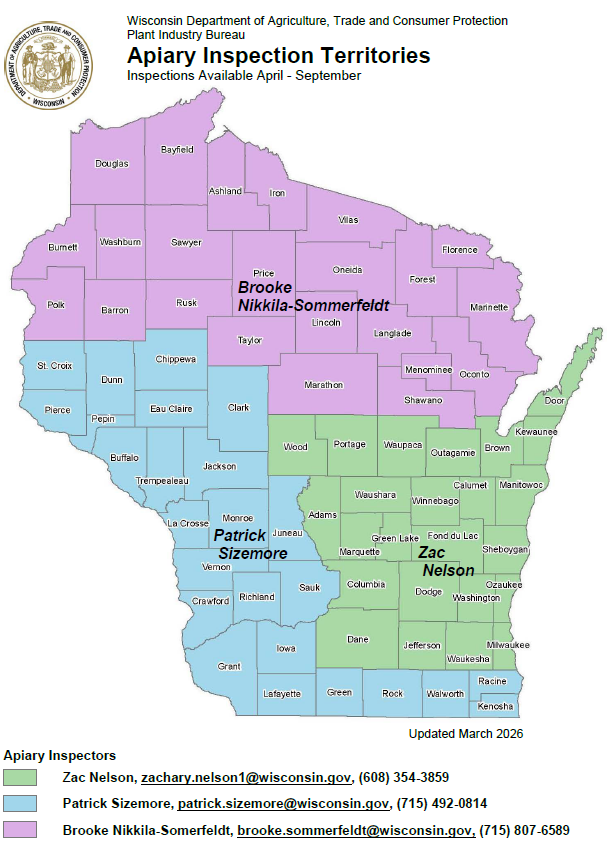
Wisconsin apiary staff are eager to provide inspection services to beekeepers May through October. If you would like to request a free, voluntary apiary inspection of your bees; if you need a $50 Certificate of Inspection to move your bees to another state (generally in September and October); or if you have 10 or more hives and are interested in participating in the National Honey Bee Survey, please contact us at DATCPapiary@wisconsin.gov so that our staff can follow up with you later this season.
Each year, Wisconsin apiary program staff work with Bureau of Agrichemical Management staff to update our Honey Bee Pest Management Options handout for beekeepers. This document provides a list of legal chemical treatments for common honey bee pests and diseases, such as Varroa mites, European foulbrood (EFB), and small hive beetle.
Schedule an apiary inspection online using the Apiary Inspection Request Form or by contacting the apiary inspector for your county.
|
|
|
Whether you are just starting out on your beekeeping journey or you are well on your way, practicing integrated pest management (IPM) is a fundamental part of maintaining colony health and good bee stewardship. IPM is the most effective approach to managing Varroa mites, the biggest threat to honey bee health. Untreated varroa mites often lead to colony failure, economic loss, and a source of mites that can spread to other colonies in the area through drifting and robbing. Effective IPM can minimize pest and disease spread, and help reduce chemical pesticide usage while maintaining the health of the honey bees through a combination of multiple strategies.
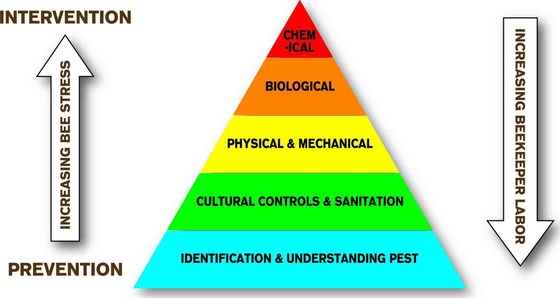 Integrated Pest Management Pyramid. "As you go from the base to the top you are looking at prevention methods first until the top where you are looking at intervention methods. As you get to the top of the pyramid, you have increasing bee stress, but decreasing beekeeper labor. This pyramid indicates that it is easier on the beekeeper to intervene with bee issues, but this comes with increasing bee stress. For this reason, it is harder on the beekeeper, but better for bee health to prevent issues before they arise." - University of Arkansas System Division of Agriculture Research and Extension
The Food and Agriculture Organization (FAO) of the United Nations defines IPM as "the careful consideration of all available pest control techniques and subsequent integration of appropriate measures that discourage the development of pest populations, keep pesticides and other interventions to levels that are economically justified, and reduce or minimize risks to human health and the environment.”
According to the Honey Bee Health Coalition BMPS for Hive Health (HBHC), the four main components of IPM are:
1. Knowledge of pests and diseases and how they interact with the host (i.e. the honey bee). Be able to recognize the signs of pests and pathogens and understand how they affect the colony. A combination of colony stressors leads to a compounding effect in the presence of more than one pest/pathogen.
2. Monitoring pest presence and abundance. Keep records and use the same monitoring method each time to determine when and what type of management decision to make.
3. Using pest thresholds to determine the need for and timing of treatment. Thresholds are static guidelines to assist in management decisions such as when to treat and what to use.
4. Implementing appropriate solutions to manage pests and diseases. Solutions consist of a combination of cultural and mechanical practices (i.e. isolate sick or weak hives and don't combine with healthy, screened bottom boards, etc.); genetic practices like using hygienic stock; and alternating the use of chemical controls.
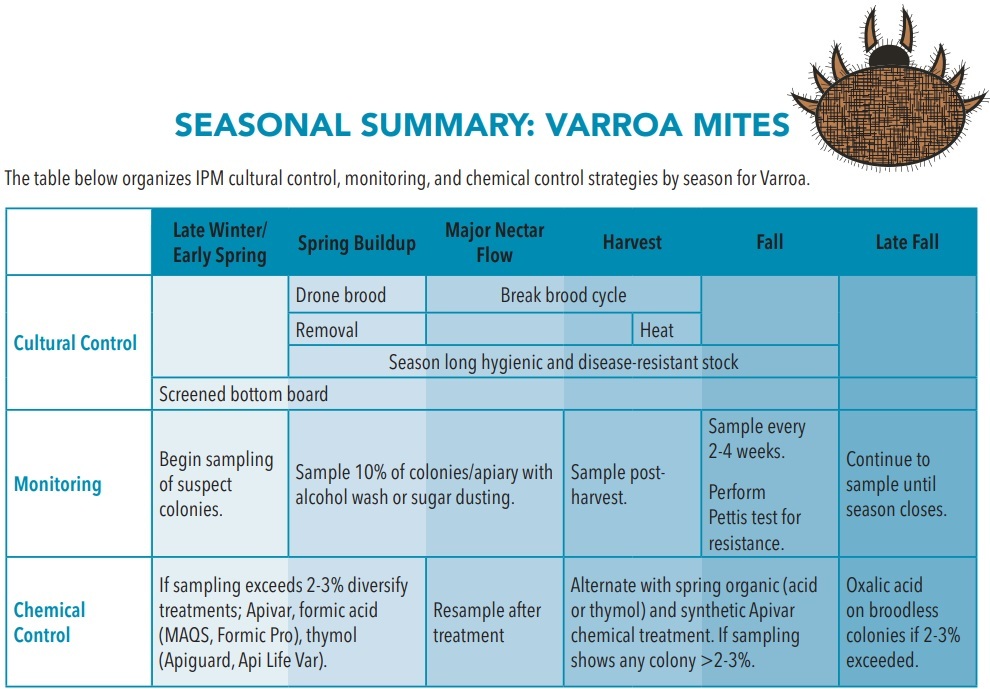 |
A table organized by the Honey Bee Health Coalition summarizing a season of control strategies for varroa mites.
Effective varroa mite control through vigilant monitoring and timely action will reduce colony losses and lower the risk of spreading pathogens among colonies. Choosing which chemical control(s) to use when for varroa can seem like a daunting task, even for the most experienced beekeeper. It's important to remember when using any type of pesticide that the label is the law and should be followed; never use off-label or unregistered products. Alternate between different chemical treatments, including organic and synthetic chemicals, mechanical and cultural practices, and genetics. Use the resources highlighted below to help you make varroa control and treatment decisions.
|
|
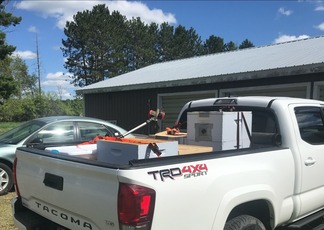
The DATCP Apiary Program is tasked with monitoring honey bees coming into Wisconsin, as well as those leaving the state, to help prevent the spread of unwanted honey bee pests and diseases. Admin. Code § ATCP 21.13(1)(a) states that “No person may ship live honey bees or used beekeeping equipment into this state without first reporting the import shipment to the department in writing.”
The requirements are straightforward: the beekeeper bringing honey bees or used beekeeping equipment into Wisconsin reports their import shipment before the arrival and provides a valid Certificate of Apiary Inspection issued within the last 12 months. Honey bee import reports can be submitted online here, emailed to DATCPapiary@wisconsin.gov or mailed to:
DATCP State Apiarist
PO Box 8911
Madison, WI 53708-8911
When you submit your report, please also email you certificate of apiary inspection (if issued outside Wisconsin) to DATCPapiary@wisconsin.gov.
There is no fee associated with filing honey bee import reports.
|
Find more information about the DATCP Apiary Program and the Wisconsin Pollinator Protection Plan via the DATCP Beekeeping and Pollinators webpage.
Division of Agricultural Resource Management | Bureau of Plant Industry
Having trouble viewing this email? View it as a Web page.
|
|
|
|
|