|
 _____________________________________
Dear Wisconsin nurseries, Christmas tree growers, and gardeners:
There are only a few days remaining to renew your nursery license without paying a late fee, so don't delay!
Take a moment to read through a few updates from the DATCP nursery program and send any feedback, questions, or ideas for future e-news updates to datcpnursery@wisconsin.gov.
Having trouble viewing this email? View it as a Web page.
_____________________________________
|
|
|
Part of DATCP’s mission is to prevent the spread of harmful plant pests. This is typically achieved by staff inspections, certifications, quarantines, and surveys. However, a critical piece is also creating public awareness to increase the chance of early detection and rapid response to invasive species introductions to Wisconsin.
Case studies show that curious members of the public are often the first to detect a new invasive species in an area (Roe et al., 2024). A great example from Wisconsin is a public report that was made on iNaturalist that led to DATCP rapid response and interception of elongate hemlock scale (Fiorinia externa) and hemlock woolly adelgid (Adelges tsugae) in April 2025. As a result of this tip, DATCP staff recovered and destroyed over 99% of the potentially infested hemlock seedlings that were imported into Wisconsin and likely prevented both pests from establishing.
To further increase public knowledge and reporting of invasive species, DATCP invites Wisconsinites to utilize the free educational resources and action toolkits available through the National Invasive Species Awareness Week (NISAW) from February 23-27, 2026. The national event is administered by the North American Invasive Species Management Association (NAISMA).
The motto for 2026 is “Defending Our Health by Stopping the Spread.” The theme points to the deep connection that environmental balance has on the health of all living organisms, including humans. Stopping the spread of invasive species helps protect that balance.
“Invasive species impact every community. Whether through wildfire risk, agriculture losses, water shortages, vector-borne diseases, or damage to critical infrastructure,” said Christie Trifone-Millhouse, Executive Director of NAISMA. “This year’s theme underscores a powerful truth: Protecting our environment is directly tied to protecting our health. NISAW 2026 is a rallying point for collaboration and solutions.”
Spark your curiosity and find out how you can help prevent the spread of invasive species. Take advantage of free resources on the NISAW website at https://naisma.org/programs/nisaw and then contact the DATCP Pest Hotline this year if you find any new invasive plant pests at (866) 440-7523 or datcppesthotline@wisconsin.gov.
Reference: Amanda D Roe, Leigh F Greenwood, David R Coyle, Catching invasives with curiosity: the importance of passive biosecurity surveillance systems for invasive forest pest detection, Environmental Entomology, Volume 53, Issue 6, December 2024, Pages 881–893, https://doi.org/10.1093/ee/nvae082
|
|
_____________________________________ |
|
|
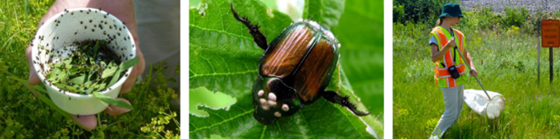
left: leafy spurge flea beetle | MDA, Monika Chandler; center: winsome fly eggs on Japanese beetle | Peter Christophono; right: DATCP Pest Survey staff | DATCP image
2025 Wisconsin 414 Permit Recap
In 2025, DATCP issued 16 Wisconsin 414 permits. These permits covered 10 different biological control organisms used for the management of spotted knapweed (12 permits), emerald ash borer (two permits), leafy spurge (one permit), and Japanese beetle (one research permit). Of the 10 biological control species released, four were parasitic wasps for emerald ash borer management, three were spotted knapweed beetles, two were leafy spurge control beetles, and one was a research organism, a microsporidian pathogen, used for the management of Japanese beetle. This is a vast increase in permits compared to 2024, in which a total of seven 414 permits were issued. Six permits were for the control of spotted knapweed and were issued for three spotted knapweed beetles while the other permit was for emerald ash borer and was issued for three parasitic wasp species.
Updated Website and New Fillable Permit Forms
Last month, an updated website and new fillable Word and PDF permit forms for DATCP’s Biological Control Program debuted. The webpage now features an in depth look at the permitting process for importing or moving plant pests and biocontrols in Wisconsin.
The page guides you through the process of figuring out if you need to apply for a Wisconsin 414 permit by listing exemptions, including species endemic (native) to the Wisconsin, EPA registered pesticides, pesticides that have an experimental use permit, and any plant that suppresses or controls plant pests or pathogens – none of which require a 414 permit.
It also includes a new table that lists 22 biological control organisms that no longer require a 414 permit in 2026. Select organisms introduced for biological control of emerald ash borer, leafy spurge, purple loosestrife, and spotted knapweed that have been repeatedly released in the state for 10 years or more without harmful impacts to non-target species no longer require a Wisconsin 414 Permit. Below is a list of approved organisms that may be released in the state without applying for a 414 Permit.
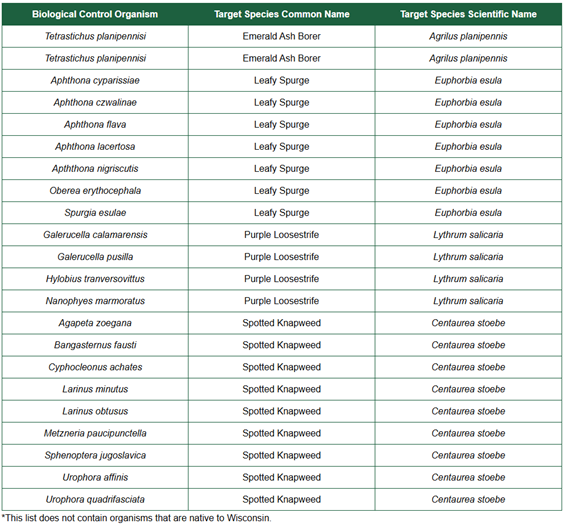 How to Request a Wisconsin 414 Permit
If you would like to release an organism that is not exempt and not included on the above table, you begin by filling out a Wisconsin 414 Permit Part 1: Importing or Moving Live Plant Pests or Biological Control Agents. This can then be mailed, emailed, or faxed to Stephanie Jentz.
Once reviewed, the permit will be returned approved or denied. Denied permits will have information on why the permit was not approved and further follow-up and discussion are welcome. The approved permit allows you to release the biological control organism into the environment in the locations disclosed on the permit. Once you have completed all of the releases for the year, a Wisconsin 414 Permit Part 2: Documentation of the Release of Plant Pests or Biological Control Agents, needs to be completed within 30 days following the final release of the approved biological control agents. Updated fillable Word and PDF Wisconsin 414 Permit Part 1 and 2 forms have been linked to the website.
_____________________________________
|
|
|
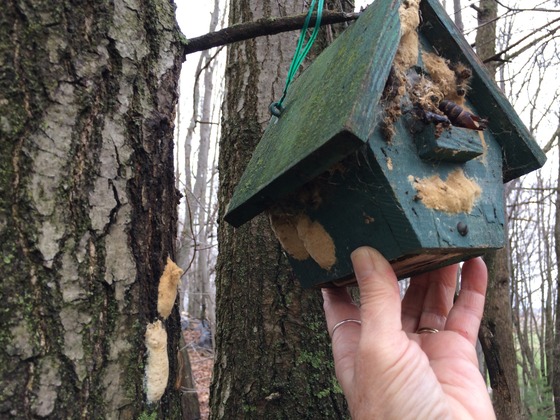
Birdhouse covered in new spongy moth egg masses and spent pupal cases | DATCP M. Wensing
Winter is a great time to hunt for spongy moth egg masses because most trees have dropped their leaves, exposing much more of their trunks and branches.
Where to Look?
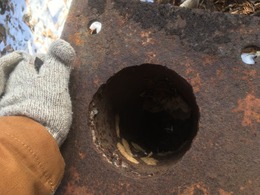
Spongy moth females lay egg masses on a variety of surfaces to protect them from the elements, so look high, low, under loose bark, and around bark fissures. They're often laid on the undersides of tree branches and crotches. Oaks are their favorites, so start there. But do not limit your search to trees. They can lay their egg masses on literally anything that's sitting outdoors, including under picnic tables, inside grills, on campers, buildings, or the undersides of deer stands, just to name a few! Birdhouses also can be a common location for egg masses.
|
|
|
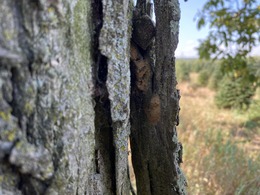
New egg masses hidden behind a loose bark flap | DATCP L. Meils
|
|
New egg masses laid inside a pipe | DATCP M. Falk
|
|
New Egg Masses Versus Old Egg Masses
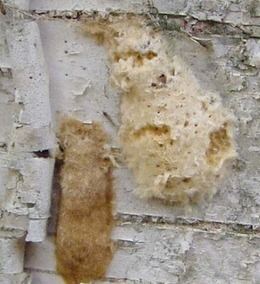
New, viable, egg masses laid last August/September are rich or dark tan in color, solid to the touch, and less likely to have chunks taken out (but still can happen). They can have tiny holes from parasitic wasps. Old egg masses laid in previous seasons are not viable. They are often faded or bleached in color, are spongy to the touch, and are more likely to have bits taken out from passing squirrels or other wildlife. |
|
|
Tan and firm new egg mass on left; bleached and damaged old egg mass on right | DATCP image
|
|
New egg mass with tiny parasitic wasps holes and the holes they leave on the egg masses | MSU
|
|
Be Aware of Spongy Moth Egg Mass Look-alikes!
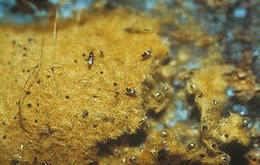
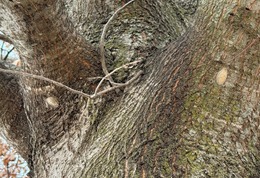
Sometimes, what you encounter is not actually a spongy moth egg mass. There are lots of other things out there that look quite similar. Inspectors carry close-range binoculars to help make positive IDs. And if you can touch it to confirm if it's firm, spongy, or something else altogether, even better. |
|
|
White-marked tussock moth pupal cases on undersides of branches | DATCP L. Meils
|
|
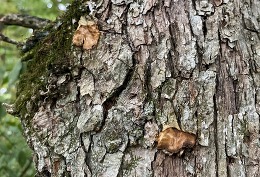
Fungal growths on tree, not egg masses | DATCP L. Meils
|
|
|
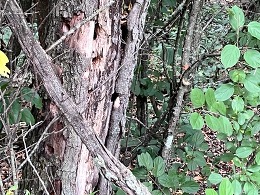
Missing piece of bark, not an egg mass | DATCP M. Wensing
|
|
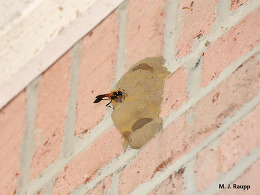
Mud dauber nest | M.J. Raupp, bugoftheweek.com
|
|
|
What to Do About Them?
Depending on the population size and your land use, there are a number of ways to consider controlling your local spongy moth population. Homeowners and woodlot owners can find helpful tips at spongymoth.wi.gov. If you only find a few egg masses, they can simply be scraped into a jar of soapy water. This is worthwhile, since each egg mass can contain 300+ eggs. Nurseries and Christmas tree growers within the federal quarantine, not moving plant material outside of the quarantine, should make efforts to control the population and mitigate the risks of moving any life stages on stock. Nurseries and Christmas tree growers within the federal quarantine that do move plant material out of the federal quarantine are required to sign a Spongy Moth Compliance Agreement and take treatment actions, or restrict the movement of potentially infested stock. If you believe you need a spongy moth compliance agreement and don't yet have one, connect with your local nursery inspector to get set up. Compliance agreements are renewed annually and are free of charge.
Spongy moths overwinter as egg masses, hatching out in spring (or around 100-200 GDDB50). That means you have plenty of time yet this winter to find the egg masses and come up with the best plan of action to deal with them. Happy hunting!
_____________________________________
|
|
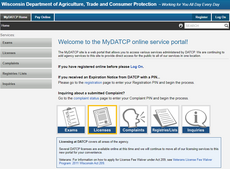
Nursery and Christmas tree licenses for this growing season (LY2026) expire on February 20, 2026. Expiration notices to renew your license for the next growing season (LY2027) were emailed and mailed out in late November. Please contact us if your email or address has changed since your last renewal.
License renewals can be completed online by using the MyDATCP portal. If you need assistance getting into your account, contact datcpnursery@wisconsin.gov or (608) 224-4574. Renewing online is an efficient way to update location information, contact information, and sources of plant materials without having to mail in a paper application.
If you are no longer in business, or if you do not plan to sell perennials next year, please let us know so we can close or suspend your license. This avoids any compliance actions, which may occur for entities who fail to contact us or renew by the February 20, 2026 deadline.
Tips and Reminders:
- Allow pop-ups from MyDATCP
- Only one tab of MyDATCP can be open at a time
- If you have multiple license types, they each need to be renewed individually; but, you can pay for them all at once by accessing your invoices from the "My Invoices" tab of MyDATCP
- Watch the video tutorial to walk you through the online renewal process
- Renew your nursery license before February 20 to avoid the 20% late fee and to check this off your busy to-do list!
For more information, email DATCPnursery@wi.gov, call (608) 224-4574, or visit the Nursery and Christmas tree licensing webpage.
|
_____________________________________
|
|
|
A compliance agreement is a written agreement between DATCP or USDA and a business engaged in growing, handling, importing or exporting regulated articles (e.g., plants and plant parts) outside of a plant pest quarantine. The business with the compliance agreement is granted a limited exemption to a quarantine to facilitate the movement of regulated articles, provided that risk mitigation measures are taken, such as notifying state or federal plant regulatory officials about shipments leaving a quarantine, and / or treating or inspecting regulated articles so material can be certified to prevent artificial plant pest spread to new areas. Nursery growers, nursery dealers, and Christmas tree growers are some of the businesses that may need compliance agreements. Compliance agreements are valid for one year and must be renewed annually. There is no fee to enter into a compliance agreement. Compliance agreements are generally pest-specific, so depending on what plant species you move, you may need multiple agreements.
To help you determine what compliance agreements you may need, DATCP created an interactive guide to generate a list of potential, applicable compliance agreements based on how you operate. By simply answering a series of yes/no questions you can quickly learn what compliance agreements will help you facilitate the movement of the stock you’re bringing in or shipping out. Fill out the guide now to determine what agreements you may need.
_____________________________________
|
|
-
2026 Landscape & Grounds Maintenance Short Course. Online, Wednesdays in February, 1-3 p.m. CST
-
MSU Christmas Tree Winter Webinar Series. February 13, 19, and 26, 11:30 a.m.-1 p.m. CST
-
Free Spanish Education for the Green Industry Workforce. UConn Extension webinar series, Fridays in February, 11 a.m. CST
-
Weed Control in Propagation: Sanitation, Mulches, and Pre-emergence Herbicides. tHRIve Webinar Series, March 4, 12 p.m. CST
-
Grow Pro Webinar Series. American Floral Endowment, monthly in 2026
_____________________________________
|
|
|
For more information about Wisconsin's Nursery and Christmas Tree Programs, visit DATCP's Nursery and Christmas Tree Program webpage.
Read past issues of What's Growing On?
If you haven't yet, please take this brief feedback survey for our monthly What's Growing On? e-newsletter. With this survey, we aim to measure your satisfaction regarding the format, frequency, and quality of the content provided. Please give us your most transparent feedback. The survey is anonymous.
For current counts during the growing season from our insect monitoring networks around the state, visit our Pest Survey webpage. To read articles on economically important plant pests affecting Wisconsin's field crops, fruits, and vegetables, read our Field Notes publication sent out weekly during the growing season.
|
|
|
|
|