|
 _____________________________________
Dear Wisconsin nurseries, Christmas tree growers, and gardeners:
Wishing you all a safe, healthy, and joyful holiday season! Take a moment to read through a few updates from the DATCP nursery program and send any feedback, questions, or ideas for future e-news updates to datcpnursery@wisconsin.gov.
Having trouble viewing this email? View it as a Web page.
_____________________________________
|
|
|
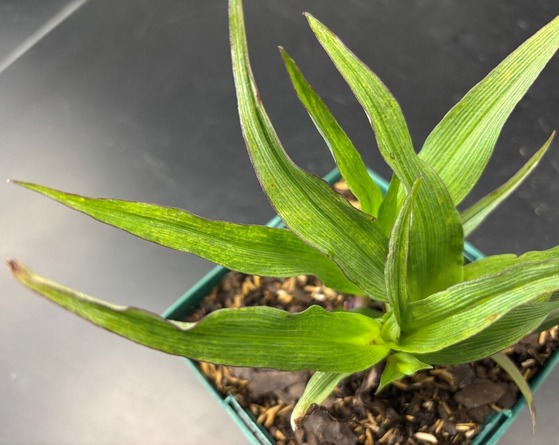
Spiderwort infected with TraMMV and TRV | DATCP PIB Laboratory
A virus new to the United States was intercepted at two Washington County nurseries in the spring of 2025. Tradescantia mild mosaic virus (TraMMV) was confirmed on spiderwort ‘"Zwanenburg Blue" plants by both DATCP’s Plant Industry Bureau Laboratory and the USDA’s Plant Pathogen Confirmatory Diagnostic Laboratory. The infected plants, which had been bought in from out-of-state suppliers this spring, were also infected with tobacco rattle virus (TRV), which is known to occur in Wisconsin. Symptoms observed on the plants included chlorotic streaking, necrosis, and flower breaking (image above). The official quarantine status of TraMMV has not yet been determined. The affected plants at both nursery locations were removed and destroyed.
|
|
|
_____________________________________
|
|
|
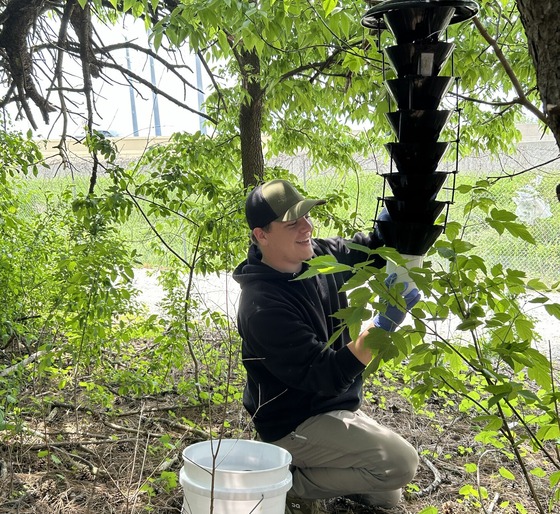
Field specialist checking survey trap | DATCP M. Lannan
DATCP continued a fifth successive year of early detection trapping for several forest pests in 2025. Trap locations included urban industrial properties and travel corridors in the eastern portion of the state. The selected targets were five defoliating moths (black-arched tussock moth, pine-tree lappet, oak processionary moth, rosy moth, and Siberian silk moth) and six wood-boring and bark beetles (black fir sawyer, black spruce beetle, brown spruce longhorned beetle, European spruce bark beetle, large pine weevil, and six-toothed bark beetle). A total of 105 traps were deployed across 15 counties and monitored from mid-May through September. Trap sample processing is now complete and none of the target pests were detected. Past surveys have not detected the target pests in Wisconsin.
_____________________________________
|
|
|
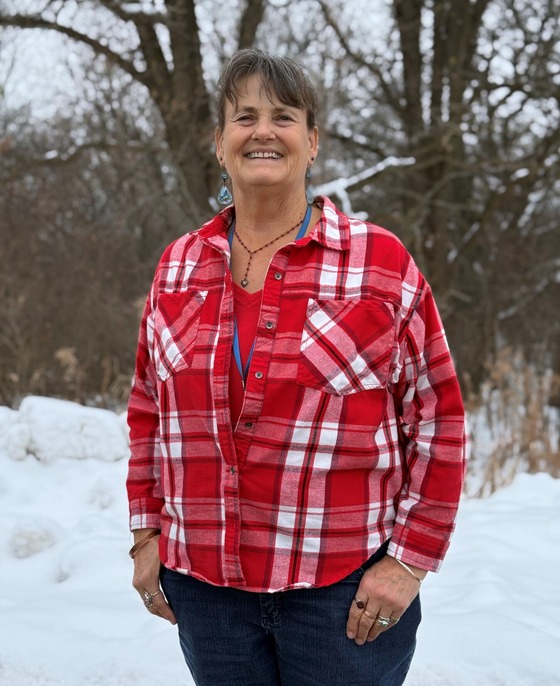
Marcia Wensing, SE WI nursery inspector, is retiring | DATCP L. Meils
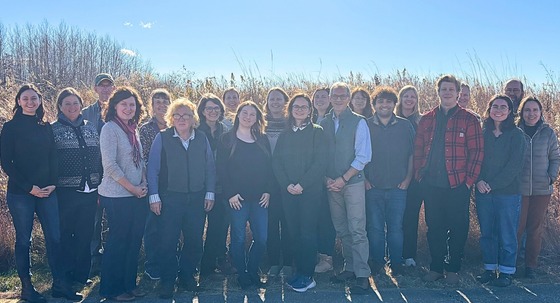
When southeastern Wisconsin nursery inspector Marcia Wensing came to work with DATCP as a Plant Pest and Disease Specialist 11 years ago, she brought over 30 years of nursery industry, horticultural education, and environmental advocacy experience to the position. She earned her bachelor’s degree in ornamental horticulture from the University of Wisconsin-Madison. She taught 13 horticulture classes as an instructor at Gateway Technical College and at Milwaukee Area Technical College. She worked as a horticulturist for The Bruce Company of Racine from 1981-2011, where she monitored plants, identified pests and diseases, interacted with clients and initiated sales contacts, and designed and implemented landscape and safety trainings. After she shared her plans to retire in January 2026, it gave us the chance to reflect on her illustrious career and acknowledge the big shoes we will need to fill.
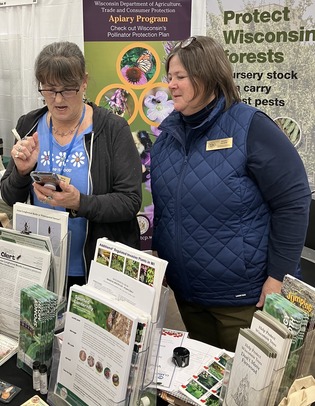
Throughout her tenure at DATCP, Wensing never hesitated to pitch in to help the Plant Industry Bureau (PIB) team meet its goals. She made time to assist with group nursery inspections and was always willing to travel to northern group Christmas tree inspections each fall. Wensing also helped survey for spotted lanternfly on tree-of-heaven in southeast Wisconsin. Wensing reliably signed up to staff DATCP’s exhibit booths, often working nights and weekends at events like the Garden Expo, the Wisconsin Arborist Association’s annual urban forestry conference, and the iLandscape tradeshow. She also passed information on by mentoring several seasonal inspectors and inviting coworkers to inspections, who all describe learning more from spending a day or two doing inspections with her than reading an entire book or taking a class. Her inspection reports were similarly informative for licensees, including pictures of regulatory pests and details on diseases and abiotic issues that could impact their business.
Along with serving on the national Inspector Committee for the audit-based Systems Approach to Nursery Certification program (SANC), Wensing was instrumental in getting McKay Nursery Company designated as the first SANC nursery in the nation in 2016. Marcia’s exemplary work was honored with the Wisconsin Arborist Association’s Lifetime Achievement Award in 2017, and subsequently with DATCP’s Employee of the Year award in 2020.
Some of her many accomplishments include being on the forefront of Wisconsin’s first Boxwood Blight detection; and repeated interceptions of Elongate Hemlock Scale on Fraser and balsam fir on Christmas trees and décor from out-of-state, which led to a quarantine being enacted for this introduced invasive pest in 2023. During the field season of 2023, Wensing detected ramorum blight (the pathogen linked to sudden oak death) on rhododendrons, leading to the removal and destruction of over 600 plants at several locations of a retail nursery chain; as well as picking up Thrips parvispinus (pepper thrips) for the first time in Wisconsin on greenhouse plants. Working with PIB lab staff to garner new state records continued in 2025 when samples she collected led to the first U.S. detection of Tradescantia Mild Mosaic Virus (TraMMV) on Tradescantia "Zwanenburg Blue" and Wisconsin’s first Phytophthora austrocedri detection on juniper nursery stock.
In 2024, the Central Plant Board nominated Wensing for the national Carl Carlson Award in plant protection after she received the Robert McAdams Award from the Central Chapter of the Horticultural Inspectors Society in 2023. More recently, Wensing has represented DATCP as the Vice Chair of the board of the Invasive Plants Association of Wisconsin (IPAW). IPAW is one of several nonprofits she’s been involved with, including serving as past president of the Wisconsin Arborist Association, a member of the International Society of Arboriculture, the Central Chapter of the Horticultural Inspection Society, the southeastern Wisconsin Landscape Contractors Association, the Wisconsin Woody Plant Society, the southeastern Wisconsin Hosta Society, the Chiwaukee Prairie Preservation Fund, and the Caledonia Conservancy. Her role on IPAW is particularly apt, as her track record of detecting NR 40 restricted and prohibited invasive plants, including woodland forget-me-not, Japanese honeysuckle, water java dropwort, and Chinese and Japanese wisteria at nurseries has led to significant improvements in compliance and understanding over time.
In summary, we are so proud of Marcia and greatly appreciate her outstanding contributions to Wisconsin agriculture! We will miss the friendly nature and the sense of humor she always brought to the job, no matter the challenges we faced. We wish her the best in retirement, where her greatest challenge will likely be learning to relax, as she enjoys her garden, her dogs, friends, and family.
After January 12, and until a new inspector is hired, licensees in Marcia's territory can direct questions to Liz Meils at elizabeth.meils@wi.gov or (608) 516-7617.
|
_____________________________________
|
|
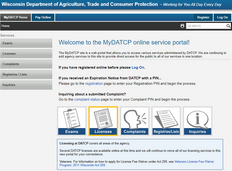
Nursery and Christmas tree licenses for this growing season (LY2026) will expire on February 20, 2026. Expiration notices to renew your license for the next growing season (LY2027) were emailed and mailed out in late November. Please contact us if your email or address has changed since your last renewal.
License renewals can be completed online by using the MyDATCP portal. If you have never used the online license portal, a PIN will be located on your expiration notice so you can register for a MyDATCP account. If you need assistance getting into your account, contact datcpnursery@wisconsin.gov or (608) 224-4574.
Renewing online is an efficient way to update location information, contact information, and sources of plant materials without having to mail in a paper application. Also, once your license is issued, you have the ability to print your license certificate from your computer. No need to wait for the mail!
If you are no longer in business, or if you do not plan to sell perennials next year, please let us know so we can close or suspend your license. This avoids any compliance actions, which may occur for entities who fail to contact us or renew by the February 20, 2026 deadline.
Tips and Reminders:
- Allow pop-ups from MyDATCP
- Only one tab of MyDATCP can be open at a time
- If you have multiple license types, they each need to be renewed individually; but you can pay for them all at once by accessing your invoices from the "My Invoices" tab of MyDATCP
- Watch the video tutorial to guide you through the online renewal process
- Renew your nursery license before February 20 to avoid the 20% late fee and to check this off your busy to-do list!
For more information, email DATCPnursery@wi.gov, call (608) 224-4574, or visit the Nursery and Christmas tree licensing webpage.
If you are also a licensed Wisconsin seed labeler, annual seed labeler licenses expire December 31 of each year. Renewal and payment can be completed online at MyDATCP.wi.gov. Late renewals are subject to a 20% late fee. Direct seed licensing questions to DATCPseed@wisconsin.gov or (608) 224-4574.
|
_____________________________________
|
|
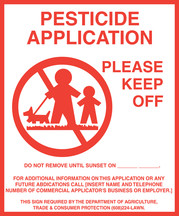
Did you know Wisconsin has a Landscape Pesticide Registry? If you didn’t know, you might wonder what the Landscape Pesticide Registry is and what it can do for you, and what may be required from your company.
Registrant Information: The Landscape Pesticide Registry allows Wisconsin residents to be notified at least 12 hours prior to a commercial pesticide application to any address located on the block you live on, or blocks that are immediately adjacent. This service is offered by the Wisconsin Department of Agriculture, Trade and Consumer Protection (DATCP). To be on the registry, you must apply by paper application or online between November 1-February 1. You have to reapply every year within that time frame to be on the registry for the following season. During the registration process, you provide your email and phone number. If necessary, DATCP will use your email to contact you, and the commercial pesticide applicators will use your phone number to give you notice of the landscape application.
This is NOT available for plain fertilizer applications or for pesticide applications to:
- Properties beyond your block or adjacent blocks
- Farm fields or other agricultural productions
- Buildings
- Utility or transportation right of ways.
Business Information: On March 15, the Landscape Registry list goes live on our website. Once the list is published, there are no revisions made to it. If the customers’ addresses are on the list, you will need to contact the registrants who asked to be notified at least 12 hours prior to the landscape application. Landscape applications include spraying for mosquitos, as well as turf and ornamental applications.
The advanced notice must include ALL of the following:
- The address to be treated
- The scheduled application date
- The name, address, and telephone number of the business making the application
- The pesticides that may be used (brand name, product name, or common chemical name)
If you have any questions about the landscape registry or the requirements, you can check out our website for more details or email datcplandscaperegistry@wi.gov.
|
_____________________________________
|
|
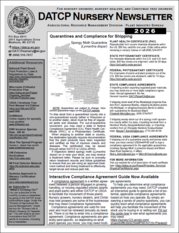
The annual Nursery Newsletter is now available online. It will also be emailed out to all nursery and Christmas tree grower license holders, as well as printed and mailed to those without email.
The annual nursery newsletter includes many resources and DATCP contact information for nursery dealers, nursery growers, and Christmas tree growers. It also includes pest and disease updates, upcoming 2026 events, and a brief 2025 programmatic summary.
|
_____________________________________
|
|
|
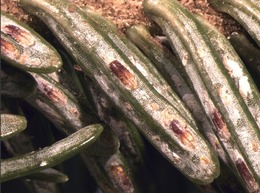
Live elongate hemlock scale on fraser fir wreath in Milwaukee Co. | DATCP M. Wensing
|
|
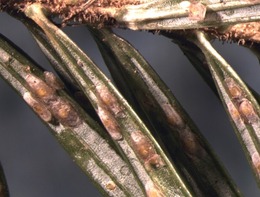
Live EHS adults and settled nymphs on fraser fir wreath material in Milwaukee Co. | DATCP M. Lannan
|
|
|
Live and dead cryptomeria scale on fraser fir wreaths in Kenosha Co. | DATCP M. Lannan
|
|
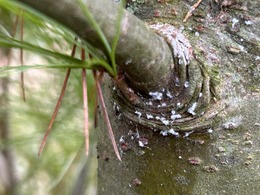
Pine bark adelgid on white pine in Juneau Co. | DATCP L. Meils
|
|
|
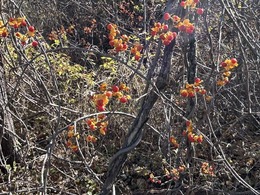
Invasive Oriental bittersweet growing along nursery field edge in Kenosha Co. | DATCP M. Wensing
|
|
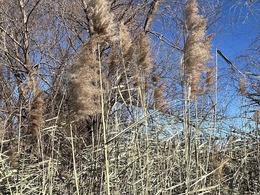
Invasive Phragmites or Common reed non-native ecotype growing along nursery field edge in Kenosha Co. | DATCP M. Wensing
|
|
|
_____________________________________
|
|
|
Happy Holidays from the DATCP Plant Industry Bureau
_____________________________________
For more information about Wisconsin's Nursery and Christmas Tree Programs, visit DATCP's Nursery and Christmas Tree Program webpage.
Read past issues of What's Growing On?
If you haven't yet, please take this brief feedback survey for our monthly What's Growing On? e-newsletter. With this survey, we aim to measure your satisfaction regarding the format, frequency, and quality of the content provided. Please give us your most transparent feedback. The survey is anonymous.
For current counts during the growing season from our insect monitoring networks around the state, refer to our Pest Survey webpage. To read articles on economically important plant pests affecting Wisconsin's field crops, fruits, and vegetables, read our Field Notes publication put out weekly during the growing season.
|
|
|
|
|